Mary Berry Eccles Cakes Recipe
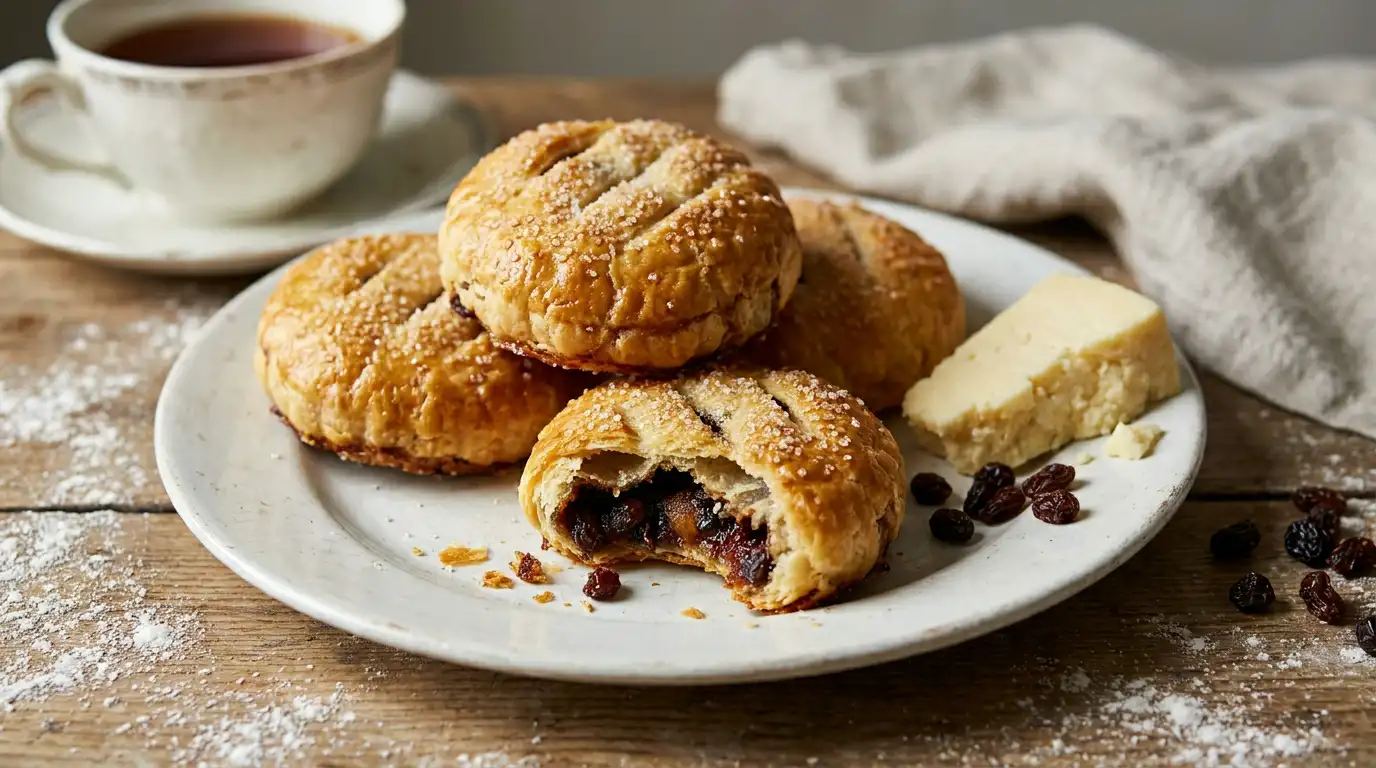
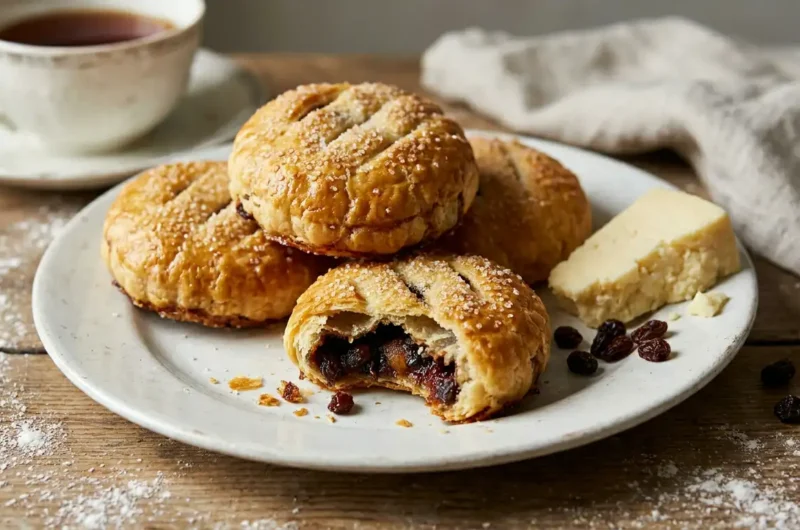
Mary Berry Eccles Cakes are buttery, flaky rounds of rough puff pastry filled with a spiced currant mixture that caramelises slightly at the edges as they bake, leaving a golden, crisp shell and a dark, sticky, fragrant centre. This version uses a straightforward rough puff pastry that comes together quickly, making it a reliable choice for a weekend bake or a classic addition to an afternoon tea spread. The filling balances warm spice with the natural sweetness of currants, and the brushed sugar glaze gives each cake a gently crunchy, amber top. From start to finish, these are ready in around 1 hour and 15 minutes.
What sets this recipe apart is the precision in the pastry folds and the balance of the filling spices, both of which produce a result that holds together neatly when baked rather than splitting or leaking. The dough is rested between folds, which is the key step that creates those delicate, papery layers.
Ingredients
For the rough puff pastry
- 200g plain flour, plus extra for dusting
- Pinch of fine salt
- 150g unsalted butter, cold and cut into 1cm cubes
- 80ml ice-cold water
For the currant filling
- 150g currants
- 40g soft light brown sugar
- 30g unsalted butter, softened
- 1 tsp mixed spice
- Half tsp ground nutmeg
- Zest of 1 small unwaxed lemon
To finish
- 1 medium egg white, lightly beaten
- 2 tbsp caster sugar, for sprinkling
How to Make Mary Berry Eccles Cakes Recipe
- Make the pastry: Place the flour and salt into a large mixing bowl. Add the cold butter cubes and toss them briefly in the flour, then use your fingertips to flatten each piece of butter without fully rubbing it in. You want visible flat pieces of butter throughout, as these create the layers. Add the ice-cold water a little at a time and bring the dough together with a butter knife until it just holds.
- Rest and fold the dough: Turn the dough out onto a lightly floured surface and press it into a rough rectangle. Roll it out to approximately 30cm x 15cm, then fold the bottom third up and the top third down, like a letter. Wrap the dough in cling film and refrigerate for 20 minutes. This resting period relaxes the gluten and keeps the butter cold, which is what gives the pastry its flaky texture.
- Repeat the fold: Remove the dough from the fridge, turn it 90 degrees, and roll and fold once more. Return to the fridge for a further 15 minutes.
- Prepare the filling: While the pastry rests, mix together the currants, soft brown sugar, softened butter, mixed spice, nutmeg, and lemon zest in a bowl until evenly combined. The mixture should be thick, cohesive, and glossy, not wet or loose.
- Preheat and prepare: Heat the oven to 220C (fan 200C). Line a large baking tray with non-stick baking paper.
- Shape the Eccles cakes: Roll the rested pastry out on a floured surface to around 3mm thickness. Use a 10cm round cutter to cut out circles, re-rolling the trimmings as needed. You should get approximately 8 to 10 rounds. Place a heaped teaspoon of the currant filling into the centre of each round, then draw up the edges of the pastry over the filling and pinch firmly to seal. Turn each one over so the seam is underneath, and gently flatten with your palm into a disc around 7cm wide.
- Score and glaze: Place the shaped cakes, seam side down, onto the prepared tray. Brush each one generously with the beaten egg white, then scatter caster sugar evenly over the top. Using a sharp knife, score two or three shallow cuts across the top of each cake, cutting just through the pastry surface. This allows steam to escape during baking and prevents the pastry from puffing unevenly.
- Bake until golden: Place the tray in the preheated oven and bake for 18 to 22 minutes, until the pastry is a deep golden brown and the edges show small caramelised spots where the filling has bubbled through. Leave to cool on the tray for 5 minutes before transferring to a wire rack.
Tips for the Best Mary Berry Eccles Cakes
Why is my pastry shrinking back when I roll it?
The gluten in the dough has not had enough time to relax. Return the pastry to the fridge for an additional 10 minutes before continuing to roll, and it will hold its shape much more easily.
Why are my Eccles cakes leaking filling during baking?
The most common cause is an improperly sealed edge. Make sure to pinch the gathered pastry very firmly and check there are no gaps before placing seam-side down on the tray. Chilling the shaped cakes for 10 minutes before baking also helps them hold their shape.
Why is the pastry on the bottom going soggy instead of crisping up?
This usually happens when the oven is not hot enough at the start of baking. Make sure the oven is fully up to temperature before the tray goes in, and position it on the upper-middle shelf rather than the bottom, so the base crisps properly.
My filling is spilling out from the score marks on top. What went wrong?
The score marks should only cut through the top layer of pastry, not all the way into the filling. If the cuts are too deep, the filling has a direct route to the surface. A light hand with a sharp knife is all that is needed.
Why does my pastry have a doughy texture rather than flaky layers?
This happens when the butter is not kept cold throughout the process. Warm butter absorbs into the flour rather than creating distinct pockets. If your kitchen is warm, chill the bowl, the rolling pin, and the surface before you begin.
Serving Suggestions
- Serve warm from the oven with a generous wedge of good-quality Lancashire cheese, which is the traditional British pairing for Eccles cakes.
- Offer at room temperature alongside a pot of strong Assam or Darjeeling tea as part of an afternoon spread.
- Dust lightly with icing sugar just before serving if presenting them at a celebration or bake sale.
- Plate with a small spoonful of clotted cream for a richer finish as a dessert course.
- Serve alongside a simple fruit salad of sliced pears and grapes to balance the sweetness of the currant filling.
Storage
Room temperature
Store the cooled Eccles cakes in an airtight container at room temperature for up to 2 days.
Refrigerator
Place in an airtight container and refrigerate for up to 4 days. Before serving, warm them in the oven at 180C for 5 to 8 minutes to restore the crispness of the pastry, as they will soften when cold.
Freezing
Wrap each baked and fully cooled Eccles cake individually in cling film, then place in a freezer bag and freeze for up to 3 months. Defrost overnight at room temperature and reheat in the oven at 180C for 8 to 10 minutes before serving.
Nutrition
- Calories: 265 kcal
- Carbohydrates: 34g
- Protein: 3g
- Fat: 13g
- Saturated Fat: 8g
- Sodium: 55mg
Nutrition values are estimates based on standard ingredient quantities and may vary depending on the specific brands used and the size of each individual cake.
FAQs
Can I use shop-bought puff pastry instead of making the rough puff from scratch?
Yes, ready-made all-butter puff pastry works well here and saves a good deal of time. Roll it out to around 3mm thickness and proceed from the shaping step. The layers will be slightly more uniform than homemade rough puff, but the result is still very good.
Can I make the pastry dough ahead of time?
The rough puff dough can be made up to 24 hours in advance and kept tightly wrapped in the fridge. The filling can also be prepared a day ahead and stored covered at room temperature. Assemble and bake on the day you want to serve them for the crispest pastry.
Can I substitute the currants with another dried fruit?
Raisins or sultanas can replace the currants in equal weight, though currants have a slightly sharper, more intense flavour that works particularly well here. Chopped dried cranberries also work if you prefer a less sweet filling, though they will add a slight tartness.
What size cutter gives the best result for Eccles cakes?
A 10cm round cutter is ideal for a standard-sized Eccles cake. Using anything smaller makes it difficult to seal the filling inside without the pastry tearing, and anything larger produces a cake that takes noticeably longer to bake through evenly.
Can I freeze the unbaked Eccles cakes before baking?
Yes, the shaped and glazed cakes can be frozen on a tray until solid, then transferred to a freezer bag for up to 2 months. Bake directly from frozen at 220C, adding 5 to 8 extra minutes to the baking time and checking the pastry is deep golden before removing from the oven.
Conclusion
This Mary Berry Eccles Cakes recipe produces a batch of 8 to 10 individual cakes with a crisp, flaky pastry shell and a fragrant, spiced currant centre that caramelises gently at the edges during baking. The method is broken into manageable stages, with the resting periods doing most of the work, making this a very achievable bake even for those new to pastry. The sugar-glazed top sets to a thin, crunchy finish that adds texture to every bite.
Whether served as part of an afternoon tea, offered with a slice of cheese, or packed into a tin for the week, these Eccles cakes are a consistently satisfying bake that rewards careful pastry folding and a properly hot oven. If you give this recipe a go, leave a comment below to share how they turned out, and feel free to pass the recipe along to anyone who enjoys a proper British bake. If you enjoyed this, you might also like the Mary Berry Yoghurt Cake Recipe, which is another simple and reliable classic worth having in your collection.
Mary Berry Eccles Cakes Recipe
Course: DessertCuisine: BritishDifficulty: Easy10
servings45
minutes22
minutes265
kcal1
hour15
minutesButtery, flaky rounds of rough puff pastry filled with a spiced currant mixture that caramelises at the edges as they bake. A classic British bake with a crisp, golden shell and a dark, sticky, fragrant centre.
Ingredients
200g plain flour, plus extra for dusting
Pinch of fine salt
150g unsalted butter, cold and cut into 1cm cubes
80ml ice-cold water
150g currants
40g soft light brown sugar
30g unsalted butter, softened
1 tsp mixed spice
Half tsp ground nutmeg
Zest of 1 small unwaxed lemon
1 medium egg white, lightly beaten
2 tbsp caster sugar, for sprinkling
Instructions
- Place the flour and salt into a large mixing bowl. Add the cold butter cubes and toss them briefly in the flour, then use your fingertips to flatten each piece of butter without fully rubbing it in. Add the ice-cold water a little at a time and bring the dough together with a butter knife until it just holds.
- Turn the dough out onto a lightly floured surface and press it into a rough rectangle. Roll it out to approximately 30cm x 15cm, then fold the bottom third up and the top third down, like a letter. Wrap the dough in cling film and refrigerate for 20 minutes.
- Remove the dough from the fridge, turn it 90 degrees, and roll and fold once more. Return to the fridge for a further 15 minutes.
- Mix together the currants, soft brown sugar, softened butter, mixed spice, nutmeg, and lemon zest in a bowl until evenly combined.
- Heat the oven to 220C (fan 200C). Line a large baking tray with non-stick baking paper.
- Roll the rested pastry out on a floured surface to around 3mm thickness. Use a 10cm round cutter to cut out circles. Place a heaped teaspoon of the currant filling into the centre of each round, draw up the edges and pinch firmly to seal. Turn seam-side down and flatten gently into a disc around 7cm wide.
- Place the shaped cakes seam side down onto the prepared tray. Brush each one with beaten egg white, scatter caster sugar over the top, then score two or three shallow cuts across the surface of each cake.
- Bake for 18 to 22 minutes, until the pastry is a deep golden brown and the edges show small caramelised spots. Leave to cool on the tray for 5 minutes before transferring to a wire rack.
Notes
- Keep butter cold throughout the pastry-making process to achieve flaky layers.
- Rest the dough between each fold to relax the gluten and prevent shrinking.
- Pinch the pastry edges very firmly to prevent filling from leaking during baking.
- Score marks should only cut through the top layer of pastry, not into the filling.
- Chill shaped cakes for 10 minutes before baking to help them hold their shape.
- Reheat stored cakes at 180C for 5 to 8 minutes to restore pastry crispness.