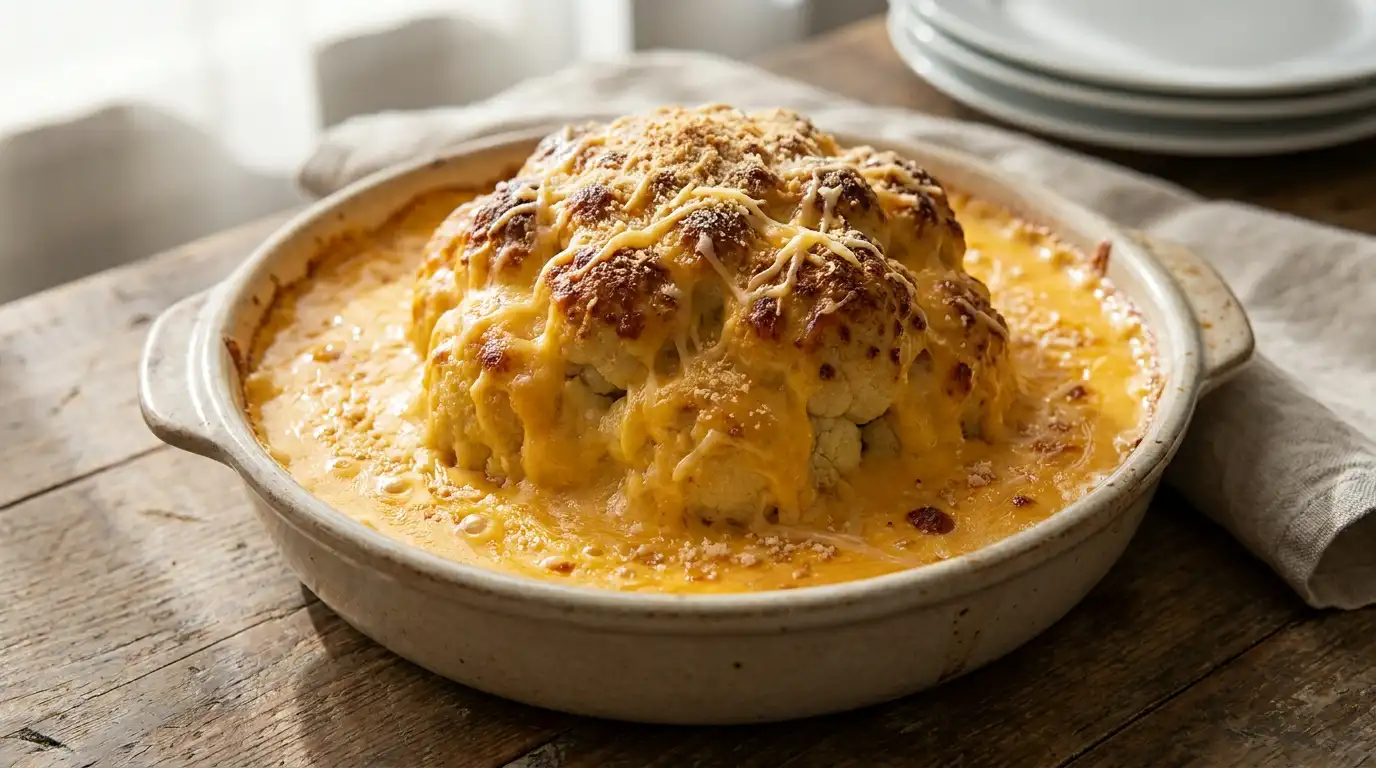
Mary Berry Cheese Sauce Recipe
Mary Berry cheese sauce is a smooth, velvety white sauce with a sharp, golden cheddar finish that coats the back of a spoon in a thick, glossy layer. It has a mild warmth from mustard and a savoury depth that makes it far more satisfying than any shop-bought version.
This version is straightforward enough for a first-time cook, yet reliable enough to serve at a dinner table without a second thought. It comes together in one pan with no fuss, and works beautifully whether you are making a classic lasagne, a hearty cauliflower cheese, or a simple pasta bake. From start to finish, it is ready in around 20 minutes.
Ingredients
For the cheese sauce
- 40g unsalted butter
- 40g plain flour
- 500ml whole milk, at room temperature
- 100g mature cheddar cheese, grated
- 1 tsp Dijon mustard
- Salt and white pepper, to taste
- A pinch of freshly grated nutmeg
How to Make Mary Berry Cheese Sauce
- Melt the butter: Place a medium heavy-based saucepan over a low to medium heat and add the butter. Allow it to melt slowly until it begins to foam but does not colour.
- Add the flour: Tip the flour into the melted butter all at once and stir vigorously with a wooden spoon for about 1 to 2 minutes, cooking the mixture until it forms a pale, sandy paste and pulls away from the sides of the pan. This step cooks out the raw flour taste so the finished sauce has a clean, creamy flavour.
- Add the milk gradually: Remove the pan from the heat and pour in roughly a quarter of the milk. Stir firmly until the mixture is smooth and lump-free before returning the pan to a medium heat. Add the remaining milk in three more additions, stirring continuously after each pour and allowing each addition to fully incorporate before adding the next.
- Cook the sauce: Once all the milk is in, keep stirring over a medium heat for 4 to 5 minutes until the sauce thickens and begins to bubble gently at the edges. It should coat the back of a spoon in a smooth, even layer without running off.
- Season and add mustard: Reduce the heat to low. Stir in the Dijon mustard, a pinch of freshly grated nutmeg, and season with salt and white pepper to taste. White pepper keeps the sauce looking clean without dark specks.
- Melt in the cheese: Remove the pan from the heat entirely before adding the grated cheddar. Stir steadily until every strand of cheese has melted into the sauce and the surface looks silky and uniform. Adding the cheese off the heat prevents it from turning grainy or splitting.
- Adjust the consistency: If the sauce feels too thick for your purpose, stir in a splash of warm milk, a tablespoon at a time, until it reaches the right consistency. For a bake topping, a thicker sauce works best. For pouring over vegetables, a slightly looser texture is better.
Tips for the Best Mary Berry Cheese Sauce
Why does my cheese sauce turn grainy or lumpy?
Graininess almost always happens when the cheese is added while the sauce is still on a high heat. Always take the pan off the heat before stirring in the cheddar. High temperatures cause the proteins in the cheese to seize and separate from the fat, leaving a gritty texture that cannot be rescued easily.
Why does my sauce have lumps in it?
Lumps form when milk is added too quickly to the butter and flour paste. Add the milk in small amounts off the heat first, stirring thoroughly between each addition. A silicone whisk rather than a wooden spoon also helps break down any stubborn lumps before they set.
Why is my cheese sauce too thin even after cooking it?
The sauce may not have cooked for long enough after all the milk was added. Keep it on a steady medium heat, stirring continuously, for a full 4 to 5 minutes. The flour needs sufficient heat and time to fully thicken the liquid. If it is still too runny after that, mix a small teaspoon of flour with a little cold milk and whisk it in, then cook for a further 2 minutes.
Why does my sauce taste floury even though I followed the recipe?
This means the butter and flour paste was not cooked for long enough before the milk was added. The roux needs at least 1 to 2 minutes of stirring over the heat to cook the raw starch out of the flour. It should smell biscuity and look pale golden before you add any liquid.
Why does my sauce skin over as it sits?
A skin forms when the surface of the sauce is exposed to air as it cools. To prevent this, press a sheet of cling film or dampened greaseproof paper directly onto the surface of the sauce while it rests, making sure there are no air pockets between the film and the sauce.
Serving Suggestions
- Pour over a head of lightly steamed cauliflower, scatter with breadcrumbs and extra grated cheddar, and bake at 200°C for 20 minutes until the top is deep golden and bubbling.
- Spoon generously over boiled macaroni for a rich, stovetop macaroni cheese that is ready to eat straight from the pan.
- Layer between sheets of fresh pasta, bolognaise, and sliced vegetables to make a proper oven-baked lasagne.
- Serve as a warm dipping sauce alongside steamed long-stem broccoli or roasted asparagus for a simple weeknight side dish.
- Drizzle over poached eggs and toasted English muffins as a straightforward alternative to hollandaise.
Storage
Room temperature
Leave the cheese sauce at room temperature for no longer than 1 hour before transferring to a covered container for storage.
Refrigerator
Store in an airtight container in the fridge for up to 3 days. To reheat, warm the sauce gently in a saucepan over a low heat, stirring regularly and adding a splash of milk to loosen it back to a pourable consistency. Bring it to room temperature for around 15 minutes before reheating for the best result.
Freezing
Pour the cooled sauce into a freezer-safe bag or rigid container, leaving a small gap at the top for expansion, and freeze for up to 2 months. Defrost overnight in the fridge and reheat gently in a saucepan, whisking well as it warms to bring it back together smoothly.
Nutrition
- Calories: 175 kcal
- Carbohydrates: 10g
- Protein: 8g
- Fat: 11g
- Saturated Fat: 7g
- Sodium: 210mg
Nutrition values are estimates based on standard ingredient quantities and may vary depending on the specific ingredients used and serving size.
FAQs
Can I use a different cheese instead of cheddar?
Yes, gruyère, Red Leicester, or a smoked cheddar all work well and each gives a slightly different flavour. Avoid very soft or high-moisture cheeses like mozzarella, as they tend to make the sauce stringy rather than smooth. Always grate the cheese yourself rather than using pre-grated bags, which contain anti-caking agents that affect how the cheese melts.
Can I make this cheese sauce ahead of time?
The sauce can be made up to 3 days in advance and kept in the fridge. When making it ahead for a bake, keep the consistency slightly thicker than you think you need, as it will loosen a little when reheated with the added splash of milk.
Can I use semi-skimmed or skimmed milk instead of whole milk?
Semi-skimmed milk will produce a slightly thinner, less rich sauce but still works well for everyday use. Skimmed milk will give a noticeably thinner result and is less suited for a bake topping. Whole milk produces the best texture and the most rounded flavour overall.
Can I double this cheese sauce recipe for a large batch?
The recipe doubles reliably. Use a larger, wide-based saucepan to allow the sauce to heat evenly and stir more frequently once all the milk is added. The thickening time may increase by a couple of minutes, so judge by texture rather than a strict timer.
Is this cheese sauce suitable for young children?
Yes, with a small adjustment. Simply leave out the Dijon mustard and reduce the salt, and the sauce is mild enough for young children. The nutmeg can also be omitted if preferred, though the quantity used here is very subtle and unlikely to cause any issue.
Conclusion
Mary Berry cheese sauce is one of those genuinely useful recipes that earns its place in any home cook’s repertoire. Made with a simple roux base, full-fat milk, and good mature cheddar, it delivers a sauce that is thick, glossy, and full of savoury flavour without requiring any specialist skill or equipment. This recipe makes enough to generously coat a dish serving 4 people, whether that is a cauliflower cheese, a lasagne, or a bowl of pasta.
Once the technique clicks, the sauce becomes second nature and takes less than 20 minutes to make from scratch. Try it the first time as a simple pouring sauce over vegetables, then build from there. If you enjoyed this recipe, share it with someone who might find it useful, or leave a comment below to let others know how it turned out. You might also enjoy this Mary Berry raspberry cake recipe for something sweet to follow.

Mary Berry Cheese Sauce Recipe
Course: SauceCuisine: BritishDifficulty: Easy4
servings5
minutes15
minutes175
kcal20
minutesA smooth, velvety cheese sauce made with a simple roux base, whole milk, and mature cheddar. Rich, glossy, and ready in 20 minutes, it works beautifully for cauliflower cheese, lasagne, pasta bakes, and more.
Ingredients
40g unsalted butter
40g plain flour
500ml whole milk, at room temperature
100g mature cheddar cheese, grated
1 tsp Dijon mustard
salt and white pepper to taste
a pinch of freshly grated nutmeg
Instructions
- Place a medium heavy-based saucepan over a low to medium heat and add the butter. Allow it to melt slowly until it begins to foam but does not colour.
- Tip the flour into the melted butter all at once and stir vigorously with a wooden spoon for 1 to 2 minutes until the mixture forms a pale, sandy paste and pulls away from the sides of the pan.
- Remove the pan from the heat and pour in roughly a quarter of the milk. Stir firmly until smooth and lump-free, then return to a medium heat. Add the remaining milk in three more additions, stirring continuously and allowing each addition to fully incorporate before adding the next.
- Keep stirring over a medium heat for 4 to 5 minutes until the sauce thickens and begins to bubble gently at the edges. It should coat the back of a spoon in a smooth, even layer.
- Reduce the heat to low. Stir in the Dijon mustard, a pinch of freshly grated nutmeg, and season with salt and white pepper to taste.
- Remove the pan from the heat entirely before adding the grated cheddar. Stir steadily until every strand of cheese has melted into the sauce and the surface looks silky and uniform.
- If the sauce feels too thick, stir in a splash of warm milk, a tablespoon at a time, until it reaches the right consistency for your purpose.
Notes
- Always add cheese off the heat to prevent the sauce from turning grainy or splitting.
- Add milk gradually and off the heat first to avoid lumps forming in the sauce.
- Cook the roux for at least 1 to 2 minutes before adding milk to remove the raw flour taste.
- Press cling film directly onto the surface of the sauce while resting to prevent a skin forming.
- Grate cheese yourself rather than using pre-grated bags, which contain anti-caking agents that affect melting.
- For a bake topping keep the sauce slightly thicker, for pouring over vegetables loosen it with a splash of warm milk.