Mary Berry Apricot Jam Recipe
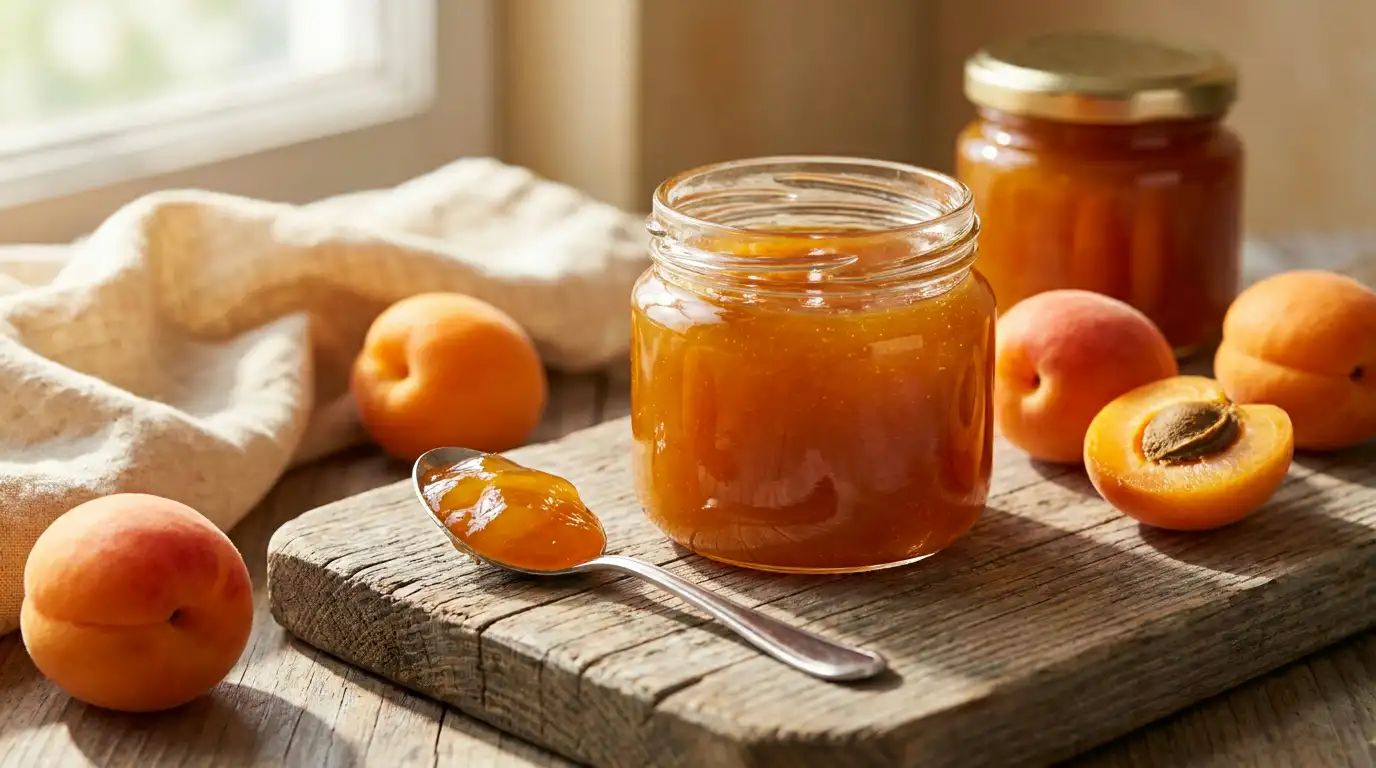
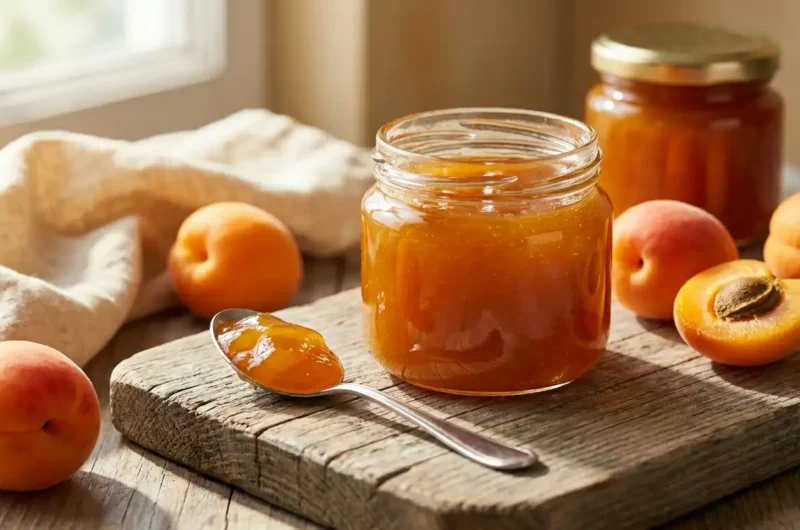
This apricot jam is a vivid, amber-gold preserve with a soft set, a clean fruity sharpness, and a warmth that deepens as it cools. It spreads smoothly from the jar, with just enough body to hold its shape on a slice of toast without running at the edges.
What makes this version reliable is the use of fresh apricots at peak ripeness combined with a careful, measured approach to the sugar ratio, giving a consistent set every time without the need for specialist equipment. It works beautifully on scones, swirled into yoghurt, or used as a glaze for pastries and tarts. From start to finish, the whole batch is ready in around 1 hour 15 minutes.
Ingredients
For the jam
- 900g fresh apricots, stoned and roughly chopped
- 150ml water
- 700g granulated sugar or preserving sugar
- 2 tablespoons lemon juice, freshly squeezed
- 6 apricot kernels, optional (cracked from the stones for an almond note)
How to Make Mary Berry Apricot Jam Recipe
- Prepare the jars: Wash three or four 300ml glass jars and their lids in hot soapy water, rinse well, and place upright on a baking tray in the oven at 140°C (Fan 120°C) for 15 minutes to sterilise. Keep warm until the jam is ready.
- Soften the apricots: Place the chopped apricots and water into a large, heavy-based saucepan or preserving pan. Bring to a gentle simmer over a medium heat, stirring occasionally, and cook for 10 to 15 minutes until the fruit has softened and broken down. This early cooking stage draws out the natural pectin from the fruit, which helps the jam to set without added pectin.
- Add the sugar and lemon juice: Remove the pan from the heat and stir in the granulated sugar and lemon juice until the sugar has completely dissolved before returning to the heat. Stir slowly at this point, as adding the sugar off the heat prevents it from catching and caramelising at the bottom of the pan.
- Bring to a rolling boil: Return the pan to a high heat and bring the mixture to a full, rolling boil, one that cannot be stirred down. Add the cracked apricot kernels now if using. Boil hard for 10 to 15 minutes without stirring, keeping a close eye on the colour and movement of the jam.
- Test for a set: Place a small plate in the freezer before you begin boiling. After 10 minutes, spoon a little jam onto the cold plate, leave for 60 seconds, then push it gently with a fingertip. If the surface wrinkles and holds its shape, the jam has reached setting point. If it runs, continue boiling for another 2 to 3 minutes and test again.
- Skim and rest: Once setting point is reached, remove the pan from the heat and skim away any foam from the surface with a large spoon. Leave the jam to rest for 8 to 10 minutes before potting, as this brief settling period prevents the fruit pieces from floating to the top of the jars.
- Pot the jam: Carefully ladle the hot jam into the warm sterilised jars using a jam funnel if available. Fill each jar to within 5mm of the rim, seal immediately with the lids, and leave to cool completely on a wire rack or folded tea towel.
Tips for the Best Mary Berry Apricot Jam Recipe
Why has my apricot jam not set after cooling?
The jam likely did not reach a high enough temperature during the boil, or the test was done too early. Return the open jars to a saucepan, bring the jam back to a full boil for 5 minutes, retest on a cold plate, and re-pot into fresh sterilised jars.
Why is my jam cloudy or full of foam?
A vigorous rolling boil naturally creates foam on the surface. Skim it away thoroughly after removing the pan from the heat, and allow the jam to rest for 8 to 10 minutes before potting. Rushing this step results in a cloudy, bubbly set.
Why does my jam taste overly sharp or sour?
Apricots vary considerably in natural sweetness depending on their ripeness. If the finished jam tastes sharper than expected, it likely came from underripe fruit. Always use apricots that are fully ripe, golden-orange in colour, and slightly soft to the touch for a rounder, more balanced flavour.
Why has the jam set too firm and become rubbery?
Over-boiling past setting point causes the pectin to over-concentrate, resulting in a stiff, rubbery texture. Use the cold plate test at the earliest recommended time rather than boiling for longer to be safe. A soft-set jam that just wrinkles slightly is the ideal result for apricot preserves.
Why are the fruit pieces sinking to the bottom of the jar?
Potting the jam while it is still at full boiling temperature causes lighter pieces to sink before the set firms around them. Always rest the jam for 8 to 10 minutes after removing from the heat, stirring gently once or twice, before ladling into jars.
Serving Suggestions
- Spread thickly over warm, freshly baked scones with clotted cream for a classic afternoon tea combination.
- Brush generously over a baked tart or frangipane as a glossy, amber glaze once the pastry has cooled slightly.
- Stir a spoonful through plain Greek yoghurt for a sharp, fruity breakfast with a clean, natural sweetness.
- Use as a filling between two layers of a Victoria sponge in place of raspberry jam for a lighter, less sweet alternative.
- Serve alongside a firm, mature Cheddar on a cheese board for a sharp and fruity contrast that works particularly well at the end of a meal.
Storage
Room Temperature
Store sealed, unopened jars in a cool, dark cupboard for up to 12 months.
Refrigerator
Once opened, keep the jar in the refrigerator and use within 4 to 6 weeks. Always use a clean, dry spoon to avoid introducing moisture or contamination that could cause the jam to spoil early.
Freezing
Apricot jam can be frozen in freezer-safe containers or small bags for up to 12 months, leaving a 2cm gap at the top of the container to allow for expansion. Defrost overnight in the refrigerator and use within 2 weeks of thawing.
Nutrition
- Calories: 48 kcal
- Carbohydrates: 12g
- Protein: 0.2g
- Fat: 0.1g
- Saturated Fat: 0g
- Sodium: 1mg
Nutrition values are estimates per tablespoon serving and may vary depending on the specific ingredients used and the final yield of your batch.
FAQs
Can I use tinned apricots instead of fresh apricots in this recipe?
Tinned apricots can be used as a substitute, but drain them well and reduce the added water to 50ml, as tinned fruit already carries a significant amount of liquid. The flavour will be milder and the colour slightly paler than a jam made with fresh fruit.
Can I make this apricot jam without added pectin?
Yes, apricots contain a reasonable level of natural pectin, particularly in the skins, so this recipe does not require commercial pectin. The lemon juice helps activate the natural pectin already present in the fruit and gives the jam a clean, bright flavour.
Can I reduce the sugar in this apricot jam recipe?
Reducing the sugar significantly will affect both the set and the shelf life of the finished jam. If a lower-sugar preserve is preferred, use jam sugar with added pectin and reduce cooking sugar by no more than 20 percent, but be aware the jam will need to be stored in the refrigerator and used within 4 weeks.
What size batch does this recipe make?
This recipe makes approximately three to four 300ml jars, which is a practical amount for home preserving. The batch can be doubled if you have a large enough pan, though take care not to fill the pan more than halfway as the jam bubbles up considerably at a rolling boil.
Can I add vanilla or other flavours to this apricot jam?
A split vanilla pod added during the initial fruit softening stage gives a subtle, rounded depth to the finished jam without overpowering the apricot flavour. Remove it before potting. A small pinch of ground cardamom added with the sugar is another option that complements the natural stone-fruit character of the apricots.
Conclusion
This Mary Berry apricot jam recipe delivers a bright, well-balanced preserve with a soft, consistent set that holds up beautifully whether spread on toast, used as a glaze, or spooned through yoghurt. The process is straightforward, requires no specialist equipment, and produces three to four 300ml jars per batch, making it a worthwhile addition to any home preserving routine.
The key to a successful result lies in using ripe, golden apricots, dissolving the sugar fully before boiling, and trusting the cold plate test rather than guessing. Once made, these jars keep well and make a considered, homemade gift. If you tried this recipe, leave a comment below to share how it turned out, or pass it on to a friend who enjoys home baking and preserving. If you enjoyed this, you might also like the Mary Berry Ginger Tray Bake Recipe for another reliable classic from Mary Berry’s repertoire.
Mary Berry Apricot Jam Recipe
Course: PreservesCuisine: BritishDifficulty: Easy48
servings15
minutes1
hour48
kcal1
hour15
minutesA vivid amber-gold preserve with a soft set, clean fruity sharpness, and warm depth. Made with fresh apricots and no added pectin, this beginner-friendly jam spreads smoothly and sets consistently every time.
Ingredients
900g fresh apricots, stoned and roughly chopped
150ml water
700g granulated sugar or preserving sugar
2 tablespoons lemon juice, freshly squeezed
6 apricot kernels, optional, cracked from the stones for an almond note
Instructions
- Wash three or four 300ml glass jars and their lids in hot soapy water, rinse well, and place upright on a baking tray in the oven at 140C Fan 120C for 15 minutes to sterilise. Keep warm until the jam is ready.
- Place the chopped apricots and water into a large heavy-based saucepan or preserving pan. Bring to a gentle simmer over a medium heat, stirring occasionally, and cook for 10 to 15 minutes until the fruit has softened and broken down.
- Remove the pan from the heat and stir in the granulated sugar and lemon juice until the sugar has completely dissolved before returning to the heat.
- Return the pan to a high heat and bring the mixture to a full rolling boil. Add the cracked apricot kernels now if using. Boil hard for 10 to 15 minutes without stirring.
- Place a small plate in the freezer before boiling begins. After 10 minutes spoon a little jam onto the cold plate, leave for 60 seconds, then push gently with a fingertip. If the surface wrinkles and holds its shape the jam has reached setting point. If it runs continue boiling for another 2 to 3 minutes and test again.
- Once setting point is reached remove the pan from the heat and skim away any foam from the surface with a large spoon. Leave the jam to rest for 8 to 10 minutes before potting.
- Carefully ladle the hot jam into the warm sterilised jars using a jam funnel if available. Fill each jar to within 5mm of the rim, seal immediately with the lids, and leave to cool completely on a wire rack or folded tea towel.
Notes
- Use fully ripe, golden-orange apricots for the best flavour and a rounder, balanced sweetness.
- Always dissolve the sugar fully off the heat before returning the pan to boil to prevent catching.
- Do not stir the jam during the rolling boil stage.
- Rest the jam for 8 to 10 minutes before potting to prevent fruit pieces floating to the top of the jars.
- Use a cold plate from the freezer to test for setting point rather than guessing by time alone.
- Skim foam thoroughly after removing from the heat for a clearer finished jam.
- Keep warm sterilised jars ready so the jam can be potted immediately once setting point is reached.