
Mary Berry Easy Fruit Cake Recipe
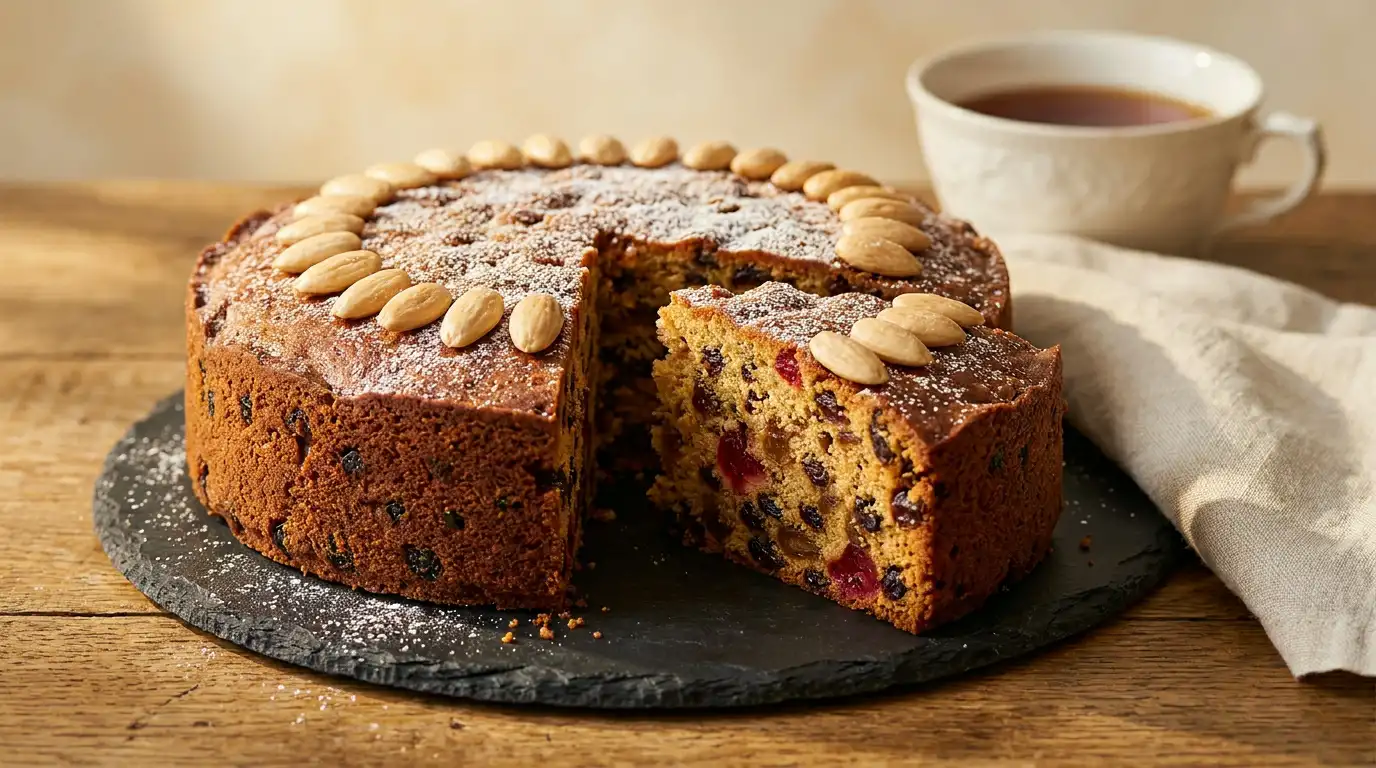
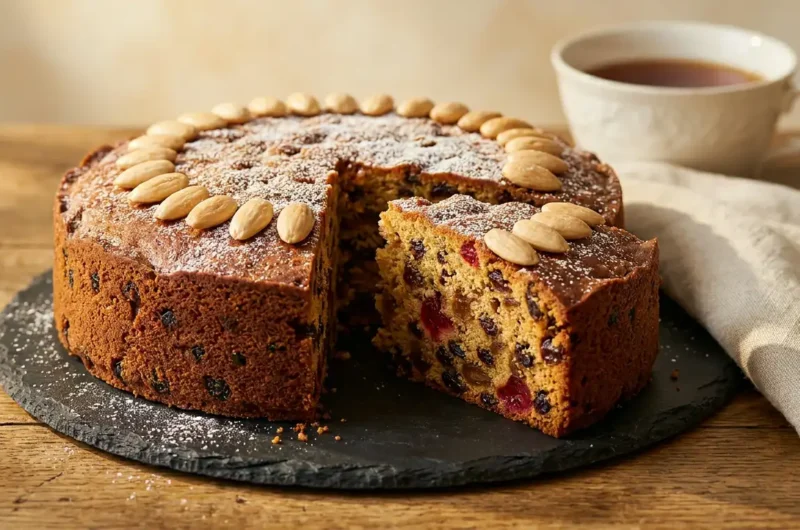
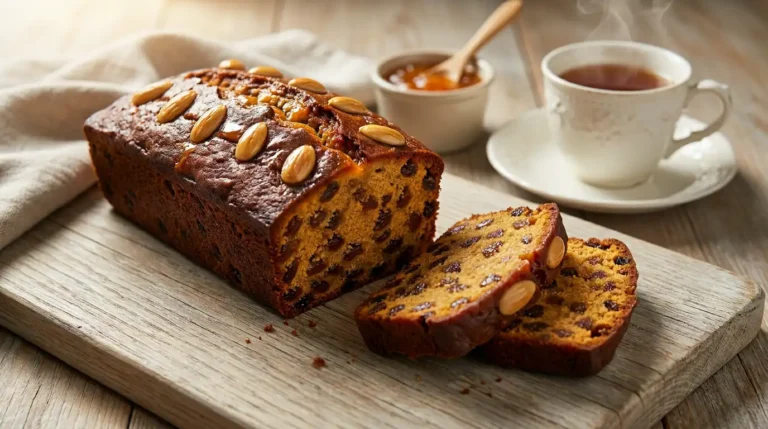
This Mary Berry easy fruit cake recipe produces a dense, moist loaf with a deep amber crumb packed with plump dried fruit and the warm, spiced scent of mixed spice and cinnamon. The outside bakes to a firm, mahogany crust while the inside stays tender and slightly sticky, with pockets of softened sultanas and currants throughout. This version keeps the method straightforward and the ingredient list compact, making it reliable for bakers who want a classic result without fuss. It suits everything from a Sunday afternoon tea to a casual festive table. From start to finish, it is ready in around 2 hours.
What makes this fruit cake stand out is the balance between the fruit-to-batter ratio. There is enough cake batter to hold the fruit in place without turning dry, and enough fruit to keep every slice moist for days. It does not require overnight soaking or weeks of feeding, which makes it a practical bake for any time of year.
Ingredients
For the cake
- 175g unsalted butter, softened
- 175g dark soft brown sugar
- 3 large eggs, beaten
- 200g self-raising flour
- 1 tsp mixed spice
- ½ tsp ground cinnamon
- 2 tbsp whole milk
- 1 tbsp black treacle
For the dried fruit mix
- 150g sultanas
- 125g currants
- 100g raisins
- 75g glacé cherries, halved and rinsed
- 50g dried mixed peel
To finish
- A small handful of whole blanched almonds (optional, for topping)
How to Make Mary Berry Easy Fruit Cake Recipe
- Prepare the tin and oven: Heat the oven to 150°C (130°C fan, Gas Mark 2). Grease and double-line a 20cm round deep cake tin with baking paper, ensuring the paper sits about 2cm above the rim of the tin to protect the top of the cake from over-colouring during the long bake.
- Cream the butter and sugar: Beat the softened butter and dark brown sugar together in a large mixing bowl until the mixture is pale, fluffy, and noticeably lighter in colour. This takes around 4 to 5 minutes with a hand whisk. Proper creaming here creates the lift and tender crumb the finished cake needs.
- Add the eggs gradually: Pour in the beaten eggs a little at a time, beating well between each addition. If the mixture begins to curdle, add a tablespoon of the measured flour and continue adding the egg. A split batter can affect the final texture of the crumb.
- Stir in the treacle and spices: Add the black treacle, mixed spice, and ground cinnamon to the batter. Stir until evenly combined. The treacle deepens the colour and adds a subtle bittersweet note that balances the sweetness of the dried fruit.
- Fold in the flour: Sift the self-raising flour over the butter mixture and fold in gently using a large metal spoon or spatula. Work in a figure-of-eight motion and stop as soon as no streaks of flour remain. Avoid over-mixing, which can make the finished cake tough.
- Add the fruit and milk: Tip in all the dried fruit, the glacé cherries, and the mixed peel. Fold through until the fruit is evenly distributed throughout the batter. Add the milk and stir once more to loosen the mixture to a soft, dropping consistency.
- Transfer to the tin: Spoon the batter into the prepared tin and level the top with the back of a wet spoon. If using almonds, arrange them in a ring or scatter loosely over the surface. The wet spoon helps achieve a smooth, even top without drag marks.
- Bake low and slow: Place the tin on the middle shelf and bake for 1 hour 30 minutes to 1 hour 45 minutes. Check at the 1 hour 20 minute mark. The cake is ready when a skewer inserted into the centre comes out clean and the top is deep golden brown. If the top colours too quickly before then, lay a sheet of baking paper loosely over the tin.
- Cool in the tin: Leave the cake to cool completely in the tin before turning out. Removing it too soon can cause the fruit-heavy cake to crack or break across the middle.
Tips for the Best Mary Berry Easy Fruit Cake
Why is my fruit sinking to the bottom of the cake?
This usually happens when the batter is too thin. Make sure the butter and sugar are properly creamed so the batter is thick enough to suspend the fruit. Rinsing and thoroughly drying glacé cherries before adding them also helps, as excess syrup makes them heavy and slippery.
Why does my fruit cake come out dry after baking?
Over-baking is the most common cause. Fruit cakes bake at a low temperature for a long time, and even 10 extra minutes at the wrong temperature can dry the crumb. Always check with a skewer from the 1 hour 20 minute mark and remove the cake as soon as it tests clean.
How do I stop the top of the cake from cracking?
A deep split across the top often means the oven temperature is slightly too high. Double-check with an oven thermometer, as many home ovens run 10 to 20 degrees hotter than the dial suggests. Baking at a true 150°C gives the cake time to rise slowly and evenly without splitting.
Why does my fruit cake have a dense, gummy texture rather than a tender crumb?
This usually points to under-creaming the butter and sugar, which leaves insufficient air in the batter. Cream until the mixture is visibly paler and fluffy before adding anything else. A cold butter straight from the fridge will not cream properly, so allow it to soften fully at room temperature first.
Why is the outside cooked but the centre still wet?
Deep cake tins with a large fruit load take longer to bake through than standard sandwich cakes. If the outside is browning but the skewer still comes out wet, cover the top loosely with baking paper and return to the oven in 10-minute increments until the skewer is clean.
Serving Suggestions
- Slice and serve at room temperature with a pot of strong Assam or English Breakfast tea for an afternoon spread.
- Warm individual slices gently and serve alongside a small wedge of mature cheddar for a traditional pairing.
- Spread a thin layer of unsalted butter over each slice to enrich the flavour and add a slight creamy contrast to the dense crumb.
- Arrange sliced pieces on a tiered cake stand alongside scones and sandwiches for a more formal tea setting.
- Dust lightly with icing sugar and place on a board with a small knife for a casual dessert centrepiece at informal gatherings.
Storage
Room temperature
Wrap the cooled cake tightly in baking paper and then in foil, and store in an airtight tin at room temperature for up to 2 weeks.
Refrigerator
If the kitchen is warm or humid, the cake can be stored in an airtight container in the refrigerator for up to 3 weeks. Bring it to room temperature for at least 30 minutes before slicing, as cold storage firms the crumb and the butter within it, and the texture is better once it has relaxed slightly.
Freezing
Wrap the whole cake or individual slices tightly in a double layer of cling film followed by a layer of foil, and freeze for up to 3 months. Defrost overnight at room temperature, still wrapped, to prevent any condensation from settling on the surface.
Nutrition
- Calories: 340 kcal
- Carbohydrates: 52g
- Protein: 4g
- Fat: 13g
- Saturated Fat: 8g
- Sodium: 95mg
Nutrition values are estimates based on the ingredients listed and may vary depending on the specific brands used and the size of each serving.
FAQs
Can I use plain flour instead of self-raising flour in this fruit cake?
Yes. Replace the self-raising flour with 200g of plain flour and add 1½ teaspoons of baking powder. Sift them together before folding into the batter to distribute the raising agent evenly.
Can I make this fruit cake ahead of time?
This cake actually improves with time. Baking it 2 to 3 days before you need it allows the flavours to develop and the crumb to settle into a slightly denser, more cohesive texture. Keep it wrapped in foil in an airtight tin.
Can I use a different tin size for this recipe?
A 20cm round tin is the most reliable choice for this quantity of batter. A 900g (2lb) loaf tin also works well, though reduce the baking time slightly and begin checking at the 1 hour 10 minute mark. Avoid tins smaller than these as the batter may overflow.
Can I add alcohol to this fruit cake for a richer flavour?
Soaking the dried fruit in 3 to 4 tablespoons of brandy, dark rum, or sherry for a few hours before baking will add depth. You can also prick the baked, cooled cake all over with a skewer and spoon a tablespoon of brandy over the surface before wrapping and storing.
Can I swap out any of the dried fruits if I do not have them all?
The recipe is flexible with the fruit mix. Dried cranberries, chopped dried apricots, or dried blueberries all work well as replacements for any of the fruits listed. Keep the total dried fruit weight at around 500g to maintain the right fruit-to-batter balance.
Conclusion
This Mary Berry easy fruit cake recipe delivers a properly moist, well-spiced cake with a rich, deep crumb that holds together cleanly when sliced. The method is simple enough for a first-time baker but reliable enough that experienced bakers can return to it again and again. This recipe makes approximately 12 generous slices from a 20cm round tin, making it well suited to sharing at gatherings, gifting, or simply keeping on the kitchen counter for the week ahead.
Give it a go and share your results in the comments below. If the crumb came out exactly right, or if you made a swap that worked particularly well, those notes are always useful for other readers. If you enjoyed baking this, you might also like the Mary Berry rock cake recipe, another simple, fruit-studded bake that comes together quickly and suits the same kind of informal tea-time spread.
Mary Berry Easy Fruit Cake Recipe
Course: DessertCuisine: BritishDifficulty: Easy12
servings20
minutes1
hour45
minutes340
kcal2
hours5
minutesA dense, moist fruit cake packed with sultanas, currants, raisins, and glacé cherries, warmly spiced with mixed spice and cinnamon. This classic British bake has a deep amber crumb, firm mahogany crust, and stays tender for days after baking.
Ingredients
175g unsalted butter, softened
175g dark soft brown sugar
3 large eggs, beaten
200g self-raising flour
1 tsp mixed spice
½ tsp ground cinnamon
2 tbsp whole milk
1 tbsp black treacle
150g sultanas
125g currants
100g raisins
75g glacé cherries, halved and rinsed
50g dried mixed peel
a small handful of whole blanched almonds, optional for topping
Instructions
- Heat the oven to 150°C (130°C fan, Gas Mark 2). Grease and double-line a 20cm round deep cake tin with baking paper, ensuring the paper sits about 2cm above the rim of the tin.
- Beat the softened butter and dark brown sugar together in a large mixing bowl until pale, fluffy, and noticeably lighter in colour, around 4 to 5 minutes with a hand whisk.
- Pour in the beaten eggs a little at a time, beating well between each addition. If the mixture begins to curdle, add a tablespoon of the measured flour and continue adding the egg.
- Add the black treacle, mixed spice, and ground cinnamon to the batter and stir until evenly combined.
- Sift the self-raising flour over the butter mixture and fold in gently using a large metal spoon or spatula, working in a figure-of-eight motion until no streaks of flour remain.
- Tip in all the dried fruit, glacé cherries, and mixed peel and fold through until evenly distributed. Add the milk and stir once more to loosen the mixture to a soft, dropping consistency.
- Spoon the batter into the prepared tin and level the top with the back of a wet spoon. If using almonds, arrange them over the surface.
- Place the tin on the middle shelf and bake for 1 hour 30 minutes to 1 hour 45 minutes. Check at the 1 hour 20 minute mark. The cake is ready when a skewer inserted into the centre comes out clean.
- Leave the cake to cool completely in the tin before turning out.
Notes
- Rinse and thoroughly dry glacé cherries before adding to prevent them from sinking to the bottom.
- Allow butter to soften fully at room temperature before creaming for the best texture.
- Use an oven thermometer to verify temperature, as many home ovens run 10 to 20 degrees hotter than the dial suggests.
- If the top colours too quickly during baking, lay a sheet of baking paper loosely over the tin.
- The cake improves in flavour when baked 2 to 3 days ahead and stored wrapped in foil in an airtight tin.
- For a richer flavour, soak the dried fruit in 3 to 4 tablespoons of brandy or dark rum before baking.
The fruit really looks yummy. I will definitely make it. Thank you for sharing your recipe.
I’m so glad it caught your eye! The fruit adds such a lovely sweetness and texture to the cake. I hope you enjoy making it and that it turns out beautifully for you 😊