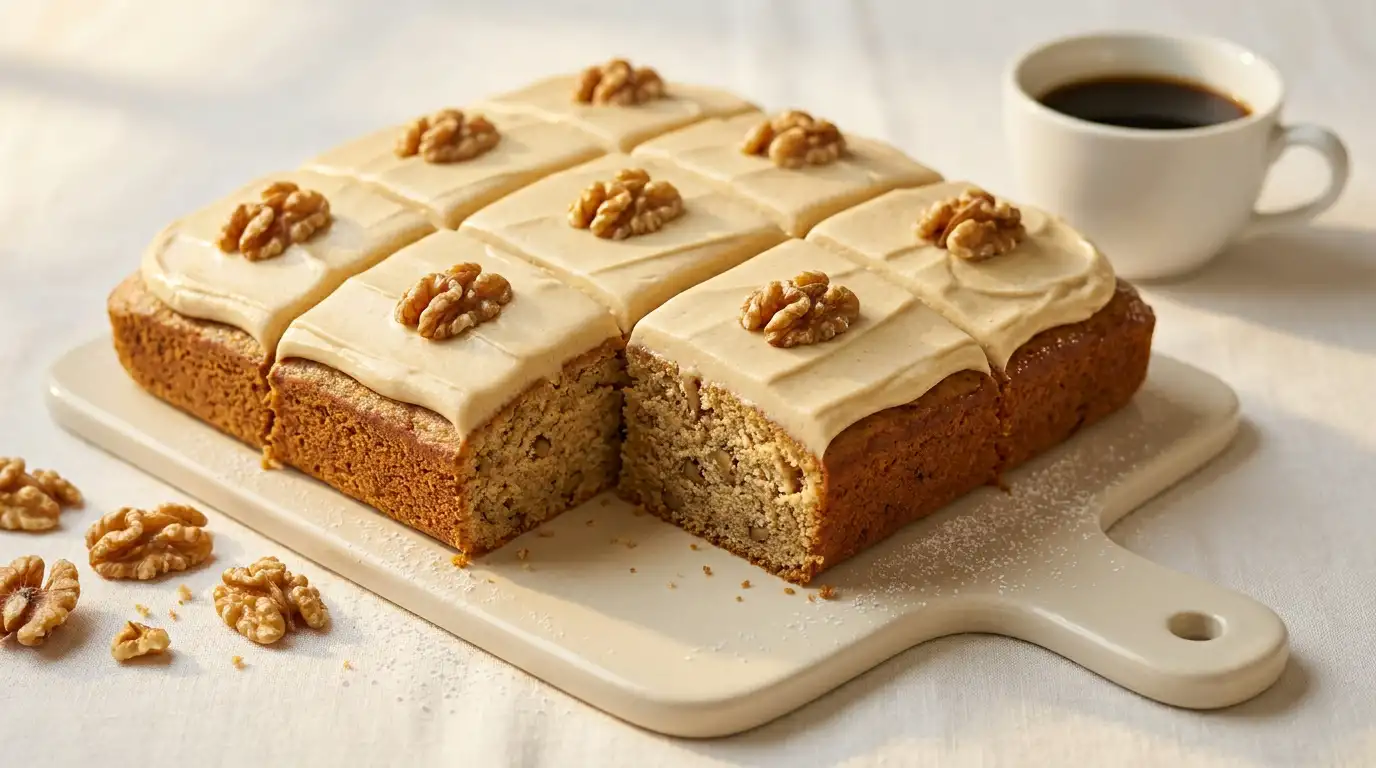
Mary Berry Coffee And Walnut Traybake Recipe
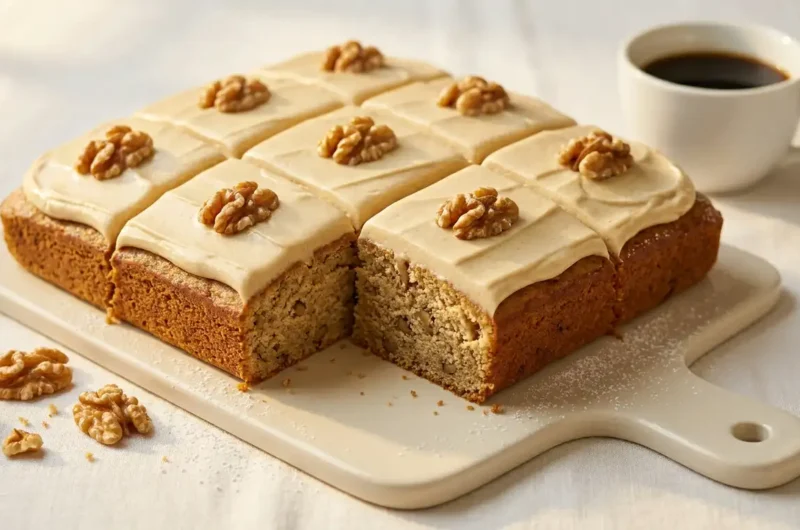
This coffee and walnut traybake is a soft, close-crumbed sponge with a warm, roasted depth from real espresso and a satisfying crunch from roughly chopped walnuts baked right through the batter. The top is finished with a smooth, coffee-scented buttercream that sets to a pale beige layer, firm at the edges and silky in the centre.
What makes this traybake particularly reliable is the all-in-one mixing method, which means everything goes into the bowl at once and there is very little room for error. It bakes flat and even, which makes it ideal for cutting into neat squares for a bake sale, a school lunch box, or an afternoon tea spread. From start to finish, it is ready in around 1 hour.
Ingredients
For the sponge
- 225g self-raising flour
- 225g caster sugar
- 225g unsalted butter, softened
- 4 large eggs, at room temperature
- 2 tsp baking powder
- 2 tbsp instant coffee granules dissolved in 2 tbsp boiling water, cooled
- 100g walnuts, roughly chopped
For the coffee buttercream
- 175g unsalted butter, softened
- 350g icing sugar, sifted
- 1.5 tbsp instant coffee granules dissolved in 1.5 tbsp boiling water, cooled
- 1–2 tbsp whole milk, if needed to loosen
To finish
- 8–10 walnut halves, for decoration
How to Make Mary Berry Coffee And Walnut Traybake
- Prepare the tin and oven: Heat the oven to 180°C (160°C fan, gas mark 4). Grease a 30 x 23cm traybake tin and line the base and sides with baking parchment, leaving a slight overhang on each side to help with lifting out later.
- Mix the dissolved coffee: Stir the instant coffee granules into the boiling water until fully dissolved, then set aside to cool completely before adding to the batter, as hot liquid will partially cook the eggs if added straight away.
- Combine the sponge ingredients: Tip the flour, caster sugar, softened butter, eggs, baking powder, and cooled coffee liquid into a large mixing bowl. Beat with an electric hand mixer on medium speed for 2 minutes until the batter is smooth, pale, and slightly increased in volume. Do not overbeat once it is combined.
- Fold in the walnuts: Add the roughly chopped walnuts to the batter and fold through gently with a spatula using slow, sweeping strokes, keeping the pieces distributed without breaking them down further.
- Fill and level the tin: Pour the batter into the prepared tin and spread it into an even layer using the back of a spoon or a small offset spatula, making sure the corners are properly filled as these tend to set faster.
- Bake the sponge: Place the tin on the middle shelf of the oven and bake for 30 to 35 minutes. The sponge is ready when it is golden brown on top, pulling slightly away from the tin edges, and a skewer inserted into the centre comes out clean with no wet batter clinging to it.
- Cool completely: Leave the traybake in the tin for 10 minutes before lifting it out using the parchment overhang. Transfer to a wire rack and leave to cool fully before adding the buttercream, as residual heat will cause the icing to melt and slide.
- Make the coffee buttercream: Beat the softened butter in a bowl with an electric mixer for 2 minutes until noticeably pale and fluffy. Add the sifted icing sugar in two additions, beating on low first to avoid clouds of sugar, then increasing speed. Pour in the cooled coffee liquid and beat for a further minute. Add a splash of milk only if the buttercream feels stiff rather than spreadable.
- Ice and decorate: Spread the buttercream evenly over the cooled sponge using a palette knife, working from the centre outward in smooth, steady strokes. Press a walnut half onto each marked portion before the buttercream firms, then allow to set for 15 minutes before slicing into squares.
Tips for the Best Coffee and Walnut Traybake
Why is my traybake dense and heavy rather than light?
This usually happens when the butter was too cold at mixing. Softened butter, which should leave a slight indent when pressed, incorporates air properly during beating. Cold butter creates a lumpy batter that bakes into a dense sponge.
Why has my buttercream turned out greasy and separated?
Greasy buttercream is almost always caused by butter that was too warm or melted. The butter should be soft and cool to the touch, not shiny or oily. If it has split, chill the bowl in the fridge for 10 minutes and beat again on low speed.
Why did my traybake dome in the middle and crack on top?
A domed top usually means the oven was too hot, causing the outer edges to set before the centre had a chance to rise evenly. Check the oven temperature with a thermometer, as many domestic ovens run 10 to 15 degrees hotter than the dial suggests.
Why are the walnuts all sinking to the bottom of my traybake?
Sinking nuts often means the batter was too thin, usually from over-measuring the liquid coffee. Make sure the dissolved coffee is measured correctly and the batter is thick enough to hold the nuts in suspension. Tossing the walnut pieces lightly in a spoonful of the measured flour before folding in also helps.
How do I get a smooth, professional-looking buttercream finish?
Dip the palette knife in warm water, wipe dry, and then drag it across the buttercream surface. The gentle warmth softens the icing just enough to smooth out any ridges or drag marks, giving a clean, level finish without disturbing the layer beneath.
Serving Suggestions
- Serve cut into 16 equal squares for a bake sale or afternoon tea table.
- Pair each slice with a strong cup of freshly brewed filter coffee or an Americano, which echoes the baked coffee notes in the sponge.
- Dust a little extra icing sugar over the buttercream before serving for a slightly more formal presentation at a celebration.
- Plate a square alongside a small scoop of vanilla ice cream for a warm-weather dessert, the cold cream cutting through the richness of the buttercream.
- Add a drizzle of melted dark chocolate over the set buttercream for a mocha variation that works well at Christmas or for a dinner party.
Storage
Room temperature
Store the iced traybake in an airtight container at room temperature for up to 3 days.
Refrigerator
Place in an airtight container and refrigerate for up to 5 days. Remove from the fridge at least 30 minutes before serving, as the buttercream firms considerably when cold and the sponge will taste denser straight from the fridge.
Freezing
The sponge freezes well without the buttercream. Wrap the cooled, un-iced traybake tightly in cling film and then in a layer of foil, and freeze for up to 2 months. Defrost at room temperature for 3 to 4 hours, then add the freshly made buttercream once fully thawed.
Nutrition
- Calories: 385 kcal
- Carbohydrates: 44g
- Protein: 4g
- Fat: 21g
- Saturated Fat: 11g
- Sodium: 145mg
Nutrition values are estimates based on standard ingredient weights and may vary depending on the specific brands used and the exact serving size cut.
FAQs
Can I use espresso instead of instant coffee granules in this traybake?
Yes, a shot of cooled espresso (approximately 30ml) works well in place of the dissolved instant coffee. Reduce or eliminate any added water in the recipe accordingly, so the total liquid quantity stays the same and the batter does not become too loose.
Can I make this coffee and walnut traybake without nuts for an allergy-friendly version?
Simply leave the walnuts out of the batter and the decoration. The sponge bakes and tastes just as good without them, and the coffee flavour comes entirely from the dissolved coffee liquid rather than the nuts.
What size tin works best for this traybake recipe?
A 30 x 23cm rectangular traybake tin gives the best depth and bake time for this quantity of batter. A slightly smaller tin such as 28 x 20cm will work, but the sponge will be deeper and may need an extra 5 minutes in the oven.
Can I make this traybake ahead of time for a party or event?
The sponge can be baked up to two days ahead and stored, tightly wrapped, at room temperature. Make and apply the buttercream on the day of serving for the freshest finish and to prevent the icing from drying out.
Can I substitute the unsalted butter with a baking spread in this recipe?
A soft baking spread such as Stork can replace the butter in the sponge, and the all-in-one method works particularly well with it as the spread is already the right consistency. For the buttercream, however, real unsalted butter gives a far better flavour and a firmer set, so it is worth keeping butter there.
Conclusion
This Mary Berry coffee and walnut traybake delivers a reliable, consistently good result whether it is being made for a midweek treat or a weekend gathering. The all-in-one sponge is tender and well-risen, the walnuts add bite and earthiness, and the coffee buttercream finishes the whole thing with a smooth, mellow sweetness. This recipe yields approximately 16 squares when cut from a standard 30 x 23cm tin.
If the coffee and walnut combination is a favourite, this traybake is one to keep coming back to. Leave a comment below if a variation has been tried, share the recipe with someone who loves a good coffee cake, and bookmark this page for the next time a crowd-pleasing bake is needed. If you enjoyed this, you might also like the Mary Berry Mars Bar Cake Recipe, another no-fuss traybake that goes down very well with all ages.
Mary Berry Coffee And Walnut Traybake Recipe
Course: DessertCuisine: BritishDifficulty: Easy16
servings25
minutes35
minutes385
kcal1
hourA soft, close-crumbed coffee sponge with roughly chopped walnuts baked through the batter, finished with a smooth coffee buttercream. Easy, beginner-friendly, and ready in around 1 hour.
Ingredients
225g self-raising flour
225g caster sugar
225g unsalted butter, softened
4 large eggs, at room temperature
2 tsp baking powder
2 tbsp instant coffee granules dissolved in 2 tbsp boiling water, cooled
100g walnuts, roughly chopped
175g unsalted butter, softened
350g icing sugar, sifted
1.5 tbsp instant coffee granules dissolved in 1.5 tbsp boiling water, cooled
1–2 tbsp whole milk, if needed to loosen
8–10 walnut halves, for decoration
Instructions
- Heat the oven to 180°C (160°C fan, gas mark 4). Grease a 30 x 23cm traybake tin and line the base and sides with baking parchment, leaving a slight overhang on each side.
- Stir the instant coffee granules into the boiling water until fully dissolved, then set aside to cool completely before adding to the batter.
- Tip the flour, caster sugar, softened butter, eggs, baking powder, and cooled coffee liquid into a large mixing bowl. Beat with an electric hand mixer on medium speed for 2 minutes until the batter is smooth and pale.
- Add the roughly chopped walnuts to the batter and fold through gently with a spatula using slow, sweeping strokes.
- Pour the batter into the prepared tin and spread into an even layer, making sure the corners are properly filled.
- Bake on the middle shelf for 30 to 35 minutes until golden brown, pulling slightly from the tin edges, and a skewer inserted into the centre comes out clean.
- Leave the traybake in the tin for 10 minutes before lifting out. Transfer to a wire rack and leave to cool fully before icing.
- Beat the softened butter for 2 minutes until pale and fluffy. Add the sifted icing sugar in two additions, then pour in the cooled coffee liquid and beat for a further minute. Add a splash of milk only if the buttercream feels stiff.
- Spread the buttercream evenly over the cooled sponge using a palette knife. Press a walnut half onto each marked portion before the buttercream firms, then allow to set for 15 minutes before slicing into squares.
Notes
- Make sure butter is properly softened before mixing to avoid a dense sponge.
- Allow the dissolved coffee to cool fully before adding to avoid partially cooking the eggs.
- Toss walnut pieces lightly in a spoonful of flour before folding in to prevent sinking.
- Check oven temperature with a thermometer as many domestic ovens run 10 to 15 degrees hotter than the dial shows.
- For the buttercream, dip a palette knife in warm water and wipe dry before smoothing for a clean finish.
- The sponge can be baked up to two days ahead and stored tightly wrapped at room temperature.