Mary Berry Pineapple Upside Down Cake Recipe
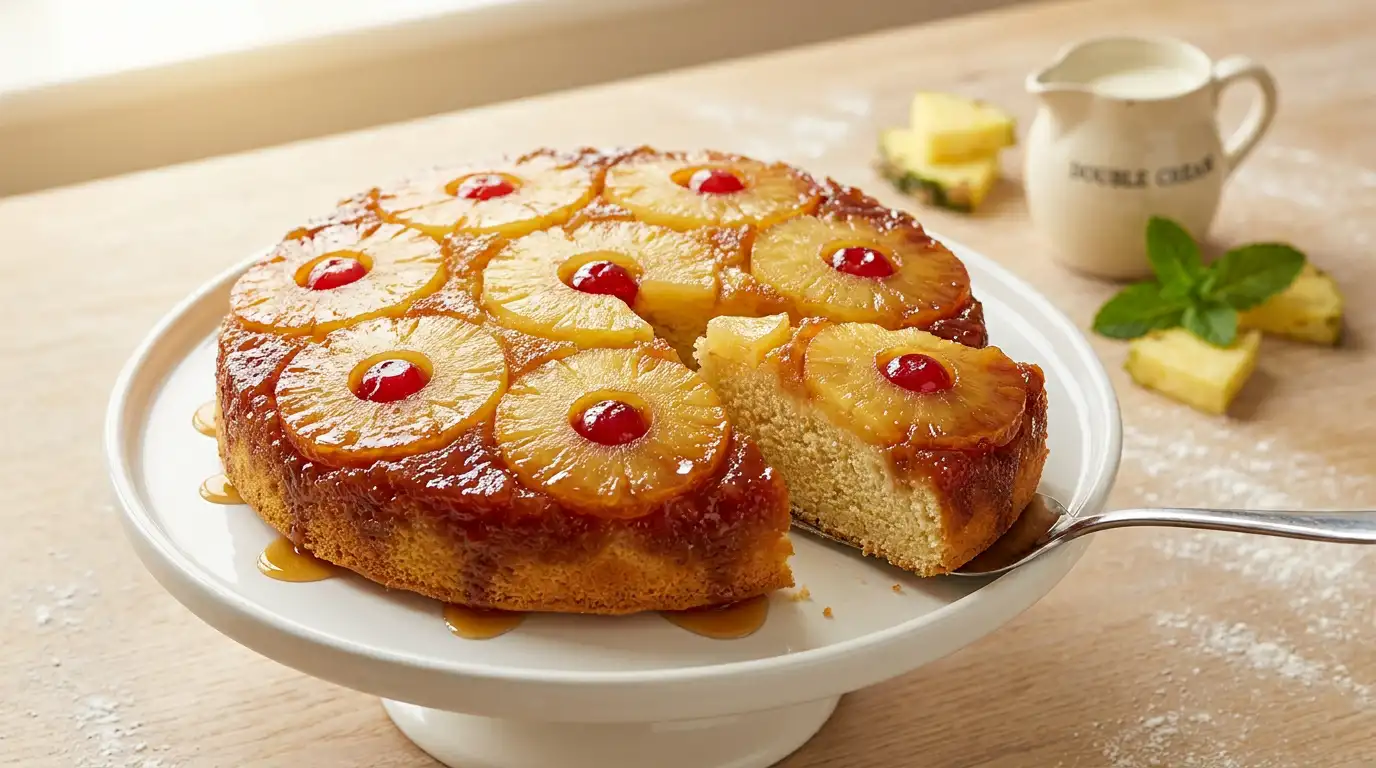
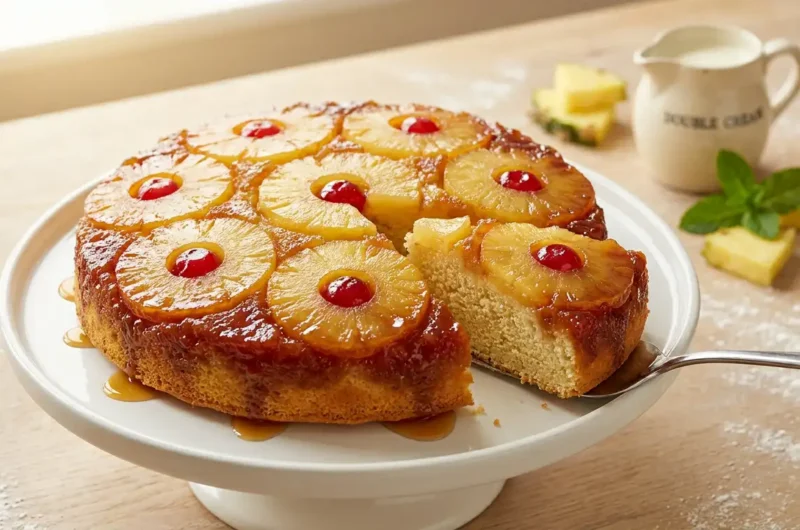
This pineapple upside down cake has a golden, caramelised topping of soft pineapple rings set in a glossy, amber-brown butter and sugar base, sitting over a tender, vanilla-scented sponge with a close, moist crumb. It turns out in one neat, dramatic round that needs no decoration beyond what the baking process has already done. The recipe uses straightforward pantry ingredients, comes together in one bowl for the sponge, and is reliable enough for a first-time baker while still being impressive enough for a weekend table. From start to finish, it is ready in around 1 hour.
What sets this version apart is the balance between the topping and the sponge. The caramel base is kept just thick enough to coat and gloss the fruit without becoming chewy or sticky once cooled. The sponge itself has enough structure to support the inverted weight without collapsing, yet stays soft to the fork.
Ingredients
For the caramel topping
- 50g unsalted butter, cut into small cubes
- 75g light soft brown sugar
- 1 x 425g tin pineapple rings in juice, drained (reserve 2 tbsp juice)
- 6 natural glace cherries, halved
For the sponge
- 150g unsalted butter, softened
- 150g caster sugar
- 2 large eggs, lightly beaten
- 150g self-raising flour, sifted
- 1 tsp baking powder
- 1 tsp vanilla extract
- 2 tbsp pineapple juice (reserved from the tin)
How to Make Mary Berry Pineapple Upside Down Cake
- Preheat and prepare the tin: Heat the oven to 180C (160C fan, gas mark 4). Grease a 20cm round, deep-sided cake tin thoroughly, including the sides, then line the base with a circle of non-stick baking paper.
- Make the caramel base: Scatter the cubed butter and brown sugar evenly over the base of the tin, then place the tin on the hob over a low heat for 2 to 3 minutes, swirling gently once or twice, until the butter has melted and combined with the sugar into a bubbling, darkened syrup. This brief heat-start gives the caramel a head start before the oven takes over, deepening the colour and flavour of the topping.
- Arrange the pineapple and cherries: Remove the tin from the heat. Lay the drained pineapple rings in a single layer over the caramel, fitting them snugly so there are no large gaps. Place a halved glace cherry, cut side up, in the centre of each ring and tuck the remaining halves into the spaces between the rings.
- Make the sponge batter: In a large mixing bowl, beat the softened butter and caster sugar together with a hand-held electric mixer for 3 to 4 minutes, until the mixture is pale in colour and noticeably lighter in texture. Add the beaten eggs a little at a time, beating well between each addition to keep the mixture smooth and prevent it from curdling.
- Add the dry ingredients and flavourings: Fold the sifted flour and baking powder into the butter mixture using a large metal spoon, cutting through the batter with a figure-of-eight motion. Once the flour is nearly incorporated, add the vanilla extract and reserved pineapple juice, then fold gently until just combined. Do not overmix at this stage, as overworking the flour develops gluten and produces a tighter, less tender crumb.
- Fill the tin and level the surface: Spoon the sponge batter carefully over the arranged pineapple and cherries, making sure to cover the fruit layer completely. Use the back of the spoon or a small offset palette knife to spread the batter to the edges of the tin and level it as evenly as possible.
- Bake the cake: Place the tin on the middle shelf of the oven and bake for 35 to 40 minutes. The cake is ready when it has risen to an even, golden surface, and a skewer inserted into the centre of the sponge comes out clean.
- Turn out and cool: Leave the cake to rest in the tin for exactly 5 minutes once out of the oven, not longer, as the caramel firms quickly and can cause the cake to stick. Run a palette knife around the inside edge of the tin, place a serving plate firmly on top, then invert in one confident motion. Lift the tin away and gently peel off the baking paper to reveal the caramelised pineapple topping beneath.
Tips for the Best Pineapple Upside Down Cake
Why did my pineapple upside down cake stick to the tin when I turned it out?
This almost always happens when the cake is left too long in the tin after baking. The caramel sets solid as it cools, bonding the fruit to the base. Turn the cake out within 5 minutes of removing it from the oven, and run a knife firmly around the edge first.
Why is the caramel topping pale instead of deep golden?
The caramel needs the initial hob step to start colouring before it goes into the oven. If you skip that step and pour a cold butter-sugar mix straight into a cold tin, the oven time alone is not enough to develop a rich, amber colour. Make sure the syrup has bubbled and deepened slightly on the hob before you add the fruit.
Why did my sponge sink slightly in the middle after baking?
A sunken centre is usually a sign that the cake was underbaked or that the oven door was opened too early. Resist opening the oven before the 30-minute mark. Test with a skewer before removing the cake, and if it comes out with wet batter attached, give it another 5 minutes.
How do I stop the caramel from becoming too hard and toffee-like once the cake cools?
Using light soft brown sugar rather than darker muscovado keeps the caramel pliable at room temperature. Avoid cooking the caramel base on the hob for longer than 3 minutes, as extended cooking pushes the sugar past the soft-set stage and into a firmer, harder set.
Why does my sponge feel dense and heavy rather than light and tender?
A dense sponge is usually caused by either undermixing the butter and sugar at the creaming stage or overmixing once the flour goes in. Cream the butter and sugar until the mixture is genuinely pale and airy, then fold the flour with a light hand and stop as soon as no dry streaks remain.
Serving Suggestions
- Serve warm, cut into generous wedges, with a steady pour of chilled double cream running over the top
- Pair with a scoop of good-quality vanilla ice cream for an after-dinner dessert, where the contrast between warm caramel and cold cream is at its best
- Offer at afternoon tea alongside a pot of strong Assam, where the sweetness of the caramel is balanced by the malt in the brew
- Add a dollop of creme fraiche on the side to cut through the richness of the caramel topping with a mild sharpness
- Dust lightly with icing sugar just before serving if the caramel topping needs a little more visual contrast, particularly when serving at room temperature
Storage
Room temperature
Store in an airtight container at room temperature for up to 2 days. Keep the cake in a cool spot away from direct sunlight, as the caramel topping can become sticky in warm conditions.
Refrigerator
The cake can be stored in the refrigerator, loosely covered with cling film or in a lidded container, for up to 4 days. Bring it back to room temperature for at least 30 minutes before serving, as the sponge firms noticeably when cold and the caramel loses its glossy, pliable texture straight from the fridge.
Freezing
Wrap individual slices or the whole cake tightly in a double layer of cling film, then in a layer of foil, and freeze for up to 2 months. Defrost overnight in the refrigerator, then allow to come fully to room temperature before serving, which preserves both the texture of the sponge and the set of the caramel topping.
Nutrition
- Calories: 390 kcal
- Carbohydrates: 48g
- Protein: 4g
- Fat: 21g
- Saturated Fat: 13g
- Sodium: 160mg
Nutrition values are estimates and may vary depending on the specific ingredients and brands used, as well as the exact serving size.
FAQs
Can I use fresh pineapple instead of tinned pineapple for this recipe?
Fresh pineapple can be used, but it contains an enzyme called bromelain that can break down the sponge slightly, giving the area around the fruit a softer, almost wet texture. Tinned pineapple has been heat-treated, which deactivates the enzyme, making it the more reliable choice for a neat, even bake.
Can I make this pineapple upside down cake ahead of time?
Yes, the cake can be baked the day before and stored at room temperature in an airtight container. The caramel topping actually settles and becomes slightly more defined overnight, which makes slicing a little neater. Warm individual slices briefly in the microwave for 20 seconds before serving if preferred.
What size tin works best for this pineapple upside down cake?
A 20cm round, deep-sided tin gives the best result for this quantity of batter. A shallower tin risks the sponge overflowing, while a wider tin produces a thinner, drier sponge. If using a loose-bottomed tin, place it on a baking tray during baking to catch any caramel that might seep through the edges.
Can I swap the glace cherries for something else?
Glace cherries are traditional and hold their colour and shape well under the heat of the oven. Maraschino cherries work in their place if preferred. Fresh cherries are not recommended, as they release too much moisture during baking, which can thin the caramel and make the topping look washed out.
Can I make this pineapple upside down cake gluten free?
Replace the self-raising flour with a good-quality gluten-free self-raising flour blend and add an extra half teaspoon of baking powder. The texture of the sponge will be slightly more tender and a little less springy, but the overall result is still worth making. Check that the baking powder used is also certified gluten free.
Conclusion
This Mary Berry pineapple upside down cake is a genuinely satisfying bake that delivers on both appearance and flavour. The caramelised pineapple topping is glossy, amber-coloured, and lightly sticky, while the vanilla sponge beneath is moist with a soft, close crumb. It holds together cleanly when sliced, making it as practical for an afternoon cake as it is for a relaxed dinner party dessert. This recipe yields 8 slices from a single 20cm round tin.
If you have been looking for a dependable recipe that uses store-cupboard ingredients and comes together without specialist equipment, this is a strong one to keep in regular rotation. Share this recipe with anyone who enjoys a classic British bake, and leave a comment below if you have tried it. For another classic to add to the repertoire, you might also like the Mary Berry tiramisu recipe, a simple, no-bake dessert that is equally reliable and impressive for entertaining.
Mary Berry Pineapple Upside Down Cake Recipe
Course: DessertCuisine: BritishDifficulty: Easy8
servings20
minutes40
minutes390
kcal1
hourA golden, caramelised pineapple upside down cake with a glossy amber topping and a tender, vanilla-scented sponge. Beginner-friendly, made in one bowl, and ready in around 1 hour.
Ingredients
50g unsalted butter, cut into small cubes
75g light soft brown sugar
1 x 425g tin pineapple rings in juice, drained (reserve 2 tbsp juice)
6 natural glace cherries, halved
150g unsalted butter, softened
150g caster sugar
2 large eggs, lightly beaten
150g self-raising flour, sifted
1 tsp baking powder
1 tsp vanilla extract
2 tbsp pineapple juice (reserved from the tin)
Instructions
- Heat the oven to 180C (160C fan, gas mark 4). Grease a 20cm round, deep-sided cake tin thoroughly, including the sides, then line the base with a circle of non-stick baking paper.
- Scatter the cubed butter and brown sugar evenly over the base of the tin, then place the tin on the hob over a low heat for 2 to 3 minutes, swirling gently once or twice, until the butter has melted and combined with the sugar into a bubbling, darkened syrup.
- Remove the tin from the heat. Lay the drained pineapple rings in a single layer over the caramel, fitting them snugly so there are no large gaps. Place a halved glace cherry, cut side up, in the centre of each ring and tuck the remaining halves into the spaces between the rings.
- In a large mixing bowl, beat the softened butter and caster sugar together with a hand-held electric mixer for 3 to 4 minutes, until the mixture is pale in colour and noticeably lighter in texture. Add the beaten eggs a little at a time, beating well between each addition.
- Fold the sifted flour and baking powder into the butter mixture using a large metal spoon. Once nearly incorporated, add the vanilla extract and reserved pineapple juice, then fold gently until just combined.
- Spoon the sponge batter carefully over the arranged pineapple and cherries, covering the fruit layer completely. Use the back of a spoon or a small offset palette knife to spread the batter to the edges and level it evenly.
- Place the tin on the middle shelf of the oven and bake for 35 to 40 minutes, until the surface is golden and a skewer inserted into the centre comes out clean.
- Leave the cake to rest in the tin for exactly 5 minutes. Run a palette knife around the inside edge, place a serving plate firmly on top, then invert in one confident motion. Lift the tin away and gently peel off the baking paper to reveal the caramelised topping.
Notes
- Turn the cake out within 5 minutes of baking or the caramel will set and the cake may stick.
- Do not skip the hob step for the caramel base, as oven heat alone will not develop a rich amber colour.
- Use light soft brown sugar rather than muscovado to keep the caramel pliable at room temperature.
- Cream butter and sugar until genuinely pale and airy before adding eggs.
- Fold flour with a light hand and stop as soon as no dry streaks remain to keep the sponge tender.
- If using a loose-bottomed tin, place it on a baking tray during baking to catch any caramel that seeps through.