Mary Berry Cauliflower Soup Recipe
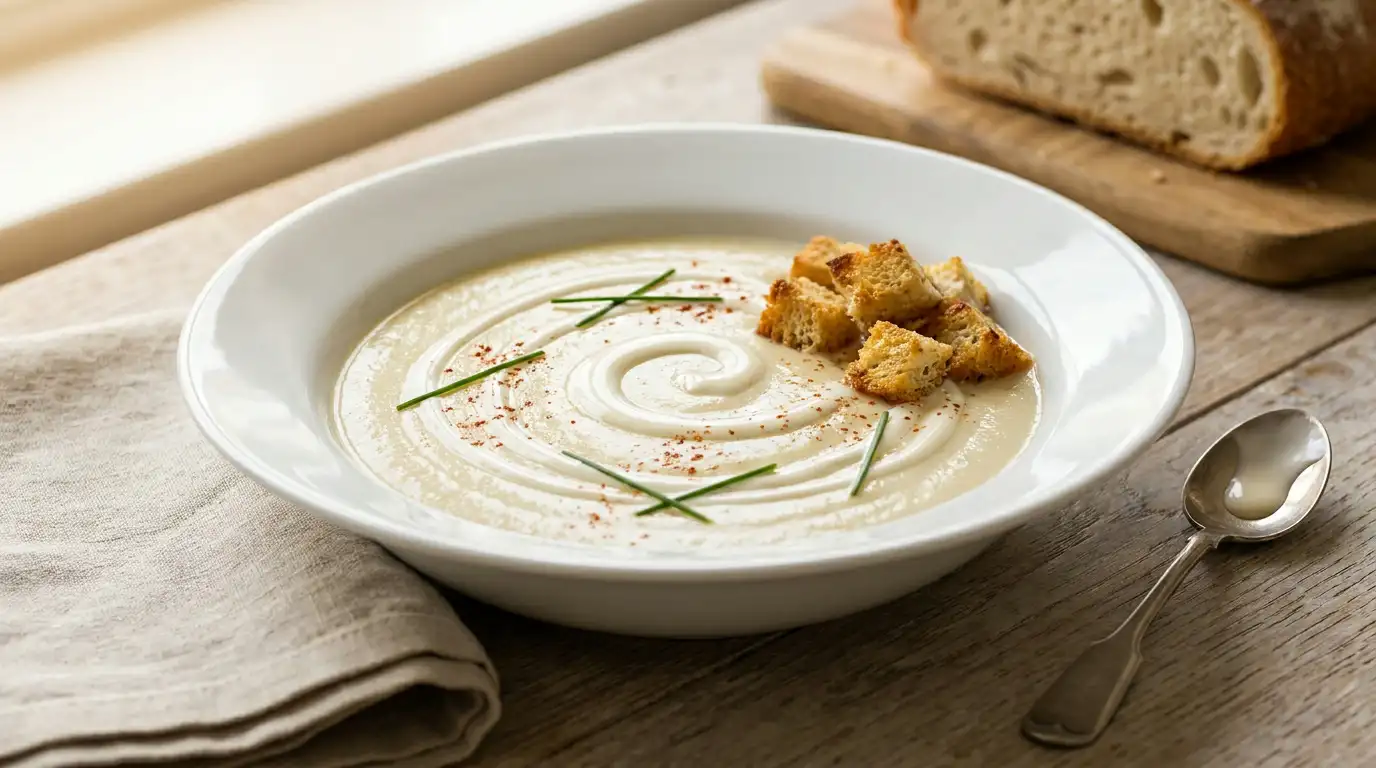
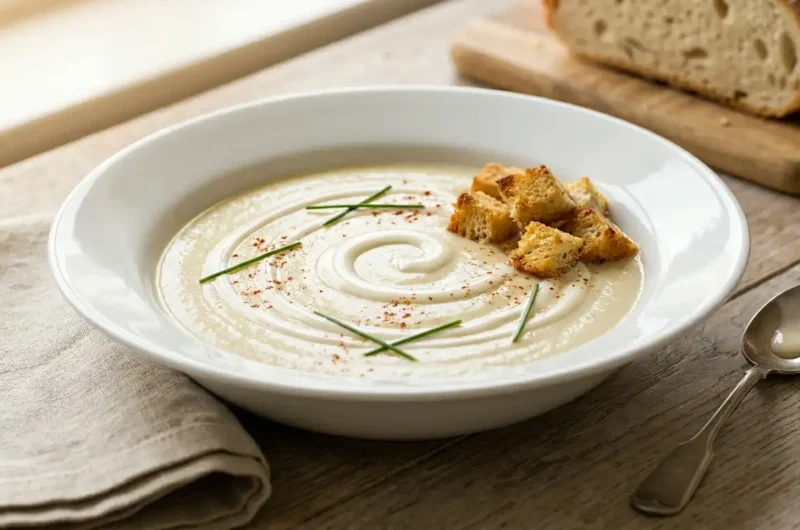
This Mary Berry cauliflower soup recipe produces a thick, ivory-coloured bowl of velvety soup with a gentle, nutty depth and a warmly savoury finish. The cauliflower breaks down into a smooth, creamy base that coats the back of a spoon without feeling heavy or stodgy.
What sets this version apart is the simplicity of the method, which suits beginner cooks without cutting corners on flavour. The soup works equally well as a light weekday lunch or a starter for a relaxed dinner party. From start to finish, it is ready in around 45 minutes.
Ingredients
For the soup base
- 1 medium cauliflower (approximately 800g), broken into florets
- 1 large onion, roughly chopped
- 2 cloves of garlic, peeled and crushed
- 30g unsalted butter
- 1 tablespoon olive oil
- 1 medium potato (approximately 200g), peeled and diced
- 1 litre good-quality vegetable stock
- 200ml whole milk
- 1 teaspoon ground nutmeg
- 1 teaspoon English mustard powder
- Salt and freshly ground black pepper, to taste
To finish
- 3 tablespoons double cream
- A small handful of fresh chives, finely snipped
- A pinch of smoked paprika
How to Make Mary Berry Cauliflower Soup Recipe
- Sweat the aromatics: Melt the butter with the olive oil in a large, heavy-based saucepan over a medium-low heat. Add the chopped onion and cook gently for 8 to 10 minutes, stirring occasionally, until it is soft and translucent. Combining butter and oil raises the smoke point slightly, which helps prevent the butter from browning before the onion has softened.
- Add the garlic: Stir in the crushed garlic and cook for a further 1 minute. The heat should remain gentle so the garlic softens rather than catches at the edges.
- Build the base: Add the diced potato and cauliflower florets to the pan. Stir everything together so the vegetables are lightly coated in the buttery onion mixture, then season with the nutmeg, mustard powder, salt, and pepper.
- Pour in the stock: Add the vegetable stock and bring the pan to a gentle simmer over a medium heat. Cover with a lid and cook for 20 minutes, or until both the cauliflower and potato are completely tender when pierced with a knife. The potato thickens the finished soup and gives it a more rounded, silky consistency.
- Blend until smooth: Remove the pan from the heat and allow the soup to cool for a few minutes. Use a stick blender directly in the pan to blitz the soup until completely smooth, working from the base upwards to avoid splashing. Alternatively, ladle the soup in batches into a free-standing blender, taking care with the steam.
- Adjust the consistency: Return the blended soup to a low heat and stir in the whole milk. If the soup is thicker than preferred, add a splash more stock or milk until the consistency is just right. It should pour with a slow, even ribbon from a spoon.
- Finish and serve: Stir through the double cream and taste one final time for seasoning. Ladle into warm bowls, then scatter over the snipped chives and a light dusting of smoked paprika before serving.
Tips for the Best Mary Berry Cauliflower Soup
Why does my cauliflower soup turn grey instead of staying a pale cream colour?
Overcooking the cauliflower past the point of tenderness causes it to oxidise and take on a dull, greyish tone. Remove the pan from the heat as soon as a knife passes through the florets without resistance, then blend immediately.
Why is my soup watery even after blending?
The ratio of liquid to vegetable is likely too high, or the potato has been left out. The potato absorbs excess liquid during cooking and thickens the soup naturally during blending. A short simmer without the lid for 5 minutes before blending can also concentrate the base.
Why does the soup taste bland despite seasoning well?
Cauliflower has a mild flavour that needs a contrasting note to lift it. Make sure the mustard powder and nutmeg are fresh and added at the right stage. Stale spices lose most of their potency during storage, so check that opened jars are no more than 6 months old.
Why does my soup separate or look grainy after adding the cream?
This happens when cold cream meets very hot soup, causing the fat to split. Temper the cream by stirring a ladleful of hot soup into it first, then pour that back into the pan with the heat on its lowest setting.
How do I stop the soup from catching on the bottom of the pan while reheating?
Reheat gently over a low heat and stir regularly, especially at the base of the pan. Adding a small splash of stock or milk before reheating loosens the soup and reduces the risk of scorching.
Serving Suggestions
- Serve with a thick slice of crusty white bloomer bread to scoop up the last of the soup from the bowl.
- Spoon into small, warmed cups as an elegant starter for a dinner party, finished with a single drizzle of truffle oil.
- Top with a handful of homemade croutons made from day-old sourdough, tossed in olive oil and toasted in the oven.
- Pair with a mature Cheddar and chutney sandwich on granary bread for a satisfying weekday lunch.
- Ladle alongside a simple green salad dressed with Dijon vinaigrette for a light but filling supper.
Storage
Room temperature
Store leftover soup in a sealed, airtight container and consume within 2 hours of cooking if kept at room temperature.
Refrigerator
Transfer cooled soup into an airtight container and refrigerate for up to 3 days. Bring it to room temperature for 10 minutes before reheating gently on the hob for the best texture and flavour.
Freezing
Pour the fully cooled soup into freezer-safe containers or zip-lock bags, leaving a little space at the top for expansion, and freeze for up to 3 months. Defrost overnight in the refrigerator, then reheat slowly over a low heat, stirring in a small splash of milk to restore the smooth, silky consistency.
Nutrition
- Calories: 185 kcal
- Carbohydrates: 18g
- Protein: 6g
- Fat: 10g
- Saturated Fat: 5g
- Sodium: 420mg
Nutrition values are estimates only and will vary depending on the specific ingredients and quantities used.
FAQs
Can I use frozen cauliflower instead of fresh for this soup?
Yes, frozen cauliflower florets work well here and save on preparation time. There is no need to defrost them first; simply add them to the pan straight from frozen and extend the simmering time by around 5 minutes to ensure they are fully tender before blending.
Can I make this cauliflower soup ahead of time?
The soup actually improves after a day in the refrigerator as the flavours continue to develop. Prepare it up to 2 days in advance, store it covered in the fridge, and reheat gently before serving with the cream and garnishes added fresh at the end.
Can I make this recipe vegan?
To make a vegan version, replace the butter with olive oil, swap the whole milk for an unsweetened oat milk or plant-based alternative, and use a dairy-free cream such as coconut cream or oat cream in place of double cream. The texture and colour will be very similar, though oat milk gives the creamiest result.
Can I add cheese to this cauliflower soup recipe?
Stirring in 50g of finely grated mature Cheddar or Gruyere just before serving adds a sharp, savoury richness to the bowl. Remove the soup from the heat before adding the cheese and stir continuously until it is fully melted to avoid the cheese becoming stringy or grainy.
Can I double this recipe to feed a larger group?
This recipe doubles well without any adjustment to the method. Use the largest saucepan available to prevent the soup from boiling over during the simmer, and blend in slightly smaller batches if using a free-standing blender to maintain control over the texture.
Conclusion
This Mary Berry cauliflower soup recipe delivers a smooth, comforting bowl that is reliably good every time. The combination of potato for body, mustard powder for warmth, and a swirl of cream for richness makes it far more satisfying than its short ingredient list might suggest. This recipe yields 4 generous servings, making it well suited to a family meal or batch cooking for the week ahead.
If this recipe has become a regular in the kitchen, share it with someone who would enjoy it or leave a comment below with any variations that have worked well. For something equally comforting to follow up with, Mary Berry apple pie recipe is a classic worth having in the repertoire.
Mary Berry Cauliflower Soup Recipe
Course: SoupCuisine: BritishDifficulty: Easy4
servings10
minutes35
minutes185
kcal45
minutesA thick, ivory-coloured cauliflower soup with a velvety smooth texture and warmly savoury finish. Made with simple ingredients including potato for body, mustard powder for warmth, and a swirl of double cream, this reliable soup is ready in 45 minutes.
Ingredients
1 medium cauliflower (approximately 800g), broken into florets
1 large onion, roughly chopped
2 cloves of garlic, peeled and crushed
30g unsalted butter
1 tablespoon olive oil
1 medium potato (approximately 200g), peeled and diced
1 litre good-quality vegetable stock
200ml whole milk
1 teaspoon ground nutmeg
1 teaspoon English mustard powder
salt and freshly ground black pepper to taste
3 tablespoons double cream
a small handful of fresh chives, finely snipped
a pinch of smoked paprika
Instructions
- Melt the butter with the olive oil in a large heavy-based saucepan over a medium-low heat. Add the chopped onion and cook gently for 8 to 10 minutes, stirring occasionally, until soft and translucent.
- Stir in the crushed garlic and cook for a further 1 minute over a gentle heat so the garlic softens rather than catches at the edges.
- Add the diced potato and cauliflower florets to the pan. Stir everything together so the vegetables are lightly coated in the buttery onion mixture, then season with the nutmeg, mustard powder, salt, and pepper.
- Pour in the vegetable stock and bring the pan to a gentle simmer over a medium heat. Cover with a lid and cook for 20 minutes, or until both the cauliflower and potato are completely tender when pierced with a knife.
- Remove the pan from the heat and allow the soup to cool for a few minutes. Use a stick blender directly in the pan to blitz the soup until completely smooth, working from the base upwards.
- Return the blended soup to a low heat and stir in the whole milk. Add a splash more stock or milk if needed until the soup pours with a slow, even ribbon from a spoon.
- Stir through the double cream and taste for seasoning. Ladle into warm bowls, then scatter over the snipped chives and a light dusting of smoked paprika before serving.
Notes
- Remove the pan from the heat as soon as a knife passes through the florets without resistance to keep the soup a pale cream colour.
- The potato thickens the finished soup naturally and gives it a more rounded, silky consistency.
- Temper the double cream by stirring a ladleful of hot soup into it first before adding to the pan to prevent splitting.
- Check that opened spice jars are no more than 6 months old as stale mustard powder and nutmeg lose most of their potency.
- Reheat gently over a low heat with a splash of stock or milk to prevent the soup from catching on the base of the pan.
- For a vegan version, replace butter with olive oil, whole milk with oat milk, and double cream with oat cream or coconut cream.