Mary Berry Beetroot Soup Recipe
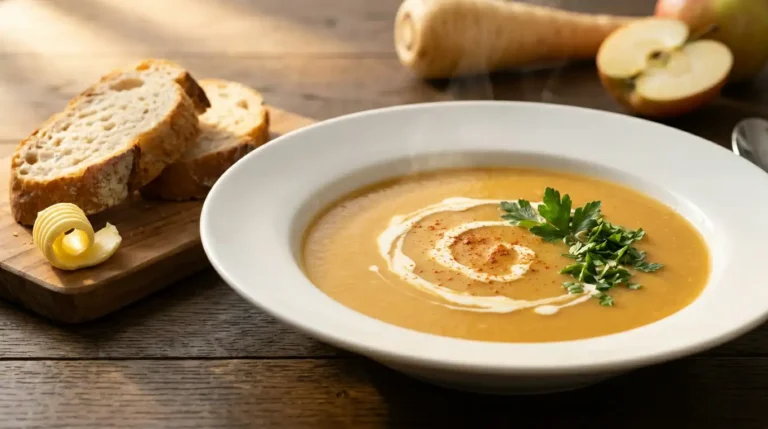
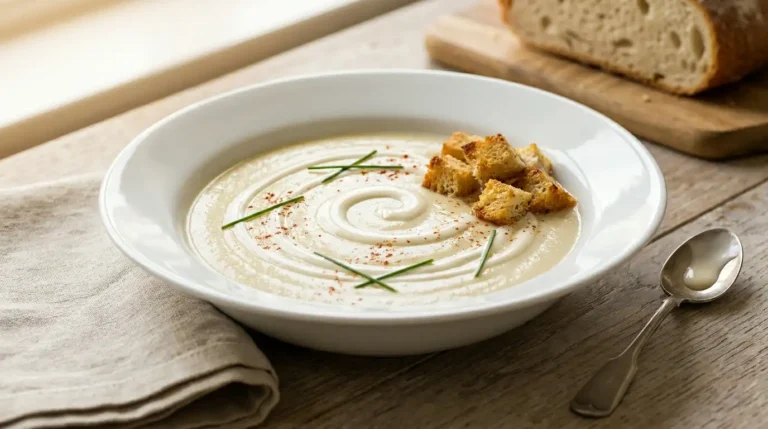
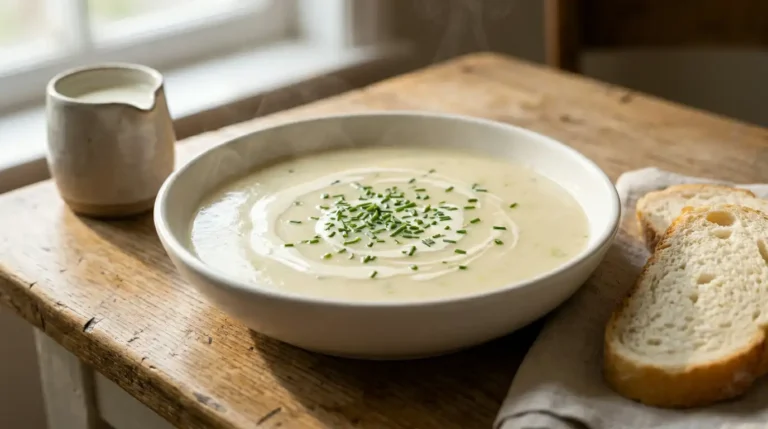
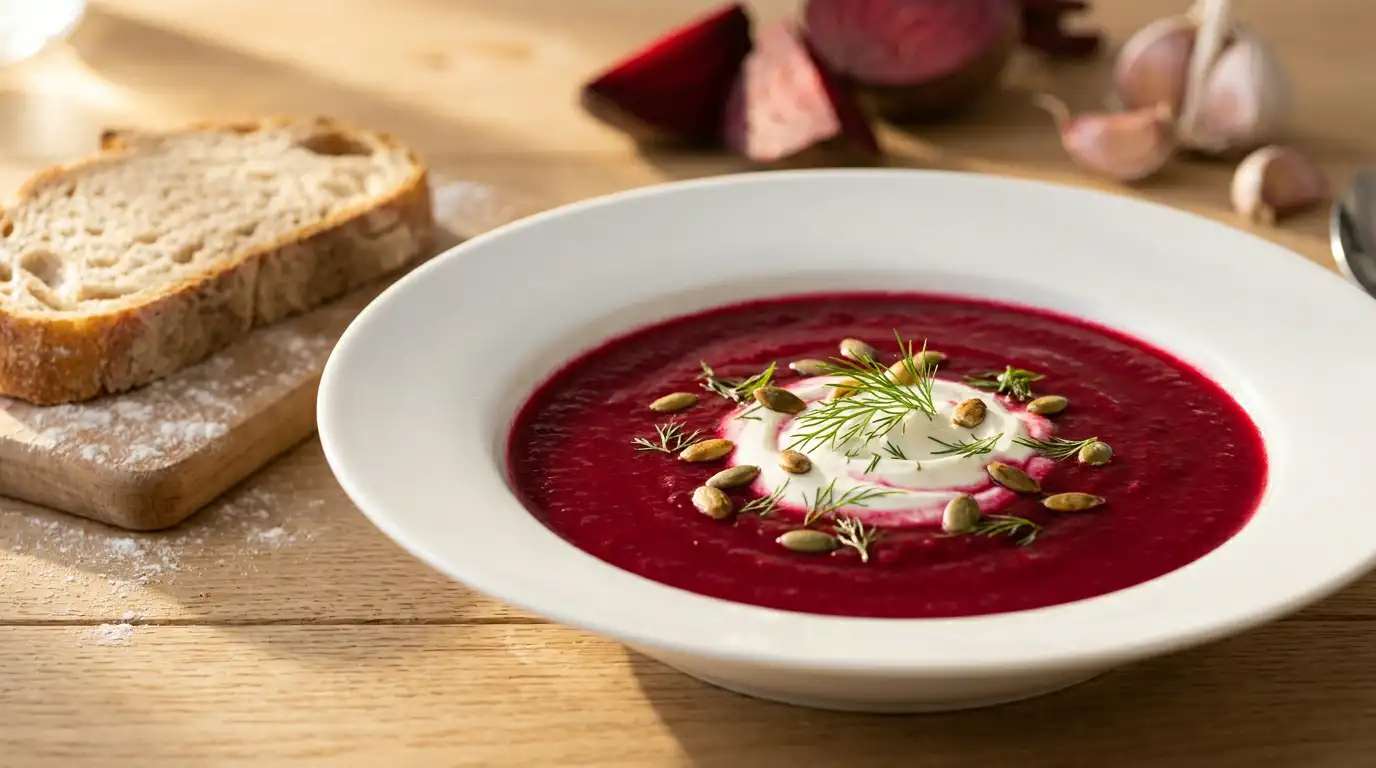
This beetroot soup is a deep, jewel-red bowl of earthy warmth with a silky, velvety body and a gentle sweetness that deepens with every spoonful. A touch of crème fraîche swirled through just before serving adds a cool, creamy contrast that lifts the whole dish. This version follows a reliably simple method, requiring no fancy equipment beyond a blender, and it scales beautifully whether cooking for two or a dinner party of eight. The ingredients are straightforward and easy to find at any UK supermarket. From start to finish, this soup is ready in around 55 minutes.
The Mary Berry beetroot soup recipe takes a no-fuss approach, relying on slow-roasted beetroot to concentrate the natural sugars and build depth of flavour that boiled beetroot simply cannot match. A base of softened onion and garlic brings savoury balance, while a good vegetable stock ties everything together into a smooth, consistent finish.
Ingredients
For the soup
- 600g raw beetroot, peeled and cut into rough 3cm chunks
- 1 medium red onion, roughly chopped
- 3 garlic cloves, unpeeled
- 2 tablespoons olive oil
- 850ml hot vegetable stock
- 1 teaspoon balsamic vinegar
- Salt and freshly ground black pepper, to season
To finish
- 4 tablespoons crème fraîche
- Small handful of fresh dill or chives, roughly chopped
How to Make Mary Berry Beetroot Soup Recipe
- Preheat the oven: Set the oven to 200°C (180°C fan, Gas Mark 6) and allow it to come fully up to temperature before the beetroot goes in, as a consistently hot oven is what gives the beetroot its caramelised edges.
- Prepare the beetroot for roasting: Tip the chopped beetroot and red onion onto a large roasting tray. Nestle the unpeeled garlic cloves among them, drizzle over the olive oil, and season generously with salt and pepper. Toss everything together so each piece is lightly coated.
- Roast until tender: Slide the tray onto the middle shelf and roast for 35 to 40 minutes, turning once halfway through, until the beetroot is completely tender when pierced with a knife and the onion has softened and taken on a little colour.
- Squeeze out the garlic: Remove the tray from the oven and leave to cool for five minutes. Squeeze the roasted garlic cloves out of their skins directly onto the tray and discard the papery husks. The roasted garlic will have a much softer, nuttier flavour than raw garlic, which gives the soup a rounded base without any sharpness.
- Blend until smooth: Transfer the roasted vegetables and garlic to a blender. Pour over the hot vegetable stock and blend on high for about a minute until completely smooth and the colour is a consistent deep magenta. Work in batches if needed, keeping a firm hand on the lid.
- Season and add the vinegar: Pour the blended soup back into a saucepan and set over a medium heat. Stir in the balsamic vinegar, then taste and adjust the seasoning with salt and pepper. The vinegar sharpens the flavour slightly and keeps the colour vivid.
- Warm through and serve: Heat the soup gently for three to four minutes until it is steaming hot. Ladle into warmed bowls, add a spoonful of crème fraîche to each, and scatter over the fresh dill or chives.
Tips for the Best Mary Berry Beetroot Soup
Why does my beetroot soup taste flat even though I followed the recipe?
Flat flavour usually means the soup needs more seasoning or more acid. Stir in an extra half teaspoon of balsamic vinegar and taste again before adding more salt. Acid is what makes beetroot soup taste bright rather than dull and earthy.
Why is my soup grainy rather than silky smooth?
This happens when the beetroot has not roasted long enough, leaving fibrous tissue that resists blending. Make sure the chunks are genuinely soft all the way through before transferring to the blender. Blending for a full minute, rather than a quick pulse, also makes a noticeable difference to the final texture.
Why has my soup turned a dull brownish-purple rather than a bright red?
Overcooking or adding acidic ingredients too early can dull the colour. Add the balsamic vinegar only after blending and during the final warming stage, never during roasting. A small squeeze of lemon juice stirred in just before serving can also revive a colour that has faded.
Why does my soup taste too sweet?
Roasted beetroot intensifies in sweetness, and some varieties are naturally sweeter than others. Balance this by adding a little more balsamic vinegar, a pinch of salt, or a small squeeze of fresh lemon juice. Adding the crème fraîche as a swirl rather than stirring it in fully also provides a tart contrast at each mouthful.
Why is my soup too thick after blending?
Beetroot absorbs liquid as it roasts, so the final consistency depends on how much moisture has evaporated. Simply add a splash of hot water or a little more stock and blend briefly again until the desired consistency is reached. The soup should coat the back of a spoon but still pour smoothly.
Serving Suggestions
- Serve with thick slices of warm crusty sourdough or a soft, buttered brown roll on the side for dipping.
- Swirl in a teaspoon of horseradish cream alongside the crème fraîche for a peppery, warming finish.
- Top with a small handful of toasted pumpkin seeds or a few walnut pieces for a contrasting crunch.
- Pair with a simple green salad dressed in a light mustard vinaigrette for a complete light lunch.
- Serve as a starter in small cups at a dinner party, finished with a thin drizzle of good quality olive oil rather than crème fraîche for a more elegant presentation.
Storage
Room temperature
Leave the soup to cool completely, then transfer to an airtight container and keep at room temperature for no more than two hours before refrigerating.
Refrigerator
Store in a sealed container in the fridge for up to four days. Reheat gently in a saucepan over a low to medium heat, stirring regularly, and bring to a full simmer before serving. The soup may thicken slightly in the fridge, so add a small splash of water or stock when reheating to restore the correct consistency.
Freezing
Pour the cooled soup into individual freezer-safe containers or zip-lock bags, leaving a little space at the top for expansion, and freeze for up to three months. Defrost overnight in the fridge and reheat from cold in a saucepan over a medium heat, stirring regularly until piping hot throughout. Do not freeze the soup with the crème fraîche already stirred in, as it will split on thawing.
Nutrition
- Calories: 145 kcal
- Carbohydrates: 18g
- Protein: 3g
- Fat: 7g
- Saturated Fat: 3g
- Sodium: 480mg
Nutrition values are estimates based on standard ingredients and may vary depending on the exact products used and portion size.
FAQs
Can I use pre-cooked vacuum-packed beetroot instead of raw beetroot?
Yes, pre-cooked beetroot works as a shortcut, though the flavour will be noticeably milder and less sweet because roasting raw beetroot caramelises its natural sugars in a way that vacuum-packed versions cannot replicate. If using pre-cooked beetroot, skip the roasting stage and sauté it with the onion and garlic in a saucepan with olive oil for five to seven minutes before adding the stock and blending.
Can I make this beetroot soup ahead of time?
This soup is ideal for making ahead, as the flavour actually deepens and improves after a day in the fridge. Prepare it fully up to the point of serving, cool quickly, and refrigerate. Add the crème fraîche and fresh herbs only when reheating and serving, not before storing.
Can I make this recipe vegan?
Swap the crème fraîche for a plant-based alternative such as oat or cashew crème fraîche, and check that the vegetable stock is free from dairy or animal derivatives. The rest of the recipe is naturally vegan as written.
Can I add other vegetables to this beetroot soup?
A medium carrot or a small parsnip, peeled and cut into similar-sized chunks, roasts well alongside the beetroot and adds a gentle sweetness without altering the colour significantly. A small raw potato, added directly to the blender with the stock, will thicken the soup naturally if a heartier, more filling result is wanted.
What size batch does this recipe make, and can it be doubled?
This recipe yields four generous servings as a starter or two as a main. It doubles easily without any adjustment to method, though a larger roasting tray will be needed to avoid overcrowding the beetroot, which would cause it to steam rather than roast and caramelise properly. Blend in batches if doubling the quantity.
Conclusion
This Mary Berry beetroot soup recipe delivers a deeply flavoured, vibrantly coloured bowl of soup that is genuinely simple to prepare at home. Roasting the beetroot is the key step, transforming what can be an earthy, one-note vegetable into something sweet, complex, and full of character. The whole process, from prepping the vegetables to ladling into bowls, takes under an hour and produces four servings. The soup stores brilliantly, making it an ideal choice for batch cooking or prepping ahead of a dinner party.
Whether served as a weeknight supper with crusty bread or as an elegant starter for guests, this recipe is reliably good every time. If you have enjoyed working with beetroot in savoury dishes, you might also enjoy the Mary Berry Beetroot Cake Recipe, which takes the same earthy sweetness in a wonderfully different direction. Share this recipe with someone who loves a warming, vibrant bowl of soup, and leave a comment below to let others know how it turned out.
Mary Berry Beetroot Soup Recipe
Course: Starter, Main CourseCuisine: BritishDifficulty: Easy4
servings15
minutes40
minutes145
kcal55
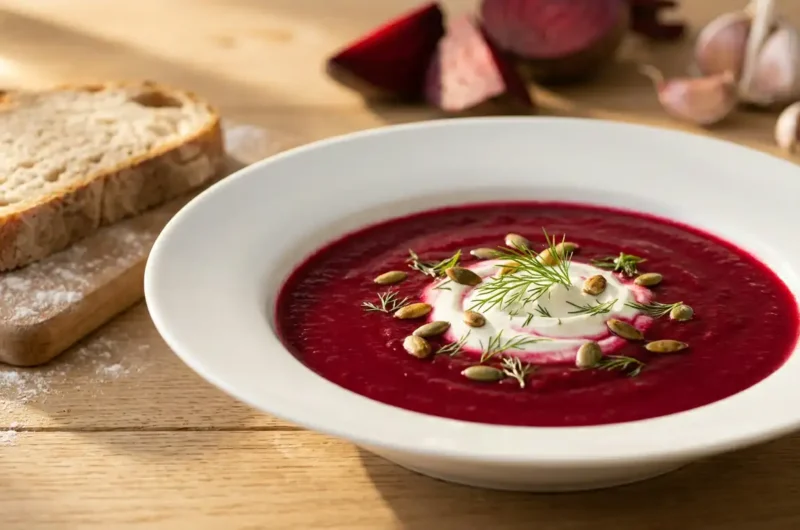
minutesA deep, jewel-red beetroot soup with a silky, velvety body and gentle natural sweetness. Made with slow-roasted beetroot, softened onion, and garlic, finished with a swirl of crème fraîche and fresh herbs for a warming, vibrant bowl.
Ingredients
600g raw beetroot, peeled and cut into rough 3cm chunks
1 medium red onion, roughly chopped
3 garlic cloves, unpeeled
2 tablespoons olive oil
850ml hot vegetable stock
1 teaspoon balsamic vinegar
salt and freshly ground black pepper, to season
4 tablespoons crème fraîche
small handful of fresh dill or chives, roughly chopped
Instructions
- Preheat the oven to 200°C (180°C fan, Gas Mark 6) and allow it to come fully up to temperature before the beetroot goes in.
- Tip the chopped beetroot and red onion onto a large roasting tray. Nestle the unpeeled garlic cloves among them, drizzle over the olive oil, and season generously with salt and pepper. Toss everything together so each piece is lightly coated.
- Slide the tray onto the middle shelf and roast for 35 to 40 minutes, turning once halfway through, until the beetroot is completely tender when pierced with a knife and the onion has softened and taken on a little colour.
- Remove the tray from the oven and leave to cool for five minutes. Squeeze the roasted garlic cloves out of their skins directly onto the tray and discard the papery husks.
- Transfer the roasted vegetables and garlic to a blender. Pour over the hot vegetable stock and blend on high for about a minute until completely smooth. Work in batches if needed, keeping a firm hand on the lid.
- Pour the blended soup back into a saucepan and set over a medium heat. Stir in the balsamic vinegar, then taste and adjust the seasoning with salt and pepper.
- Heat the soup gently for three to four minutes until steaming hot. Ladle into warmed bowls, add a spoonful of crème fraîche to each, and scatter over the fresh dill or chives.
Notes
- Use raw beetroot rather than pre-cooked for the best depth of flavour and colour.
- Do not overcrowd the roasting tray or the beetroot will steam rather than caramelise.
- Add the balsamic vinegar only after blending to keep the soup’s colour bright and vivid.
- Blend for a full minute to achieve a genuinely silky, smooth consistency.
- Do not freeze the soup with crème fraîche already stirred in as it will split on thawing.
- A small splash of extra stock or hot water can be added when reheating if the soup has thickened in the fridge.