Mary Berry Beetroot Cake Recipe
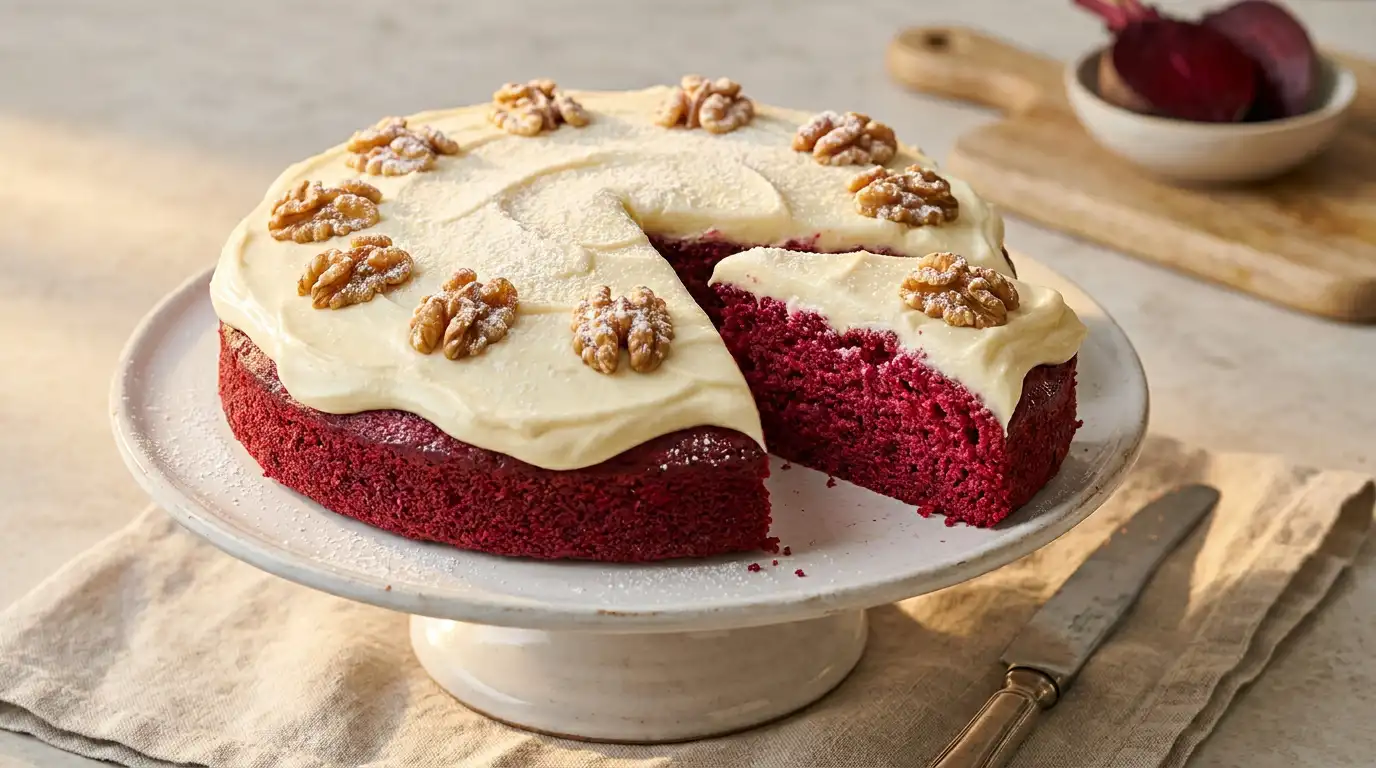
This beetroot cake is a deep, ruby-crimson sponge with a tender, close crumb and a gentle earthiness that balances the sweetness of the batter. The natural moisture from the beetroot keeps every slice dense without being heavy, and a soft cream cheese frosting adds a cool, tangy finish against the warm spice notes within. It holds together beautifully when sliced, making it as suitable for a celebration table as for a quiet afternoon with tea. From start to finish, it is ready in around 1 hour 30 minutes.
What sets this version apart is its reliability. The grated beetroot is stirred directly into the batter rather than pureed, which gives the sponge a slightly more textured bite and a more natural, rustic appearance. It is the kind of cake that works with a stand mixer or a simple bowl and wooden spoon, and the result is consistent either way.
Ingredients
For the sponge
- 250g raw beetroot, peeled and coarsely grated
- 200g plain flour
- 1 tsp baking powder
- 1/2 tsp bicarbonate of soda
- 1 tsp ground cinnamon
- 1/2 tsp ground mixed spice
- 1/4 tsp fine salt
- 180g caster sugar
- 3 large eggs, at room temperature
- 150ml sunflower oil
- 1 tsp vanilla extract
- 2 tbsp whole milk
For the cream cheese frosting
- 200g full-fat cream cheese, cold
- 80g icing sugar, sifted
- 1 tsp vanilla extract
- 50ml double cream
To finish
- A small handful of walnut halves
- A light dusting of icing sugar (optional)
How to Make Mary Berry Beetroot Cake Recipe
- Preheat and prepare the tin: Heat the oven to 180C (160C fan, Gas Mark 4). Lightly grease a deep 20cm round cake tin and line the base and sides with baking parchment, pressing the paper into the corners to prevent lifting during baking.
- Combine the dry ingredients: Sift the flour, baking powder, bicarbonate of soda, cinnamon, mixed spice, and salt into a large mixing bowl and give them a brief stir to distribute the leavening agents evenly through the flour.
- Whisk the wet ingredients: In a separate jug, whisk together the eggs, sunflower oil, vanilla extract, and milk until the mixture looks pale and slightly thickened, about one minute by hand. This short whisking stage helps the oil emulsify with the eggs, which gives the sponge a more even, tender crumb.
- Bring the batter together: Pour the wet ingredients into the dry and fold with a large spatula until just combined. Do not overmix at this stage, a few faint streaks of flour are fine because the next addition will finish incorporating them.
- Fold in the beetroot: Add the grated beetroot and the caster sugar to the bowl and fold everything together with gentle, sweeping strokes until the batter is a deep magenta-pink and no dry patches remain. The sugar goes in at this stage to draw a little liquid from the beetroot and loosen the batter to a pourable consistency.
- Bake the sponge: Pour the batter into the prepared tin and smooth the top with a palette knife or the back of a spoon. Bake on the middle shelf for 45 to 50 minutes, until a skewer inserted into the centre comes out clean and the top feels set and springy to a gentle press.
- Cool completely: Leave the cake in the tin for 10 minutes before turning onto a wire rack. Peel away the parchment and allow the sponge to cool fully before frosting, which takes around 40 minutes. Applying the frosting to a warm cake will cause it to slide and pool around the base.
- Make the frosting: Beat the cold cream cheese with the sifted icing sugar and vanilla extract until smooth and lump-free. Add the double cream and continue to beat for a further 30 seconds until the mixture is thick enough to hold soft peaks and spread without running.
- Frost and finish: Spread the cream cheese frosting across the top of the cooled cake using a palette knife, working from the centre outward and letting a little drape over the edges for a generous, rustic look. Scatter walnut halves across the surface and dust lightly with icing sugar if desired before serving.
Tips for the Best Mary Berry Beetroot Cake Recipe
Why is my beetroot cake pale pink rather than deep ruby red?
The red pigment in raw beetroot, called betacyanin, reacts with heat and turns a duller, brownish-pink as the cake bakes. To keep the colour vibrant inside the sponge, avoid over-baking and do not add any acidic ingredients such as lemon juice, which will shift the pigment further toward brown.
Why does my beetroot cake feel wet or gummy in the middle after it has cooled?
This is nearly always caused by underbaking. Beetroot releases a great deal of moisture during baking and the centre needs the full 45 to 50 minutes at the correct temperature to set. Check that your oven temperature is accurate and always test with a skewer before removing the cake from the oven.
How do I stop the top of the cake from doming and cracking?
A doming top usually means the oven temperature is too high. Baking at 160C fan rather than full heat gives the sponge time to rise slowly and evenly. If your oven runs hot, dropping the temperature by 10 degrees and adding 5 minutes to the baking time often produces a flatter, more even surface.
Why is my cream cheese frosting too runny to spread?
Using cream cheese at room temperature is the most common cause of a loose frosting. Always start with cold cream cheese straight from the fridge and beat it briefly before adding the icing sugar. Adding more icing sugar thickens the mixture but can make it overly sweet, so it is better to keep the cream cheese cold from the start.
Why does my sponge taste bitter rather than sweet and earthy?
This usually points to too much bicarbonate of soda. Measure it precisely with a level half teaspoon rather than an approximate scoop, as even a small excess leaves a soapy, metallic aftertaste in the finished sponge. Sifting the bicarbonate with the flour ensures it is evenly distributed and prevents any concentrated pockets in the batter.
Serving Suggestions
- Serve at room temperature on a wooden board with the frosting still slightly chilled for the best contrast between the dense sponge and cool, creamy topping.
- Pair with a pot of Earl Grey or Darjeeling tea, whose floral notes sit well against the earthy sweetness of the beetroot.
- Offer alongside a small dish of lightly sweetened creme fraiche for guests who prefer a less sweet accompaniment than the cream cheese frosting.
- Serve as a dessert after a light lunch by adding a small scoop of good vanilla ice cream, which melts into the spiced sponge and ties the flavours together.
- Cut into neat squares and arrange on a tiered stand for an afternoon tea spread alongside finger sandwiches and scones.
Storage
Room temperature
Store the unfrosted sponge in an airtight container at room temperature for up to 2 days.
Refrigerator
Once frosted, keep the cake covered loosely with cling film or in a large airtight container in the fridge for up to 4 days. Remove it from the fridge 30 minutes before serving so the sponge softens slightly and the flavour comes through more fully.
Freezing
Freeze the unfrosted sponge only: wrap it tightly in cling film followed by a layer of foil and store in the freezer for up to 2 months. Defrost at room temperature for 3 to 4 hours, then frost as normal before serving.
Nutrition
- Calories: 380 kcal
- Carbohydrates: 42g
- Protein: 5g
- Fat: 21g
- Saturated Fat: 7g
- Sodium: 210mg
Nutrition values are estimates and may vary depending on the specific ingredients and exact quantities used.
FAQs
Can I use cooked vacuum-packed beetroot instead of raw beetroot?
It is better to use raw beetroot for this recipe. Cooked beetroot has already lost much of its moisture and will not integrate into the batter in the same way, often producing a denser, slightly claggy texture rather than the light, moist crumb that grated raw beetroot gives.
Can I make this Mary Berry beetroot cake ahead of time?
Yes, the unfrosted sponge can be baked a day in advance and stored in an airtight container. Make and apply the cream cheese frosting on the day you plan to serve the cake, as the frosting holds best when applied fresh and chilled just before serving.
Can I use a different oil instead of sunflower oil?
A mild-flavoured vegetable oil or light rapeseed oil works equally well. Avoid olive oil, which has a strong flavour that can overpower the delicate spice notes in the sponge.
What size tin works best for this beetroot cake recipe?
A deep 20cm round tin is the most reliable choice for the quantities given here. A shallow tin of the same diameter will cause the batter to overflow during baking, and a larger tin will produce a thinner sponge that bakes too quickly at the edges before the centre is set.
Can I add chocolate to this beetroot cake?
Yes, replacing 30g of the plain flour with 30g of good-quality cocoa powder gives a darker, richer sponge with a faint chocolate note that complements the beetroot well. Reduce the cinnamon to half a teaspoon if going this route, so the cocoa is not overwhelmed by the spicing.
Conclusion
This Mary Berry beetroot cake recipe is a dependable bake that delivers a moist, well-spiced sponge with a vivid colour and a clean, earthy sweetness. The method is straightforward enough for a confident beginner but produces results that look and taste considered. The cream cheese frosting keeps the finish cool and tangy, balancing the warmth of the cinnamon and mixed spice in the crumb. This recipe yields 10 to 12 slices from a single 20cm round cake.
Whether it is baked for a birthday, a weekend gathering, or a quiet afternoon treat, the cake holds its shape and flavour well over several days. If you try this recipe, share your results in the comments below or pass it on to someone who would enjoy a reliable, colourful bake. If you enjoyed this, you might also like the Mary Berry salmon mousse recipe, a simple and elegant dish that works beautifully as a starter or light lunch.
Mary Berry Beetroot Cake Recipe
Course: DessertCuisine: BritishDifficulty: Easy12
servings40
minutes50
minutes380
kcal1
hour30
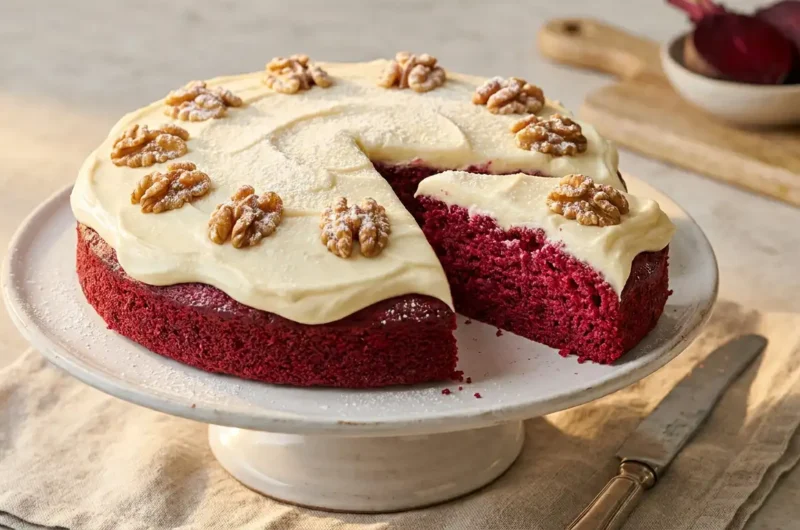
minutesA deep ruby-crimson sponge with a tender, close crumb and gentle earthy sweetness. This moist beetroot cake is topped with a cool, tangy cream cheese frosting and warm spice notes throughout.
Ingredients
250g raw beetroot, peeled and coarsely grated
200g plain flour
1 tsp baking powder
1/2 tsp bicarbonate of soda
1 tsp ground cinnamon
1/2 tsp ground mixed spice
1/4 tsp fine salt
180g caster sugar
3 large eggs, at room temperature
150ml sunflower oil
1 tsp vanilla extract
2 tbsp whole milk
200g full-fat cream cheese, cold
80g icing sugar, sifted
1 tsp vanilla extract
50ml double cream
a small handful of walnut halves
a light dusting of icing sugar optional
Instructions
- Heat the oven to 180C (160C fan, Gas Mark 4). Grease a deep 20cm round cake tin and line the base and sides with baking parchment.
- Sift the flour, baking powder, bicarbonate of soda, cinnamon, mixed spice, and salt into a large mixing bowl and stir briefly to distribute evenly.
- In a separate jug, whisk together the eggs, sunflower oil, vanilla extract, and milk until pale and slightly thickened, about one minute by hand.
- Pour the wet ingredients into the dry and fold with a large spatula until just combined.
- Add the grated beetroot and caster sugar and fold with gentle sweeping strokes until the batter is deep magenta-pink and no dry patches remain.
- Pour the batter into the prepared tin, smooth the top, and bake on the middle shelf for 45 to 50 minutes until a skewer inserted into the centre comes out clean.
- Leave the cake in the tin for 10 minutes then turn onto a wire rack and allow to cool fully before frosting.
- Beat the cold cream cheese with the sifted icing sugar and vanilla extract until smooth. Add the double cream and beat for a further 30 seconds until thick enough to hold soft peaks.
- Spread the frosting across the top of the cooled cake, scatter walnut halves over the surface, and dust lightly with icing sugar before serving.
Notes
- Always use raw beetroot rather than cooked vacuum-packed beetroot for best moisture and texture.
- Keep cream cheese cold before making the frosting to prevent it becoming runny.
- Do not overmix the batter once the wet and dry ingredients are combined.
- Test with a skewer at 45 minutes as oven temperatures can vary.
- Cool the sponge completely before applying frosting or it will slide and pool.
- For a chocolate version, replace 30g of flour with 30g of cocoa powder and reduce cinnamon to half a teaspoon.