Mary Berry Marble Cake Recipe
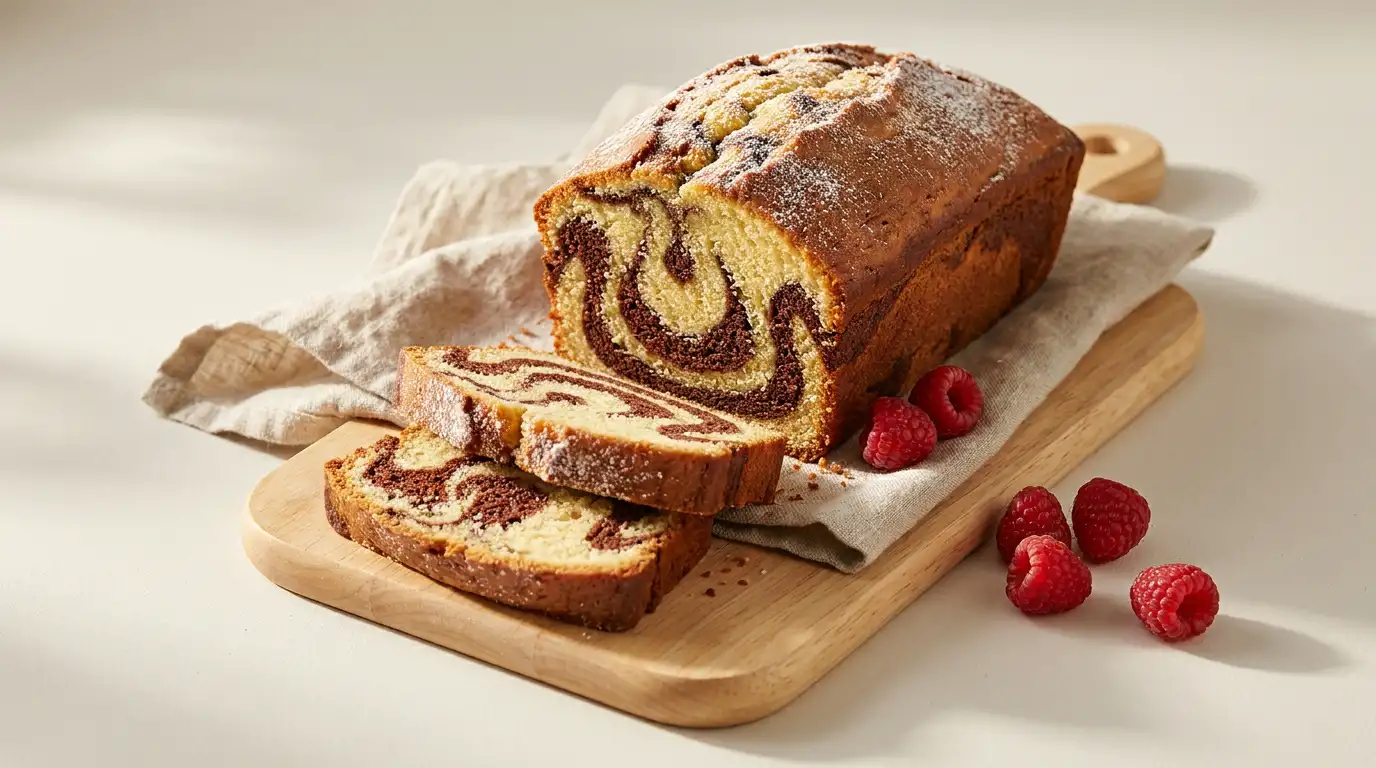
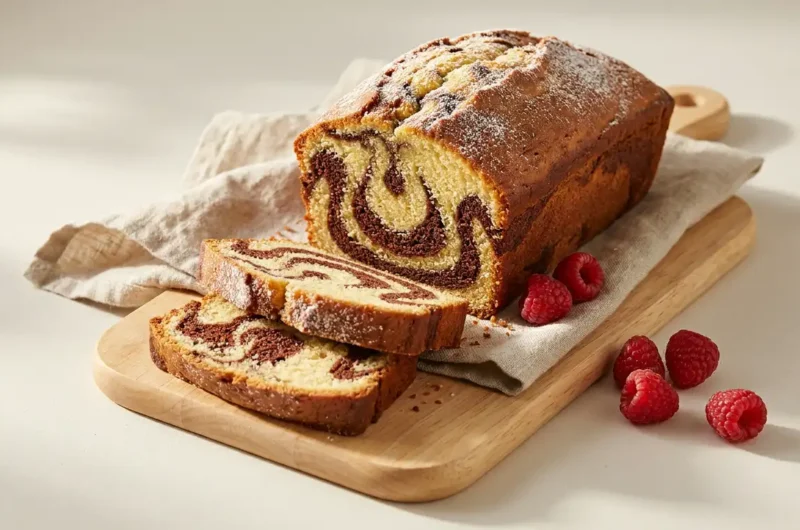
This marble cake is a beautifully swirled vanilla and chocolate sponge with a soft, even crumb and a faintly crisp golden crust. Each slice reveals ribbons of pale cream and deep cocoa running through the centre, baked into a tender, close-textured loaf that holds its shape cleanly when sliced. It is the kind of bake that looks far more involved than it actually is, which makes it ideal for beginners and experienced home bakers alike. From start to finish, it is ready in around 1 hour 15 minutes.
What makes this version reliable is the method: the two batters are made from one base mixture, so the flavours stay balanced and the textures match perfectly. There is no risk of one half being denser than the other. It suits an afternoon tea spread, a birthday cake, or a mid-week treat with no particular occasion at all.
Ingredients
For the sponge
- 200g unsalted butter, softened
- 200g caster sugar
- 3 large eggs, at room temperature
- 200g self-raising flour, sifted
- 1 tsp baking powder
- 2 tbsp whole milk
- 1 tsp vanilla extract
For the chocolate half
- 25g cocoa powder, sifted
- 2 tbsp hot water
To finish
- 1 tbsp icing sugar, for dusting (optional)
How to Make Mary Berry Marble Cake Recipe
- Prepare the tin and oven: Preheat the oven to 180°C (160°C fan) and grease a 900g (2lb) loaf tin, then line the base and long sides with baking paper. This lining makes it easier to lift the finished cake out cleanly without cracking the crust.
- Cream the butter and sugar: Beat the softened butter and caster sugar together in a large bowl for 3 to 4 minutes until the mixture is pale, noticeably lighter in colour, and slightly fluffy in texture.
- Add the eggs: Beat in the eggs one at a time, adding a tablespoon of the sifted flour with each one. This helps the batter stay smooth and prevents it from curdling.
- Fold in the flour: Sift the remaining flour and baking powder over the mixture and fold in gently using a large metal spoon or spatula. Add the milk and vanilla extract, and fold until just combined. The batter should drop easily from the spoon.
- Make the chocolate batter: Spoon roughly half the batter into a separate bowl. Mix the cocoa powder with the hot water in a small bowl until it forms a smooth, dark paste, then stir it through the second bowl of batter until evenly combined.
- Layer and swirl: Drop alternating spoonfuls of the vanilla and chocolate batters into the prepared tin, roughly four or five dollops of each, working in two layers if needed to use all the batter. Run a skewer or a table knife through the batter in a zigzag motion two or three times to create the marble effect. Do not over-swirl or the two colours will merge into a muddy grey.
- Bake the cake: Place the tin on the middle shelf of the preheated oven and bake for 45 to 50 minutes, until the top is golden brown and a skewer inserted into the centre comes out clean with no wet batter clinging to it.
- Cool and turn out: Leave the cake in the tin for 10 minutes, then lift it onto a wire rack using the baking paper and leave to cool completely before slicing. Dust lightly with icing sugar to serve, if desired.
Tips for the Best Mary Berry Marble Cake
Why did my marble pattern disappear and look grey when baked?
The swirl was over-mixed. Two to three passes with the skewer is enough to create a visible marble pattern. Any more and the two batters blend together, losing the contrast between vanilla and chocolate once baked.
Why did my cake sink slightly in the middle after coming out of the oven?
The most common cause is under-baking. The cake needs to be fully set in the centre before it is removed from the oven. Always test with a skewer and wait until it comes out completely clean, not just damp, before taking the tin out.
How do I stop the top of the loaf from cracking unevenly?
A slight crack running down the length of the top is completely normal for a loaf cake and is not a fault. If the crack is very wide or splits to one side, the oven temperature may be too high. Check it with a standalone oven thermometer, as most domestic ovens run 10 to 15 degrees higher than the dial suggests.
Why is the cocoa batter so much thicker than the vanilla batter?
The cocoa paste adds density to that half of the mixture, which is normal. Using hot water to mix the cocoa first keeps it fluid enough to incorporate without seizing, and the two batters will bake at the same rate despite the slight difference in consistency.
How do I get a moist crumb rather than a dry one?
Do not over-bake. Once the skewer comes out clean, remove the cake promptly. Leaving it in the oven for an extra 10 minutes to be safe will draw moisture out of the sponge. Covering the cooled cake tightly also keeps it from drying out during storage.
Serving Suggestions
- Serve sliced at room temperature with a cup of Assam or English Breakfast tea.
- Pair with a small bowl of lightly whipped double cream on the side for an afternoon tea spread.
- Dust with cocoa powder instead of icing sugar for a more defined chocolate finish on the top crust.
- Serve warm with a drizzle of dark chocolate ganache poured over the top slice for a more indulgent dessert presentation.
- Offer thin slices alongside fresh raspberries or strawberries, which cut through the richness of the cocoa batter.
Storage
Room temperature
Store the cooled cake in an airtight tin or container at room temperature for up to 3 days.
Refrigerator
Wrap the cake tightly in cling film or place it in a sealed container and refrigerate for up to 5 days. Bring it back to room temperature for 20 to 30 minutes before serving, as the cold firms the crumb and mutes the flavour.
Freezing
Slice the cooled cake, wrap each slice individually in cling film, and place the wrapped slices in a freezer bag, where they will keep well for up to 2 months. Defrost individual slices at room temperature for around 1 hour before eating.
Nutrition
- Calories: 320 kcal
- Carbohydrates: 38g
- Protein: 4g
- Fat: 17g
- Saturated Fat: 10g
- Sodium: 160mg
Nutrition values are estimates based on average ingredient brands and may vary depending on the specific products used and the serving size.
FAQs
Can I use plain flour instead of self-raising flour for this marble cake?
Yes. Replace the self-raising flour with 200g plain flour and increase the baking powder to 2 teaspoons. Sift them together thoroughly before adding to the batter to ensure the raising agent is evenly distributed.
Can I make this marble cake in a round tin instead of a loaf tin?
A 20cm round cake tin works well with this quantity of batter. Reduce the baking time slightly, checking from around 35 minutes, as the shallower depth means the heat reaches the centre faster than in a deep loaf tin.
Can I make this recipe ahead of time?
The cake keeps well once baked and is actually easier to slice cleanly the day after baking, once it has settled. Bake it the day before, cool it completely, then wrap it tightly and store at room temperature until needed.
Can I use salted butter instead of unsalted butter?
Salted butter can be used, but leave out any additional pinch of salt in the recipe and be aware the flavour will be slightly sharper. Unsalted butter gives better control over the final balance of flavours.
Can I double this recipe to make a larger cake?
The recipe scales up well. Double all quantities and divide the batter between two 900g loaf tins, baking them side by side on the same shelf. Check both at the 45-minute mark, as individual oven variations may mean one takes a few minutes longer than the other.
Conclusion
This Mary Berry marble cake recipe delivers a consistent, beautifully patterned sponge every time it is made. The single-batter method keeps the two halves perfectly matched in texture, and the cocoa paste technique gives a true, deep chocolate flavour rather than a faint hint. This recipe yields 8 to 10 generous slices from a standard 900g loaf tin, making it a practical bake for sharing or keeping through the week.
If the marble pattern comes out a little different each time, that is entirely part of the appeal of this bake. No two slices ever look exactly the same. Share this recipe with anyone who enjoys a reliable, classic British bake, and leave a comment below if you have tried it. If you enjoyed this recipe, you might also like the Mary Berry Baked Apples Recipe for another timeless, fuss-free British classic.
Mary Berry Marble Cake Recipe
Course: DessertCuisine: BritishDifficulty: Easy10
servings25
minutes50
minutes320
kcal1
hour15
minutesA beautifully swirled vanilla and chocolate sponge with a soft, even crumb and a faintly crisp golden crust. This classic British loaf cake is beginner-friendly, reliable, and perfect for afternoon tea or a mid-week treat.
Ingredients
200g unsalted butter, softened
200g caster sugar
3 large eggs, at room temperature
200g self-raising flour, sifted
1 tsp baking powder
2 tbsp whole milk
1 tsp vanilla extract
25g cocoa powder, sifted
2 tbsp hot water
1 tbsp icing sugar, for dusting (optional)
Instructions
- Preheat the oven to 180C (160C fan) and grease a 900g loaf tin, then line the base and long sides with baking paper.
- Beat the softened butter and caster sugar together in a large bowl for 3 to 4 minutes until pale, lighter in colour, and slightly fluffy.
- Beat in the eggs one at a time, adding a tablespoon of the sifted flour with each one to keep the batter smooth.
- Sift the remaining flour and baking powder over the mixture and fold in gently. Add the milk and vanilla extract and fold until just combined.
- Spoon roughly half the batter into a separate bowl. Mix the cocoa powder with the hot water to form a smooth paste, then stir it through the second bowl of batter until evenly combined.
- Drop alternating spoonfuls of vanilla and chocolate batters into the prepared tin. Run a skewer through the batter in a zigzag motion two to three times to create the marble effect.
- Bake on the middle shelf for 45 to 50 minutes until golden and a skewer inserted into the centre comes out clean.
- Leave the cake in the tin for 10 minutes, then lift onto a wire rack to cool completely. Dust with icing sugar before serving if desired.
Notes
- Do not over-swirl the batter or the two colours will merge into a muddy grey.
- Always test with a skewer and wait until it comes out completely clean before removing from the oven.
- Use hot water to mix the cocoa powder into a paste to keep it smooth and fluid before adding to the batter.
- Bring eggs to room temperature before use to help the batter combine evenly.
- The cake slices more cleanly the day after baking once it has fully settled.
- Check oven temperature with a standalone thermometer as most domestic ovens run 10 to 15 degrees higher than the dial indicates.