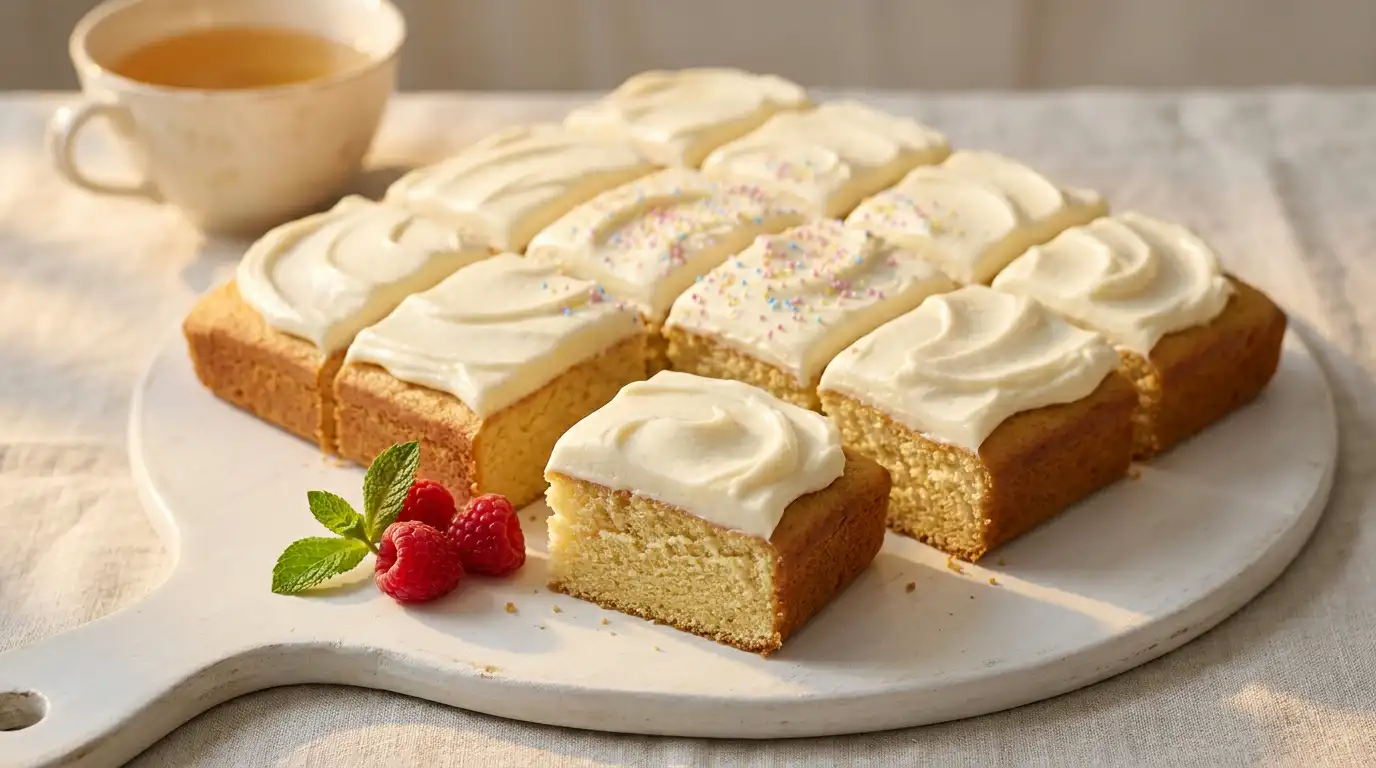
Mary Berry Vanilla Tray Bake Recipes
This vanilla tray bake is a pale golden sponge with a tender, close crumb and a faintly crisp top edge, carrying a clean, warm vanilla fragrance that deepens as it cools. The batter comes together quickly in one bowl, bakes evenly across a flat tin, and produces neat, portion-ready squares that hold their shape when cut.
It suits everything from a school bake sale to an afternoon tea, and the flat format means no fussing with layers or levelling. The vanilla buttercream finish adds a silky, lightly sweet coating without overpowering the sponge beneath. From start to finish, it is ready in around 55 minutes.
Ingredients
For the sponge
- 200g unsalted butter, softened
- 200g caster sugar
- 4 large eggs, at room temperature
- 2 tsp vanilla extract
- 200g self-raising flour, sifted
- 2 tbsp whole milk
- 1 tsp baking powder
For the vanilla buttercream
- 150g unsalted butter, softened
- 300g icing sugar, sifted
- 1.5 tsp vanilla extract
- 2 tbsp whole milk
To finish
- Sprinkles or coloured sugar, optional
How to Make Mary Berry Vanilla Tray Bake
- Prepare the tin: Lightly grease a 30cm x 23cm rectangular baking tin and line it with baking parchment, leaving a slight overhang on each long side to help with lifting later. Preheat the oven to 180°C (160°C fan, Gas 4).
- Cream the butter and sugar: Beat the softened butter and caster sugar together in a large bowl for 3 to 4 minutes until the mixture is noticeably paler and fluffy, this aerates the batter and contributes to the light crumb. Use an electric hand mixer or a stand mixer on medium speed.
- Add the eggs and vanilla: Crack in the eggs one at a time, beating well after each addition. Add the vanilla extract with the final egg. If the mixture begins to look curdled, add a tablespoon of the measured flour and continue beating.
- Fold in the flour: Sift the self-raising flour and baking powder directly into the bowl, then fold through gently using a large metal spoon or spatula. Stop as soon as no dry streaks remain, overmixing at this stage toughens the sponge.
- Loosen with milk: Add the milk and fold it through until the batter drops easily from the spoon with a slow, soft fall. The consistency should be smooth and just pourable, not runny.
- Spread and bake: Tip the batter into the prepared tin and spread it level with a palette knife or the back of a spoon. Bake on the middle shelf for 25 to 30 minutes until the sponge is golden, has pulled slightly from the sides of the tin, and a skewer inserted into the centre comes out clean.
- Cool completely: Leave the tray bake in the tin for 10 minutes before lifting it out using the parchment overhang, then transfer to a wire rack and leave until fully cold. Icing a warm sponge will cause the buttercream to melt and slide.
- Make the buttercream: Beat the softened butter until creamy, then gradually add the sifted icing sugar in two or three additions, mixing slowly at first to avoid a cloud of sugar. Add the vanilla extract and milk, then increase speed and beat for 2 minutes until the buttercream is smooth, pale, and spreadable.
- Ice and finish: Spread the buttercream evenly across the cooled sponge using a palette knife, working from the centre outward for a smooth finish. Add sprinkles or coloured sugar if using, then cut into approximately 15 to 18 squares with a sharp knife.
Tips for the Best Mary Berry Vanilla Tray Bake
Why is my tray bake denser than expected?
The butter and sugar were likely not beaten for long enough. The creaming stage should take at least 3 to 4 minutes at medium speed, until the mixture has increased in volume and turned a noticeably lighter shade. Under-creamed batter produces a heavier, more compact crumb.
Why did my bake sink in the middle after coming out of the oven?
The most common cause is opening the oven door too early, usually before the 20-minute mark. The sudden drop in temperature collapses the unset centre. Always wait until at least three-quarters of the baking time has passed before checking.
How do I get a flat, even surface on my tray bake?
Use a palette knife or small offset spatula to spread the batter into the corners before baking. Tap the tin gently on the worktop two or three times after filling, this settles any air pockets and encourages an even spread without overmixing.
Why is my buttercream grainy instead of smooth?
The icing sugar was either not sifted or was added too quickly. Sifting removes lumps before they can be beaten in, and adding the sugar in two or three stages, not all at once, allows it to fully incorporate before the next addition goes in.
Why does the parchment lift from the tin during baking?
Lightly grease the tin before lining it, this helps the parchment to lie flat and stay in contact with the base and sides. Cut the corners of the parchment at an angle so it sits neatly without overlapping folds that can catch on the batter.
Serving Suggestions
- Serve in neat squares on a flat board or tiered cake stand for an afternoon tea spread.
- Pair each square with a pot of Earl Grey or a strong Assam for a classic British teatime combination.
- Top with a small fresh raspberry or a sliced strawberry pressed lightly into the buttercream before the icing sets, for a sharper fruit note against the sweet vanilla.
- Dust with a little sifted icing sugar in place of buttercream for a lighter, less sweet finish suitable for younger guests.
- Warm individual squares gently in a low oven for 5 minutes and serve alongside a scoop of good vanilla ice cream for a simple dessert.
Storage
Room temperature
Store the iced tray bake in an airtight container at room temperature for up to 3 days.
Refrigerator
Place the squares in a single layer in an airtight container and refrigerate for up to 5 days. Allow them to sit at room temperature for 20 to 30 minutes before serving, as cold buttercream can taste dull and feel firm rather than soft and silky.
Freezing
Freeze the sponge without the buttercream, wrapping each cooled square tightly in clingfilm and then in a layer of foil, and keep for up to 2 months. Defrost at room temperature for 2 hours, then ice once the sponge has fully thawed.
Nutrition
- Calories: 285 kcal
- Carbohydrates: 36g
- Protein: 3g
- Fat: 14g
- Saturated Fat: 8g
- Sodium: 95mg
Nutrition values are estimates based on standard ingredient brands and may vary depending on the specific ingredients used and the size of each serving.
FAQs
Can I use baking spread instead of butter in a vanilla tray bake?
Yes, a good-quality baking spread works well in this recipe and is often softer straight from the fridge, which makes creaming easier. Avoid very low-fat spreads, as the higher water content can make the sponge heavy and affect how evenly it bakes.
Can I make this vanilla tray bake recipe ahead of time?
The sponge can be baked a day in advance and stored uniced, wrapped in clingfilm at room temperature. Make the buttercream fresh on the day of serving and ice the bake within a few hours of cutting for the cleanest presentation.
What size tin works best for this recipe?
A 30cm x 23cm rectangular tin gives a sponge depth of around 3 to 4cm, which is ideal for even baking and neat portions. A smaller tin will produce a deeper sponge that may need an additional 5 to 8 minutes in the oven, so check with a skewer.
Can I add lemon zest to this vanilla tray bake?
Yes, finely grated zest from one unwaxed lemon stirred into the batter gives a bright, citrus lift that sits well alongside the vanilla. A teaspoon of fresh lemon juice can also be added to the buttercream in place of one of the tablespoons of milk for a lemon buttercream finish.
Can I halve this recipe for a smaller batch?
Yes, halve all the quantities and bake in a 20cm square tin for 20 to 22 minutes, checking from around the 18-minute mark. The thinner batter will bake faster, so keep a close eye on colour and do the skewer test early.
Conclusion
Mary Berry vanilla tray bake recipes offer one of the most practical formats in home baking: a single batter, one tin, and a result that portions cleanly into 15 to 18 squares with very little effort. The sponge is reliably light with a gentle vanilla warmth, and the buttercream adds just enough sweetness to make each square feel finished without being heavy. It is the kind of bake that fits naturally into a weekday routine or a weekend gathering, and scales up or down to suit the occasion.
Whether this is a first attempt at tray baking or a returning favourite, the method here is designed to be clear, repeatable, and forgiving. Share your results in the comments below, or pass the recipe on to someone who would enjoy it. If you enjoyed this, you might also like the Mary Berry Tarte Tatin recipe for another classic bake that is elegant but well within reach at home.
Mary Berry Vanilla Tray Bake Recipes
Course: DessertCuisine: BritishDifficulty: Easy15
servings20
minutes30
minutes285
kcal55
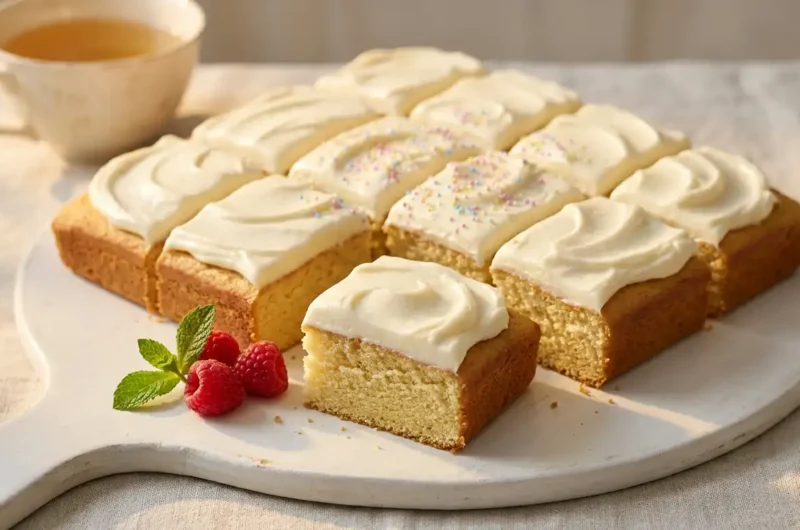
minutesA pale golden sponge with a tender, close crumb and a clean warm vanilla fragrance, topped with silky vanilla buttercream and cut into neat portions. Simple, reliable, and beginner-friendly with a one-bowl batter that suits everything from afternoon tea to a school bake sale.
Ingredients
200g unsalted butter, softened
200g caster sugar
4 large eggs, at room temperature
2 tsp vanilla extract
200g self-raising flour, sifted
2 tbsp whole milk
1 tsp baking powder
150g unsalted butter, softened
300g icing sugar, sifted
1.5 tsp vanilla extract
2 tbsp whole milk
sprinkles or coloured sugar, optional
Instructions
- Lightly grease a 30cm x 23cm rectangular baking tin and line it with baking parchment, leaving a slight overhang on each long side. Preheat the oven to 180C (160C fan, Gas 4).
- Beat the softened butter and caster sugar together in a large bowl for 3 to 4 minutes until the mixture is noticeably paler and fluffy.
- Crack in the eggs one at a time, beating well after each addition. Add the vanilla extract with the final egg.
- Sift the self-raising flour and baking powder directly into the bowl, then fold through gently using a large metal spoon or spatula until no dry streaks remain.
- Add the milk and fold it through until the batter drops easily from the spoon with a slow, soft fall.
- Tip the batter into the prepared tin, spread it level, and bake on the middle shelf for 25 to 30 minutes until golden and a skewer inserted into the centre comes out clean.
- Leave the tray bake in the tin for 10 minutes before lifting out using the parchment overhang, then transfer to a wire rack and leave until fully cold.
- Beat the softened butter until creamy, then gradually add the sifted icing sugar in two or three additions. Add the vanilla extract and milk, then beat for 2 minutes until smooth, pale, and spreadable.
- Spread the buttercream evenly across the cooled sponge using a palette knife. Add sprinkles or coloured sugar if using, then cut into approximately 15 to 18 squares with a sharp knife.
Notes
- Beat butter and sugar for a full 3 to 4 minutes to ensure a light, airy crumb.
- If the batter looks curdled when adding eggs, mix in a tablespoon of the measured flour to bring it back together.
- Do not open the oven door before the 20-minute mark to prevent the centre from sinking.
- Always cool the sponge completely before icing to stop the buttercream from melting.
- Sift the icing sugar before adding it to the butter to avoid a grainy buttercream.
- Freeze the sponge without buttercream for best results when storing long term.