Mary Berry Courgette Cake Recipe
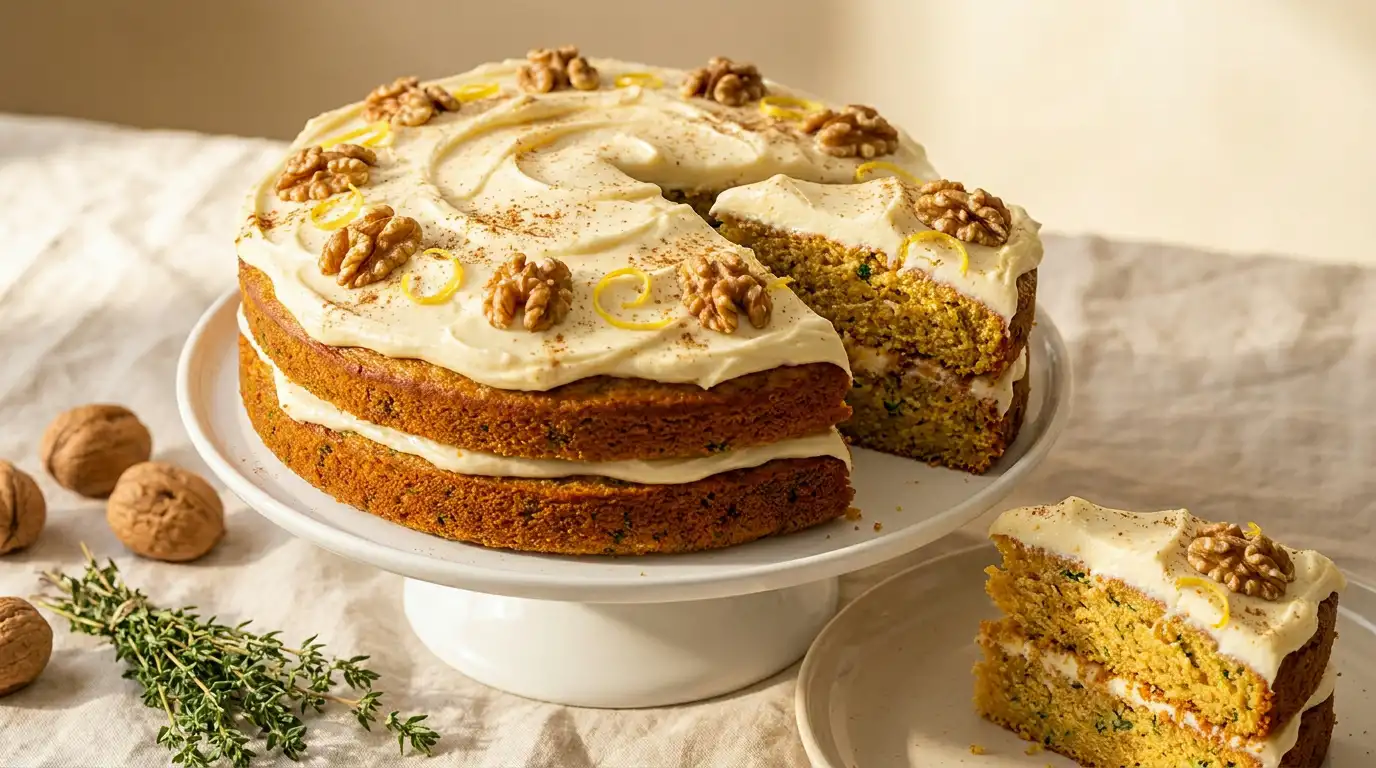
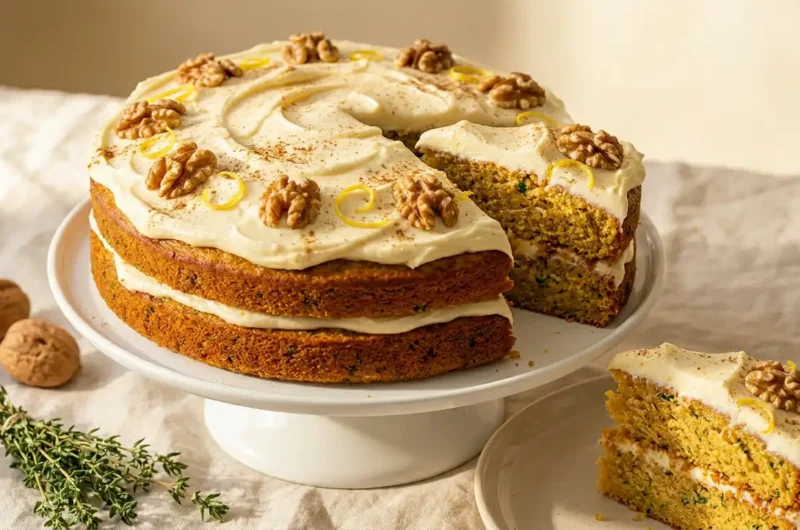
This courgette cake is a moist, tender sponge with a fine, open crumb and a gentle warmth from ground cinnamon. The grated courgette melts into the batter as it bakes, leaving behind a soft, almost velvet-like texture that holds beautifully under a thick layer of cream cheese frosting. It is the kind of cake that surprises people, subtly earthy in flavour but balanced by the sweetness of the sponge and the tang of the topping.
What makes this version reliable is the method. The batter comes together quickly in one bowl, with no creaming required, making it well suited to bakers of any level. It works as a weekday treat, a birthday centrepiece, or a garden party showstopper. From start to finish, it is ready in around 1 hour 20 minutes.
Ingredients
For the sponge
- 250g courgette, coarsely grated
- 200g self-raising flour
- 1 tsp baking powder
- 1 tsp ground cinnamon
- ½ tsp ground nutmeg
- 150g caster sugar
- 75g light muscovado sugar
- 3 large eggs
- 150ml sunflower oil
- 1 tsp vanilla extract
- Finely grated zest of 1 unwaxed lemon
For the cream cheese frosting
- 200g full-fat cream cheese, at room temperature
- 75g unsalted butter, softened
- 200g icing sugar, sifted
- 1 tsp vanilla extract
To finish
- 25g walnut halves, roughly chopped
- Lemon zest curls or a light dusting of cinnamon
How to Make Mary Berry Courgette Cake Recipe
- Prepare the tin: Preheat the oven to 180°C (160°C fan, Gas 4). Grease and line two 20cm round sandwich tins with baking paper, making sure the paper sits flat against the base.
- Grate and press the courgette: Coarsely grate the courgette onto a clean tea towel, then gather the edges and squeeze firmly over the sink. This removes excess moisture and prevents the sponge from becoming dense or gummy.
- Combine the dry ingredients: Sift the flour, baking powder, cinnamon, and nutmeg into a large mixing bowl. Add both sugars and stir briefly to distribute evenly through the flour.
- Add the wet ingredients: Make a well in the centre of the dry mixture. Add the eggs, sunflower oil, vanilla extract, and lemon zest. Beat together using a wooden spoon or spatula until the batter is smooth and glossy, taking care not to overmix once the flour is incorporated.
- Fold in the courgette: Add the pressed courgette to the batter and fold through gently with a spatula, using slow, sweeping strokes so the strands stay evenly distributed without breaking down further.
- Divide and bake: Spoon the batter evenly between the two prepared tins and smooth the surfaces level. Bake on the middle shelf for 25 to 30 minutes, until the tops are golden, the edges have pulled away slightly from the tin, and a skewer inserted into the centre comes out clean.
- Cool the sponges: Leave the cakes in their tins for 10 minutes before turning out onto a wire rack. Peel off the baking paper and allow to cool completely before frosting, as residual heat will melt the cream cheese topping.
- Make the frosting: Beat the softened butter until pale and creamy. Add the cream cheese and beat again until just combined. Sift in the icing sugar and add the vanilla, then mix on a low speed until smooth. Do not over-beat once the cream cheese is added, as this can cause the frosting to loosen.
- Assemble the cake: Place one sponge on a serving plate or cake stand. Spread roughly half the frosting over the top in an even layer. Lay the second sponge on top and press down very gently. Spread the remaining frosting over the surface.
- Finish and serve: Scatter the chopped walnuts across the top of the frosting. Add a few curls of lemon zest or a light dusting of ground cinnamon to finish. Slice cleanly with a knife dipped in hot water and wiped dry between cuts.
Tips for the Best Mary Berry Courgette Cake
Why is my courgette cake soggy in the middle?
This almost always comes down to moisture left in the courgette. Always squeeze the grated courgette very firmly in a tea towel before adding it to the batter. Even a small amount of extra liquid can prevent the centre from setting properly during baking.
Why has my cake sunk after coming out of the oven?
A sunken centre usually means the cake was underbaked or the oven door was opened too early. Wait until the 25-minute mark before testing, and use a skewer rather than pressing the top, as pressing can deflate a fragile sponge before it has fully set.
Why is my cream cheese frosting runny?
Over-beating is the most common cause. Once the cream cheese is added, mix only until the frosting is smooth and no lumps remain. If it does loosen, chill it in the refrigerator for 20 minutes before spreading, which will firm it back to a spreadable consistency.
How do I stop the top of the cake from cracking?
A cracked top is usually caused by too much heat at the start of baking. Make sure the oven is fully preheated to the correct temperature and that the tins are placed centrally on the middle shelf, away from the top element.
Why does my sponge taste bitter after baking?
This points to too much baking powder or spice. Measure baking powder with a proper measuring spoon and level it off flat rather than heaping it. Old or stale spices can also turn acrid when baked, so check the dates on your ground cinnamon and nutmeg before using them.
Serving Suggestions
- Serve in thick slices alongside a pot of strong Assam or Earl Grey for an afternoon tea spread.
- Dust the finished cake lightly with icing sugar and a pinch of cinnamon for a more rustic, pared-back presentation.
- Pair a slice with a small quenelle of crème fraîche for a dessert course, where its freshness cuts through the richness of the frosting.
- Plate individual slices on a white or pale ceramic plate to let the warm amber tones of the sponge come through visually.
- Add a scattering of lightly toasted walnut halves and a sprig of fresh mint across the top of the cake for a garden party centrepiece.
Storage
Room temperature
Once assembled and frosted, store the cake in an airtight container at cool room temperature for up to 2 days.
Refrigerator
Because of the cream cheese frosting, the cake keeps well in the refrigerator for up to 5 days when stored in a covered container or under a cake dome. Remove it from the refrigerator at least 30 minutes before serving, as the sponge firms considerably when chilled and benefits from returning to room temperature.
Freezing
The sponge layers can be frozen unfrosted. Wrap each cooled sponge individually in clingfilm and then in a layer of foil, and freeze for up to 3 months. Defrost at room temperature for 2 to 3 hours before frosting and assembling as normal.
Nutrition
- Calories: 420 kcal
- Carbohydrates: 48g
- Protein: 5g
- Fat: 23g
- Saturated Fat: 9g
- Sodium: 210mg
Nutrition values are estimates based on average ingredient weights and may vary depending on the specific brands used and how generously the cake is sliced.
FAQs
Can I use wholemeal flour instead of self-raising flour in this recipe?
Wholemeal flour will make the sponge considerably denser and the crumb heavier. If you want to use it, replace no more than half the self-raising flour with wholemeal self-raising flour, and expect a slightly shorter rise. Plain wholemeal flour without raising agents is not a suitable swap here.
Can I make this courgette cake ahead of time?
Yes, the sponge layers bake well a day in advance. Store them wrapped in clingfilm at room temperature overnight, then frost and assemble on the day of serving. The frosting can also be made ahead and kept covered in the refrigerator, though it will need a brief stir before spreading.
Can I add nuts or dried fruit directly into the batter?
Chopped walnuts or pecans work particularly well folded into the batter just before dividing between the tins. Use around 60g to 75g. Dried fruit such as sultanas can also be added but will add extra sweetness, so consider reducing the caster sugar by 20g if using them.
What size tins work best for this courgette cake recipe?
Two 20cm round sandwich tins give the best result, producing two even layers with enough height to hold the frosting cleanly. A single 23cm tin can be used if you prefer one deeper cake, though the baking time will increase to around 40 to 45 minutes.
Can I use oil instead of butter in the sponge?
This recipe is already built around sunflower oil rather than butter, which is precisely what gives the courgette cake its particularly moist crumb. Oil coats the flour proteins differently from butter and keeps the sponge tender even after a day or two of storage, making it a deliberate choice rather than a shortcut.
Conclusion
This Mary Berry courgette cake recipe delivers a sponge that is consistently moist, gently spiced, and topped with a thick, tangy cream cheese frosting. The method is straightforward, the result is reliable, and the cake slices cleanly, making it a solid choice whether you are baking for family or guests. This recipe yields 10 to 12 generous slices, depending on how the cake is divided.
If you have a courgette to use up or simply want a cake that holds well for a few days without drying out, this is a recipe worth keeping. Try it once and the batter will feel like second nature. Share your results in the comments below, and let others know how it turned out. If you enjoyed this, you might also like this Mary Berry banana muffins recipe, another easy, oil-based bake that is just as simple to put together.
Mary Berry Courgette Cake Recipe
Course: DessertCuisine: BritishDifficulty: Easy12
servings20
minutes30
minutes420
kcal1
hour20
minutesA moist, tender sponge cake with a fine open crumb, gently spiced with cinnamon and nutmeg, and topped with a thick tangy cream cheese frosting. This one-bowl bake comes together quickly and suits bakers of any level.
Ingredients
250g courgette, coarsely grated
200g self-raising flour
1 tsp baking powder
1 tsp ground cinnamon
1/2 tsp ground nutmeg
150g caster sugar
75g light muscovado sugar
3 large eggs
150ml sunflower oil
1 tsp vanilla extract
finely grated zest of 1 unwaxed lemon
200g full-fat cream cheese, at room temperature
75g unsalted butter, softened
200g icing sugar, sifted
1 tsp vanilla extract
25g walnut halves, roughly chopped
lemon zest curls or a light dusting of cinnamon to finish
Instructions
- Preheat the oven to 180C (160C fan, Gas 4). Grease and line two 20cm round sandwich tins with baking paper.
- Coarsely grate the courgette onto a clean tea towel, then gather the edges and squeeze firmly over the sink to remove excess moisture.
- Sift the flour, baking powder, cinnamon, and nutmeg into a large mixing bowl. Add both sugars and stir briefly to distribute evenly.
- Make a well in the centre of the dry mixture. Add the eggs, sunflower oil, vanilla extract, and lemon zest. Beat together until the batter is smooth and glossy without overmixing.
- Fold the pressed courgette into the batter using slow, sweeping strokes with a spatula until evenly distributed.
- Spoon the batter evenly between the two prepared tins and smooth the surfaces level. Bake on the middle shelf for 25 to 30 minutes until golden and a skewer inserted in the centre comes out clean.
- Leave the cakes in their tins for 10 minutes before turning out onto a wire rack. Peel off the baking paper and allow to cool completely.
- Beat the softened butter until pale and creamy. Add the cream cheese and beat until just combined. Sift in the icing sugar, add the vanilla, and mix on a low speed until smooth.
- Place one sponge on a serving plate. Spread roughly half the frosting over the top in an even layer. Lay the second sponge on top and press down gently. Spread the remaining frosting over the surface.
- Scatter the chopped walnuts across the top and finish with lemon zest curls or a light dusting of ground cinnamon. Slice with a knife dipped in hot water and wiped dry between cuts.
Notes
- Always squeeze grated courgette firmly before adding to the batter to prevent a soggy sponge.
- Do not over-beat the frosting once cream cheese is added as this causes it to loosen.
- If the frosting becomes too soft, chill it in the refrigerator for 20 minutes before spreading.
- The sponge layers can be baked a day ahead and stored wrapped in clingfilm at room temperature.
- For a deeper cake, bake the batter in a single 23cm tin for 40 to 45 minutes instead.
- Fold 60g to 75g of chopped walnuts or pecans into the batter for added texture.