Mary Berry Swiss Roll Recipe
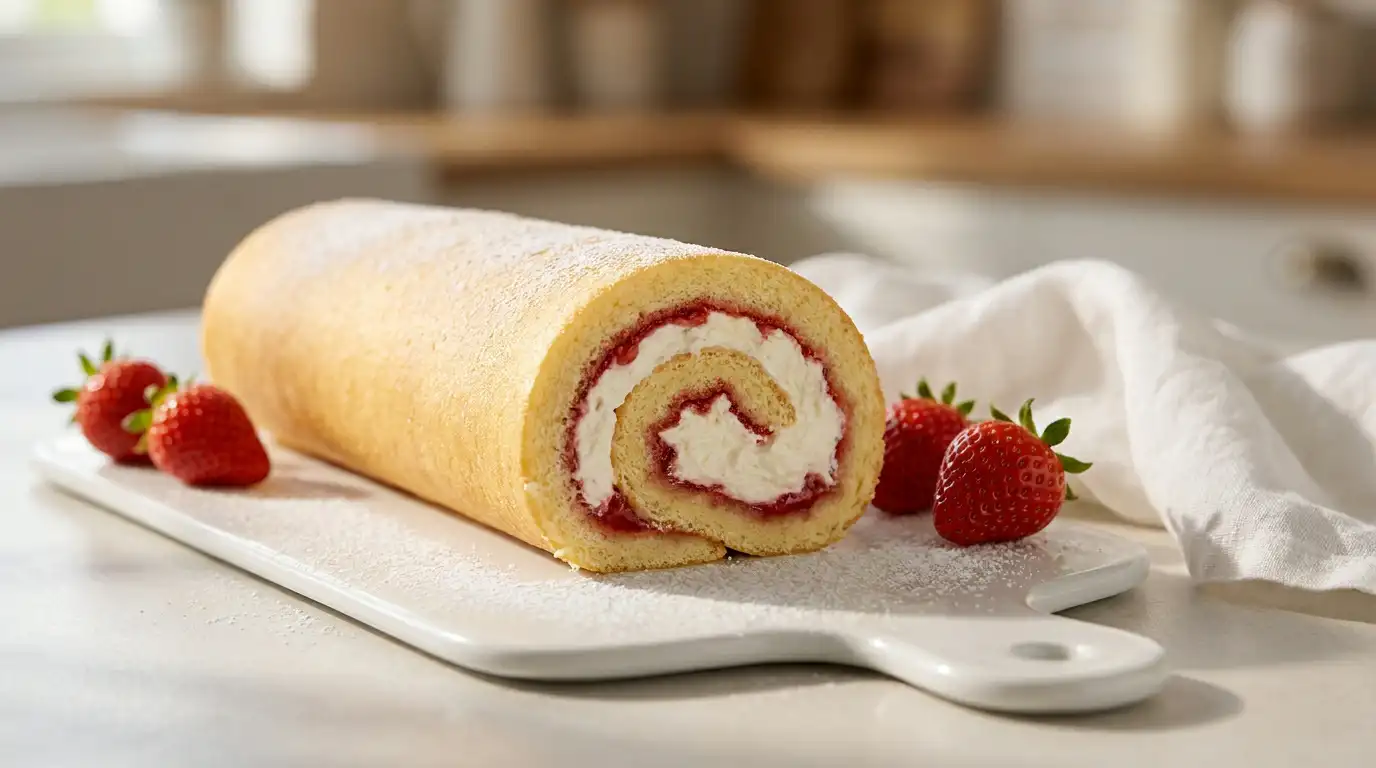
A Swiss roll is a light, springy sponge with a pale golden surface that rolls up around a generous layer of softly whipped cream and sweet strawberry jam. The crumb is tender and airy, the filling cool and lightly set, and when sliced, each round reveals a neat, even spiral that looks far more impressive than the effort required. This is a classic bake that works just as well for an afternoon tea as it does for a casual weekend pudding. The recipe is straightforward enough for a first-time baker but produces results that look polished and neat every time. From start to finish, it is ready in around 40 minutes.
What makes this version reliable is the method. The sponge uses a simple whisked egg and sugar base that creates enough structure to roll without cracking, and the timing is kept short so the sponge stays pliable straight out of the oven. Rolling it while warm is the key step that makes the whole process work.
Ingredients
For the sponge
- 3 large eggs, at room temperature
- 90g caster sugar, plus extra for dusting
- 90g self-raising flour, sifted
- 1 tsp vanilla extract
For the filling
- 150ml double cream, chilled
- 1 tbsp icing sugar, sifted
- 4 tbsp good-quality strawberry jam
To finish
- 1 tbsp icing sugar, for dusting
How to Make Mary Berry Swiss Roll Recipe
- Prepare the tin: Heat the oven to 200C (180C fan, Gas 6). Grease a 23cm x 33cm Swiss roll tin and line it with baking parchment, pressing the paper neatly into the corners so the sponge bakes flat.
- Whisk the eggs and sugar: Place the eggs and caster sugar in a large, clean bowl and use an electric hand whisk to beat them together for 5 to 7 minutes until the mixture is very pale, thick, and holds a ribbon trail when the whisk is lifted. This long whisking time is what gives the sponge its airy, open texture.
- Add the vanilla: Pour in the vanilla extract and whisk briefly for another 10 seconds to incorporate evenly.
- Fold in the flour: Add the sifted flour all at once and fold it in gently using a large metal spoon, cutting through the mixture in slow, deliberate figures of eight. Stop folding as soon as the flour disappears to keep as much air in the batter as possible.
- Bake the sponge: Pour the batter into the prepared tin and spread it to the corners with a palette knife or the back of a spoon. Place in the centre of the oven and bake for 10 to 12 minutes until the sponge is golden, set at the edges, and springs back when lightly pressed in the middle.
- Roll while warm: Lay a sheet of baking parchment on the work surface and dust it generously with caster sugar. Turn the sponge out onto the sugared paper and carefully peel away the lining paper from the base. While the sponge is still warm and pliable, roll it up tightly from the short end with the sugared paper inside. Rolling the sponge at this stage trains it into shape so it will not crack when filled later.
- Cool completely: Place the rolled sponge on a wire rack and leave it to cool fully, at least 20 to 25 minutes. Do not rush this step; filling a warm sponge will cause the cream to melt and run.
- Whip the cream: Whisk the chilled double cream with the icing sugar until it just holds soft, billowy peaks. It should be thick enough to spread without being stiff or grainy.
- Fill and re-roll: Carefully unroll the cooled sponge and spread the jam evenly across the surface, leaving a 1cm border at the far short edge. Spread the whipped cream over the jam in an even layer. Roll the sponge back up firmly using the paper to help guide and tighten it, but remove the paper as you roll so it does not get trapped inside.
- Finish and serve: Place the Swiss roll seam-side down on a serving plate or board. Dust the top with icing sugar passed through a small sieve for an even, fine coating. Slice with a sharp serrated knife using a gentle sawing motion to keep the spiral neat.
Tips for the Best Swiss Roll
Why did my Swiss roll crack when I rolled it?
The sponge was most likely left too long before rolling. It must be turned out and rolled while still hot from the oven. Once it cools flat, it loses its flexibility and will split along the outside edge when you try to curl it.
Why is my sponge dense and flat rather than light and airy?
The eggs and sugar were not whisked for long enough. The mixture needs to reach the full ribbon stage, where it falls from the whisk in a thick, slow ribbon that sits on the surface for several seconds before sinking. Anything less and the sponge will lack the structure to hold its shape.
How do I stop the cream filling from oozing out when I cut slices?
Whip the cream only to soft peaks rather than stiff peaks. Overly firm cream tends to split under the pressure of slicing. Chilling the finished roll for 20 minutes in the refrigerator before slicing also helps it hold together cleanly.
Why does the sponge stick to the tin even though I lined it?
The parchment needs to be pressed firmly into the corners of the tin, with no gaps or air pockets. Greasing both the tin and the top surface of the paper before pouring in the batter also helps. A sponge that sticks will tear when you try to turn it out.
My spiral is uneven. How do I get a tighter, more uniform roll?
Start the roll at the short end and apply firm, even pressure along the full width of the sponge as you go. Using the sugared paper to pull and guide the roll rather than pressing directly with your hands gives you much better control and a tighter, more consistent spiral.
Serving Suggestions
- Serve in thick slices alongside a pot of Earl Grey or Assam tea for a classic afternoon tea spread.
- Arrange on a long board dusted with extra icing sugar and add fresh strawberries or raspberries alongside for colour and freshness.
- Pair each slice with a small spoonful of good vanilla ice cream for a simple pudding at the end of a dinner party.
- Dust with a mix of icing sugar and a little cocoa powder for a slightly more grown-up presentation without changing the flavour.
- Serve chilled straight from the refrigerator on warm days, as the cool cream filling makes it particularly refreshing when the sponge is cold and firm.
Storage
Room temperature
Keep in an airtight container for up to 1 day in a cool spot away from direct sunlight, provided the kitchen is not too warm.
Refrigerator
Wrap the roll loosely in cling film or place it in an airtight container and refrigerate for up to 2 days. Remove it from the fridge 15 minutes before serving so the cream softens slightly and the sponge loses its chill for the best texture.
Freezing
Wrap the unfilled, cooled sponge tightly in cling film followed by a layer of foil and freeze for up to 1 month. Defrost overnight in the refrigerator, then fill and roll as described once fully thawed. A filled and rolled Swiss roll does not freeze well, as the cream filling breaks down on defrosting.
Nutrition
- Calories: 245 kcal
- Carbohydrates: 32g
- Protein: 4g
- Fat: 11g
- Saturated Fat: 6g
- Sodium: 75mg
Nutrition values are estimates based on the ingredients listed above and may vary depending on the specific brands used and the exact serving size.
FAQs
Can I use plain flour instead of self-raising flour in a Swiss roll?
Yes. Replace the self-raising flour with the same quantity of plain flour and add half a teaspoon of baking powder. Sift them together thoroughly before folding into the egg mixture so the raising agent is evenly distributed.
Can I make a Swiss roll the day before serving?
The sponge can be baked and rolled in the sugared paper up to a day ahead, then left at room temperature in the paper until needed. Fill and re-roll on the day of serving for the freshest result, as cream-filled rolls are best eaten within a few hours of assembly.
What size tin is best for a Swiss roll?
A 23cm x 33cm Swiss roll tin is the standard size for this recipe. Using a smaller tin will produce a sponge that is too thick and may crack when rolled, while a larger tin will give a sponge that is too thin and fragile to handle easily.
Can I use a different jam flavour in a Swiss roll?
Any smooth jam works well here. Raspberry jam is the most traditional choice and gives a slightly sharper flavour against the sweet cream. Apricot, blackcurrant, or blueberry jam all work too, though avoid jams with large pieces of fruit as they create an uneven surface that makes rolling difficult.
Can I make a chocolate Swiss roll using this recipe?
Replace 15g of the flour with 15g of good-quality cocoa powder and sift them together before folding in. The method stays exactly the same. A chocolate sponge pairs well with a filling of whipped cream and a thin layer of chocolate hazelnut spread in place of the jam.
Conclusion
This Mary Berry Swiss roll is a light, elegantly presented bake that comes together in well under an hour. The whisked sponge is pale and springy, the cream filling is soft and cool, and the jam adds just enough sweetness and colour to make each spiral look as good as it tastes. This recipe makes one Swiss roll, enough for 8 slices, which is ideal for a small gathering or a generous family tea. Once you understand the rolling technique, this becomes one of the most repeatable and satisfying bakes in a home baker’s collection.
If the steps above have given you the confidence to give this a go, share your results in the comments below. It is always useful to hear how different ovens and kitchens affect the bake, and your tips could help other readers too. If you enjoyed making this, you might also like the Mary Berry Marzipan Recipe, which is another classic that rewards careful technique and uses simple, everyday ingredients.

Mary Berry Swiss Roll Recipe
Course: DessertCuisine: BritishDifficulty: Easy8
servings20
minutes12
minutes245
kcal40
minutesA light, springy sponge rolled around softly whipped cream and strawberry jam. This classic British bake is beginner-friendly, ready in 40 minutes, and produces a neat, even spiral every time.
Ingredients
3 large eggs, at room temperature
90g caster sugar, plus extra for dusting
90g self-raising flour, sifted
1 tsp vanilla extract
150ml double cream, chilled
1 tbsp icing sugar, sifted
4 tbsp good-quality strawberry jam
1 tbsp icing sugar, for dusting
Instructions
- Heat the oven to 200C (180C fan, Gas 6). Grease a 23cm x 33cm Swiss roll tin and line it with baking parchment, pressing the paper neatly into the corners so the sponge bakes flat.
- Place the eggs and caster sugar in a large, clean bowl and use an electric hand whisk to beat them together for 5 to 7 minutes until the mixture is very pale, thick, and holds a ribbon trail when the whisk is lifted.
- Pour in the vanilla extract and whisk briefly for another 10 seconds to incorporate evenly.
- Add the sifted flour all at once and fold it in gently using a large metal spoon, cutting through the mixture in slow, deliberate figures of eight until the flour just disappears.
- Pour the batter into the prepared tin, spread it to the corners, and bake for 10 to 12 minutes until the sponge is golden and springs back when lightly pressed in the middle.
- Turn the sponge out onto a sheet of baking parchment dusted with caster sugar, peel away the lining paper, and roll the sponge up tightly from the short end with the sugared paper inside while still warm.
- Place the rolled sponge on a wire rack and leave to cool completely for at least 20 to 25 minutes.
- Whisk the chilled double cream with the icing sugar until it just holds soft, billowy peaks.
- Carefully unroll the cooled sponge, spread the jam evenly across the surface leaving a 1cm border, then spread the whipped cream over the jam in an even layer.
- Roll the sponge back up firmly using the paper to guide it, place seam-side down on a serving plate, and dust the top with icing sugar before slicing with a sharp serrated knife.
Notes
- Roll the sponge while it is still hot from the oven to prevent cracking.
- Whisk eggs and sugar to a full ribbon stage for an airy, open texture.
- Whip cream only to soft peaks to prevent splitting when slicing.
- Chill the filled roll for 20 minutes before slicing for a cleaner spiral.
- Freeze the unfilled sponge only, as a cream-filled roll does not freeze well.
- Use a sharp serrated knife with a gentle sawing motion to keep each slice neat.