Mary Berry Piccalilli Recipe
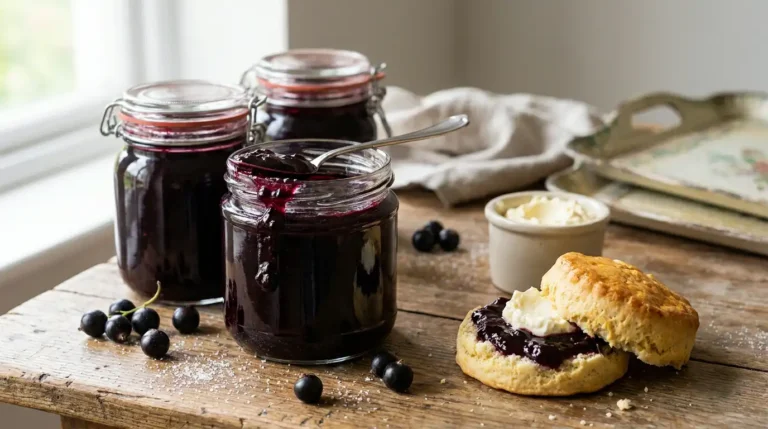
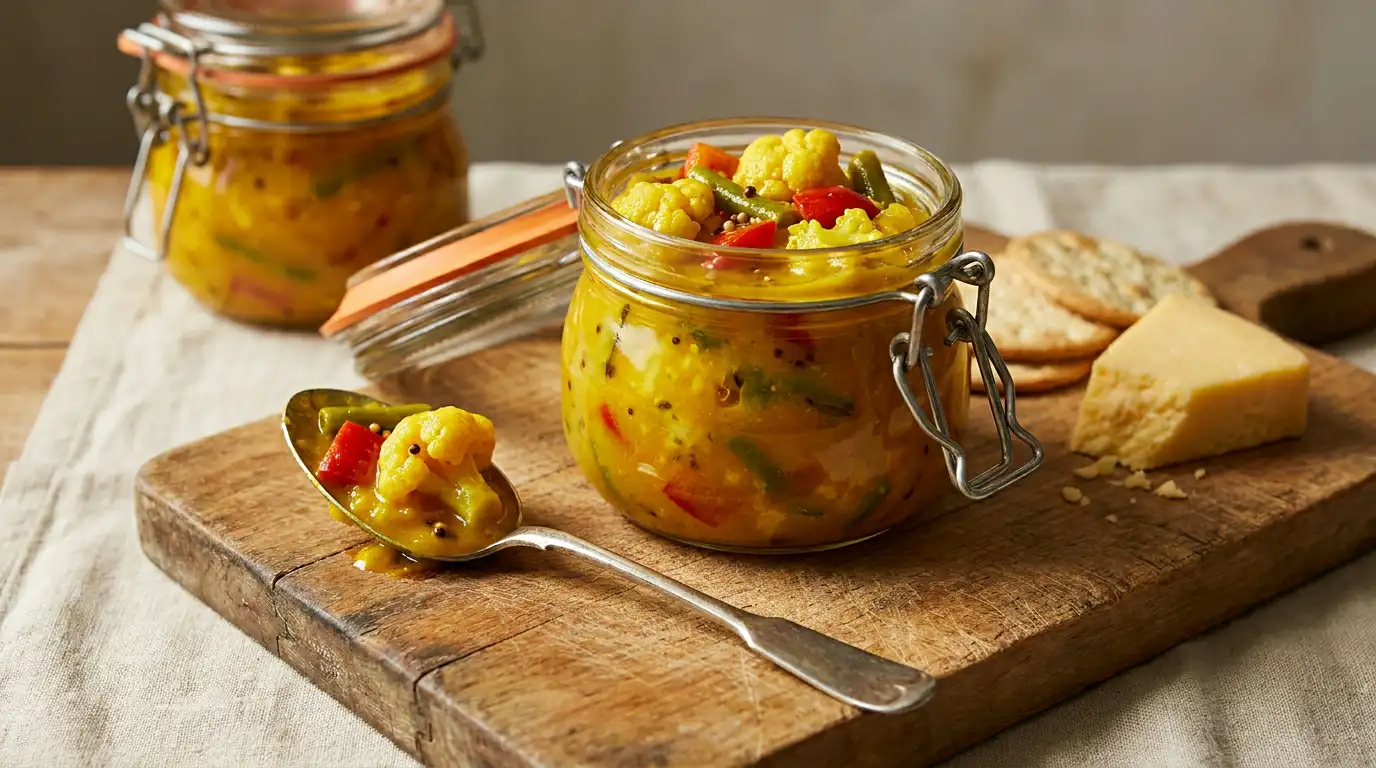
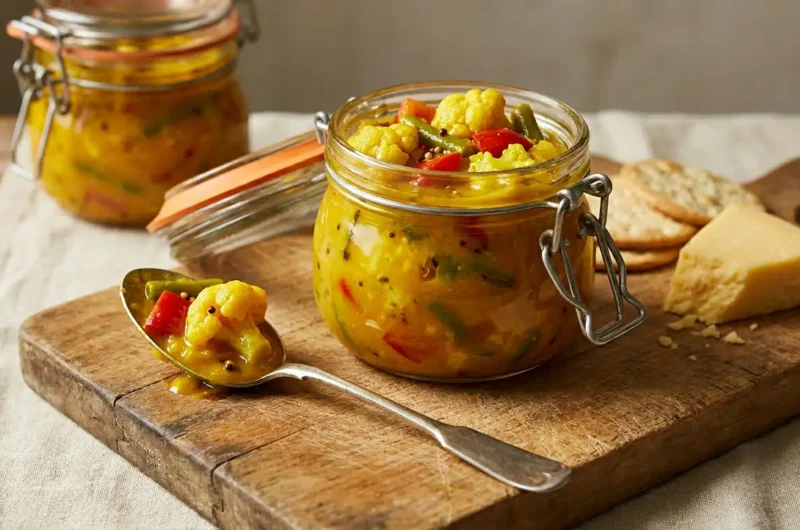
Mary Berry Piccalilli is a boldly coloured, mustard-sharp preserve packed with crunchy cauliflower, crisp courgette, and firm green beans, all coated in a thick, turmeric-golden sauce with a tangy vinegar finish. It cuts through rich meats and cheeses beautifully, making it one of those store-cupboard jars you reach for again and again.
This version keeps the method straightforward and the ingredient list manageable, so it is well suited to anyone making piccalilli for the first time. The brine step does most of the work overnight, leaving just a short cooking time the following day. From start to finish, including the overnight salting, it is ready in around 14 hours.
Ingredients
For the vegetables
- 350g cauliflower, cut into small florets
- 200g courgette, diced into 1cm cubes
- 150g French green beans, trimmed and cut into 2cm lengths
- 150g small pickling onions, peeled and halved
- 1 red pepper, deseeded and diced into 1cm pieces
- 40g fine sea salt
For the piccalilli sauce
- 500ml malt vinegar
- 150g caster sugar
- 2 tsp ground turmeric
- 2 tsp English mustard powder
- 1 tsp ground ginger
- 1 tsp yellow mustard seeds
- ½ tsp ground coriander
- 3 tbsp cornflour
- 3 tbsp cold water
How to Make Mary Berry Piccalilli Recipe
- Salt the vegetables: Place all the prepared vegetables into a large mixing bowl. Scatter over the fine sea salt and toss everything together until the salt is evenly distributed. Cover with a clean tea towel and leave at room temperature for 12 hours or overnight, as this draws out excess moisture and keeps the vegetables firm after cooking.
- Rinse and dry: Tip the salted vegetables into a colander and rinse thoroughly under cold running water. Shake off as much water as possible, then spread the vegetables out on a clean tea towel and pat dry. Any residual moisture will thin the sauce, so take care here.
- Make the spiced vinegar base: Pour 400ml of the malt vinegar into a large, heavy-based saucepan. Add the caster sugar, turmeric, mustard powder, ground ginger, mustard seeds, and ground coriander. Set the pan over a medium heat and stir until the sugar has fully dissolved, then bring the liquid to a gentle simmer.
- Add the vegetables: Tip the dried vegetables into the simmering spiced vinegar. Stir to combine, then cook over a medium heat for 5 to 6 minutes. The vegetables should retain a noticeable bite; they will soften slightly further as the jar cools.
- Thicken the sauce: In a small bowl, whisk together the cornflour and the remaining 100ml cold water until completely smooth, with no lumps remaining. Pour this mixture into the pan in a steady stream, stirring constantly. The sauce will thicken within 1 to 2 minutes to a coating consistency that clings to the vegetables.
- Sterilise the jars: While the piccalilli is cooking, wash two 500ml glass jars and their lids in hot soapy water, rinse well, and place them upright on a baking tray in an oven set to 140C (fan 120C) for 15 minutes. Using sterilised jars prevents spoilage and extends the shelf life considerably.
- Pot and seal: Remove the jars from the oven using a clean cloth. Ladle the hot piccalilli into the warm jars, pressing the vegetables down gently to remove any air pockets. Fill to within 1cm of the rim, then seal immediately with the lids. Leave to cool completely on a wire rack before labelling and storing.
Tips for the Best Mary Berry Piccalilli Recipe
Why is my piccalilli sauce too thin after adding the cornflour?
The cornflour needs a full minute or two of steady simmering to activate and thicken properly. If the sauce still looks thin, mix a teaspoon of cornflour with a little cold water and stir it in, then return the pan to the heat and cook for another minute.
Why did my vegetables turn mushy instead of staying crunchy?
Overcooking is the most common cause. The vegetables only need 5 to 6 minutes in the simmering vinegar. Remove the pan from the heat as soon as they lose their raw edge but still push back slightly when pressed with a spoon.
Why does my piccalilli look pale rather than the classic bright golden colour?
The depth of colour comes from using good-quality ground turmeric. If the jar looks dull, the spice may have been sitting in the cupboard for too long. Fresh turmeric gives a vivid, almost neon-yellow sauce that intensifies slightly as the piccalilli matures in the jar.
Why is my piccalilli too salty even after rinsing?
The vegetables need a thorough rinse under running cold water for a full minute or so, not just a quick swill. If it still tastes overly salty, soak the rinsed vegetables in fresh cold water for ten minutes before patting them dry.
Why is the sauce sticking to the bottom of the pan?
Once the cornflour goes in, the sauce thickens quickly and can catch on the base if the heat is too high. Reduce to a low heat the moment the cornflour mixture is added, and keep stirring in wide, sweeping movements across the entire base of the pan.
Serving Suggestions
- Spoon alongside a thick wedge of mature Cheddar and a handful of water biscuits for a classic ploughman’s plate.
- Serve with sliced cold cuts of gammon or roast ham, where the sharp vinegar cuts through the fat cleanly.
- Pile onto a cheese toastie just before closing the bread, so the heat from the grill warms the piccalilli without cooking it further.
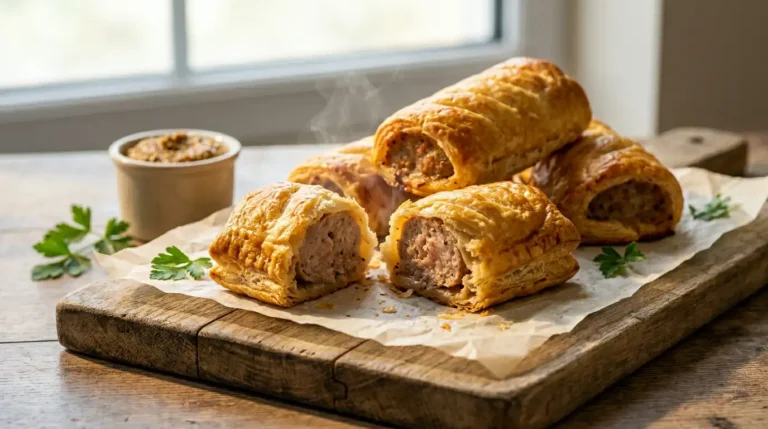
- Offer as a table condiment with sausage rolls or pork pies at a buffet or picnic spread.
- Stir a tablespoon into a coronation chicken filling to add acidity and a mustard warmth alongside the curry spices.
Storage
Room Temperature
Store sealed, unopened jars in a cool, dark cupboard in an airtight environment for up to three months.
Refrigerator
Once opened, keep the jar sealed in the refrigerator for up to four weeks. Bring the jar to room temperature for around twenty minutes before serving to allow the sauce to loosen slightly and the flavours to come forward.
Freezing
Piccalilli is not suitable for freezing, as the high vinegar content and the cornflour-thickened sauce break down on thawing, leaving the vegetables waterlogged and the sauce separated. Make the recipe in small batches and refrigerate the opened jar instead of freezing.
Nutrition
- Calories: 45 kcal
- Carbohydrates: 9g
- Protein: 1g
- Fat: 0.5g
- Saturated Fat: 0g
- Sodium: 320mg
Nutrition values are estimates based on one 2-tablespoon serving and may vary depending on the specific ingredients used and serving size.
FAQs
Can I use white wine vinegar instead of malt vinegar in piccalilli?
Yes, white wine vinegar works well and gives a milder, slightly less robust flavour. The colour of the finished piccalilli will also be a fraction brighter since malt vinegar adds a faint brownish tint. Use the same quantity as stated in the recipe.
Can I make piccalilli without cornflour to thicken the sauce?
Plain flour can be used as a substitute, but it needs a little longer to cook out its raw taste. Use the same weight and whisk it into cold water in the same way, then simmer the sauce for an extra two minutes after adding it to the pan.
Can I add different vegetables to this piccalilli recipe?
Yes, piccalilli is quite flexible with its vegetable content. Small diced cucumber, celery, or baby corn all work well. The key is to keep the total vegetable weight roughly the same so the ratio of sauce to vegetables stays balanced.
Can I make this piccalilli recipe ahead of time?
Piccalilli actually improves with time. The flavours mellow and deepen after the jars have been left sealed for at least two weeks, so making it several weeks ahead is genuinely worthwhile rather than just convenient.
Is this piccalilli recipe suitable for a gluten-free diet?
The recipe as written uses cornflour, which is naturally gluten-free. However, some brands of malt vinegar are derived from barley and contain gluten. If cooking for someone with coeliac disease or a gluten intolerance, swap the malt vinegar for cider vinegar or white wine vinegar, which are gluten-free.
Conclusion
This Mary Berry Piccalilli Recipe delivers a deeply savoury, mustard-forward preserve with genuinely crunchy vegetables and a sauce that has real body and colour. The method is split across two days but requires very little active cooking time, making it a practical project for a weekend. The recipe makes approximately two 500ml jars, giving around 20 to 25 generous servings in total.
Once you have made a batch, it is easy to see why homemade piccalilli outperforms anything from a supermarket shelf. Share this recipe with anyone who enjoys making their own preserves, or leave a comment below to let others know how yours turned out. If you enjoyed this, you might also like the Mary Berry Meringue Nests Recipe for a beautifully classic and crowd-pleasing sweet treat.
Mary Berry Piccalilli Recipe
Course: CondimentCuisine: BritishDifficulty: Easy20
servings20
minutes20
minutes45
kcal14
hoursA boldly coloured, mustard-sharp preserve packed with crunchy cauliflower, courgette, and green beans, all coated in a thick turmeric-golden sauce with a tangy vinegar finish. This classic homemade piccalilli is beginner-friendly and perfect for pairing with cheese, cold meats, and pies.
Ingredients
350g cauliflower, cut into small florets
200g courgette, diced into 1cm cubes
150g French green beans, trimmed and cut into 2cm lengths
150g small pickling onions, peeled and halved
1 red pepper, deseeded and diced into 1cm pieces
40g fine sea salt
500ml malt vinegar
150g caster sugar
2 tsp ground turmeric
2 tsp English mustard powder
1 tsp ground ginger
1 tsp yellow mustard seeds
half tsp ground coriander
3 tbsp cornflour
3 tbsp cold water
Instructions
- Place all prepared vegetables into a large mixing bowl, scatter over the fine sea salt, toss to combine, cover with a clean tea towel, and leave at room temperature for 12 hours or overnight.
- Tip the salted vegetables into a colander, rinse thoroughly under cold running water, then spread on a clean tea towel and pat completely dry.
- Pour 400ml of the malt vinegar into a large heavy-based saucepan, add the caster sugar, turmeric, mustard powder, ground ginger, mustard seeds, and ground coriander, then stir over a medium heat until the sugar dissolves and bring to a gentle simmer.
- Add the dried vegetables to the simmering spiced vinegar, stir to combine, and cook over a medium heat for 5 to 6 minutes until the vegetables retain a firm bite.
- Whisk the cornflour with the remaining 100ml cold water until smooth, then pour into the pan in a steady stream, stirring constantly until the sauce thickens to a coating consistency within 1 to 2 minutes.
- Wash two 500ml glass jars and lids, rinse well, and place upright on a baking tray in an oven set to 140C (fan 120C) for 15 minutes to sterilise.
- Ladle the hot piccalilli into the warm jars, press the vegetables down gently to remove air pockets, fill to within 1cm of the rim, seal immediately with the lids, and leave to cool completely on a wire rack.
Notes
- Rinse the salted vegetables thoroughly under running water for a full minute to avoid an overly salty finish.
- Pat the vegetables as dry as possible before adding to the vinegar to prevent the sauce from thinning.
- Use fresh ground turmeric for the best vivid golden colour in the finished piccalilli.
- Reduce the heat to low the moment the cornflour mixture is added and stir continuously to prevent the sauce catching on the base of the pan.
- Leave sealed jars for at least two weeks before opening to allow the flavours to mellow and deepen.
- Once opened, store in the refrigerator and use within four weeks.
- Piccalilli is not suitable for freezing as the sauce separates and the vegetables turn waterlogged on thawing.