Mary Berry Viennese Fingers Recipe
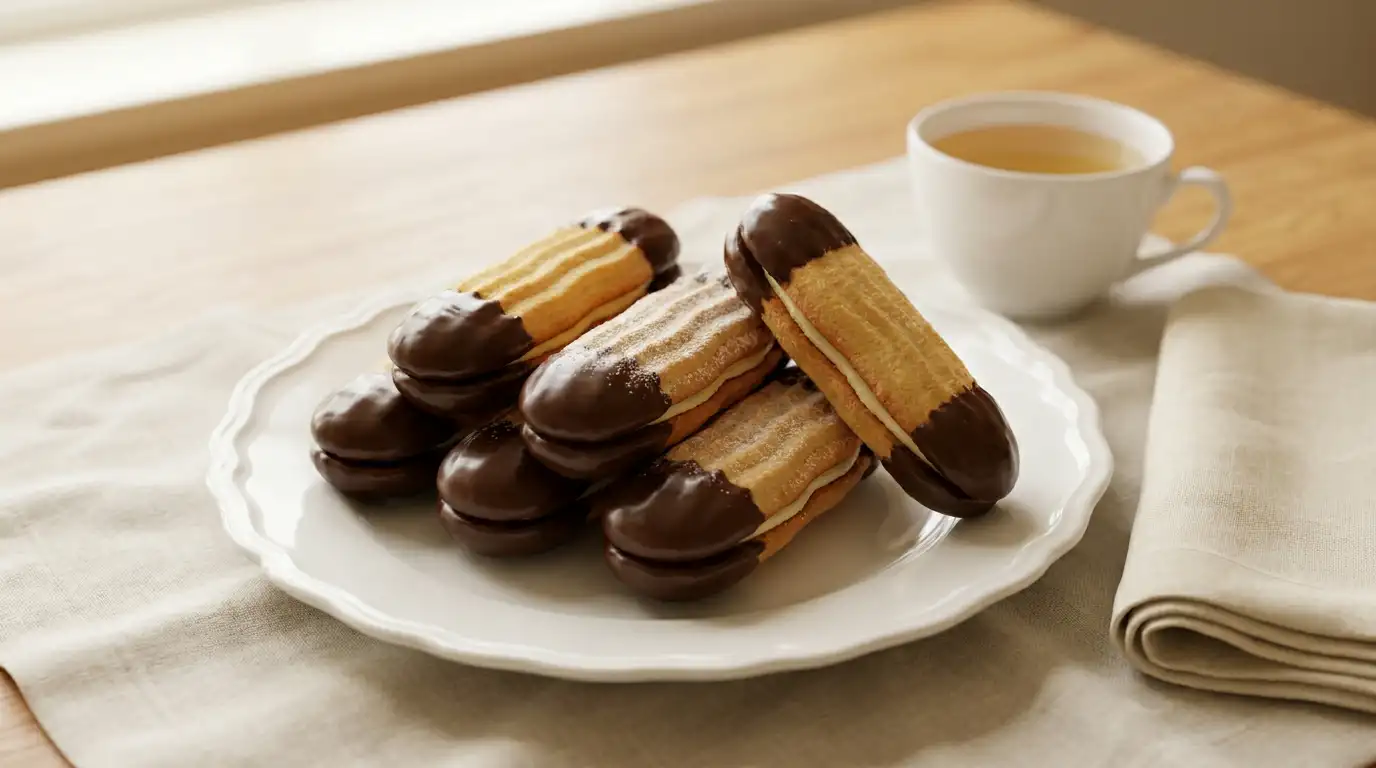
Mary Berry Viennese Fingers are delicate, buttery biscuits with a melt-in-the-mouth crumb and a crisp, ridged exterior piped into neat finger shapes. The dough is rich with softened butter and icing sugar, giving each biscuit a tender, short texture that crumbles gently against the teeth without being dry or powdery. Once sandwiched with a silky buttercream and dipped in dark chocolate, they look elegant and taste indulgent in equal measure.
This version of the recipe is reliable and beginner-friendly, using straightforward timings and a simple piping technique that produces consistent results every time. It suits afternoon tea, gift tins, or a baking session with older children. From start to finish, the biscuits are ready in around 1 hour, including cooling time.
Ingredients
For the biscuits
- 175g unsalted butter, softened at room temperature
- 40g icing sugar, sifted
- 175g plain flour, sifted
- 25g cornflour
- 1 tsp vanilla extract
For the buttercream filling
- 75g unsalted butter, softened
- 150g icing sugar, sifted
- 1 tsp vanilla extract
- 1 tsp whole milk
For the chocolate dip
- 100g dark chocolate (at least 50% cocoa solids), broken into pieces
How to Make Mary Berry Viennese Fingers Recipe
- Preheat and prepare the trays: Heat the oven to 190°C (170°C fan) and line two large baking trays with non-stick baking paper. Setting the oven correctly before you start ensures the biscuits bake at a steady temperature and hold their piped shape without spreading.
- Beat the butter and sugar: Place the softened butter and icing sugar in a large mixing bowl. Beat together with an electric hand whisk for 3 to 4 minutes until the mixture is very pale, fluffy, and noticeably lighter in colour.
- Add the vanilla and flours: Pour in the vanilla extract, then sift in the plain flour and cornflour. Fold gently with a spatula until a smooth, soft dough comes together. The cornflour lightens the texture, so avoid overworking the dough once the flours are incorporated.
- Fill the piping bag: Fit a large piping bag with a medium star nozzle and spoon the dough into the bag. Pipe finger shapes roughly 8cm long onto the prepared trays, spacing them at least 3cm apart to allow for slight spreading during baking.
- Bake the biscuits: Place the trays on the middle and upper shelves of the oven. Bake for 13 to 15 minutes until the biscuits are pale golden at the edges and feel firm to a gentle touch. They should not be deeply browned.
- Cool completely: Leave the biscuits on the trays for 5 minutes, then transfer carefully to a wire rack. Allow them to cool fully before filling, as warm biscuits will melt the buttercream.
- Make the buttercream: Beat the softened butter until smooth, then gradually add the icing sugar and beat for 2 to 3 minutes until creamy and pale. Add the vanilla extract and milk, then beat for a further minute until light and spreadable.
- Sandwich the biscuits: Spread or pipe a small amount of buttercream onto the flat base of one biscuit, then press a second biscuit on top, flat side down. Repeat with all the remaining biscuits.
- Melt and dip the chocolate: Melt the dark chocolate in a heatproof bowl set over a pan of barely simmering water, stirring until completely smooth. Dip each end of the sandwiched biscuits into the melted chocolate, letting any excess drip back into the bowl. Lay the dipped biscuits on a clean sheet of baking paper and leave at room temperature until the chocolate is fully set.
Tips for the Best Mary Berry Viennese Fingers Recipe
Why is my Viennese Fingers dough too stiff to pipe through the nozzle?
The butter was not soft enough before beating. The dough must be at true room temperature, not slightly chilled. If it is resisting the piping bag, leave the filled bag in a warm spot for 5 minutes and try again, rather than adding liquid, which will alter the texture.
Why did my Viennese Fingers spread flat and lose their ridged shape during baking?
The dough was likely too warm going into the oven, or the butter was beaten too briefly and retained too much air. Chill the piped, unbaked biscuits on the tray for 15 minutes before baking to help them hold their shape.
Why do my Viennese Fingers crack when I try to sandwich them?
The biscuits were handled before they had cooled fully. Even if they feel firm to the touch, the structure continues to set as they cool on the rack. Wait until the biscuits are completely cold before pressing them together.
Why is the chocolate coating streaky or grey once it sets?
This happens when the chocolate is overheated during melting, causing the cocoa butter to separate. Melt it slowly over low heat, removing the bowl from the pan as soon as the chocolate is smooth. Working with chocolate that is around 45°C or lower gives a clean, glossy finish.
How do I stop my biscuits browning too much on the bottom before the tops are done?
Place an empty baking tray on the shelf below the biscuits to act as a heat buffer. This reduces the direct heat hitting the base and gives the biscuits a more even, pale golden colour throughout.
Serving Suggestions
- Arrange on a tiered cake stand alongside a pot of Earl Grey or Assam tea for an afternoon tea spread.
- Place in small paper cases inside a gift tin lined with tissue paper for a baked homemade gift.
- Serve alongside a scoop of vanilla ice cream for a simple pudding course at a dinner party.
- Dust very lightly with extra icing sugar just before serving to add a soft finish against the dark chocolate ends.
- Pair with a small glass of cold milk for a children’s treat after school, leaving out the chocolate dip for younger ones.
Storage
Room temperature
Store the finished biscuits in an airtight tin or container at room temperature for up to 4 days.
Refrigerator
If the kitchen is warm and the buttercream begins to soften, transfer the biscuits to a lidded container in the fridge for up to 6 days. Bring them to room temperature for 20 minutes before serving so the buttercream loses its chill and returns to a soft, creamy texture.
Freezing
Freeze the un-sandwiched, un-dipped biscuits only, wrapped in a single layer between sheets of baking paper inside a sealed freezer bag, for up to 2 months. Defrost at room temperature for 30 minutes, then fill and dip as directed once they have returned fully to room temperature.
Nutrition
- Calories: 210 kcal
- Carbohydrates: 22g
- Protein: 2g
- Fat: 13g
- Saturated Fat: 8g
- Sodium: 10mg
Nutrition values are estimates and will vary depending on the specific ingredients and brands used, as well as the size of each biscuit.
FAQs
Can I use salted butter instead of unsalted butter for Viennese Fingers?
Yes, you can use salted butter in both the dough and the buttercream. The biscuits will have a very subtle savoury edge that most people enjoy, but reduce any added salt if the recipe you follow includes it separately.
Can I make Viennese Fingers without a piping bag or star nozzle?
A large freezer bag with one corner snipped off will work in place of a proper piping bag, though the ridged pattern will be less defined. Alternatively, a biscuit press fitted with a star disc produces a similar effect with less effort than hand-piping.
Can I make the dough ahead of time?
The dough can be made up to 24 hours in advance and stored, covered, in the fridge. Before piping, leave it at room temperature for 20 to 30 minutes so it softens back to a workable consistency.
Can I use milk chocolate instead of dark chocolate for the dip?
Milk chocolate works well and gives a sweeter, creamier finish. White chocolate is also an option, though it sets more slowly and requires careful temperature control to avoid it turning grainy.
Can I double this recipe to make a larger batch?
This recipe doubles well. Use the largest bowl available when beating the butter and sugar, and bake in batches rather than crowding the trays, which can cause uneven browning. The baking time stays the same.
Conclusion
Mary Berry Viennese Fingers are a rewarding bake that look far more impressive than the effort involved. The dough comes together quickly, the piping takes a little practice but is straightforward once the technique clicks, and the combination of a buttery biscuit, vanilla buttercream, and dark chocolate is one that consistently satisfies. This recipe makes approximately 10 to 12 sandwiched biscuits, depending on the length piped.
Whether made for afternoon tea, a baking gift, or simply a weekend treat, these biscuits deliver a reliably elegant result. If this recipe worked well for you, leave a comment below to share how it went, or pass it on to someone who enjoys classic British baking. If you enjoyed this, you might also like Mary Berry Coconut Macaroons Recipe for another delicate, teatime biscuit worth adding to your collection.
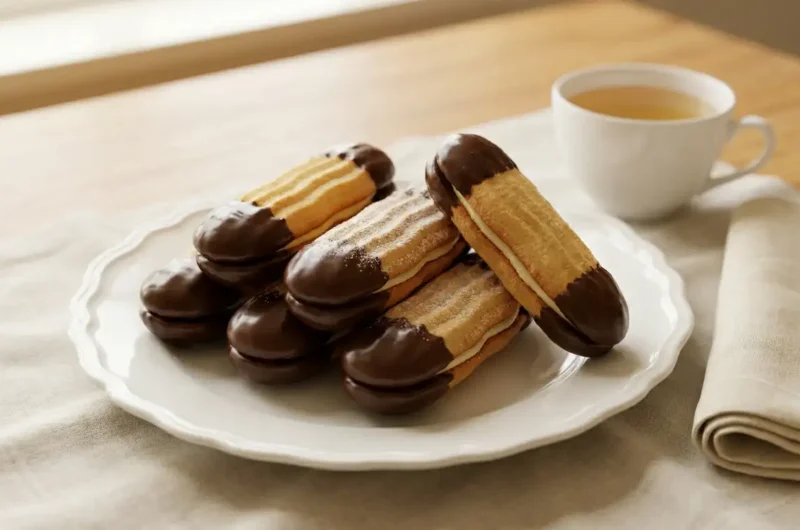
Mary Berry Viennese Fingers Recipe
Course: DessertCuisine: BritishDifficulty: Easy12
servings20
minutes15
minutes210
kcal1
hourDelicate, buttery biscuits with a melt-in-the-mouth crumb, piped into neat finger shapes, sandwiched with vanilla buttercream, and dipped in dark chocolate. A reliable and beginner-friendly bake perfect for afternoon tea or a homemade gift tin.
Ingredients
175g unsalted butter, softened at room temperature
40g icing sugar, sifted
175g plain flour, sifted
25g cornflour
1 tsp vanilla extract
75g unsalted butter, softened
150g icing sugar, sifted
1 tsp vanilla extract
1 tsp whole milk
100g dark chocolate (at least 50% cocoa solids), broken into pieces
Instructions
- Heat the oven to 190C (170C fan) and line two large baking trays with non-stick baking paper.
- Beat the softened butter and icing sugar together with an electric hand whisk for 3 to 4 minutes until very pale and fluffy.
- Add the vanilla extract, then sift in the plain flour and cornflour and fold gently with a spatula until a smooth, soft dough comes together.
- Fit a large piping bag with a medium star nozzle, fill with the dough, and pipe finger shapes roughly 8cm long onto the prepared trays, spaced at least 3cm apart.
- Bake for 13 to 15 minutes until pale golden at the edges and firm to a gentle touch, then leave on the trays for 5 minutes before transferring to a wire rack to cool completely.
- Beat the softened butter until smooth, gradually add the icing sugar and beat for 2 to 3 minutes, then add the vanilla extract and milk and beat for a further minute until light and spreadable.
- Spread or pipe a small amount of buttercream onto the flat base of one biscuit and press a second biscuit on top, flat side down, repeating with all remaining biscuits.
- Melt the dark chocolate in a heatproof bowl over a pan of barely simmering water, stirring until smooth, then dip each end of the sandwiched biscuits into the chocolate.
- Lay the dipped biscuits on a clean sheet of baking paper and leave at room temperature until the chocolate is fully set.
Notes
- Butter must be truly softened at room temperature or the dough will be too stiff to pipe.
- Chill the piped unbaked biscuits on the tray for 15 minutes before baking to help them hold their ridged shape.
- Wait until biscuits are completely cold before sandwiching to prevent the buttercream from melting.
- Melt chocolate slowly over low heat to avoid streaky or grey coating once set.
- Place an empty tray on the shelf below the biscuits to prevent the bases from over-browning.
- Un-sandwiched biscuits can be frozen for up to 2 months and filled after defrosting.