Mary Berry Side Of Salmon Recipe
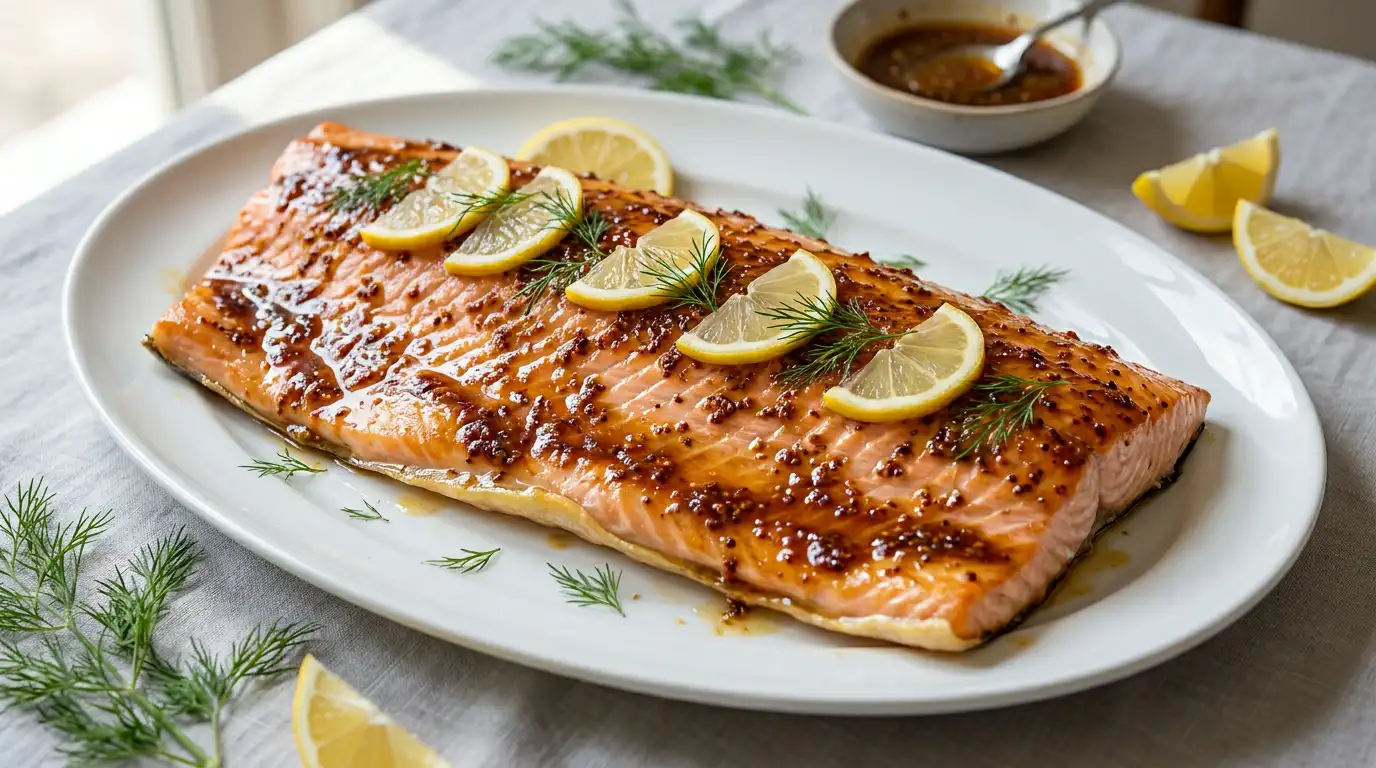
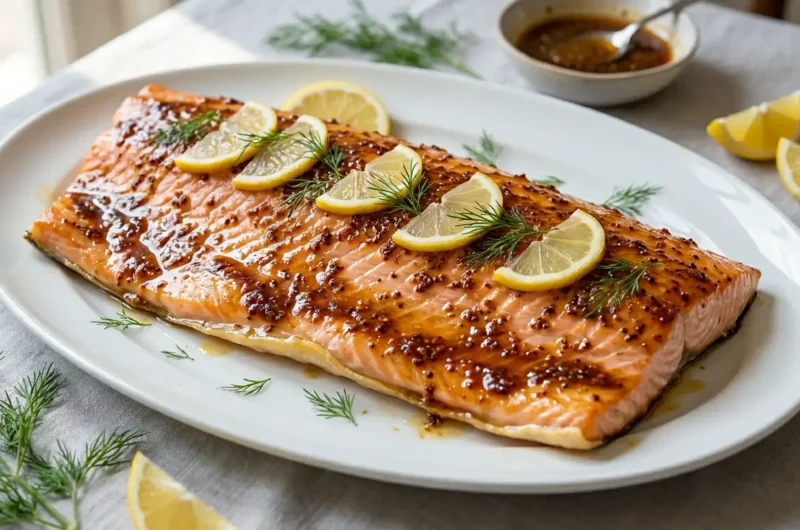
This side of salmon is a gently glazed, blush-pink fillet with a lacquered surface that catches the light and a tender, flaking interior that holds together in clean, moist layers. The glaze carries a balance of sweet and sharp, sinking into the fish just enough to season it through without masking the natural richness of the salmon itself. It works equally well as the centrepiece of a relaxed weekend lunch or as part of a more formal spread for guests. From start to finish, it is ready in around 45 minutes.
Ingredients
For the salmon
- 1 whole side of salmon, approximately 900g, skin on, pin bones removed
- 1 tablespoon olive oil
- ½ teaspoon fine sea salt
- ¼ teaspoon freshly ground black pepper
- 1 lemon, thinly sliced into rounds
- 4 sprigs of fresh dill
For the glaze
- 3 tablespoons runny honey
- 2 tablespoons wholegrain mustard
- 1 tablespoon soy sauce
- 1 tablespoon freshly squeezed lemon juice
- 1 clove of garlic, finely grated
To finish
- 1 lemon, cut into wedges, for serving
- Small handful of fresh dill fronds, roughly picked
How to Make Mary Berry Side Of Salmon Recipe
- Preheat the oven: Set the oven to 200°C (180°C fan, gas mark 6) and line a large baking tray with a sheet of baking parchment, leaving enough overhang on the sides to fold loosely over the fish if needed.
- Prepare the glaze: In a small bowl, combine the honey, wholegrain mustard, soy sauce, lemon juice, and grated garlic. Stir well until fully blended, this only takes about one minute but ensures the garlic is evenly distributed throughout.
- Position the salmon: Lay the salmon fillet skin-side down on the prepared tray. Drizzle the olive oil evenly over the surface and season with the sea salt and black pepper.
- Apply the glaze: Spoon roughly two thirds of the glaze over the salmon flesh, spreading it with the back of the spoon to reach the edges. Reserve the remaining glaze for halfway through cooking, which helps build a deeper, slightly sticky finish.
- Add the aromatics: Lay the lemon slices and dill sprigs along the top of the salmon. These sit directly on the flesh during cooking and gently perfume the fish as it bakes.
- Bake the salmon: Place the tray in the centre of the oven and bake for 15 minutes. Remove briefly, spoon over the reserved glaze, then return to the oven for a further 8 to 10 minutes, until the glaze is golden and beginning to caramelise at the edges and the flesh flakes cleanly when pressed with a fork.
- Rest and finish: Remove the salmon from the oven and allow it to rest on the tray for 5 minutes before serving. Scatter the fresh dill fronds over the top and serve with lemon wedges on the side.
Tips for the Best Mary Berry Side Of Salmon Recipe
Why is my glazed salmon dry after baking?
Overcooking is almost always the cause. Salmon continues to cook for a few minutes after it leaves the oven, so pull the tray out when the thickest part of the fillet still has a very slight translucency at its core. It will finish to a just-set, moist texture as it rests.
How do I stop the glaze from burning before the salmon is cooked through?
Split the glaze into two applications rather than adding it all at once. Applying the first coat at the start and the second coat midway through baking gives the sugars in the honey time to caramelise without scorching. If the top is colouring too fast in your particular oven, lay a loose tent of foil over the fillet for the final few minutes.
Why does my salmon stick to the baking tray?
Baking parchment is essential here rather than foil alone, as the glaze contains honey which can bond to foil during cooking. A light drizzle of olive oil under the fillet before it goes onto the paper provides additional insurance against sticking.
How do I know when the salmon is properly cooked through?
Press the thickest part of the fillet gently with a fork or your finger. Properly cooked salmon will separate into distinct, opaque layers with very little resistance. If it still feels dense and springy, return it to the oven for 3 to 4 minutes and check again.
Why does the glaze taste too sharp after baking?
The lemon juice and mustard can become more pronounced if the glaze is applied too thickly in one go. Spreading it in two thin layers allows the heat to mellow and round out those sharper notes into a more balanced finish.
Serving Suggestions
- Serve on a large board or flat platter with lemon wedges tucked alongside the fillet for a relaxed sharing presentation at the table.
- Pair with buttered new potatoes and a handful of watercress for a complete, light main course.
- Flake cold leftovers over a cucumber and dill salad with a spoonful of crème fraîche for a next-day lunch.
- Offer alongside a bowl of warm asparagus with hollandaise as part of a celebratory spread or buffet.
- Serve at room temperature with sliced rye bread and soft cream cheese as an elegant centrepiece for a summer lunch party.
Storage
Room temperature
The cooked salmon can sit at room temperature for up to 2 hours before serving, making it practical for buffets, but should not be left out beyond this point.
Refrigerator
Wrap any leftover salmon tightly in cling film or store it in a lidded container and refrigerate for up to 2 days. Bring it to room temperature for around 20 minutes before serving to allow the texture to soften slightly and the flavour to come through fully.
Freezing
Wrap individual portions in a double layer of cling film, then place inside a freezer bag and freeze for up to 1 month. Defrost overnight in the refrigerator and serve cold, as reheating previously frozen cooked salmon tends to dry it out.
Nutrition
- Calories: 310 kcal
- Carbohydrates: 9g
- Protein: 34g
- Fat: 15g
- Saturated Fat: 3g
- Sodium: 480mg
Nutrition values are estimates and will vary depending on the exact size of the salmon fillet and the specific ingredients used.
FAQs
Can I use salmon fillets instead of a whole side of salmon?
Yes, individual fillets work well with the same glaze. Reduce the total baking time to around 12 to 15 minutes depending on thickness, and check for doneness from the 10-minute mark. Apply the glaze in two stages just as you would with the whole side.
Can I make this salmon recipe ahead of time?
The glaze can be mixed up to 24 hours in advance and kept in the fridge in a small jar. The salmon itself is best baked on the day of serving, but it can be served at room temperature, which makes it very manageable for entertaining as it does not need to go straight from oven to table.
Can I swap wholegrain mustard for Dijon mustard in this recipe?
Dijon can be used as a substitute and will produce a smoother, slightly more intense glaze. The textural contrast from the whole mustard seeds is lost, but the flavour balance remains similar. Use the same quantity.
What can I use instead of honey if I need to avoid added sugar?
Maple syrup is the closest substitute in terms of consistency and the way it caramelises during baking. Use the same amount as the honey called for. The flavour will be slightly more woody and less floral, but it works well with the mustard and lemon.
Can I cook this salmon on a barbecue instead of in the oven?
A whole side of salmon can be cooked on a barbecue over indirect heat with the lid on. Place it skin-side down on oiled foil and cook for around 20 to 25 minutes, applying the glaze in two stages as with the oven method. Keep the temperature moderate so the glaze does not catch on the direct flames.
Conclusion
This Mary Berry side of salmon recipe delivers a reliable, impressive result with minimal fuss. The honey and mustard glaze builds a glossy, caramelised surface over flesh that stays moist and full of flavour throughout. Applied in two stages, the glaze develops a depth that a single coating simply cannot achieve. This recipe serves 4 to 6 people generously as a main course, making it an excellent choice for family gatherings, garden parties, or any occasion where a centrepiece dish is needed without hours of preparation.
Whether served warm from the oven or at room temperature as part of a spread, the result is consistent and straightforward to execute even for those who do not regularly cook fish. If this recipe has been useful, share it with someone who would enjoy it, or leave a comment below with how it turned out at your table. If you enjoyed this, you might also like the Mary Berry Viennese Fingers Recipe for a classic baked treat to serve alongside your dessert spread.
Mary Berry Side Of Salmon Recipe
Course: Main CourseCuisine: BritishDifficulty: Easy6
servings15
minutes25
minutes310
kcal45
minutesA gently glazed whole side of salmon with a honey and wholegrain mustard coating that caramelises to a glossy finish in the oven. Tender, flaking flesh with a balance of sweet and sharp flavours, ideal for gatherings and relaxed entertaining.
Ingredients
900g whole side of salmon, skin on, pin bones removed
1 tablespoon olive oil
half teaspoon fine sea salt
quarter teaspoon freshly ground black pepper
1 lemon, thinly sliced into rounds
4 sprigs of fresh dill
3 tablespoons runny honey
2 tablespoons wholegrain mustard
1 tablespoon soy sauce
1 tablespoon freshly squeezed lemon juice
1 clove of garlic, finely grated
1 lemon, cut into wedges, for serving
small handful of fresh dill fronds, roughly picked
Instructions
- Preheat the oven to 200C (180C fan, gas mark 6) and line a large baking tray with baking parchment.
- In a small bowl, combine the honey, wholegrain mustard, soy sauce, lemon juice, and grated garlic. Stir until fully blended.
- Lay the salmon fillet skin-side down on the prepared tray. Drizzle with olive oil and season with sea salt and black pepper.
- Spoon two thirds of the glaze over the salmon flesh and spread to the edges. Reserve the remaining glaze for midway through cooking.
- Lay the lemon slices and dill sprigs along the top of the salmon.
- Bake in the centre of the oven for 15 minutes. Remove, spoon over the reserved glaze, then return to the oven for a further 8 to 10 minutes until the glaze is golden and the flesh flakes cleanly.
- Remove from the oven and rest for 5 minutes. Scatter with fresh dill fronds and serve with lemon wedges.
Notes
- Split the glaze into two applications to build a deeper caramelised finish without burning.
- Use baking parchment rather than foil alone as the honey in the glaze can bond to foil during cooking.
- Pull the salmon from the oven when the thickest part still has a very slight translucency as it will finish cooking while resting.
- If the glaze colours too quickly, lay a loose tent of foil over the fillet for the final few minutes.
- Serve at room temperature for buffets as it holds well and does not need to go straight from oven to table.
- Leftover salmon keeps refrigerated for up to 2 days, wrapped tightly in cling film.