Mary Berry Salmon Tray Bake Recipe
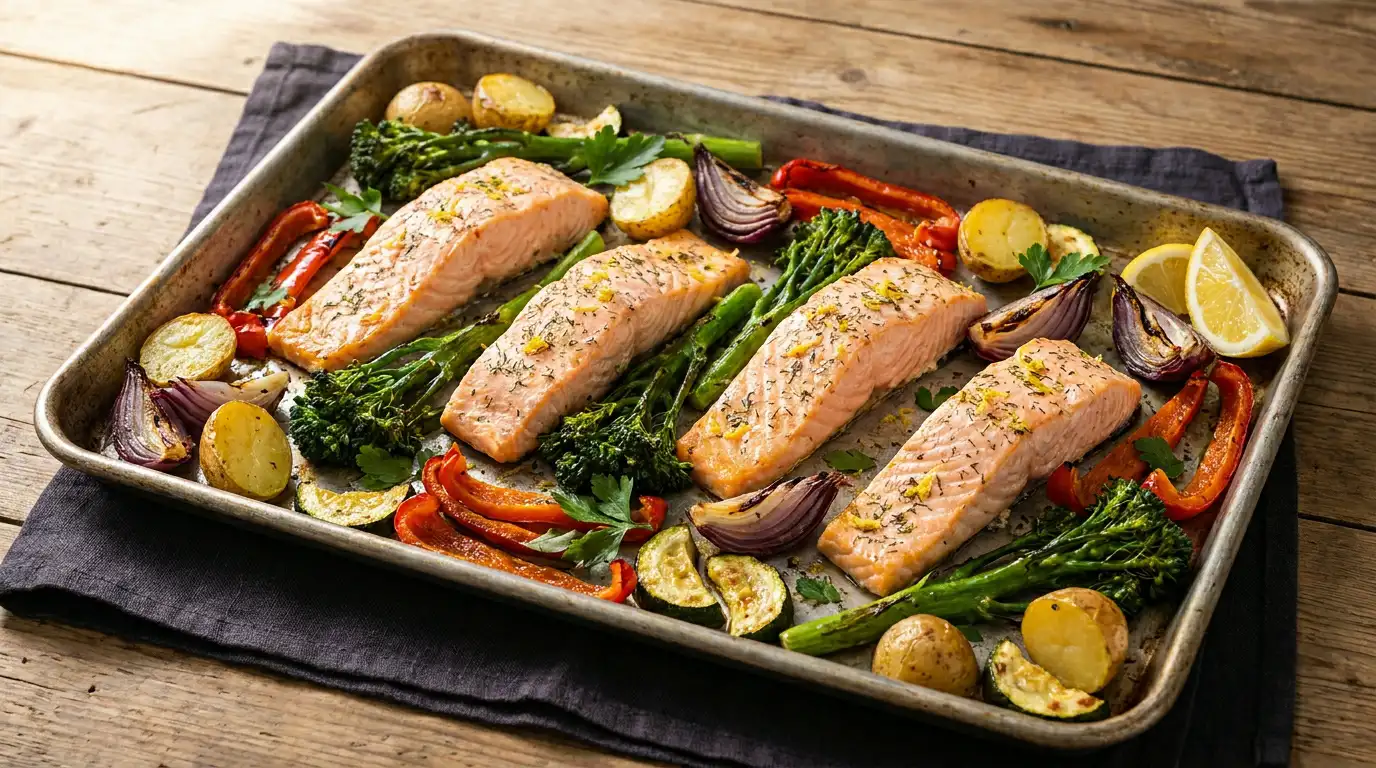
This Mary Berry salmon tray bake is a vibrant, oven-roasted dish where flaky, blush-pink salmon fillets sit atop tender vegetables that caramelise at the edges as they cook. The fish stays moist and lightly golden on top, with a subtle herby aroma that fills the kitchen in the final minutes of roasting. It is the kind of recipe that works just as well on a quiet Tuesday evening as it does for a relaxed weekend dinner with guests. From start to finish, it is ready in around 40 minutes.
What makes this version particularly reliable is the way the vegetables and salmon go into the oven together, meaning no separate pans, no complicated timing, and very little washing up. The seasoning is straightforward but effective, and the result is a complete, balanced meal that looks far more considered than the effort it requires.
Ingredients
For the vegetables
- 300g baby new potatoes, halved
- 200g tenderstem broccoli, trimmed
- 1 red pepper, deseeded and sliced into strips
- 1 courgette, sliced into half-moons
- 1 red onion, cut into thin wedges
- 3 tablespoons olive oil
- 1 teaspoon smoked paprika
- ½ teaspoon garlic granules
- Salt and black pepper, to season
For the salmon
- 4 salmon fillets, skin-on, approximately 130g each
- 1 tablespoon olive oil
- 1 teaspoon dried dill
- 1 teaspoon lemon zest
- Salt and black pepper, to season
To finish
- 1 lemon, cut into wedges for serving
- Small handful of flat-leaf parsley, roughly chopped
How to Make Mary Berry Salmon Tray Bake Recipe
- Preheat the oven: Set the oven to 200°C (180°C fan, gas mark 6) and place a large roasting tray inside to heat up. A hot tray gives the vegetables a head start on browning.
- Parboil the potatoes: Place the halved new potatoes in a saucepan of cold salted water, bring to the boil, and cook for 6 minutes. Drain well and leave to steam dry for 2 minutes before seasoning. This step ensures the potatoes cook through evenly in the oven without becoming dense.
- Season the vegetables: In a large bowl, combine the drained potatoes, sliced red pepper, courgette, tenderstem broccoli, and red onion wedges. Drizzle over the 3 tablespoons of olive oil, add the smoked paprika, garlic granules, salt, and black pepper, then toss everything together until evenly coated.
- Roast the vegetables first: Carefully remove the hot tray from the oven and spread the seasoned vegetables across it in a single layer. Return to the oven and roast for 15 minutes, until the edges are beginning to catch and colour.
- Prepare the salmon: While the vegetables roast, place the salmon fillets on a plate and drizzle with the tablespoon of olive oil. Sprinkle over the dried dill, lemon zest, salt, and black pepper, then gently press the seasoning onto the flesh side of each fillet.
- Add the salmon to the tray: Remove the tray from the oven and nestle the salmon fillets skin-side down among the vegetables, leaving a little space around each one. Return to the oven for a further 12 to 14 minutes, until the salmon flesh is opaque throughout and lifts easily with a fork.
- Rest and finish: Remove the tray from the oven and leave to rest for 2 minutes. Scatter the chopped flat-leaf parsley over the top and arrange the lemon wedges around the tray before bringing it to the table.
Tips for the Best Mary Berry Salmon Tray Bake
Why are my vegetables still firm when the salmon is already cooked?
The vegetables need more time in the oven than the salmon, so always start them first. Giving them a 15-minute head start before adding the fish is the key step. If you skip the parboiling stage for the potatoes, they will not be fully tender by the time the salmon is done.
Why does my salmon dry out and become flaky in the wrong way?
Overcooked salmon loses its silky, just-set texture and becomes chalky and dry. Pull the tray from the oven as soon as the flesh turns opaque and no longer looks translucent at its thickest point. The residual heat during resting will finish the job.
How do I stop the broccoli from burning before everything else is ready?
Tenderstem broccoli cooks faster than root vegetables and peppers, so tuck the florets slightly underneath the other vegetables when you first spread them on the tray. This shields them from the direct oven heat during the initial roasting period.
Why are my vegetables steaming rather than roasting?
Crowding the tray traps steam and prevents browning. Make sure the vegetables are spread in a single, even layer with a little space between them. If the tray looks too full, split the vegetables across two trays and rotate them halfway through.
Why is there a lot of liquid pooling in the tray towards the end?
This usually happens when the salmon releases moisture from being placed directly on top of wet vegetables. Pat the salmon fillets dry with kitchen paper before seasoning and adding them to the tray. This helps the skin to crisp slightly rather than sit in liquid.
Serving Suggestions
- Serve straight from the tray with the lemon wedges squeezed generously over the fish just before eating.
- Spoon a few tablespoons of Greek yogurt seasoned with lemon juice and black pepper alongside for a cool, creamy contrast.
- Pair with warm crusty bread to mop up the roasting juices that collect at the base of the tray.
- Add a simple green salad of watercress and cucumber dressed with white wine vinegar for a lighter finish.
- Serve alongside steamed jasmine rice if a more substantial portion is needed, particularly for hungrier appetites.
Storage
Room temperature
Cooked salmon should not be left at room temperature for more than 2 hours. Transfer any leftovers to an airtight container promptly after serving.
Refrigerator
Store leftovers in an airtight container in the refrigerator for up to 2 days. Reheat gently in the oven at 160°C for 8 to 10 minutes, or allow to come to room temperature and enjoy cold over salad leaves, which actually works very well.
Freezing
Cooked salmon can be frozen, though the texture of the flesh changes slightly on thawing, becoming a little softer. If freezing, wrap individual portions tightly in cling film and place in a freezer-safe bag for up to 1 month. Defrost overnight in the refrigerator and use within 24 hours of thawing.
Nutrition
- Calories: 420 kcal
- Carbohydrates: 22g
- Protein: 34g
- Fat: 22g
- Saturated Fat: 4g
- Sodium: 310mg
Nutrition values are estimates based on the ingredients listed and may vary depending on the specific brands or portion sizes used.
FAQs
Can I use frozen salmon fillets instead of fresh?
Yes, frozen salmon works well in this recipe. Defrost the fillets completely in the refrigerator overnight, then pat them dry with kitchen paper before seasoning. Any excess moisture left on the surface will cause the fish to steam rather than roast.
Can I swap the vegetables for different ones?
Absolutely. Cherry tomatoes, asparagus, green beans, and sliced fennel all work well in this tray bake. Stick to vegetables with a similar density or adjust the roasting times accordingly. Delicate vegetables like asparagus only need 8 to 10 minutes, so add them to the tray when the salmon goes in.
Can I make this salmon tray bake ahead of time?
The vegetables can be parboiled, seasoned, and spread on the tray up to 4 hours in advance, then covered and kept in the refrigerator. The salmon is best seasoned and added fresh before cooking. Do not assemble the full tray more than a few hours ahead, as the fish will begin to cure slightly in the lemon zest and salt if left too long.
Can I use skinless salmon fillets for this recipe?
Yes, skinless fillets can be used. The skin-on version holds together slightly better during roasting and gives a more defined base to the fillet, but skinless works fine. Reduce the cooking time by 1 to 2 minutes as skinless fillets often cook a touch faster.
Is this salmon tray bake suitable for a gluten-free diet?
Yes, the recipe as written contains no gluten. All the ingredients are naturally gluten-free, but always check the labelling on spice blends such as smoked paprika and garlic granules, as some brands are processed in facilities that handle gluten-containing products.
Conclusion
This Mary Berry salmon tray bake is one of those recipes that delivers a genuinely satisfying result with very little fuss. The combination of caramelised roasted vegetables and tender, herb-seasoned salmon makes for a complete meal that is as suitable for a midweek dinner as it is for a relaxed meal with friends. This recipe serves 4 people and takes around 40 minutes from start to finish, making it a practical and reliable option for most occasions.
Give it a go the next time you want something nourishing and full of colour without spending the evening in the kitchen. If this recipe works well for you, leave a comment below and let others know how it turned out. Share it with anyone who might find a quick, wholesome fish supper useful. If you enjoyed this, you might also like the Mary Berry cheese sauce recipe, which pairs beautifully with many baked fish and vegetable dishes.
Mary Berry Salmon Tray Bake Recipe
Course: Main CourseCuisine: BritishDifficulty: Easy4
servings10
minutes30
minutes420
kcal40
minutesA vibrant, oven-roasted tray bake with flaky salmon fillets and caramelised vegetables, seasoned with smoked paprika, dill, and lemon zest. Ready in 40 minutes with minimal washing up.
Ingredients
300g baby new potatoes, halved
200g tenderstem broccoli, trimmed
1 red pepper, deseeded and sliced into strips
1 courgette, sliced into half-moons
1 red onion, cut into thin wedges
3 tablespoons olive oil
1 teaspoon smoked paprika
half teaspoon garlic granules
salt and black pepper to season
4 salmon fillets skin-on approximately 130g each
1 tablespoon olive oil
1 teaspoon dried dill
1 teaspoon lemon zest
salt and black pepper to season
1 lemon cut into wedges for serving
small handful of flat-leaf parsley roughly chopped
Instructions
- Set the oven to 200C (180C fan, gas mark 6) and place a large roasting tray inside to heat up.
- Place the halved new potatoes in a saucepan of cold salted water, bring to the boil, and cook for 6 minutes. Drain well and leave to steam dry for 2 minutes.
- In a large bowl, combine the drained potatoes, sliced red pepper, courgette, tenderstem broccoli, and red onion wedges. Drizzle over 3 tablespoons of olive oil, add the smoked paprika, garlic granules, salt, and black pepper, then toss until evenly coated.
- Carefully remove the hot tray from the oven and spread the seasoned vegetables across it in a single layer. Return to the oven and roast for 15 minutes.
- Place the salmon fillets on a plate and drizzle with 1 tablespoon of olive oil. Sprinkle over the dried dill, lemon zest, salt, and black pepper, then gently press the seasoning onto the flesh side of each fillet.
- Remove the tray from the oven and nestle the salmon fillets skin-side down among the vegetables. Return to the oven for a further 12 to 14 minutes, until the salmon flesh is opaque throughout.
- Remove the tray from the oven and leave to rest for 2 minutes. Scatter the chopped flat-leaf parsley over the top and arrange the lemon wedges around the tray before serving.
Notes
- Always parboil the potatoes before roasting to ensure they cook through evenly.
- Pat salmon fillets dry with kitchen paper before seasoning to prevent steaming.
- Spread vegetables in a single layer to encourage browning rather than steaming.
- Tuck tenderstem broccoli slightly under other vegetables during the initial roast to prevent burning.
- Pull the tray from the oven as soon as the salmon turns opaque to avoid overcooking.
- Frozen salmon fillets work well if defrosted overnight and patted dry before use.