Mary Berry Plum Cake Recipe
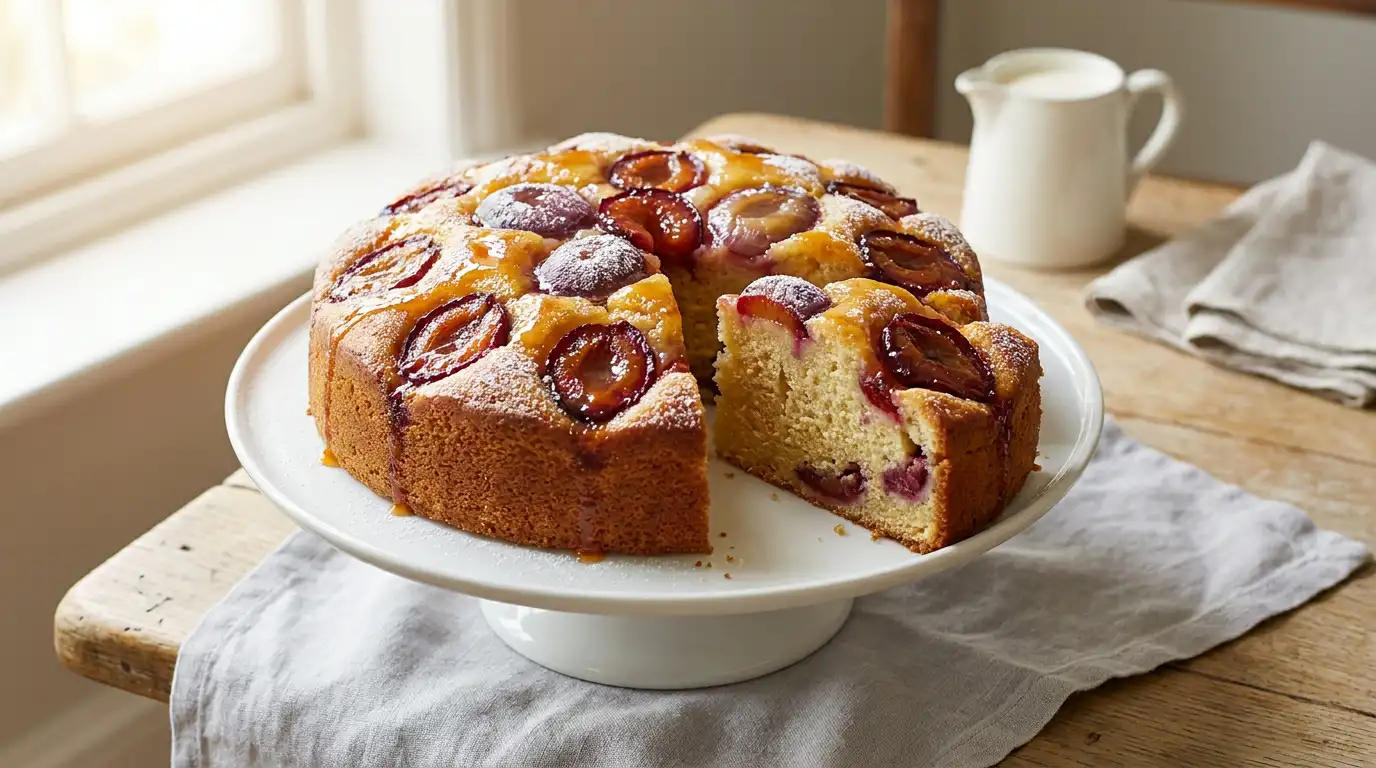
This plum cake has a tender, golden crumb with a slight moisture running through it from the fruit, and a warm spiced aroma that fills the kitchen as it bakes. The plums soften into jammy pockets throughout the sponge, giving each slice a burst of sweet-sharp flavour against the buttery base. It is a reliable bake that works just as well for a weekend afternoon tea as it does for a casual dinner party dessert. From start to finish, it is ready in around 1 hour 20 minutes.
Ingredients
For the sponge
- 175g unsalted butter, softened
- 175g caster sugar
- 3 large eggs, at room temperature
- 175g self-raising flour, sifted
- 1 tsp baking powder
- 1 tsp vanilla extract
- 2 tbsp whole milk
- 1 tsp ground cinnamon
- ½ tsp ground mixed spice
For the plum topping
- 450g ripe plums, stoned and halved
- 2 tbsp demerara sugar
- ¼ tsp ground cinnamon
To finish
- 2 tbsp apricot jam, warmed and sieved
- Icing sugar, for dusting
How to Make Mary Berry Plum Cake Recipe
- Prepare the tin and oven: Heat the oven to 180°C (160°C fan) and grease a 20cm round springform cake tin. Line the base with baking parchment and lightly flour the sides.
- Cream the butter and sugar: Beat the softened butter and caster sugar together in a large bowl for 3 to 4 minutes until the mixture is pale and noticeably fluffy, this stage is important as it traps air that helps the cake rise.
- Add the eggs: Beat in the eggs one at a time, adding a tablespoon of the measured flour with each egg to prevent the mixture from curdling. Mix until each egg is fully combined before adding the next.
- Fold in the flour and spices: Sift the remaining flour, baking powder, cinnamon, and mixed spice over the butter mixture, then fold in gently with a large metal spoon. Add the vanilla extract and milk, and fold again until the batter just comes together with a smooth, dropping consistency.
- Fill the tin: Spoon the batter into the prepared tin and spread it level with a palette knife or the back of a spoon.
- Arrange the plums: Press the halved plums cut-side up into the surface of the batter in a single layer, packing them fairly close together as they will shrink slightly during baking. Scatter the demerara sugar and the extra cinnamon evenly over the fruit.
- Bake the cake: Place on the middle shelf of the oven and bake for 45 to 50 minutes, until the sponge is golden, feels firm to a light touch in the centre, and a skewer inserted between two plums comes out clean.
- Glaze and cool: Remove from the oven and brush the warm plums immediately with the sieved apricot jam. This gives the fruit a glossy finish and adds a subtle sweetness. Leave the cake to cool in the tin for 15 minutes, then transfer to a wire rack.
- Dust and serve: Once the cake has cooled to room temperature, dust lightly with icing sugar just before serving.
Tips for the Best Mary Berry Plum Cake
Why has my plum cake sunk in the middle after baking?
This usually happens when the oven door is opened too early, before the sponge has set. Resist opening the oven for the first 35 minutes of baking. A sunken centre can also result from too much liquid in the batter, so measure the milk carefully.
Why is my cake still wet in the centre even after 50 minutes?
Very ripe plums release a lot of juice during baking, which can slow the setting of the sponge beneath them. If the skewer comes out wet, return the cake to the oven for a further 5 to 8 minutes, loosely covered with foil to stop the top over-browning.
How do I stop the plums from sinking to the bottom of the cake?
Make sure the batter is a proper dropping consistency, not too slack. A firmer batter will hold the fruit in place. Pressing the plums gently onto the surface, cut-side up, rather than pushing them down into the batter also helps keep them near the top during baking.
Why is the top of my plum cake browning too quickly?
The demerara sugar on top can catch before the centre is fully cooked, especially in fan ovens. If the top is darkening past golden before the baking time is up, lay a loose sheet of foil over the tin. Do not press it down or seal it tightly.
My cake is dry. What went wrong?
Overbaking is the most common cause. Every oven runs at a slightly different temperature, so begin checking at the 40-minute mark rather than relying solely on the timer. Removing the cake as soon as the skewer comes out clean, rather than waiting for a firm crust, will keep the crumb moist.
Serving Suggestions
- Serve warm with a generous pour of cold double cream for a simple pudding.
- Pair with a pot of strong Assam or Darjeeling tea for an afternoon slice.
- Add a scoop of vanilla ice cream alongside for a more indulgent dessert.
- Dust with extra icing sugar and serve at room temperature as a centrepiece for a tea table.
- Warm individual slices briefly in a low oven at 150°C for 8 to 10 minutes before serving if the cake has been stored overnight.
Storage
Room temperature
Store in an airtight tin or container at room temperature for up to 2 days.
Refrigerator
Wrap the cake tightly in clingfilm or keep it in an airtight container in the fridge for up to 4 days. Bring the cake to room temperature for at least 30 minutes before serving, as the cold firms the crumb and mutes the flavour of the spices.
Freezing
Wrap individual slices in clingfilm and then in a layer of foil, or place the whole cake in a freezer-safe container, and freeze for up to 2 months. Defrost overnight at room temperature before serving, and apply a fresh dusting of icing sugar after thawing.
Nutrition
- Calories: 320 kcal
- Carbohydrates: 38g
- Protein: 4g
- Fat: 17g
- Saturated Fat: 10g
- Sodium: 180mg
Nutrition values are estimates based on standard ingredients and a serving size of one slice (approximately one eighth of the cake). Actual values will vary depending on the specific ingredients and quantities used.
FAQs
Can I use tinned plums instead of fresh plums in this recipe?
Tinned plums can be used, but they must be thoroughly drained and patted dry with kitchen paper before going onto the batter. Tinned fruit holds far more moisture than fresh and will make the sponge soggy if added straight from the tin.
Can I make this plum cake ahead of time?
Yes, this cake keeps well. Bake it the day before and store it covered at room temperature overnight. The spices actually deepen slightly in flavour by the next day, making it a good choice for preparing in advance for a gathering.
What size tin works best for this plum cake recipe?
A 20cm round springform tin is ideal, as the removable base makes it much easier to lift the cake out without disturbing the plum topping. A 20cm loose-bottomed sandwich tin will also work. Avoid a standard fixed-base tin for this recipe.
Can I swap the plums for a different fruit?
Damsons, greengages, or apricots all work very well using the same method and quantities. Pears can be used but should be peeled and sliced rather than halved, and the baking time may need reducing by 5 minutes as pears are denser and release less juice.
Can I make this cake gluten-free?
Replace the self-raising flour with a good-quality gluten-free self-raising blend at the same weight. Add a quarter of a teaspoon of xanthan gum if the blend does not already include it, to help bind the crumb. The texture will be slightly denser but the flavour remains very similar.
Conclusion
This Mary Berry plum cake recipe brings together a light, warmly spiced sponge and soft, jammy fruit in a bake that is straightforward enough for a weeknight but impressive enough to share at any occasion. The combination of cinnamon, mixed spice, and demerara sugar gives the topping a gentle caramel note, while the apricot glaze adds a neat finish without any extra effort. The recipe makes one 20cm cake, serving 8 slices.
If this bake has gone into your regular rotation, leave a comment below to share how it turned out, and feel free to pass the recipe on to anyone who loves a fruit cake with proper depth of flavour. For another classic British bake with a similarly satisfying pastry finish, take a look at the Mary Berry Eccles Cakes recipe for your next baking session.
Mary Berry Plum Cake Recipe
Course: DessertCuisine: BritishDifficulty: Easy8
servings20
minutes50
minutes320
kcal1
hour20
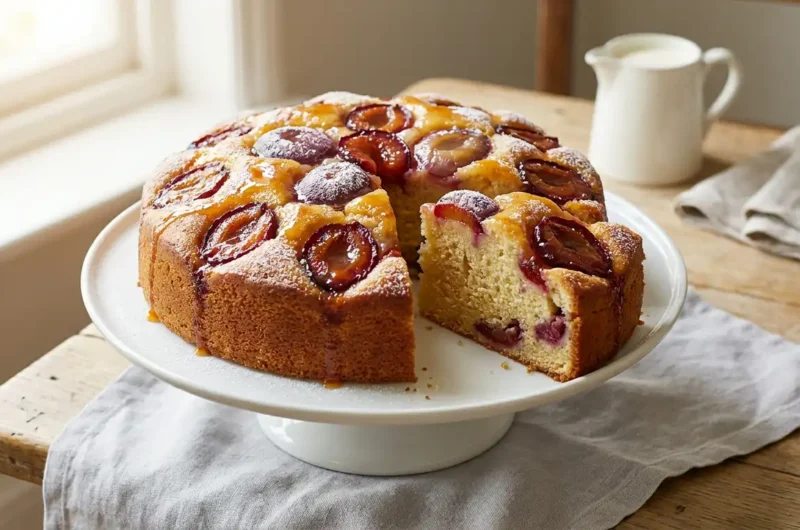
minutesA tender, warmly spiced sponge cake topped with jammy halved plums, a demerara sugar crust, and a glossy apricot glaze. This beginner-friendly bake is perfect for afternoon tea or a casual dinner party dessert.
Ingredients
175g unsalted butter, softened
175g caster sugar
3 large eggs, at room temperature
175g self-raising flour, sifted
1 tsp baking powder
1 tsp vanilla extract
2 tbsp whole milk
1 tsp ground cinnamon
½ tsp ground mixed spice
450g ripe plums, stoned and halved
2 tbsp demerara sugar
¼ tsp ground cinnamon
2 tbsp apricot jam, warmed and sieved
icing sugar for dusting
Instructions
- Heat the oven to 180°C (160°C fan), grease a 20cm round springform cake tin, line the base with baking parchment, and lightly flour the sides.
- Beat the softened butter and caster sugar together for 3 to 4 minutes until pale and fluffy.
- Beat in the eggs one at a time, adding a tablespoon of the measured flour with each egg to prevent curdling.
- Sift the remaining flour, baking powder, cinnamon, and mixed spice over the butter mixture, fold in gently, then add the vanilla extract and milk and fold until the batter just comes together with a smooth dropping consistency.
- Spoon the batter into the prepared tin and spread it level with a palette knife.
- Press the halved plums cut-side up into the surface of the batter in a single layer, then scatter the demerara sugar and extra cinnamon evenly over the fruit.
- Bake on the middle shelf for 45 to 50 minutes until golden, firm to the touch in the centre, and a skewer inserted between two plums comes out clean.
- Brush the warm plums immediately with the sieved apricot jam, leave the cake to cool in the tin for 15 minutes, then transfer to a wire rack.
- Dust lightly with icing sugar just before serving.
Notes
- Resist opening the oven for the first 35 minutes to prevent the cake sinking in the centre.
- If the top browns too quickly, lay a loose sheet of foil over the tin without sealing it.
- If the skewer comes out wet after 50 minutes, bake for a further 5 to 8 minutes loosely covered with foil.
- Make sure the batter is a proper dropping consistency so the plums stay near the surface and do not sink.
- Bring refrigerated cake to room temperature for at least 30 minutes before serving for the best texture and flavour.
- Apply a fresh dusting of icing sugar after defrosting if the cake has been frozen.