Mary Berry Coconut Cake Recipe
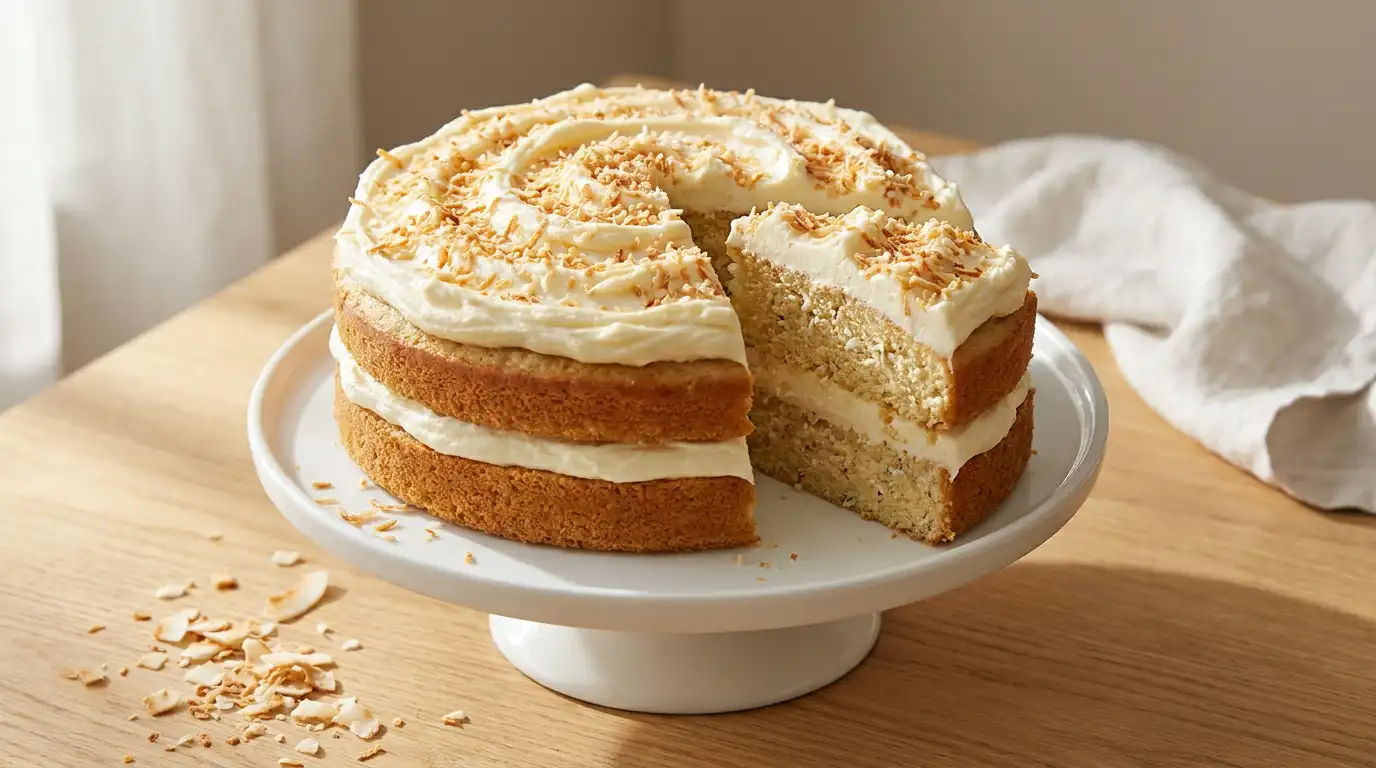
This coconut cake is a pale golden sponge with a soft, close crumb and a gentle sweetness that comes through with every bite. The shredded coconut inside the batter gives it a slightly chewy texture, while the coconut buttercream on top is smooth, lightly fragrant, and just sweet enough to balance the sponge without overwhelming it.
What makes this version so dependable is the straightforward creaming method, the kind that works every time in a standard home kitchen with no special equipment needed. It holds well through the day, making it a solid choice for afternoon tea, a birthday, or a casual weekend bake. From mixing bowl to finished cake, expect around 1 hour and 10 minutes.
Ingredients
For the sponge
- 200g unsalted butter, softened at room temperature
- 200g caster sugar
- 3 large eggs, at room temperature
- 200g self-raising flour, sifted
- 1 tsp baking powder
- 3 tbsp whole milk
- 75g desiccated coconut
- 1 tsp vanilla extract
For the coconut buttercream
- 150g unsalted butter, softened
- 300g icing sugar, sifted
- 2 tbsp coconut cream
- 1/2 tsp vanilla extract
To finish
- 40g desiccated coconut, lightly toasted
How to Make Mary Berry Coconut Cake Recipe
- Preheat the oven: Set the oven to 180°C (160°C fan, Gas Mark 4). Grease two 20cm round sandwich tins and line the bases with baking parchment.
- Cream the butter and sugar: Beat the softened butter and caster sugar together in a large mixing bowl for 4 to 5 minutes until the mixture is very pale and noticeably fluffy, this volume is what gives the sponge its lift.
- Add the eggs: Beat in the eggs one at a time, adding a tablespoon of the sifted flour with each egg to prevent the mixture from splitting. Mix well between each addition.
- Fold in the dry ingredients: Add the remaining flour, baking powder, and desiccated coconut. Fold gently with a large metal spoon or spatula until just combined, then stir in the milk and vanilla extract to loosen the batter to a soft dropping consistency.
- Divide and level: Spoon the batter evenly between the two prepared tins and smooth the tops with the back of a spoon. Weigh the tins if possible to ensure even layers.
- Bake the sponges: Place both tins on the middle shelf of the oven and bake for 22 to 25 minutes, until the sponges are golden on top and a skewer inserted into the centre comes out clean.
- Cool the cakes: Leave the sponges in their tins for 5 minutes, then turn out onto a wire rack and peel off the parchment. Allow to cool completely before adding any buttercream, as warm sponge will melt the frosting.
- Make the buttercream: Beat the softened butter until pale and creamy, then gradually add the sifted icing sugar in two or three additions, mixing on a low speed at first to avoid a cloud of icing sugar. Beat in the coconut cream and vanilla extract until the buttercream is smooth and holds its shape.
- Assemble the cake: Spread half the buttercream over the flat side of one cooled sponge and place the second sponge on top, flat side down. Spread the remaining buttercream over the top of the cake in a smooth, even layer.
- Finish with toasted coconut: Scatter the lightly toasted desiccated coconut over the buttercream while it is still soft so the coconut adheres well. Press it gently into the sides if a more covered finish is preferred.
Tips for the Best Mary Berry Coconut Cake
Why has my coconut cake come out dense and heavy?
The most common cause is under-creaming the butter and sugar. The mixture needs a full 4 to 5 minutes of beating to incorporate enough air. Butter that is too cold will also resist creaming properly, so allow it to soften fully at room temperature for at least an hour before you start.
Why did my sponge dome up sharply in the middle?
A domed centre usually points to an oven that runs too hot or batter that was overmixed after the flour was added. Check your oven temperature with a thermometer and fold the flour in gently, stopping as soon as no dry streaks remain.
Why is the desiccated coconut sinking to the bottom of my sponge?
This happens when the batter is too loose. Check that the consistency is a soft dropping consistency before dividing between the tins. If it looks runny, hold back a tablespoon of milk and fold the coconut in last, folding minimally to keep it evenly suspended.
Why is my buttercream grainy and not smoothing out?
Grainy buttercream is almost always caused by icing sugar that has not been sifted, or butter that is too cold. Sift the sugar before adding it, and if the buttercream still feels gritty, beat for another 2 minutes on a medium speed, the friction warms the mixture slightly and dissolves any remaining sugar crystals.
How do I stop the toasted coconut from looking patchy on top?
Apply the toasted coconut immediately after spreading the final layer of buttercream, while the surface is still slightly tacky. Press it down gently with clean hands so it sits flat. If the buttercream has already set, briefly warm the surface with a palette knife dipped in warm water.
Serving Suggestions
- Serve in generous slices alongside a pot of Earl Grey or a light Darjeeling tea for afternoon serving.
- Add a spoonful of lightly whipped double cream on the side for a slightly richer dessert presentation.
- Pair a slice with fresh mango or pineapple pieces to bring out the tropical note of the coconut.
- Dust a little extra icing sugar over the top just before serving for a clean, finished appearance at the table.
- Serve at room temperature rather than straight from the fridge, as the buttercream firms up when chilled and loses its soft texture.
Storage
Room temperature
Store the assembled cake in an airtight tin or cake box at room temperature for up to 3 days.
Refrigerator
If the kitchen is warm, keep the cake in the fridge in an airtight container for up to 5 days. Remove it at least 30 minutes before serving to allow the buttercream to soften back to a spreadable, creamy consistency.
Freezing
Freeze the un-iced sponge layers individually, wrapped tightly in clingfilm and placed in a freezer bag, for up to 2 months. Defrost at room temperature for 2 to 3 hours, then fill and ice as normal once fully thawed.
Nutrition
- Calories: 485 kcal
- Carbohydrates: 56g
- Protein: 5g
- Fat: 27g
- Saturated Fat: 17g
- Sodium: 105mg
Nutrition values are estimates based on standard ingredient quantities and may vary depending on the specific brands and serving size used.
FAQs
Can I use desiccated coconut or does it need to be shredded coconut?
Desiccated coconut works perfectly here and is the standard choice for this style of British cake. Shredded or flaked coconut has a coarser texture and can make the crumb uneven, so stick with fine desiccated coconut for both the batter and the topping.
Can I use coconut milk instead of coconut cream in the buttercream?
Coconut milk is thinner and will make the buttercream too soft to hold its shape. Stick to coconut cream for a firmer, more stable result. If coconut cream is unavailable, a small amount of full-fat cream cheese blended in will help the buttercream hold without affecting the flavour noticeably.
Can I make this coconut cake ahead of time?
The sponge layers can be baked a day ahead and stored wrapped in clingfilm at room temperature. The buttercream can also be made in advance and kept in the fridge, then beaten again briefly to restore its smoothness before assembling.
What tin size works best for this coconut cake recipe?
Two 20cm round sandwich tins give the best result, producing two even layers with a good rise. Using 18cm tins will give taller, slightly denser layers and may need an extra 3 to 4 minutes of baking time. Avoid anything smaller than 18cm as the batter will overflow.
Can I make this recipe as a traybake instead of a layered cake?
The sponge batter works well in a 30cm x 20cm traybake tin. Spread the full batter into the greased and lined tin and bake at 180°C for around 25 to 28 minutes. Once cooled, spread the buttercream over the top and finish with toasted coconut as usual.
Conclusion
This Mary Berry coconut cake recipe brings together a tender, lightly sweet sponge with a smooth coconut buttercream and a layer of toasted coconut that adds both texture and a gentle nuttiness to the finish. The method is reliable and follows the classic creaming technique, which means it suits bakers at most stages of experience. The recipe makes one two-layer 20cm cake, enough for 8 to 10 generous slices.
Whether it is baked for a birthday, a Sunday afternoon tea, or simply because the week calls for a decent slice of something homemade, this cake delivers a consistent result every time. If you tried this recipe, leave a comment below to share how it turned out, or pass it along to someone who loves a good coconut bake. If you enjoyed this, you might also like the Mary Berry plum cake recipe, another beautifully simple bake that suits the same relaxed, afternoon tea occasion perfectly.
Mary Berry Coconut Cake Recipe
Course: DessertCuisine: BritishDifficulty: Easy10
servings20
minutes25
minutes485
kcal1
hour10
minutesA pale golden sponge with a soft close crumb, desiccated coconut folded through the batter, and a smooth creamy coconut buttercream on top. This classic coconut cake is beginner-friendly, reliable, and perfect for afternoon tea or a casual birthday bake.
Ingredients
200g unsalted butter, softened at room temperature
200g caster sugar
3 large eggs, at room temperature
200g self-raising flour, sifted
1 tsp baking powder
3 tbsp whole milk
75g desiccated coconut
1 tsp vanilla extract
150g unsalted butter, softened
300g icing sugar, sifted
2 tbsp coconut cream
1/2 tsp vanilla extract
40g desiccated coconut, lightly toasted
Instructions
- Preheat the oven to 180C (160C fan, Gas Mark 4). Grease two 20cm round sandwich tins and line the bases with baking parchment.
- Beat the softened butter and caster sugar together in a large mixing bowl for 4 to 5 minutes until the mixture is very pale and fluffy.
- Beat in the eggs one at a time, adding a tablespoon of the sifted flour with each egg to prevent the mixture from splitting.
- Add the remaining flour, baking powder, and desiccated coconut. Fold gently until just combined, then stir in the milk and vanilla extract to reach a soft dropping consistency.
- Spoon the batter evenly between the two prepared tins, smooth the tops, and weigh the tins if possible to ensure even layers.
- Bake both tins on the middle shelf for 22 to 25 minutes until golden and a skewer inserted into the centre comes out clean.
- Leave the sponges in their tins for 5 minutes, then turn out onto a wire rack, peel off the parchment, and allow to cool completely.
- Beat the softened butter until pale, then gradually add the sifted icing sugar. Beat in the coconut cream and vanilla extract until smooth and the buttercream holds its shape.
- Spread half the buttercream over the flat side of one cooled sponge and place the second sponge on top, flat side down. Spread the remaining buttercream over the top.
- Scatter the lightly toasted desiccated coconut over the buttercream while it is still soft and press gently so it adheres well.
Notes
- Cream butter and sugar for a full 4 to 5 minutes to build enough air into the batter.
- Add eggs one at a time with a spoonful of flour to prevent the mixture from curdling.
- Fold flour in gently and stop as soon as no dry streaks remain to keep the crumb tender.
- Allow sponges to cool completely before applying buttercream or it will melt and slide.
- Sift the icing sugar before adding to the butter to avoid a grainy buttercream.
- Apply toasted coconut to the top immediately after spreading the buttercream while the surface is still tacky.