Mary Berry Sticky Ginger Cake Recipe
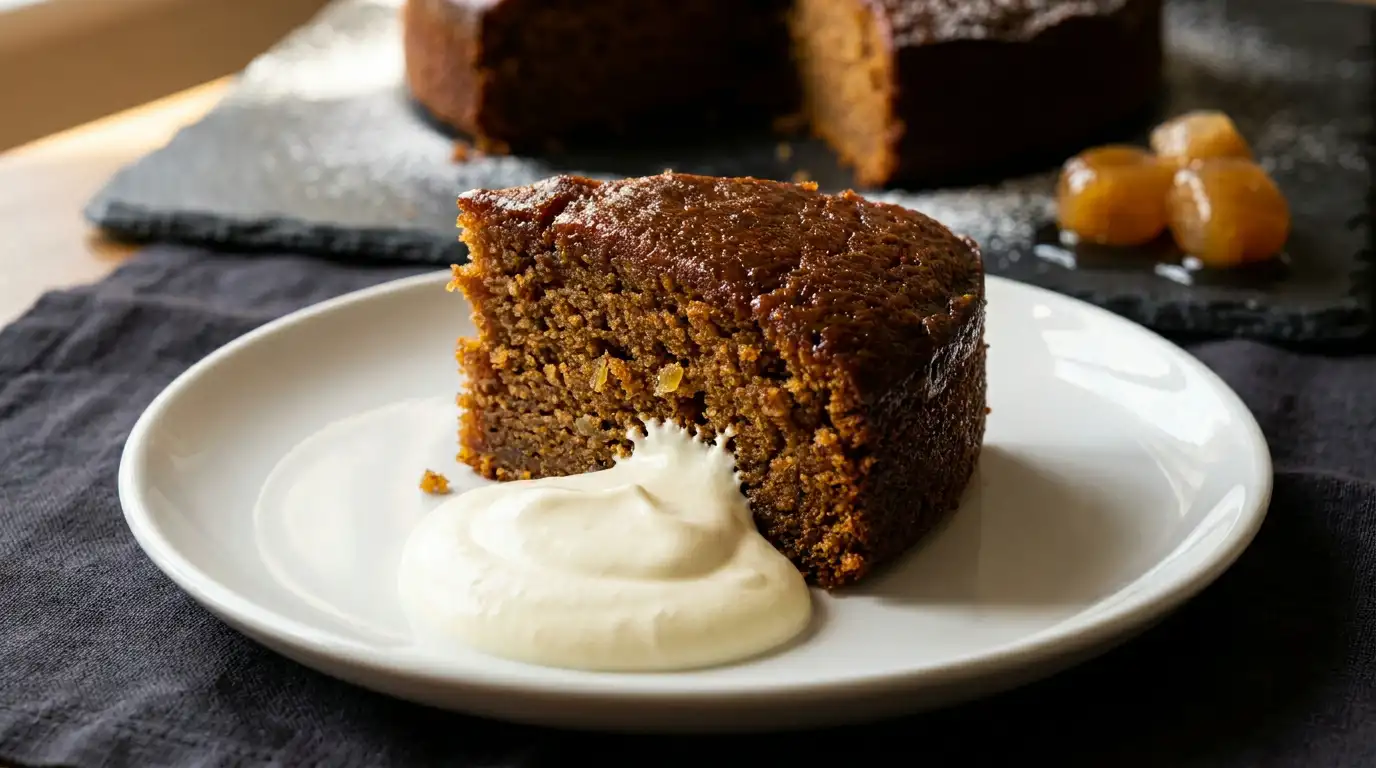
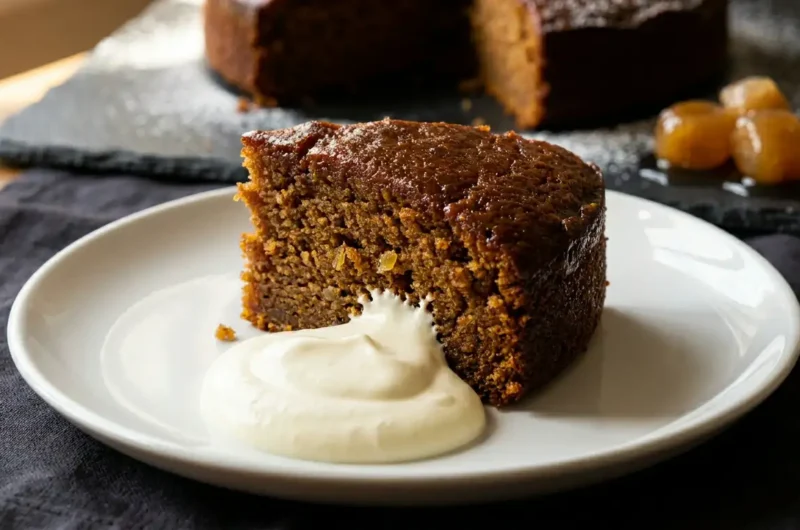
Mary Berry sticky ginger cake is a deeply bronzed, treacle-rich sponge with a moist, close crumb and a warming heat that builds slowly from ground ginger and stem ginger combined. The surface bakes to a thin, slightly crisp crust that softens overnight into the characteristic sticky top that gives this cake its name.
This version comes together in a single saucepan before the batter goes into the tin, which keeps the method straightforward and the washing-up minimal. It suits an afternoon tea spread as readily as it does a casual pudding served warm with cream. From start to finish, it is ready in around 1 hour 15 minutes.
Ingredients
For the sponge
- 175g plain flour
- 1 tsp bicarbonate of soda
- 2 tsp ground ginger
- 1 tsp ground cinnamon
- ½ tsp mixed spice
- 100g unsalted butter, cut into cubes
- 100g dark muscovado sugar
- 100g black treacle
- 75g golden syrup
- 150ml whole milk
- 2 large eggs, lightly beaten
- 60g stem ginger in syrup, finely chopped
- 2 tbsp stem ginger syrup (from the jar)
For the sticky glaze
- 2 tbsp stem ginger syrup
- 1 tbsp golden syrup
How to Make Mary Berry Sticky Ginger Cake
- Prepare the tin: Heat the oven to 160C fan or 180C conventional. Grease a 20cm square or round cake tin and line the base and sides with baking parchment, leaving a slight overhang to make lifting the cake out easier.
- Melt the wet ingredients: Place the butter, dark muscovado sugar, treacle, and golden syrup into a medium saucepan over a low heat. Stir gently and remove from the heat as soon as the butter has melted and the sugar has dissolved, this prevents the mixture from boiling and altering the texture of the finished cake.
- Cool slightly and add the milk: Pour the milk into the warm saucepan mixture and stir to combine. Allow this to cool for around five minutes so it does not cook the eggs when they are added.
- Combine the dry ingredients: Sift the plain flour, bicarbonate of soda, ground ginger, cinnamon, and mixed spice into a large bowl. Make a well in the centre.
- Bring the batter together: Pour the warm treacle mixture into the flour well along with the beaten eggs, chopped stem ginger, and the two tablespoons of ginger syrup. Stir with a wooden spoon or balloon whisk until a smooth, fairly runny batter forms with no dry flour visible at the bottom of the bowl.
- Fill the tin and bake: Pour the batter into the lined tin. It will look thin at this stage, which is correct. Bake on the middle shelf for 40 to 45 minutes, until the cake is set across the surface, has pulled away slightly from the sides, and a skewer inserted into the centre comes out clean.
- Apply the glaze: While the cake is still warm in the tin, mix the two tablespoons of stem ginger syrup with the golden syrup and brush it evenly over the surface. The warmth of the cake helps the glaze soak into the top layer rather than sitting on it.
- Cool and turn out: Leave the cake to cool completely in the tin before lifting it out using the parchment. The top will develop its sticky quality as it cools, so do not rush this stage.
Tips for the Best Mary Berry Sticky Ginger Cake
Why is my ginger cake sinking in the middle?
This usually happens when the oven door is opened too early or the bake time is cut short. The batter has a high liquid content from the treacle and syrup, so it needs the full 40 to 45 minutes to set the structure. Check the cake only after 38 minutes, and always use a skewer to confirm it is done rather than going by colour alone.
Why does my sticky ginger cake have a dry, crumbly texture?
Overbaking is the most common cause. Dark-coloured cakes like this one absorb heat quickly and can dry out fast once they are past the correct internal temperature. Pull the cake from the oven as soon as the skewer comes out clean, even if the top looks slightly underdone around the edges.
How do I get the sticky top that ginger cake is known for?
The glaze applied while the cake is still warm is only part of it. Wrapping the completely cooled cake in cling film and leaving it at room temperature for 12 to 24 hours allows the surface moisture to redistribute, producing that characteristically sticky, slightly tacky crust that ginger cake is prized for.
Why does my cake smell bitter rather than spiced?
Bicarbonate of soda that is past its use-by date, or has been stored near moisture, loses its potency and can leave a faint metallic or bitter note in dense syrups cakes. Check the tin is sealed and replace it if it is more than six months open, even if it still looks fine.
Why is the chopped stem ginger sinking to the bottom of my cake?
Toss the chopped stem ginger in a teaspoon of the sifted flour before adding it to the batter. The light coating creates enough friction to hold the pieces in suspension through the bake rather than letting them drop through the liquid batter to the base.
Serving Suggestions
- Serve warm, cut into generous squares, with a pour of cold double cream that melts slightly against the heat of the cake.
- Pair with a cup of strong Assam or English Breakfast tea for a mid-afternoon serving, the tannins cut through the sweetness cleanly.
- Add a small scoop of good vanilla ice cream alongside a warm slice for a dinner party pudding.
- Dust the top lightly with icing sugar just before serving if the surface has become very dark during baking, it softens the appearance for a smarter presentation.
- Serve at room temperature alongside a wedge of sharp Wensleydale or mature Cheddar, the contrast between the spiced sweetness and the savoury cheese is a classic northern pairing.
Storage
Room temperature
Store the cooled cake in an airtight tin or wrapped tightly in cling film at room temperature for up to five days, where the texture will continue to improve and the top will grow stickier over time.
Refrigerator
If the kitchen is particularly warm, the cake can be kept in an airtight container in the refrigerator for up to one week. Bring individual slices to room temperature for at least 30 minutes before eating, as the cold firms the crumb and mutes the ginger flavour noticeably.
Freezing
Wrap the fully cooled cake, whole or cut into slices, tightly in cling film and then a layer of foil, and freeze for up to three months. Defrost overnight at room temperature, still wrapped, to prevent the surface from drying out as it thaws.
Nutrition
- Calories: 310 kcal
- Carbohydrates: 48g
- Protein: 4g
- Fat: 12g
- Saturated Fat: 7g
- Sodium: 180mg
Nutrition values are estimates based on standard ingredient quantities and may vary depending on the specific brands and serving size used.
FAQs
Can I use self-raising flour instead of plain flour in this ginger cake?
It is not recommended. Self-raising flour already contains baking powder, and combined with the bicarbonate of soda in this recipe the cake may rise too quickly and then collapse. Plain flour with the bicarbonate measured separately gives a more controlled, even rise suited to this dense batter.
Can I make this ginger cake ahead of time?
Yes, and it is actually better made one to two days ahead. The flavour deepens and the sticky surface becomes more pronounced as the cake sits, making it an ideal bake for a weekend gathering or celebration where preparation time is tight.
Can I use black treacle and golden syrup in equal measure, or do the quantities matter?
The ratio matters considerably. Black treacle contributes the dark, slightly bitter backbone and the bronzed colour, while golden syrup brings sweetness and helps keep the crumb moist. Swapping them equally for one another will alter both the colour and the balance of flavour, producing a cake that is either too sharp or too sweet.
What size tin works best for this recipe?
A 20cm square tin gives a good depth of around 4 to 5cm, which is ideal for an even bake and a presentable slice. A 20cm round tin works equally well with the same bake time. Avoid using a tin larger than 23cm as the batter will spread too thin and the edges will overbake before the centre sets.
Can I leave out the stem ginger and just use ground ginger?
The stem ginger can be left out if needed, though the result will be a less complex and noticeably drier cake. If omitting it, add one additional tablespoon of golden syrup to the batter to help compensate for the moisture the chopped stem ginger would have contributed.
Conclusion
This Mary Berry sticky ginger cake delivers everything the name promises: a darkly spiced, syrup-laden sponge with a tender crumb and a glaze that turns gloriously tacky as the cake rests. The method is built around a single saucepan and a straightforward mix, making it accessible to bakers at most levels without sacrificing any of the depth that makes a proper ginger cake worth baking. This recipe yields 12 generous squares or slices from a 20cm tin.
Whether served warm as a pudding or left to sit and deepen overnight for an afternoon treat, this cake earns its place on any table. If this recipe worked well for you, leave a comment below to share how it turned out, or pass the recipe on to someone who would appreciate a reliable, flavour-forward bake. If you enjoyed this, you might also like the Mary Berry beetroot soup recipe for another comforting, unfussy classic to add to your repertoire.
Mary Berry Sticky Ginger Cake Recipe
Course: DessertCuisine: BritishDifficulty: Easy12
servings20
minutes45
minutes310
kcal1
hour15
minutesA deeply bronzed, treacle-rich sponge with a moist close crumb and warming heat from ground ginger and stem ginger combined. This easy one-saucepan bake develops a gloriously sticky top as it rests, making it perfect for afternoon tea or a casual pudding.
Ingredients
175g plain flour
1 tsp bicarbonate of soda
2 tsp ground ginger
1 tsp ground cinnamon
half tsp mixed spice
100g unsalted butter cut into cubes
100g dark muscovado sugar
100g black treacle
75g golden syrup
150ml whole milk
2 large eggs lightly beaten
60g stem ginger in syrup finely chopped
2 tbsp stem ginger syrup from the jar
2 tbsp stem ginger syrup for glaze
1 tbsp golden syrup for glaze
Instructions
- Heat the oven to 160C fan or 180C conventional. Grease a 20cm square or round cake tin and line the base and sides with baking parchment leaving a slight overhang.
- Place the butter, dark muscovado sugar, treacle, and golden syrup into a medium saucepan over a low heat. Stir gently and remove from the heat as soon as the butter has melted and the sugar has dissolved.
- Pour the milk into the warm saucepan mixture and stir to combine. Allow to cool for around five minutes.
- Sift the plain flour, bicarbonate of soda, ground ginger, cinnamon, and mixed spice into a large bowl and make a well in the centre.
- Pour the warm treacle mixture into the flour well along with the beaten eggs, chopped stem ginger, and two tablespoons of ginger syrup. Stir until a smooth, fairly runny batter forms with no dry flour visible.
- Pour the batter into the lined tin and bake on the middle shelf for 40 to 45 minutes until set across the surface and a skewer inserted into the centre comes out clean.
- While the cake is still warm, mix the two tablespoons of stem ginger syrup with the golden syrup and brush evenly over the surface.
- Leave the cake to cool completely in the tin before lifting out using the parchment.
Notes
- Wrap the cooled cake in cling film and leave for 12 to 24 hours to develop the sticky top it is known for.
- Toss chopped stem ginger in a teaspoon of flour before adding to prevent it sinking to the base.
- Check the cake only after 38 minutes to avoid opening the oven too early.
- Replace bicarbonate of soda if it has been open more than six months to avoid a bitter flavour.
- Do not swap plain flour for self-raising flour as the extra leavening will cause the cake to collapse.
- The cake improves in flavour and stickiness when made one to two days ahead.