Mary Berry Salted Caramel Cake Recipe
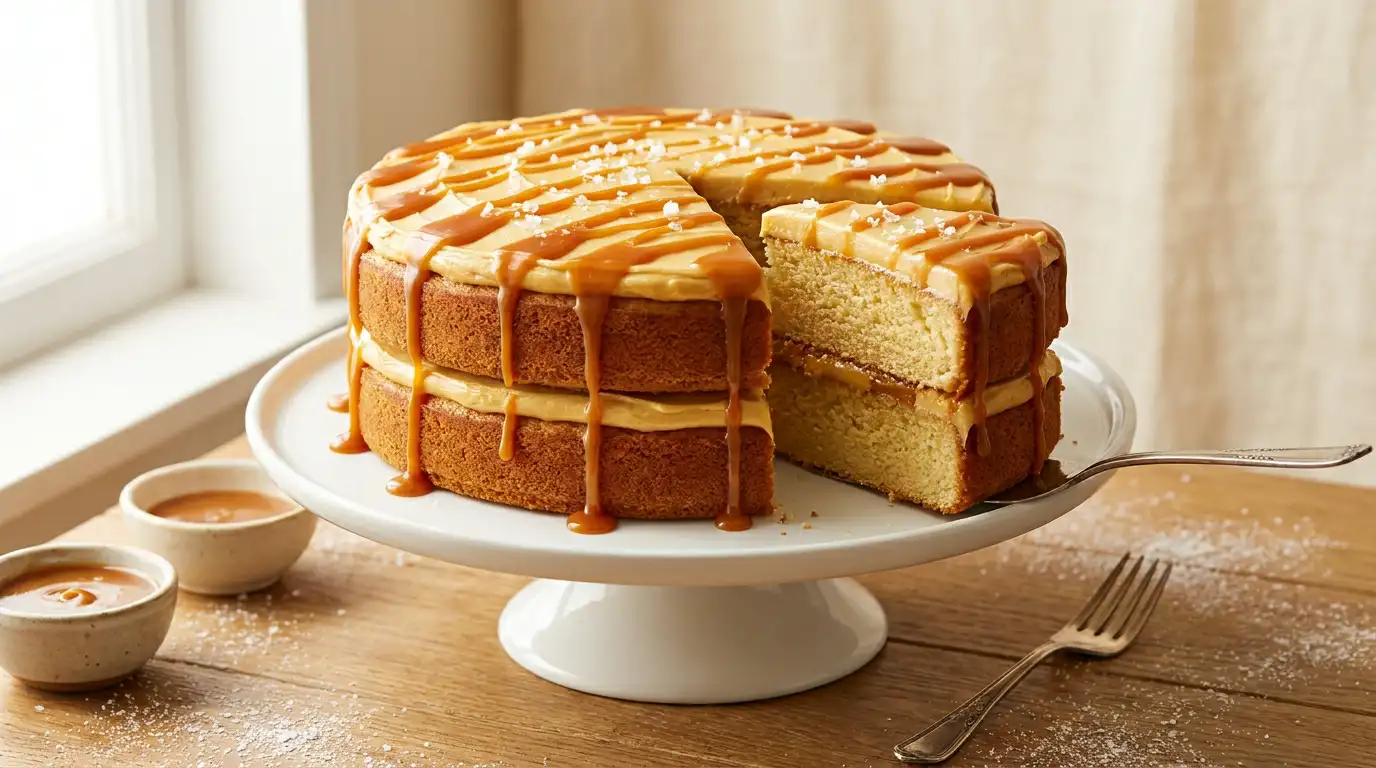
This Mary Berry salted caramel cake is a golden, tender sponge layered with a smooth, buttery caramel buttercream and finished with a pourable salted caramel sauce that sets into a glossy, amber coating. The contrast between the sweet caramel filling and the faint salted finish gives every slice a depth that keeps it from feeling heavy or one-note.
The recipe uses a straightforward all-in-one sponge method, which means fewer bowls and a reliable rise every time. It works equally well for a weekend bake, a birthday, or an afternoon tea spread. From start to finish, it is ready in around 1 hour 30 minutes.
Ingredients
For the sponge
- 200g unsalted butter, softened
- 200g golden caster sugar
- 4 large eggs, at room temperature
- 200g self-raising flour, sifted
- 1 tsp baking powder
- 2 tbsp whole milk
- 1 tsp vanilla extract
For the salted caramel sauce
- 150g caster sugar
- 90ml double cream, warmed
- 40g unsalted butter, cubed
- 3/4 tsp flaked sea salt
For the caramel buttercream
- 150g unsalted butter, softened
- 280g icing sugar, sifted
- 3 tbsp of the cooled salted caramel sauce (from above)
- 1 tbsp whole milk, if needed to loosen
To finish
- Remaining salted caramel sauce, for drizzling
- A pinch of flaked sea salt, for the top
How to Make Mary Berry Salted Caramel Cake
- Prepare the tins: Heat the oven to 180C (160C fan). Grease two 20cm round sandwich tins and line the bases with baking parchment. Place both tins on the middle shelf of the oven.
- Mix the sponge batter: Put the softened butter, golden caster sugar, eggs, sifted flour, baking powder, milk, and vanilla extract into a large bowl. Beat with an electric hand whisk for 2 minutes until the batter is pale, smooth, and slightly increased in volume. This brief beating incorporates just enough air without overworking the gluten.
- Bake the sponges: Divide the batter evenly between the two prepared tins, using a palette knife to level the surface. Bake for 22 to 25 minutes, until the tops are golden and a skewer inserted into the centre comes out clean. Leave in the tins for 5 minutes, then turn out onto a wire rack to cool completely.
- Make the salted caramel sauce: Tip the caster sugar into a light-coloured, heavy-based saucepan and spread it into an even layer. Set over a medium heat without stirring until the edges begin to melt and turn amber, then gently swirl the pan. Continue until the sugar is fully melted and a deep amber colour, watching closely as it can turn bitter quickly at this stage. Remove from the heat and carefully pour in the warmed double cream, the mixture will bubble vigorously. Stir in the cubed butter until fully melted, then add the sea salt. Pour into a heatproof jug and leave to cool to room temperature.
- Make the caramel buttercream: Beat the softened butter with an electric whisk until very pale and fluffy. Gradually add the sifted icing sugar, mixing on low first to avoid a cloud of sugar. Once combined, beat on high for 1 minute. Add 3 tablespoons of the cooled salted caramel sauce and beat again until the buttercream is smooth and holds its shape. If it feels stiff, add a tablespoon of milk.
- Assemble the cake: Place one cooled sponge on a cake board or plate. Spread half the caramel buttercream over the surface in an even layer, leaving a small border around the edge. Drizzle 2 tablespoons of the salted caramel sauce over the buttercream. Set the second sponge gently on top and press down lightly so it sits level.
- Frost and decorate: Spread the remaining buttercream over the top of the cake in a smooth layer. Pour the remaining salted caramel sauce slowly over the centre of the top, letting it drip naturally over the edges. Finish with a pinch of flaked sea salt scattered across the caramel while it is still slightly soft.
Tips for the Best Mary Berry Salted Caramel Cake
Why did my caramel sauce turn grainy after adding the cream?
This happens when the cream is too cold, causing the hot sugar to seize and recrystallise. Always warm the cream in a small saucepan or microwave before adding it to the caramel, so the temperature difference is not too dramatic.
Why is my caramel buttercream too runny to spread?
The caramel sauce must be completely cool and at room temperature before it is added to the butter and icing sugar. If it is still warm, it softens the butter too quickly, making the buttercream loose. Chill the buttercream for 15 minutes and beat again if this happens.
Why did my sponge layers come out uneven in height?
Uneven batter distribution is the usual cause. Weigh the batter into each tin using kitchen scales rather than estimating by eye, and spread it level with a palette knife before baking.
How do I stop the caramel drip from running off the sides too fast?
The caramel sauce needs to be thickened and cooled enough to be pourable but not runny. If it flows too quickly, leave it to cool for another 10 to 15 minutes, stirring occasionally, until it coats the back of a spoon with a ribbon-like consistency before pouring.
Why does my sponge have a dense, tight crumb instead of a light texture?
Over-mixing after the flour is added develops too much gluten and weighs the sponge down. Beat the batter only until just smooth, and make sure the butter is genuinely soft before starting, as cold butter does not incorporate air efficiently.
Serving Suggestions
- Serve at room temperature with a pour of cold double cream alongside each slice, which balances the sweetness of the caramel.
- Pair with a pot of strong Assam tea, the slight tannin cuts through the richness of the buttercream.
- Plate individual slices with a small scoop of vanilla bean ice cream for a dinner party dessert.
- Dust the plate lightly with a little sifted icing sugar and add a few shards of homemade caramel for a neater presentation at a celebration.
- Serve at a birthday tea alongside finger sandwiches and scones for a full afternoon tea spread.
Storage
Room temperature
Store the assembled cake in an airtight container at room temperature for up to 2 days.
Refrigerator
Once decorated, the cake can be stored in an airtight container in the fridge for up to 4 days. Bring it out at least 30 minutes before serving so the buttercream softens back to a creamy texture and the sponge loses its chill.
Freezing
The un-iced sponge layers can be individually wrapped in cling film and placed in a sealed freezer bag for up to 2 months. Defrost overnight at room temperature before filling and decorating.
Nutrition
- Calories: 520 kcal
- Carbohydrates: 62g
- Protein: 5g
- Fat: 28g
- Saturated Fat: 17g
- Sodium: 310mg
Nutrition values are estimates only and will vary depending on the exact ingredients and brands used, as well as the size of each serving.
FAQs
Can I use salted butter instead of unsalted butter in the sponge?
Yes, salted butter works in the sponge, but reduce the flaked sea salt in the caramel sauce by half to avoid the cake becoming overly salty. The caramel buttercream is best made with unsalted butter so the flavour stays balanced and sweet.
Can I make this salted caramel cake a day ahead?
The sponge layers can be baked a day in advance, wrapped tightly in cling film, and kept at room temperature. The caramel sauce can also be made ahead and stored in a sealed jar in the fridge. Assemble and frost the cake on the day for the neatest finish and best texture.
What size cake tins work best for this recipe?
Two 20cm round sandwich tins give the ideal depth and bake time for these quantities. Using 18cm tins will produce slightly deeper layers that may need 3 to 5 extra minutes in the oven, while 23cm tins will give thinner sponges that bake more quickly.
Can I double this recipe to make a larger celebration cake?
Yes, doubling the quantities works well if you want a four-layer cake. Use four 20cm tins, or bake in two batches if your oven space is limited. The baking time stays roughly the same, but check the sponges at the 22-minute mark.
Can I use light brown sugar instead of caster sugar in the caramel sauce?
Caster sugar is recommended for a clean, clear caramel. Light brown sugar contains molasses, which can make the sauce taste more toffee-like and slightly denser, though the result is still pleasant. The colour will be darker and the flavour less delicate than a classic salted caramel.
Conclusion
This Mary Berry salted caramel cake brings together a reliable, light sponge with a silky caramel buttercream and a glossy sauce that hardens slightly at the edges and stays soft at the centre. The balance of sweet, buttery caramel and flaked sea salt makes it a cake that suits both casual baking days and more special occasions. This recipe makes 10 generous slices, enough for a family gathering or celebration.
If this is your first time making a caramel sauce from scratch, take it slowly and trust the colour of the sugar rather than the clock. Once you have that amber depth, the rest of the cake comes together quickly. If you try this recipe, leave a comment below to share how it turned out, or pass it along to someone who loves a proper caramel bake. You might also enjoy this Mary Berry cauliflower cheese recipe for a comforting savoury dish to balance a day of sweet baking.
Mary Berry Salted Caramel Cake Recipe
Course: DessertCuisine: BritishDifficulty: Easy10
servings30
minutes25
minutes520
kcal1
hour30
minutesA golden, tender sponge layered with smooth caramel buttercream and finished with a glossy pourable salted caramel sauce. Beginner-friendly steps with reliable results every time.
Ingredients
200g unsalted butter, softened
200g golden caster sugar
4 large eggs, at room temperature
200g self-raising flour, sifted
1 tsp baking powder
2 tbsp whole milk
1 tsp vanilla extract
150g caster sugar
90ml double cream, warmed
40g unsalted butter, cubed
3/4 tsp flaked sea salt
150g unsalted butter, softened
280g icing sugar, sifted
3 tbsp cooled salted caramel sauce
1 tbsp whole milk, if needed to loosen
a pinch of flaked sea salt for the top
Instructions
- Heat the oven to 180C (160C fan). Grease two 20cm round sandwich tins, line the bases with baking parchment, and place on the middle shelf.
- Put the softened butter, golden caster sugar, eggs, sifted flour, baking powder, milk, and vanilla extract into a large bowl. Beat with an electric hand whisk for 2 minutes until pale and smooth.
- Divide the batter evenly between the two prepared tins, level the surface with a palette knife, and bake for 22 to 25 minutes until golden and a skewer comes out clean. Cool in tins for 5 minutes then turn out onto a wire rack.
- Tip the caster sugar into a heavy-based saucepan and melt over a medium heat without stirring until deep amber. Remove from the heat, pour in the warmed double cream carefully, stir in the cubed butter until melted, then add the sea salt. Pour into a heatproof jug and leave to cool completely.
- Beat the softened butter until pale and fluffy. Gradually add the sifted icing sugar on low speed, then beat on high for 1 minute. Add 3 tablespoons of the cooled caramel sauce and beat until smooth. Add a tablespoon of milk if needed.
- Place one cooled sponge on a plate. Spread half the caramel buttercream over the surface and drizzle 2 tablespoons of salted caramel sauce on top. Set the second sponge on top and press down lightly.
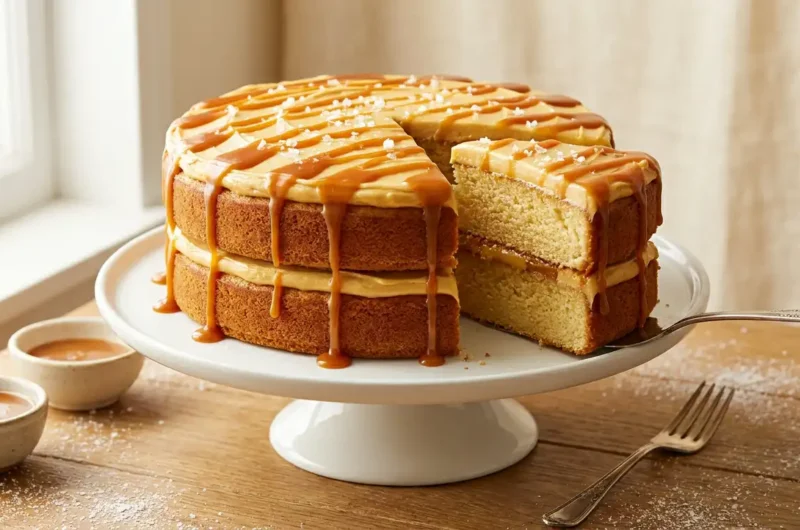
- Spread the remaining buttercream over the top of the cake. Pour the remaining salted caramel sauce over the centre, letting it drip over the edges naturally. Scatter a pinch of flaked sea salt over the top while the caramel is still slightly soft.
Notes
- Always warm the double cream before adding it to the hot caramel to prevent the sauce from seizing.
- The caramel sauce must be fully cooled before adding to the buttercream, otherwise it will make the mixture too soft to spread.
- Weigh the batter into each tin using kitchen scales for even sponge layers.
- Allow the caramel sauce to cool until it coats the back of a spoon before using it as a drizzle.
- Beat the butter thoroughly before adding icing sugar to ensure a light, creamy buttercream.