Mary Berry Lemon And Coconut Cake Recipe
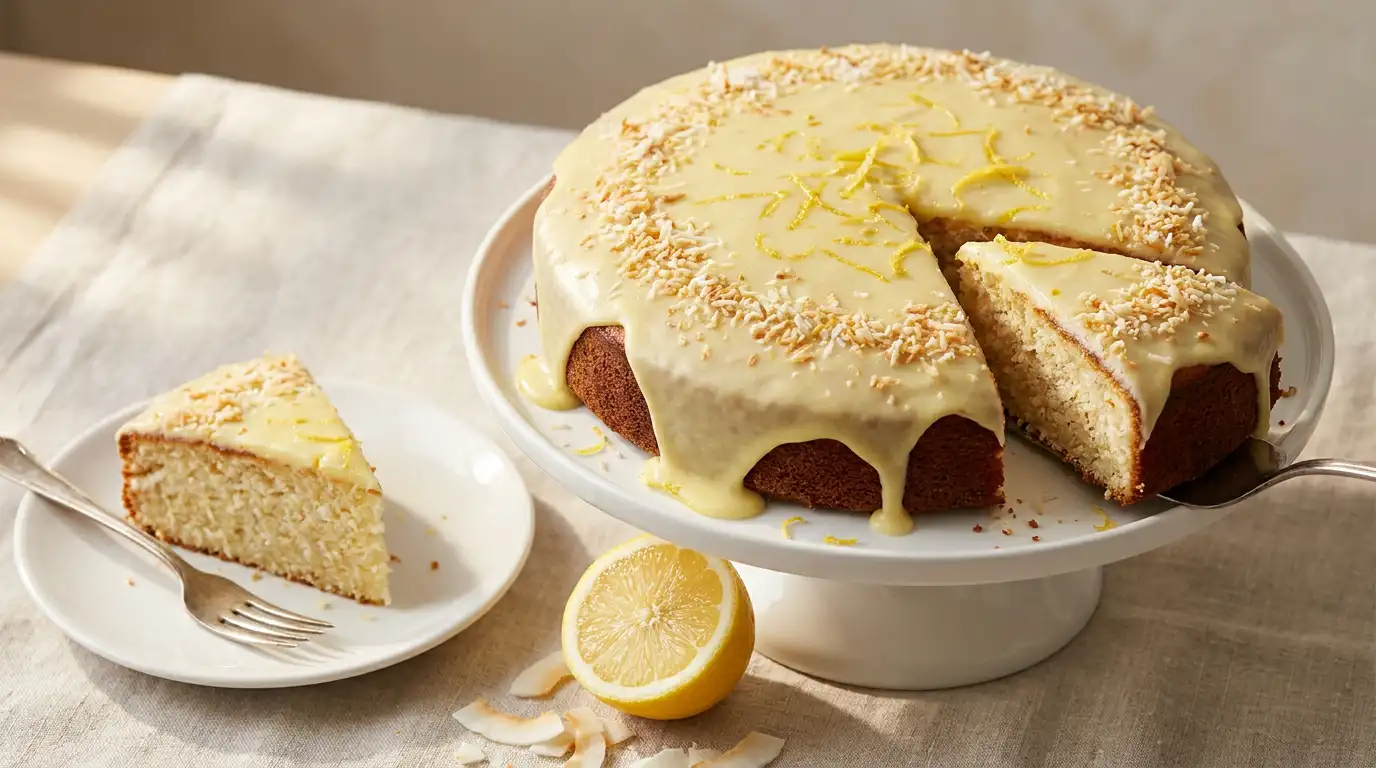
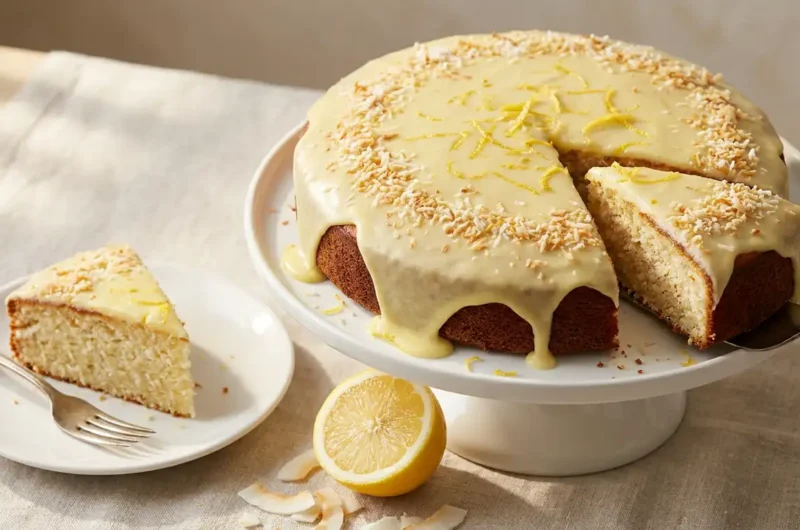
This Mary Berry lemon and coconut cake is a tender, close-textured sponge with a bright citrus tang balanced by the gentle sweetness of desiccated coconut, finished with a silky lemon glaze that sets to a soft, pale crust. The crumb is moist but never heavy, and the coconut adds a fine, slightly chewy texture throughout each slice. It holds together cleanly when cut and carries the fragrance of fresh lemon zest from the first moment it comes out of the oven.
This version of the recipe is straightforward enough for a first-time baker yet reliable enough to bring to a summer afternoon gathering or a birthday tea. The method follows a simple all-in-one approach that keeps washing up low and results consistent. From start to finish, it is ready in around 1 hour 15 minutes.
Ingredients
For the sponge
- 175g unsalted butter, softened
- 175g caster sugar
- 3 large eggs, at room temperature
- 175g self-raising flour, sifted
- 1 tsp baking powder
- 60g desiccated coconut
- Zest of 2 unwaxed lemons
- 2 tbsp whole milk
For the lemon drizzle
- Juice of 1.5 lemons (approximately 45ml)
- 100g icing sugar, sifted
To finish
- 20g desiccated coconut, lightly toasted
- Zest of half a lemon, finely grated
How to Make Mary Berry Lemon And Coconut Cake Recipe
- Prepare the tin: Preheat the oven to 180C (160C fan, gas mark 4). Grease a 20cm round loose-bottomed cake tin and line the base and sides with baking parchment.
- Mix the batter: Place the softened butter, caster sugar, eggs, sifted flour, baking powder, desiccated coconut, lemon zest, and milk into a large mixing bowl. Beat with an electric hand mixer on medium speed for about 2 minutes until the mixture is pale, smooth, and evenly combined. This single-stage method ensures the coconut is distributed evenly throughout the batter without overmixing.
- Fill the tin: Spoon the batter into the prepared tin and smooth the surface with a palette knife or the back of a spoon, making sure it reaches the edges evenly.
- Bake the cake: Place on the middle shelf of the preheated oven and bake for 30 to 35 minutes, until the surface is a deep golden colour and a skewer inserted into the centre comes out clean. If the top begins to colour too quickly after 25 minutes, loosely lay a sheet of foil over the tin.
- Make the drizzle: While the cake is still warm in the tin, whisk together the lemon juice and sifted icing sugar in a small bowl until smooth and slightly runny. The icing should flow off the spoon in a thin, steady ribbon.
- Apply the drizzle: Use a skewer or cocktail stick to poke 15 to 20 small holes across the surface of the warm cake. Pour the lemon drizzle evenly over the top, allowing it to sink down into the holes and pool around the edges. This step allows the sharp lemon syrup to soak into the crumb before the cake fully cools, giving it a moist, flavoured interior rather than just a surface coating.
- Cool and decorate: Leave the cake in the tin for 20 minutes, then carefully remove and transfer to a wire rack to cool completely. Once cool, scatter the toasted desiccated coconut over the surface and finish with a pinch of finely grated lemon zest for colour and fragrance.
Tips for the Best Mary Berry Lemon And Coconut Cake
Why is my coconut cake coming out dry and dense?
Desiccated coconut absorbs moisture from the batter as the cake bakes. Using more than 60g for this tin size, or overbaking by even 5 minutes, will draw too much liquid from the crumb. Check for doneness at the 30-minute mark rather than waiting for the full 35 minutes.
Why does the lemon drizzle sit on top rather than soaking in?
The drizzle must go on while the cake is still warm and fresh from the oven. If the cake cools completely first, the crumb firms up and the syrup cannot penetrate. Pierce the holes while the cake is still in the tin, and pour the drizzle immediately after.
Why is the bottom of my cake pale and slightly underbaked?
A loose-bottomed tin placed on a cold shelf will slow the heat reaching the base. Always preheat the oven fully and place the tin on the middle shelf rather than a low one, and avoid placing it directly on a cold baking sheet without preheating it first.
How do I stop the coconut on top from burning under the grill when toasting it?
Do not toast desiccated coconut under a grill. Spread it in a dry frying pan over a medium-low heat and stir constantly for 2 to 3 minutes. As soon as it turns a light, even amber, tip it immediately onto a cold plate to stop the cooking.
Why did my cake sink slightly in the middle after coming out of the oven?
Opening the oven door before the cake has set, usually within the first 20 minutes, causes the centre to drop before the structure has firmed up. Keep the oven door closed until at least the 28-minute mark, then check quickly with a skewer without leaving the door open for more than a few seconds.
Serving Suggestions
- Serve at room temperature alongside a pot of Earl Grey or a light Darjeeling tea for an afternoon spread.
- Slice and plate with a spoonful of lightly whipped double cream and a few fresh raspberries for a simple dessert.
- Dust lightly with a small amount of extra icing sugar just before serving if the glaze has been absorbed fully into the cake.
- Cut into neat fingers rather than wedges and arrange on a tiered stand as part of a garden party tea selection.
- Pair with a cold glass of elderflower cordial in summer, where the citrus notes in the cake and the floral drink complement each other cleanly.
Storage
Room temperature
Store in an airtight tin or container at room temperature for up to 3 days, keeping it away from direct sunlight or heat sources.
Refrigerator
Wrap the cake in cling film or place in an airtight container and refrigerate for up to 5 days. Remove from the fridge at least 30 minutes before serving, as the cold will firm the crumb and mute the citrus fragrance until it returns to room temperature.
Freezing
Wrap individual slices or the whole unfrosted cake tightly in cling film, then in a layer of foil, and freeze for up to 2 months. Defrost at room temperature for 3 to 4 hours, then add the drizzle and toasted coconut decoration once fully thawed.
Nutrition
- Calories: 385 kcal
- Carbohydrates: 44g
- Protein: 5g
- Fat: 21g
- Saturated Fat: 14g
- Sodium: 120mg
Nutrition values are estimates based on standard ingredient quantities and may vary depending on the specific brands and serving sizes used.
FAQs
Can I use fresh coconut instead of desiccated coconut in this recipe?
Fresh coconut has a much higher moisture content than desiccated, which will affect the texture of the batter and the bake time significantly. For consistent results, stick with desiccated coconut. If using finely grated fresh coconut, reduce the milk to 1 tbsp and expect a slightly longer bake.
Can I make this lemon and coconut cake ahead of time?
Yes. The sponge can be baked a day ahead and stored wrapped at room temperature. Apply the lemon drizzle the following day while the cake is gently warmed in the oven at 150C for 5 minutes, so the syrup soaks in rather than sitting on the surface.
Can I use a loaf tin instead of a round cake tin?
A 900g (2lb) loaf tin works well for this batter. Reduce the oven temperature slightly to 170C (150C fan) and expect a bake time of 40 to 50 minutes, checking with a skewer from 40 minutes. The top may crack along the centre, which is normal for a loaf-style cake.
Can I replace the butter with a dairy-free alternative in this recipe?
A baking-grade dairy-free block butter, such as one based on coconut or sunflower oil, works as a direct swap in equal quantities. Avoid spreads with a high water content, as these will affect the crumb and may cause the cake to collapse slightly in the centre.
Can I double this recipe to make a larger celebration cake?
Yes, double the quantities and divide the batter between two greased and lined 20cm round tins. Bake both at the same time on the same shelf if your oven allows, or stagger them. Once cooled, sandwich the two layers with lemon curd and a thin layer of whipped cream before adding the drizzle and coconut topping to the surface.
Conclusion
This Mary Berry lemon and coconut cake recipe is a reliable, crowd-pleasing bake that delivers a golden sponge with a sharp, syrup-soaked crumb and a fragrant coconut finish every time. The all-in-one method keeps the process quick and the washing up manageable, making it a practical choice whether baking for a weekday treat or a weekend gathering. This recipe makes approximately 8 to 10 generous slices from a single 20cm round tin.
If this recipe has been useful, share it with a fellow baker or leave a comment below with how yours turned out. Variations, questions, and suggestions are always welcome. If you enjoyed this, you might also like the Mary Berry Death by Chocolate Cake recipe for a rich, indulgent bake that is just as straightforward to make at home.
Mary Berry Lemon And Coconut Cake Recipe
Course: DessertCuisine: BritishDifficulty: Easy10
servings20
minutes35
minutes385
kcal1
hour15
minutesA tender, close-textured sponge with bright citrus tang and desiccated coconut throughout, finished with a silky lemon drizzle glaze and toasted coconut on top. Beginner-friendly and ready in around 75 minutes.
Ingredients
175g unsalted butter, softened
175g caster sugar
3 large eggs, at room temperature
175g self-raising flour, sifted
1 tsp baking powder
60g desiccated coconut
zest of 2 unwaxed lemons
2 tbsp whole milk
juice of 1.5 lemons approximately 45ml
100g icing sugar, sifted
20g desiccated coconut, lightly toasted
zest of half a lemon, finely grated
Instructions
- Preheat the oven to 180C (160C fan, gas mark 4). Grease a 20cm round loose-bottomed cake tin and line the base and sides with baking parchment.
- Place the softened butter, caster sugar, eggs, sifted flour, baking powder, desiccated coconut, lemon zest, and milk into a large mixing bowl. Beat with an electric hand mixer on medium speed for about 2 minutes until the mixture is pale, smooth, and evenly combined.
- Spoon the batter into the prepared tin and smooth the surface with a palette knife or the back of a spoon, making sure it reaches the edges evenly.
- Place on the middle shelf of the preheated oven and bake for 30 to 35 minutes, until the surface is a deep golden colour and a skewer inserted into the centre comes out clean.
- While the cake is still warm in the tin, whisk together the lemon juice and sifted icing sugar in a small bowl until smooth and slightly runny.
- Use a skewer or cocktail stick to poke 15 to 20 small holes across the surface of the warm cake. Pour the lemon drizzle evenly over the top, allowing it to sink down into the holes and pool around the edges.
- Leave the cake in the tin for 20 minutes, then carefully remove and transfer to a wire rack to cool completely. Once cool, scatter the toasted desiccated coconut over the surface and finish with a pinch of finely grated lemon zest.
Notes
- Check for doneness at the 30-minute mark to avoid overbaking and a dry crumb.
- Apply the drizzle while the cake is still warm so it soaks into the crumb rather than sitting on top.
- Toast desiccated coconut in a dry frying pan over medium-low heat, stirring constantly, until lightly amber.
- Always preheat the oven fully and bake on the middle shelf for an even rise and a well-coloured base.
- Keep the oven door closed for at least the first 28 minutes to prevent the centre from sinking.