Mary Berry Lemon Victoria Sponge Recipe
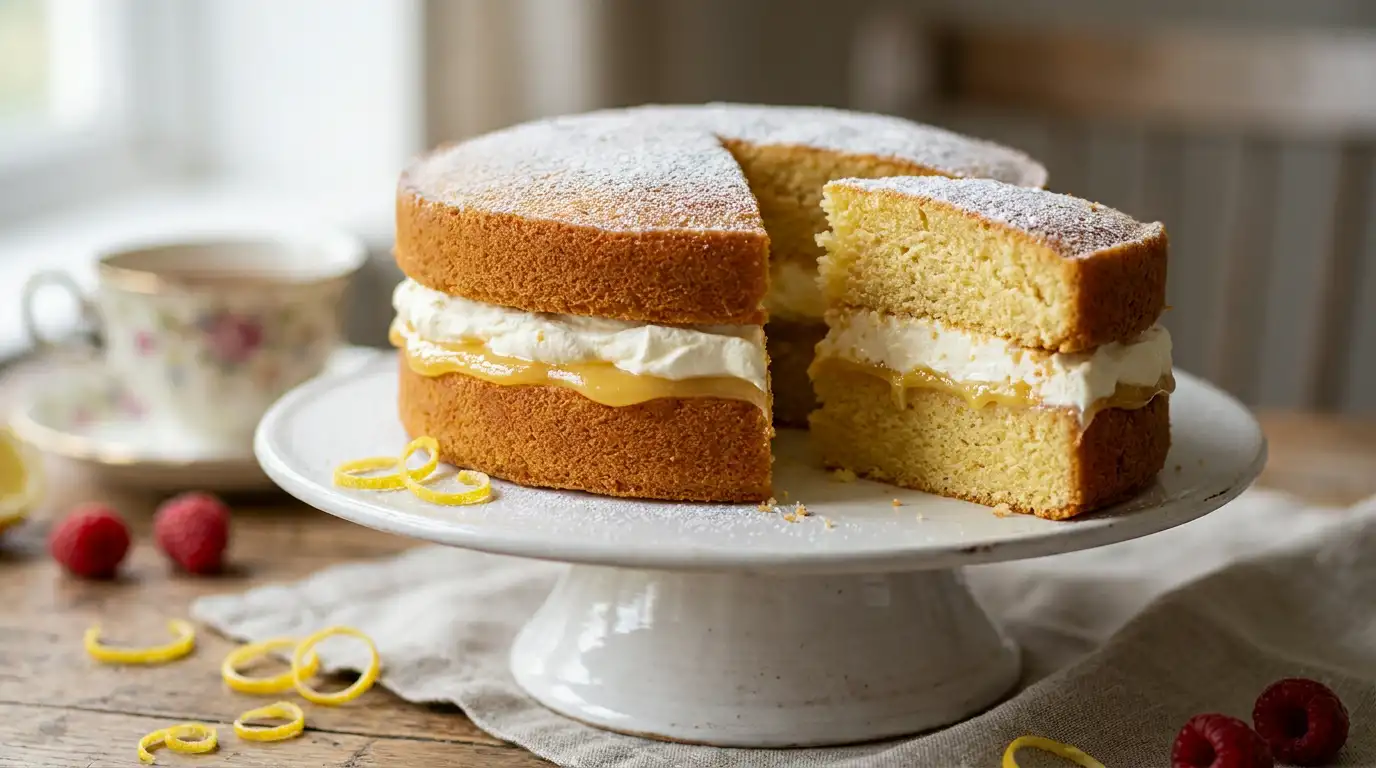
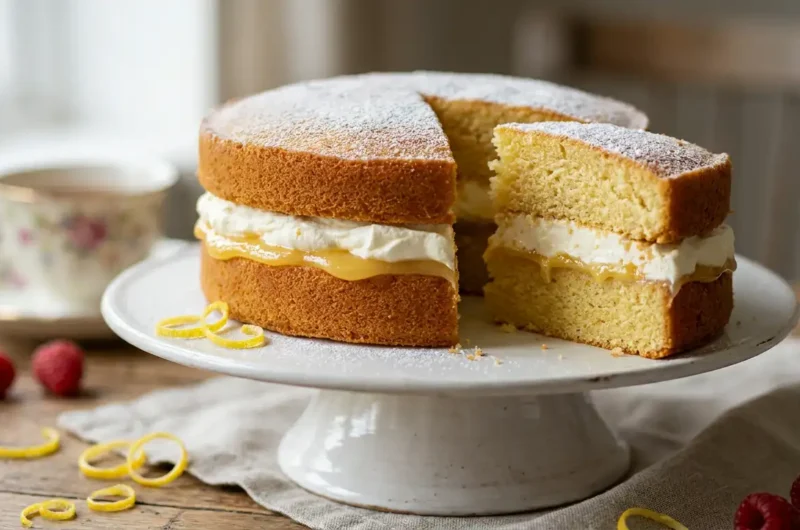
This lemon Victoria sponge layers a light, golden crumb with a sharp lemon curd filling and a thick layer of whipped cream, finished with a fine dusting of caster sugar.
This version of the Mary Berry lemon Victoria sponge recipe uses her reliable all-in-one method, so there is little risk of overbeating the mixture. It suits afternoon tea, birthdays, or a relaxed weekend bake, and the two sponges hold their shape well once sliced. From start to finish, it is ready in around 1 hour 10 minutes.
Ingredients
For the sponge
- 200g unsalted butter, softened
- 200g caster sugar
- 4 large eggs, at room temperature
- 200g self-raising flour
- 1 tsp baking powder
- Zest of 1 unwaxed lemon
- 2 tbsp milk
For the filling
- 100g lemon curd
- 200ml double cream, chilled
- 1 tbsp caster sugar, plus extra for dusting
How to Make Mary Berry Lemon Victoria Sponge
- Prepare the tins: Grease and line two 20cm sandwich tins with baking parchment, then heat the oven to 180C (160C fan).
- Cream the butter and sugar: Beat the butter and caster sugar together in a large bowl until pale and fluffy, this traps air that gives the sponge its light texture.
- Add the eggs: Beat in the eggs one at a time, adding a spoonful of the flour with the last egg to stop the mixture from splitting.
- Fold in the dry ingredients: Sift in the remaining flour and baking powder, then fold through gently with a metal spoon along with the lemon zest and milk.
- Divide and level: Split the mixture evenly between the two tins and smooth the tops with the back of a spoon.
- Bake the sponges: Bake for 22 to 25 minutes until golden and well risen, and the centre springs back when lightly pressed.
- Cool completely: Leave the sponges in their tins for 5 minutes, then turn out onto a wire rack, a warm sponge will melt the cream filling.
- Whip the cream: Whisk the double cream with the caster sugar to soft peaks, taking care not to overwhip, as it can turn grainy.
- Fill the sponge: Spread the lemon curd over one sponge, top with the whipped cream, then sandwich together with the second sponge.
- Finish and serve: Dust the top with caster sugar and cut into slices.
Tips for the Best Mary Berry Lemon Victoria Sponge
Why did my Victoria sponge sink in the middle?
This usually means the oven door was opened too early or the baking powder was old. Wait until at least 20 minutes have passed before checking, and use baking powder within its date.
How do I get an even rise on both sponges?
Weigh the mixture in each tin on kitchen scales rather than guessing by eye. This keeps the layers level and the same depth once stacked.
Why is my sponge dense rather than light?
The butter and sugar were likely not creamed long enough. Beat for a full 3 to 4 minutes until the mixture turns pale and noticeably fluffy.
Why does my lemon curd filling slide out when I cut a slice?
A thin sponge layer that is still slightly warm cannot hold the curd in place. Cool the sponges fully and spread the curd in a thin, even layer right to the edge.
Why did my whipped cream filling turn watery?
Overwhipping or using cream that has warmed up causes it to separate. Whip just to soft peaks and fill the cake close to serving time.
Serving Suggestions
- Serve with a pot of strong English tea for a classic afternoon tea spread
- Add a few fresh raspberries on the side for a sharp, fresh contrast
- Pair with a chilled glass of limoncello for a dinner party finish
- Scatter extra lemon zest over the top just before slicing for colour
- Set it as the centrepiece for a birthday or celebration table
Storage
Room temperature
Keep the unfilled sponge layers in an airtight container at room temperature for up to 2 days.
Refrigerator
Store the filled cake in an airtight container in the fridge for up to 3 days. Bring it out around 30 minutes before serving for the best texture, as the cream stiffens when cold.
Freezing
Wrap the unfilled sponge layers individually in cling film, then foil, and freeze for up to 2 months. Defrost overnight in the fridge before filling and serving.
Nutrition
- Calories: 320-350 kcal
- Carbohydrates: 33g
- Protein: 4g
- Fat: 20g
- Saturated Fat: 12g
- Sodium: 150mg
These figures are approximate estimates and will vary depending on the exact ingredients and portion sizes used.
FAQs
Can I use bottled lemon curd instead of homemade?
Yes, a good quality shop-bought lemon curd works well here and saves time. Choose one with a strong, tangy flavour so it stands up against the cream.
Can I make this Victoria sponge ahead of time?
The sponge layers can be baked a day ahead and kept wrapped at room temperature. Fill the cake with curd and cream on the day you plan to serve it.
Can I freeze a lemon Victoria sponge?
The plain sponge layers freeze well for up to 2 months, but it is best not to freeze them once filled with cream, as the texture suffers on thawing.
What size tin works best for this recipe?
Two 20cm round sandwich tins give the classic proportions for this cake. Deeper 18cm tins also work, though baking time will need to increase slightly.
Can I double this recipe for a larger gathering?
Yes, the quantities double easily, though it is best to bake in batches rather than overfilling a mixing bowl, which can make the mixture harder to fold properly.
Conclusion
This Mary Berry lemon Victoria sponge recipe brings together a tender, golden sponge, a sharp layer of lemon curd, and softly whipped cream, all finished with a simple dusting of sugar. It is a dependable bake for anyone wanting a classic teatime cake without any fuss, and the method leaves little room for error.
This recipe makes one 20cm sandwich cake, serving around 8 slices. Give it a try this weekend, and leave a comment below to share how your sponge turned out. If you enjoyed this, you might also like mary berry chocolate cake with oil recipe.
Mary Berry Lemon Victoria Sponge Recipe
Course: Dessert, BakingCuisine: BritishDifficulty: Easy8
servings45
minutes25
minutes335
kcal1
hour10
minutesA light, golden Victoria sponge filled with tangy lemon curd and softly whipped cream, finished with a dusting of caster sugar. This beginner-friendly bake uses Mary Berry’s reliable all-in-one method and is ready in just over an hour.
Ingredients
200g unsalted butter, softened
200g caster sugar
4 large eggs, at room temperature
200g self-raising flour
1 tsp baking powder
zest of 1 unwaxed lemon
2 tablespoons milk
100g lemon curd
200ml double cream, chilled
1 tablespoon caster sugar, plus extra for dusting
Instructions
- Grease and line two 20cm sandwich tins, then heat the oven to 180C (160C fan).
- Beat the butter and caster sugar together until pale and fluffy.
- Beat in the eggs one at a time, adding a spoonful of flour with the last egg.
- Sift in the remaining flour and baking powder, then fold in gently with the lemon zest and milk.
- Divide the mixture evenly between the tins and smooth the tops.
- Bake for 22 to 25 minutes until golden and well risen.
- Leave the sponges in their tins for 5 minutes, then turn out onto a wire rack to cool completely.
- Whisk the double cream with caster sugar to soft peaks.
- Spread the lemon curd over one sponge, top with whipped cream, then sandwich with the second sponge.
- Dust the top with caster sugar and cut into slices.
Notes
- Wait until at least 20 minutes have passed before opening the oven door, to stop the sponge sinking.
- Weigh the mixture into each tin for an even rise.
- Beat the butter and sugar for a full 3 to 4 minutes for a light texture.
- Cool the sponges fully before adding the curd, so it does not slide out.
- Whip the cream just to soft peaks and fill close to serving time.
- Store the filled cake in the fridge for up to 3 days.