Mary Berry Vanilla Cupcakes Recipe
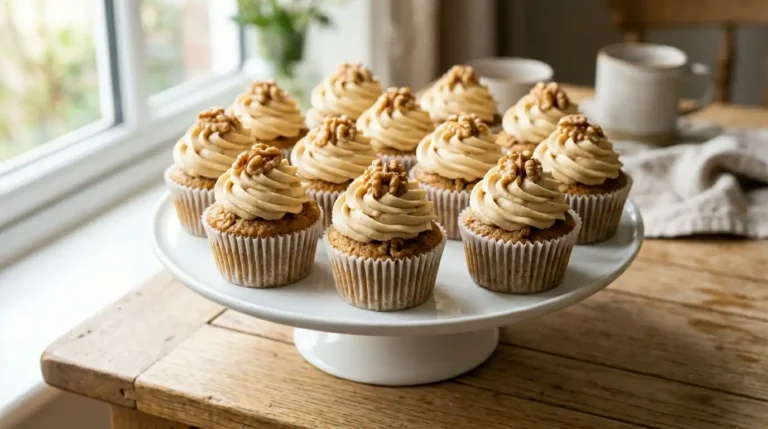
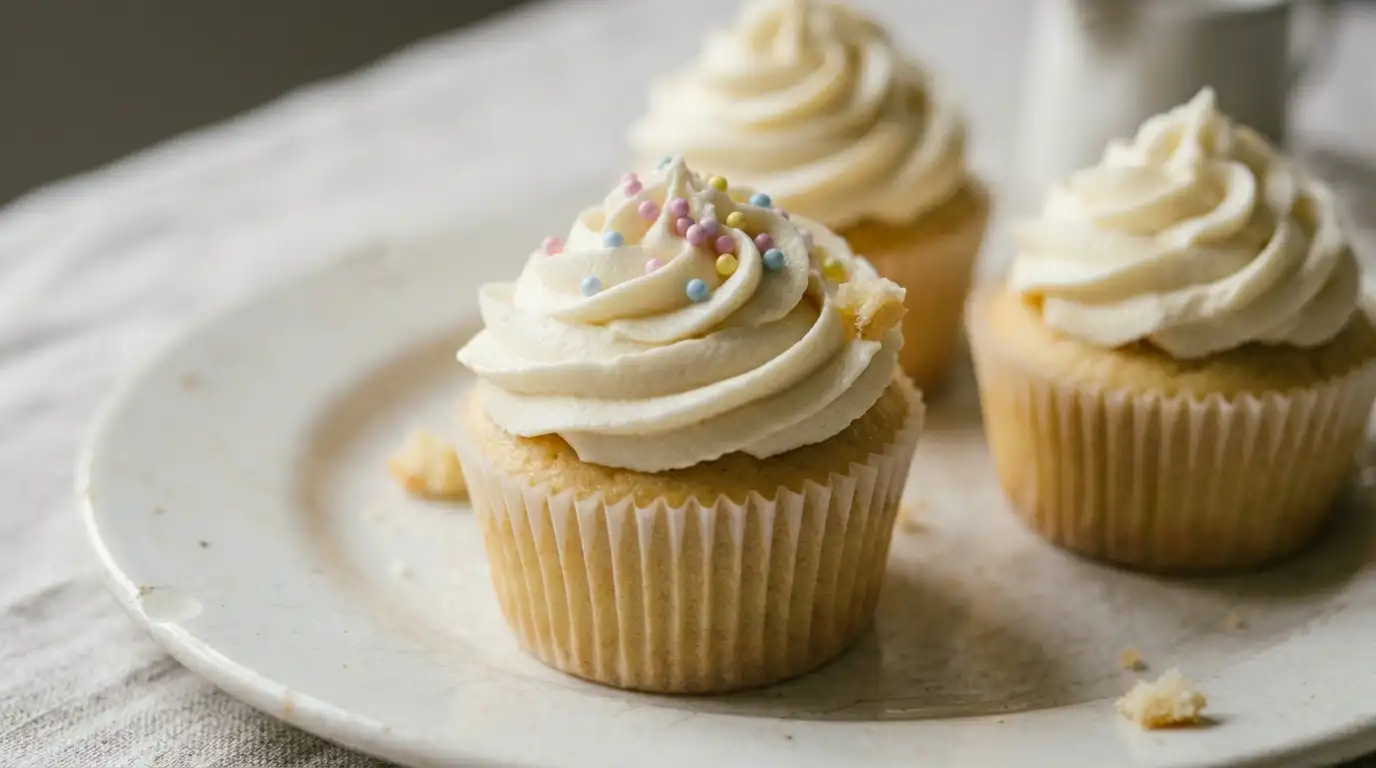
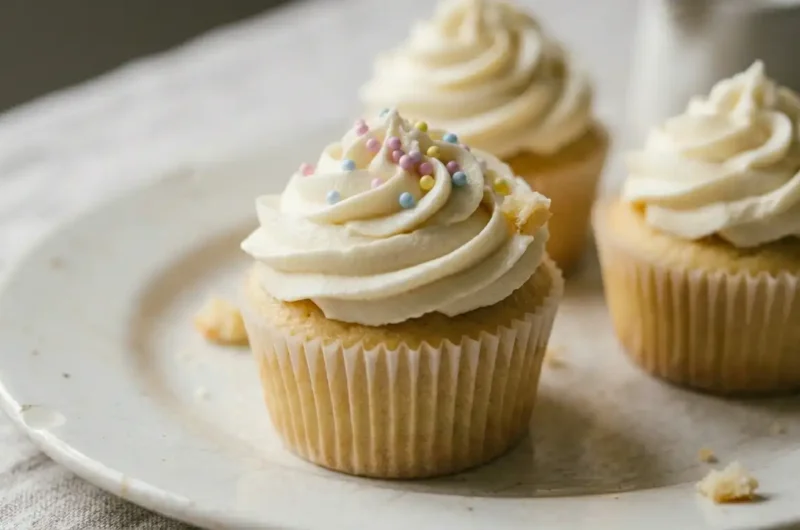
These vanilla cupcakes are soft, pale-golden sponges with a close, tender crumb and a light vanilla fragrance that carries from oven to table. The buttercream on top is silky and smooth, piped into a gentle swirl that holds its shape without feeling heavy or overly sweet. This Mary Berry vanilla cupcakes recipe follows a straightforward all-in-one method that delivers consistent results every single time, making it a reliable choice for birthdays, bake sales, and afternoon tea alike. From start to finish, the whole batch is ready in around 45 minutes.
What sets this recipe apart is its simplicity and reliability. The batter comes together in one bowl with no complicated techniques, and the buttercream is balanced to complement rather than overwhelm the sponge beneath it.
Ingredients
For The Sponge
- 150g unsalted butter, softened at room temperature
- 150g caster sugar
- 3 medium eggs, at room temperature
- 150g self-raising flour, sifted
- 1 tsp baking powder
- 2 tbsp whole milk
- 1 tsp vanilla extract
For The Vanilla Buttercream
- 200g unsalted butter, softened
- 400g icing sugar, sifted
- 2 tbsp whole milk
- 1.5 tsp vanilla extract
To Finish
- Sprinkles, sugar pearls, or a light dusting of icing sugar (optional)
How to Make Mary Berry Vanilla Cupcakes
- Preheat the oven: Set the oven to 180°C (160°C fan) and line a 12-hole muffin tin with paper cupcake cases. This ensures the oven is at the correct temperature the moment the batter is ready.
- Mix the sponge batter: Place the butter, caster sugar, eggs, sifted flour, baking powder, milk, and vanilla extract into a large mixing bowl. Beat together with an electric hand mixer on medium speed for about 2 minutes until the mixture is pale, smooth, and has a slightly dropping consistency. Do not overmix once the ingredients are combined, as this can tighten the crumb.
- Fill the cases: Divide the batter evenly between the 12 cupcake cases, filling each one roughly two-thirds full. A small ice cream scoop makes this quicker and more consistent.
- Bake the cupcakes: Place the tin on the middle shelf of the preheated oven and bake for 18 to 20 minutes. The cupcakes are ready when they are golden on top and a skewer inserted into the centre comes out clean.
- Cool completely: Remove the tin from the oven and leave the cupcakes in the tin for 5 minutes before transferring to a wire rack. Allow them to cool fully before decorating, as residual heat will melt the buttercream if applied too soon.
- Make the buttercream: Beat the softened butter in a clean bowl on high speed for 3 to 4 minutes until it turns noticeably paler in colour. Add the sifted icing sugar in two batches, beating well between each addition. Add the milk and vanilla extract, then beat for a further 2 minutes until the buttercream is very light and smooth. The extended beating step is what gives the buttercream its airy, silky finish rather than a dense, greasy texture.
- Pipe or spread the buttercream: Transfer the buttercream to a piping bag fitted with a large star nozzle and pipe a swirl onto each cooled cupcake, starting from the outer edge and working inward. Alternatively, spread with a palette knife for a more relaxed finish.
- Decorate and serve: Add any optional toppings such as sprinkles or sugar pearls, and serve at room temperature.
Tips for the Best Mary Berry Vanilla Cupcakes
Why are my cupcakes domed and cracked on top?
This happens when the oven temperature is too high or the cases are overfilled. Check your oven with a thermometer and fill each case no more than two-thirds full to allow the batter to rise gently without forcing through the top.
Why did my cupcakes sink in the middle after baking?
Sinking is usually caused by opening the oven door too early in the bake, which causes the heat to drop before the structure has set. Wait until at least 15 minutes have passed before checking, and resist the urge to open the door before then.
Why is my buttercream grainy or gritty?
Graininess in buttercream almost always comes from icing sugar that has not been sifted before use. Always pass the icing sugar through a fine sieve before adding it to the butter, and beat the mixture for a full two minutes after the final addition.
Why does my buttercream look greasy or separated?
This is a sign the butter was too warm when beaten. The butter should be soft enough to press a finger into, but not so warm that it looks shiny or slick. If separation occurs, chill the bowl in the fridge for 10 minutes, then beat again.
How do I get a really even rise across all twelve cupcakes?
Uneven rises usually point to inconsistent batter portions. Using a small ice cream scoop or a piping bag to fill the cases removes the guesswork and gives each cupcake the same amount of batter, which leads to a uniform bake.
Serving Suggestions
- Serve at room temperature alongside a pot of Earl Grey or Darjeeling tea for a classic afternoon spread.
- Top with a small fresh strawberry or half a raspberry pressed gently into the piped buttercream for a summery finish.
- Arrange on a tiered cake stand for birthday parties or bake sales, alternating with chocolate cupcakes for visual contrast.
- Dust lightly with edible shimmer powder over the piped buttercream for an elegant party presentation.
- Pair with a glass of cold milk for a straightforward after-school treat that suits all ages.
Storage
Room Temperature
Store the decorated cupcakes in an airtight container at cool room temperature for up to 2 days.
Refrigerator
If the kitchen is warm, transfer the cupcakes to an airtight container and refrigerate for up to 4 days. Remove them from the fridge at least 30 minutes before serving, as cold buttercream firms up considerably and loses its smooth, creamy texture when eaten straight from the fridge.
Freezing
Un-iced sponges freeze well: wrap each cooled cupcake individually in cling film and place in a freezer-safe bag for up to 3 months. Defrost at room temperature for 2 hours and make the buttercream fresh before decorating.
Nutrition
- Calories: 370 kcal
- Carbohydrates: 48g
- Protein: 3g
- Fat: 19g
- Saturated Fat: 12g
- Sodium: 85mg
Nutrition values are estimates based on standard ingredient quantities and may vary depending on the specific brands used and the size of each serving.
FAQs
Can I use plain flour instead of self-raising flour in these vanilla cupcakes?
Yes. Replace the self-raising flour with 150g plain flour and increase the baking powder to 2 teaspoons. Sift them together thoroughly before adding to the bowl to ensure an even rise.
Can I make the cupcake batter ahead of time?
It is best to bake the batter immediately after mixing, as the baking powder begins to activate on contact with the wet ingredients. However, the baked and cooled sponges can be prepared a day ahead and stored in an airtight container, with the buttercream made and applied on the day of serving.
Can I use salted butter in place of unsalted butter?
Salted butter can be used in the sponge if that is all that is available, and the result will still be pleasant. For the buttercream, unsalted butter is strongly recommended, as salted butter can make the frosting taste unbalanced and slightly sharp against the sweetness of the icing sugar.
Can I double this recipe to make 24 cupcakes?
Yes, the recipe scales up reliably. Simply double all quantities and bake in two 12-hole tins, positioned on the same shelf if they fit side by side, or on separate shelves with the tins swapped halfway through the baking time for an even colour.
Can I colour the buttercream for a celebration?
Gel food colouring works best here, as liquid food colouring can thin the buttercream and affect its consistency. Add the gel colouring a tiny amount at a time after the buttercream is fully beaten, mixing well between each addition until the desired shade is reached.
Conclusion
This Mary Berry vanilla cupcakes recipe is one of the most dependable bakes in a home baker’s collection. The all-in-one sponge produces a consistent, tender crumb with a clean vanilla flavour, while the silky buttercream provides a smooth, well-balanced finish. Each stage is straightforward, and the ingredients are ones most home kitchens already have on hand. The recipe yields 12 cupcakes, which is a practical amount for parties, gifts, or a weekend bake with children.
Whether piped neatly for a celebration or swirled quickly for an everyday treat, these cupcakes hold up beautifully at every occasion. If this recipe worked well for you, share it with someone who loves to bake, or leave a comment below with how yours turned out. If you enjoyed this, you might also like Mary Berry all in one apple cake recipe.
Mary Berry Vanilla Cupcakes Recipe
Course: DessertCuisine: BritishDifficulty: Easy12
servings20
minutes20
minutes370
kcal45
minutesSoft, pale-golden vanilla sponge cupcakes made with a simple all-in-one method, topped with silky vanilla buttercream. A reliable, beginner-friendly bake perfect for birthdays, bake sales, and afternoon tea.
Ingredients
150g unsalted butter, softened at room temperature
150g caster sugar
3 medium eggs, at room temperature
150g self-raising flour, sifted
1 tsp baking powder
2 tbsp whole milk
1 tsp vanilla extract
200g unsalted butter, softened (for buttercream)
400g icing sugar, sifted (for buttercream)
2 tbsp whole milk (for buttercream)
1.5 tsp vanilla extract (for buttercream)
sprinkles, sugar pearls, or a light dusting of icing sugar (optional)
Instructions
- Preheat the oven to 180C (160C fan) and line a 12-hole muffin tin with paper cupcake cases.
- Place the butter, caster sugar, eggs, sifted flour, baking powder, milk, and vanilla extract into a large mixing bowl and beat with an electric hand mixer on medium speed for about 2 minutes until pale, smooth, and slightly dropping in consistency.
- Divide the batter evenly between the 12 cupcake cases, filling each one roughly two-thirds full.
- Bake on the middle shelf for 18 to 20 minutes until golden on top and a skewer inserted into the centre comes out clean.
- Leave the cupcakes in the tin for 5 minutes, then transfer to a wire rack and allow to cool completely before decorating.
- Beat the softened butter for the buttercream on high speed for 3 to 4 minutes until noticeably paler, then add the sifted icing sugar in two batches, beating well between each addition.
- Add the milk and vanilla extract to the buttercream and beat for a further 2 minutes until light and smooth.
- Pipe a swirl of buttercream onto each cooled cupcake using a large star nozzle, or spread with a palette knife, then add optional toppings and serve.
Notes
- Fill each cupcake case no more than two-thirds full to avoid domed or cracked tops.
- All ingredients should be at room temperature before mixing for the best batter consistency.
- Do not open the oven door before 15 minutes to prevent the cupcakes from sinking.
- Always sift the icing sugar before adding to the butter to avoid a grainy buttercream.
- If the buttercream looks greasy, chill the bowl for 10 minutes then beat again.
- Un-iced sponges can be frozen for up to 3 months, wrapped individually in cling film.