Mary Berry Cappuccino Cake Recipe
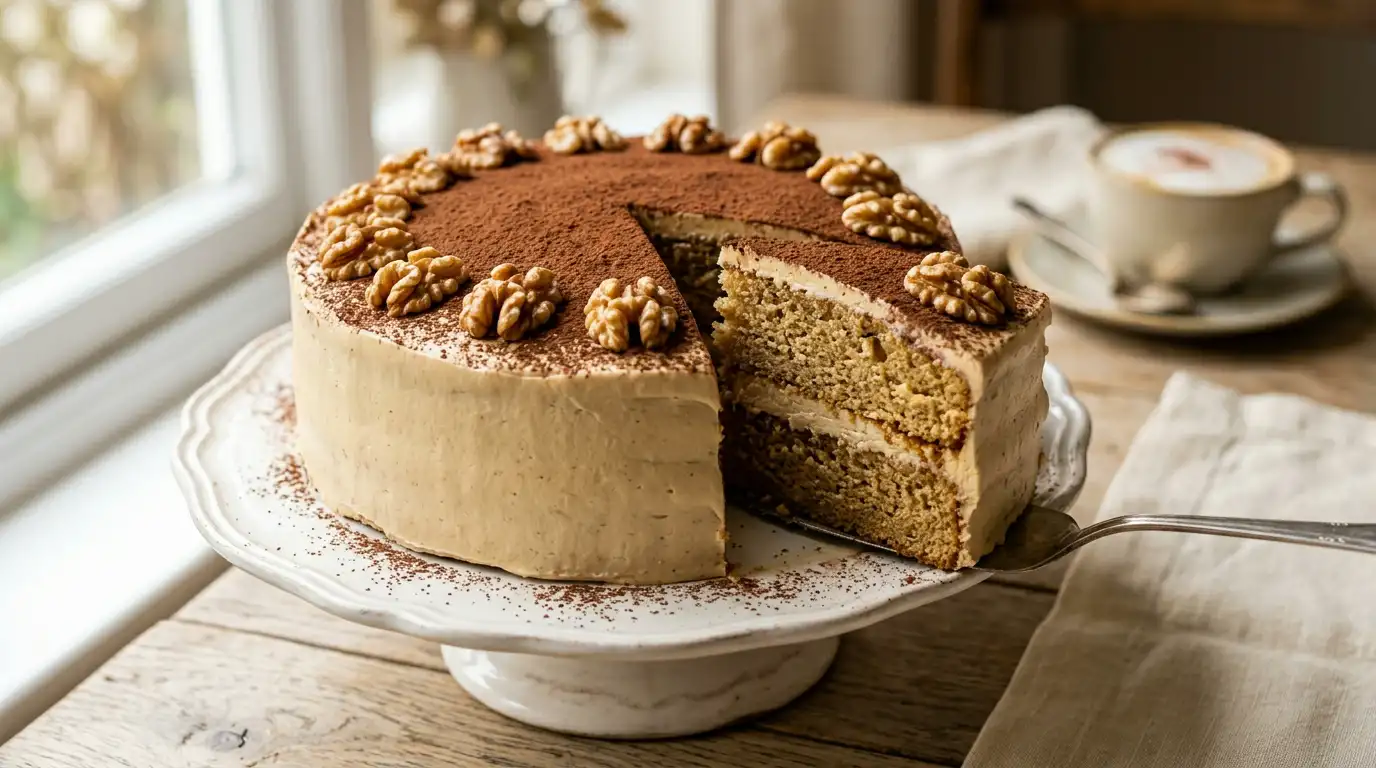
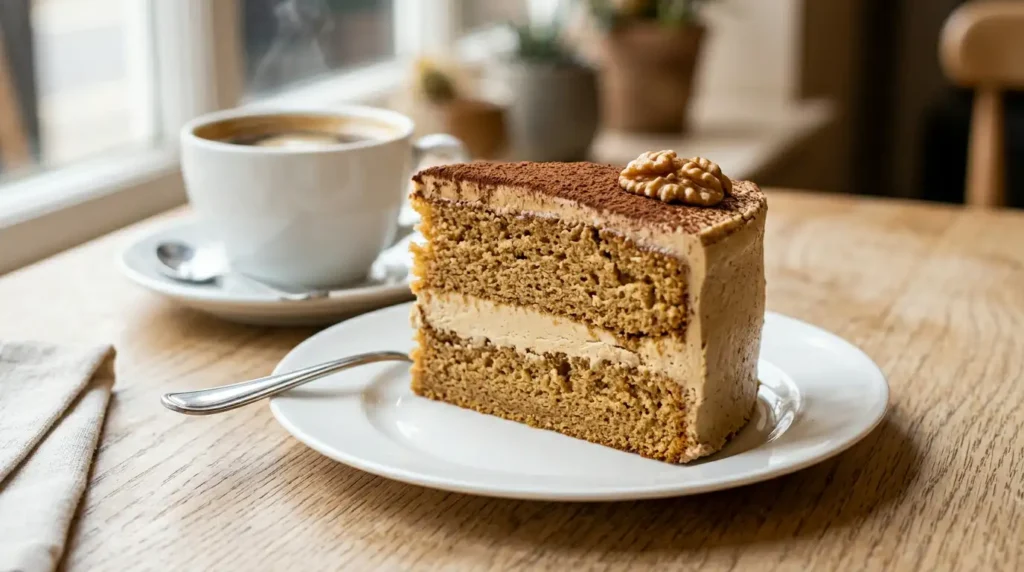
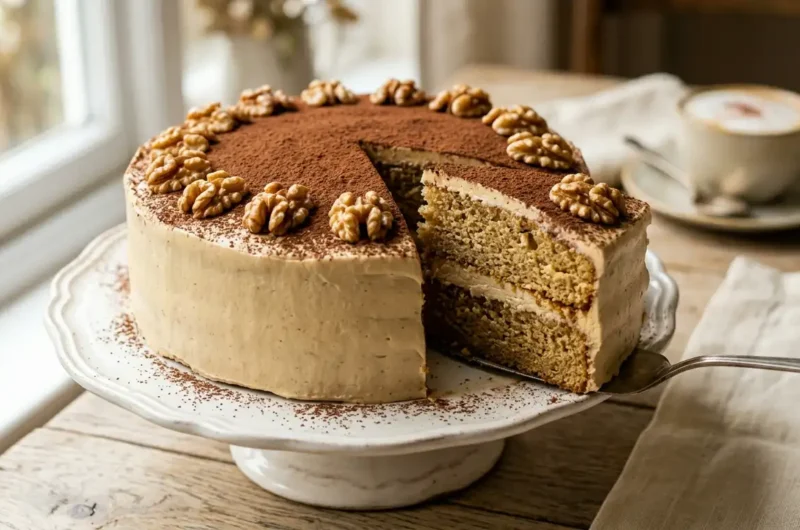
This Mary Berry cappuccino cake is a light, coffee-scented sponge with a soft, open crumb, sandwiched and covered in a silky, pale-brown buttercream that carries a gentle bitterness from real espresso. The surface is dusted with a fine layer of cocoa powder, exactly as a proper cappuccino would be, giving the finished cake a warm, café-house aroma and a matte, elegant appearance.
What makes this version particularly appealing is how approachable it is. The sponge uses a straightforward all-in-one method, so there is no complicated creaming or folding involved. It works equally well for a weekend bake or a celebration, holding its shape cleanly when sliced and staying tender for several days. From start to finish, it is ready in around 1 hour 15 minutes.
Ingredients
- 225g self-raising flour
- 225g caster sugar
- 225g unsalted butter, softened
- 4 large eggs, at room temperature
- 1 tsp baking powder
- 2 tbsp instant espresso powder dissolved in 2 tbsp boiling water, cooled
- 2 tbsp whole milk
- 300g icing sugar, sifted
- 150g unsalted butter, softened
- 1 tbsp instant espresso powder dissolved in 1 tbsp boiling water, cooled
- 1–2 tbsp whole milk, to loosen
- 1 tbsp cocoa powder, for dusting
- A few whole walnut halves, to decorate (optional)
How to Make Mary Berry Cappuccino Cake
Prepare the tins and oven
Heat the oven to 180°C (160°C fan). Grease two 20cm round sandwich tins and line the bases with baking parchment. Using the same tin size for both layers ensures the sponges bake evenly and stack neatly.
Dissolve the espresso
Combine the instant espresso powder with the boiling water in a small bowl and stir until fully dissolved. Leave to cool for at least 5 minutes before adding to the batter. Adding hot liquid to butter can cause the mixture to split, so cooling is important here.
Make the sponge batter
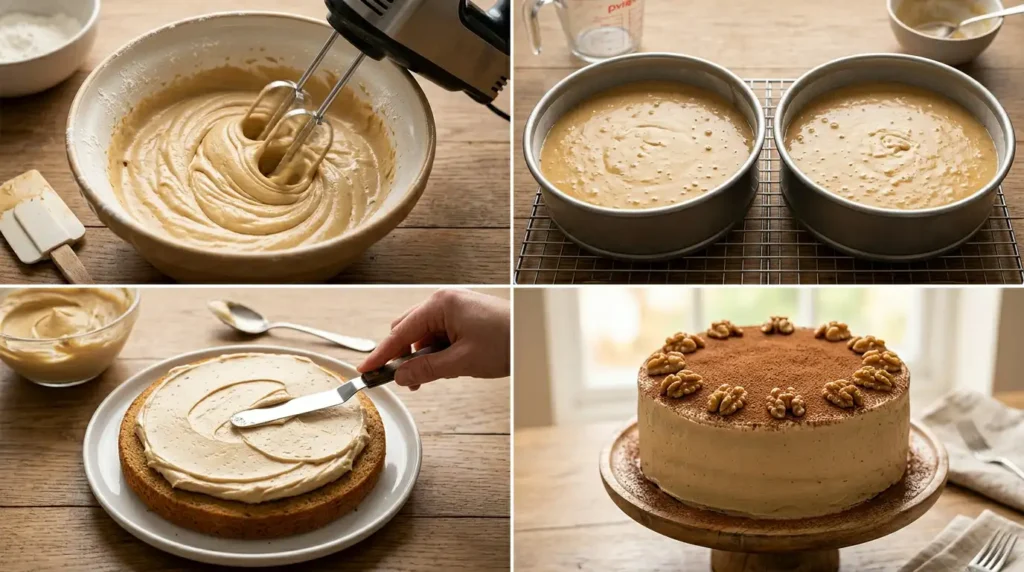
Place the butter, caster sugar, eggs, self-raising flour, baking powder, cooled espresso liquid, and milk into a large bowl. Beat together using an electric hand whisk on medium speed for approximately 2 minutes until the mixture is pale, smooth, and just combined. Take care not to overbeat, as this can tighten the gluten in the flour and produce a dense crumb.
Bake the sponges
Divide the batter equally between the two prepared tins and spread level with a palette knife or the back of a spoon. Bake in the centre of the oven for 22 to 25 minutes, until the sponges are golden brown, have risen, and spring back when lightly pressed in the middle. A skewer inserted into the centre should come out clean.
Cool the sponges
Remove the tins from the oven and leave to cool in the tins for 8 minutes. Then turn the sponges out onto a wire rack, peel off the parchment, and leave to cool completely. Spreading buttercream onto a warm sponge will cause it to melt, so patience here makes a real difference to the finish.
Make the coffee buttercream
Beat the softened butter in a bowl using an electric whisk until pale and creamy, around 2 minutes. Add the sifted icing sugar in two additions, beating between each. Pour in the cooled espresso liquid and beat until the buttercream is smooth and spreadable. Add milk a teaspoon at a time if the buttercream is too stiff to spread.
Assemble the cake
Place one cooled sponge onto a serving plate or board, flat side up. Spread roughly one third of the buttercream evenly over the top using a palette knife. Place the second sponge on top, flat side down, pressing gently so the layers sit flush. Use the remaining buttercream to cover the top and sides of the cake in a smooth, even layer.
Finish and decorate
Hold a fine-mesh sieve above the top of the cake and sift the cocoa powder over the surface in a light, even layer. Arrange a few walnut halves around the top edge if using. The cocoa layer echoes the finish of a proper cappuccino and sets within minutes.
Tips for the Best Mary Berry Cappuccino Cake
01 Why did my cappuccino cake sink in the middle after baking?
02 Why does my coffee sponge taste bitter rather than balanced?
03 How do I stop the buttercream from becoming too runny?
04 Why are my sponge layers uneven in height after baking?
05 Why does the cocoa powder on top clump rather than dust evenly?
Serving Suggestions
Serve in thick slices alongside a freshly brewed cup of strong Italian-style coffee to reinforce the cappuccino flavour.
Plate on a white china cake stand and add a light extra dusting of cocoa just before bringing to the table for a clean, café-style presentation.
Pair with a small scoop of vanilla ice cream for a dessert serving, as the cold, plain cream offsets the warm bitterness of the coffee sponge well.
Offer thin slices at room temperature for afternoon tea, where the texture of the buttercream is softer and the coffee flavour more pronounced.
Arrange individual slices in paper cupcake cases for a party buffet or celebration table, making the cake easy to serve without a knife.
Storage
Room Temperature
Store the assembled cake in an airtight container at room temperature for up to 3 days, keeping it away from direct sunlight or heat sources.
Refrigerator
Place the cake in an airtight container and refrigerate for up to 5 days. Remove from the refrigerator at least 30 minutes before serving, as cold buttercream is firm and the coffee flavour is more muted when chilled.
Freezing
Wrap individual sponge layers tightly in cling film, then in foil, and freeze for up to 3 months without the buttercream. Thaw overnight at room temperature, then ice and assemble as normal before serving.
Nutrition
Nutrition values are estimates based on standard ingredient weights and may vary depending on the specific brands used and the size of each serving. Values are calculated per slice based on 10 servings per cake.
FAQs
01 Can I use filter coffee instead of instant espresso powder in this cake?
02 Can I make the Mary Berry cappuccino cake ahead of time?
03 What size tin works best for this cappuccino cake recipe?
04 Can I add walnuts or chocolate chips inside the sponge itself?
05 Can I make this cappuccino cake recipe gluten-free?
Conclusion
This Mary Berry cappuccino cake delivers everything a good coffee cake should: a tender, evenly risen sponge with a genuine coffee flavour that comes through in both the crumb and the buttercream, finished with that characteristic cocoa dusting that gives it its name. The all-in-one method keeps the process simple, and the result is a cake that slices cleanly and keeps well for several days. This recipe makes one 20cm layered cake, serving approximately 10 generous slices.
Whether it is for a Sunday afternoon with family or a birthday celebration, this cake earns its place on any table. If you try it, share your results in the comments below, and let us know if you added walnuts or kept it simple. For another classic bake to try next, you might also enjoy the Mary Berry white bread recipe, a reliable, straightforward loaf that is just as satisfying to make from scratch.
Mary Berry Cappuccino Cake Recipe
Course: DessertCuisine: BritishDifficulty: Easy10
servings20
minutes25
minutes490
kcal1
hour15
minutesA light, coffee-scented sponge cake sandwiched and covered in a silky espresso buttercream, finished with a fine cocoa dusting. Made using a simple all-in-one method, this beginner-friendly bake is perfect for afternoon tea or a celebration.
Ingredients
225g self-raising flour
225g caster sugar
225g unsalted butter, softened
4 large eggs, at room temperature
1 tsp baking powder
2 tbsp instant espresso powder dissolved in 2 tbsp boiling water, cooled
2 tbsp whole milk
300g icing sugar, sifted
150g unsalted butter, softened
1 tbsp instant espresso powder dissolved in 1 tbsp boiling water, cooled
1–2 tbsp whole milk, to loosen
1 tbsp cocoa powder, for dusting
a few whole walnut halves, to decorate (optional)
Instructions
- Heat the oven to 180°C (160°C fan). Grease two 20cm round sandwich tins and line the bases with baking parchment.
- Combine the instant espresso powder with the boiling water in a small bowl, stir until fully dissolved, and leave to cool for at least 5 minutes.
- Place the butter, caster sugar, eggs, self-raising flour, baking powder, cooled espresso liquid, and milk into a large bowl. Beat with an electric hand whisk on medium speed for approximately 2 minutes until pale and smooth.
- Divide the batter equally between the two prepared tins, spread level, and bake in the centre of the oven for 22 to 25 minutes until golden, risen, and a skewer inserted in the centre comes out clean.
- Leave the sponges to cool in the tins for 8 minutes, then turn out onto a wire rack, peel off the parchment, and leave to cool completely.
- Beat the softened butter until pale and creamy. Add the sifted icing sugar in two additions, beating between each. Mix in the cooled espresso liquid and beat until smooth and spreadable, adding milk a teaspoon at a time if needed.
- Place one cooled sponge onto a serving plate flat side up. Spread roughly one third of the buttercream over the top, then place the second sponge on top flat side down and press gently.
- Use the remaining buttercream to cover the top and sides of the cake in a smooth, even layer, then sift cocoa powder over the surface and decorate with walnut halves if using.
Notes
- Use room-temperature eggs and butter for the smoothest all-in-one batter.
- Do not open the oven door before 20 minutes to prevent the sponge from sinking.
- Cool the espresso liquid completely before adding it to both the batter and the buttercream.
- Weigh the batter into each tin for even layers rather than estimating by eye.
- Chill the iced cake for 15 minutes before dusting with cocoa for a neater finish.
- Fold 75g chopped walnuts or dark chocolate chips into the batter before baking for added texture.