Mary Berry Royal Icing Recipe
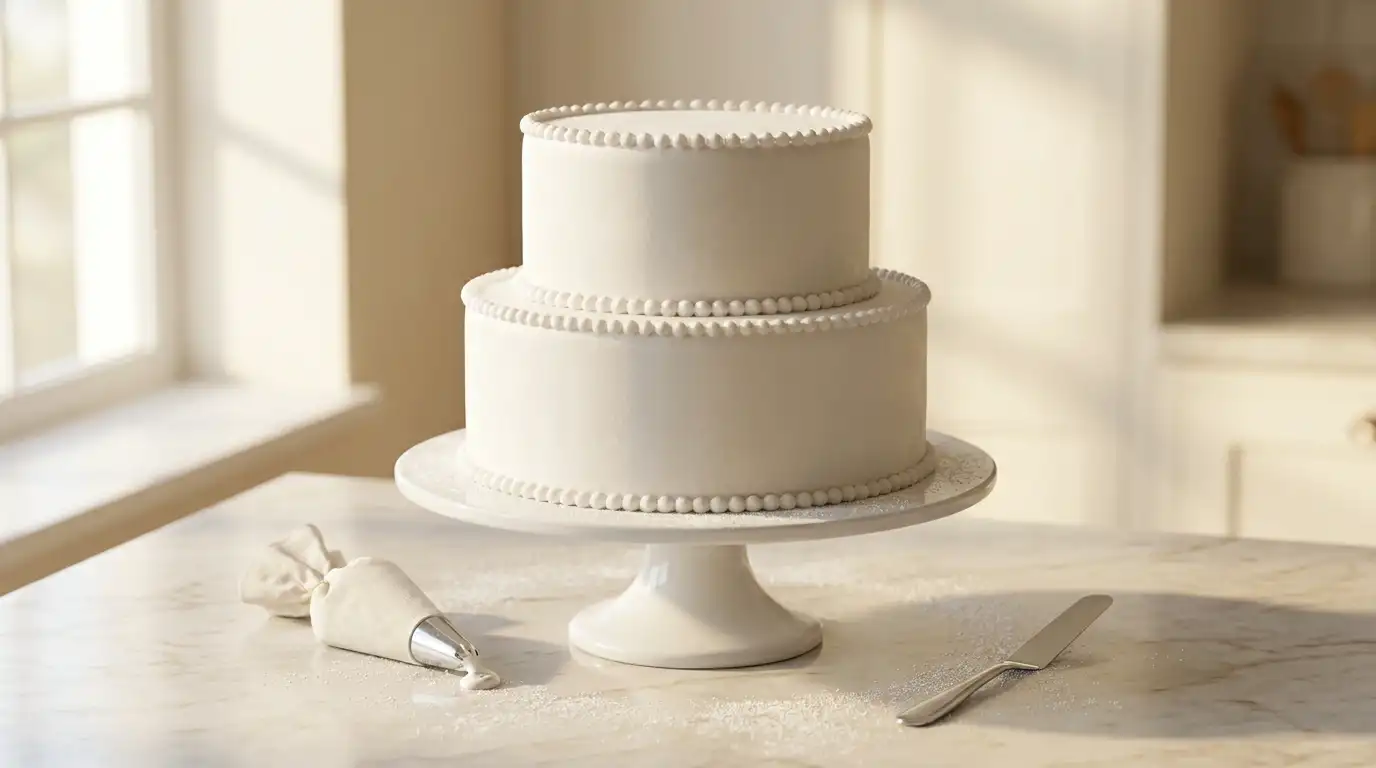
Mary Berry royal icing sets to a brilliant white, smooth finish with a firm, matte surface that holds crisp edges and fine piped detail. It spreads cleanly over a marzipan base, dries without cracking, and gives celebration cakes that clean, professional look. This recipe uses dried egg white powder, which makes it a practical choice for home bakers concerned about raw eggs and gives a more consistent result than fresh whites. From mixing to full set, allow around 2 to 3 hours including drying time.
Ingredients
For the royal icing
- 500g icing sugar, sifted
- 30g dried egg white powder (also sold as meringue powder)
- 75ml cold water
- 1 tsp lemon juice
How to Make Mary Berry Royal Icing Recipe
- Sift the icing sugar: Pass the icing sugar through a fine-mesh sieve into a large, grease-free bowl. Any lumps left in at this stage will block a piping nozzle later, so sift twice if needed.
- Dissolve the egg white powder: In a small jug, whisk the dried egg white powder into the cold water until fully dissolved with no visible granules. Let it sit for two minutes before using, as this gives the powder time to fully hydrate.
- Combine the mixture: Pour the dissolved egg white liquid and the lemon juice into the sifted icing sugar. Beat using a hand-held electric mixer on a low speed for one minute, then increase to medium speed for five to seven minutes until the icing is very white, thick, and forms stiff peaks.
- Check the consistency: Lift the beater and allow the icing to fall back into the bowl. It should hold a ribbon for three to four seconds before settling. This is the correct stiff-peak consistency for coating a cake. If it is too stiff, add water half a teaspoon at a time.
- Adjust for piping or flooding: Reserve a portion of the stiff icing for piping borders and detail. For a flat coating, let the remaining icing down with a few drops of water until a ribbon holds for around ten seconds before disappearing into the surface. This softer consistency spreads smoothly and self-levels to a flat finish.
- Apply the first coat: Spoon icing onto a marzipan-covered cake and spread with a palette knife or side scraper, working from the top down to the sides. Keep strokes firm and even. Leave to dry for at least four hours, ideally overnight, in a cool dry room before applying a second coat.
- Apply the second coat: Once the first coat is fully dry and firm to the touch, apply a second layer of thinned icing in the same way. Two coats give a more even, opaque finish than one thick coat. Leave to set fully before decorating or adding piped details.
- Pipe decorations: Spoon the reserved stiff icing into a piping bag fitted with a small round nozzle. Pipe borders, lettering, or fine details onto the set surface. The stiff consistency holds a clean edge and does not spread.
Tips for the Best Mary Berry Royal Icing Recipe
Why is my royal icing not going white enough?
Royal icing needs extended beating to break down the sugar crystals and incorporate air. Beat for a full five to seven minutes at medium speed. A short mix will leave the icing looking slightly grey or cream-coloured rather than brilliant white.
Why does my royal icing go hard in the bowl before I finish decorating?
Royal icing skins over quickly when exposed to air. Keep the bowl covered with a damp cloth at all times when not actively spreading or piping, and press cling film directly onto the surface of any icing stored in a separate bowl or jug.
Why is my icing sliding off the marzipan?
The marzipan surface must be completely dry and free from grease before icing. If marzipan was applied recently, leave it to dry uncovered for at least 24 hours. Brush with a very thin layer of cooled boiled water just before icing to help adhesion.
Why has my royal icing cracked after drying?
Cracks usually form when the icing is applied too thickly in a single coat. Two or three thin coats, each allowed to dry fully, will give a smooth and crack-free finish far more reliably than one heavy layer.
Why does my icing have air bubbles on the surface?
Beating at too high a speed incorporates large air bubbles into the mixture. Use a medium speed and, once the icing is ready, stir it gently with a spatula for one minute to knock out excess air before applying it to the cake.
Serving Suggestions
- Use as the final coating on a traditional Christmas cake set on a silver cake board for a clean, formal presentation.
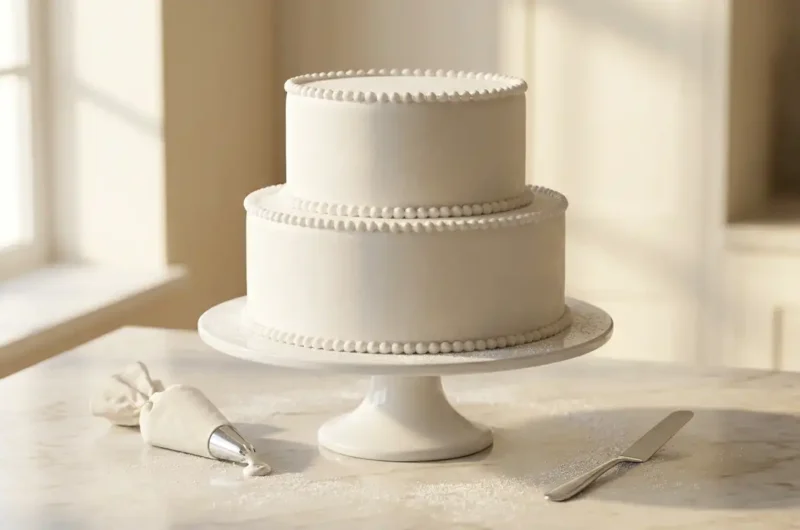
- Pipe a simple border of small dots around the base and top edge to frame the smooth surface neatly.
- Flood individual biscuits with thinned royal icing and leave to dry flat on a wire rack for neat, even coverage.
- Pipe royal icing snowflakes or simple flower motifs onto non-stick baking paper, leave to dry, then peel and arrange on the finished cake as stand-alone decorations.
- Layer over a rich fruit cake that has been covered in marzipan for a classic celebration cake to serve at Christmas, weddings, or christenings.
Storage
Room temperature
Once set on a cake, royal icing can be kept at room temperature in a cool, dry place for up to four weeks, loosely covered with greaseproof paper to protect the surface from dust.
Refrigerator
Unset royal icing can be stored in an airtight container in the fridge for up to three days. Before using again, bring it to room temperature and beat it briefly to restore its consistency, as it can stiffen in the cold.
Freezing
Royal icing can be frozen in a sealed, airtight container or freezer bag for up to three months. Defrost overnight in the fridge, then bring to room temperature and re-beat before using, as the texture may need adjusting with a few drops of water.
Nutrition
- Calories: 95 kcal
- Carbohydrates: 24g
- Protein: 0.5g
- Fat: 0g
- Saturated Fat: 0g
- Sodium: 5mg
Nutrition values are estimates per serving based on the full batch divided into approximately 16 portions. Actual values may vary depending on the specific brands and ingredients used.
FAQs
Can I use fresh egg whites instead of dried egg white powder?
Yes. Replace the 30g dried egg white powder and 75ml water with 2 large fresh egg whites, around 60ml. The icing will behave in the same way, though fresh egg white can make the texture slightly softer. Use only pasteurised eggs if serving to young children, pregnant women, or anyone in a vulnerable group.
Can I make royal icing ahead of time?
Royal icing made with dried egg white powder can be prepared up to three days in advance. Store it in an airtight container with cling film pressed directly onto the surface, then re-beat before use to bring it back to the correct consistency.
Can I colour royal icing?
Yes. Use gel food colouring rather than liquid, as liquid colour can thin the icing and affect how it sets. Add the gel a little at a time with a cocktail stick and fold gently until the colour is even. Paste colours give the most vibrant, consistent results.
What is the difference between stiff-peak and flood consistency royal icing?
Stiff-peak icing holds a sharp point when the beater is lifted and is used for piping borders, writing, and raised detail. Flood consistency is looser and self-levels, used for filling in outlined areas on biscuits or for coating the flat surface of a cake. Let down stiff icing with water, a few drops at a time, to reach flooding consistency.
How much royal icing does this recipe make?
This batch covers one standard 20cm round cake with two coats plus a small amount reserved for piped decoration. For a larger 25cm cake or one with elaborate piped detail, increase all quantities by half to ensure enough coverage without rushing.
Conclusion
This Mary Berry royal icing recipe gives a reliable, brilliant white icing that coats cleanly, dries firm, and provides the perfect surface for both spreading and piping. Using dried egg white powder keeps the process straightforward and the results consistent, whether covering a Christmas cake or decorating individual biscuits. The recipe makes enough to coat one 20cm round cake twice over with a little left for piped borders and detail.
Once the technique feels familiar, the icing can be adjusted in consistency to suit almost any decorating task. Share the finished results or leave a comment below if you have any questions about the process. For an equally classic pairing, take a look at the Mary Berry apricot jam recipe, which makes the ideal glaze beneath the marzipan layer before icing.
Mary Berry Royal Icing Recipe
Course: DessertCuisine: BritishDifficulty: Easy16
servings15
minutes95
kcal3
hoursA brilliant white, smooth royal icing that sets firm with crisp edges and fine piped detail. Made with dried egg white powder for a consistent, reliable finish on celebration cakes and decorated biscuits.
Ingredients
500g icing sugar, sifted
30g dried egg white powder (also sold as meringue powder)
75ml cold water
1 tsp lemon juice
Instructions
- Pass the icing sugar through a fine-mesh sieve into a large, grease-free bowl, sifting twice if needed to remove all lumps.
- Whisk the dried egg white powder into the cold water in a small jug until fully dissolved with no visible granules, then leave for two minutes to hydrate.
- Pour the dissolved egg white liquid and lemon juice into the sifted icing sugar and beat on low speed for one minute, then increase to medium speed for five to seven minutes until the icing is very white, thick, and forms stiff peaks.
- Lift the beater and allow the icing to fall back into the bowl. It should hold a ribbon for three to four seconds before settling. Add water half a teaspoon at a time if the icing is too stiff.
- Reserve a portion of stiff icing for piping. For a flat coating, add a few drops of water to the remaining icing until a ribbon holds for around ten seconds before disappearing into the surface.
- Spoon icing onto a marzipan-covered cake and spread with a palette knife or side scraper from the top down to the sides. Leave to dry for at least four hours, ideally overnight, in a cool dry room.
- Once the first coat is fully dry and firm to the touch, apply a second layer of thinned icing in the same way and leave to set fully before decorating.
- Spoon the reserved stiff icing into a piping bag fitted with a small round nozzle and pipe borders, lettering, or fine details onto the set surface.
Notes
- Beat for a full five to seven minutes to achieve a brilliant white colour.
- Keep the bowl covered with a damp cloth at all times to prevent the icing from skinning over.
- Press cling film directly onto the surface of stored icing to prevent a crust forming.
- Ensure marzipan is fully dry and grease-free before applying icing for best adhesion.
- Apply two or three thin coats rather than one thick layer to avoid cracking.
- Stir finished icing gently with a spatula for one minute before use to knock out air bubbles.
- Use gel food colouring rather than liquid to colour royal icing without affecting consistency.