Mary Berry Buttermilk Pancakes Recipe
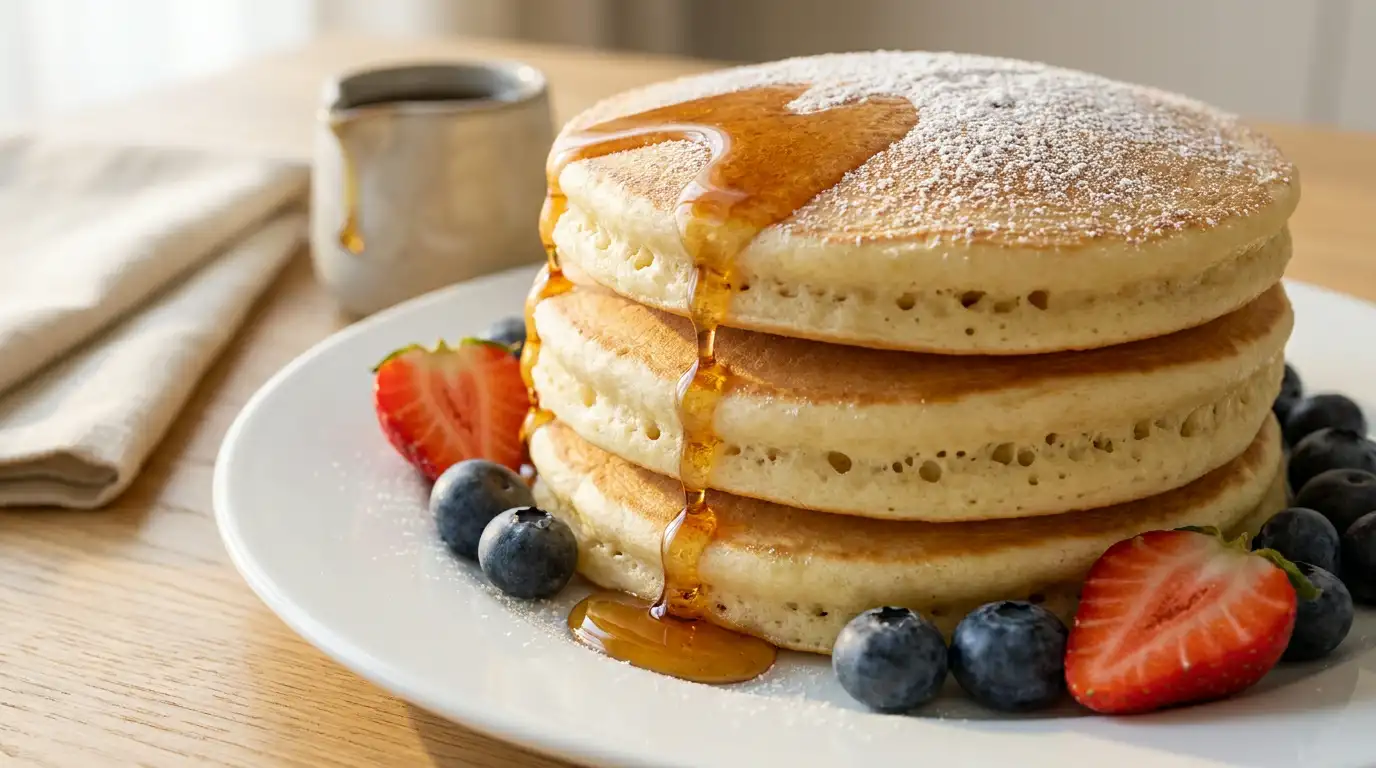
Mary Berry buttermilk pancakes are thick, cloud-soft rounds with a pale golden crust, a tender crumb, and a slight tang that plain milk pancakes simply cannot replicate. The batter comes together in minutes and the results are consistent every single time, making this a reliable choice whether it is a leisurely weekend breakfast or a quick weekday treat.
What sets this version apart is the balance between the buttermilk’s gentle acidity and a touch of vanilla, which gives the pancakes a clean, rounded flavour rather than a flat, starchy one. They are equally suited to a quiet breakfast for two or a stack served to a table full of people. From start to finish, these are ready in around 30 minutes.
Ingredients
For the pancakes
- 200g plain flour
- 1 tsp baking powder
- ½ tsp bicarbonate of soda
- 1 tbsp caster sugar
- ¼ tsp fine salt
- 2 large eggs
- 250ml buttermilk
- 2 tbsp whole milk
- 1 tsp vanilla extract
- 30g unsalted butter, melted and cooled slightly
For cooking
- A small knob of unsalted butter, for greasing the pan
- A little flavourless oil, such as sunflower oil
To serve
- Maple syrup or golden syrup
- Fresh berries of your choice
- A dusting of icing sugar (optional)
How to Make Mary Berry Buttermilk Pancakes Recipe
- Mix the dry ingredients: Sift the plain flour, baking powder, bicarbonate of soda, caster sugar, and salt into a large mixing bowl. Make a well in the centre to receive the wet ingredients.
- Combine the wet ingredients: In a jug, whisk together the eggs, buttermilk, whole milk, vanilla extract, and melted butter until evenly combined. The mixture should look a little frothy at this stage, which indicates the leavening is already beginning to activate.
- Make the batter: Pour the wet ingredients into the well of the dry ingredients and stir with a spatula or wooden spoon until just combined. A few lumps in the batter are entirely normal and will smooth out during cooking, so do not over-mix, as this develops the gluten and produces tough, flat pancakes.
- Rest the batter: Leave the batter to stand for 5 minutes at room temperature. This brief rest allows the bicarbonate of soda to react fully with the buttermilk’s acidity, giving the pancakes their characteristic lift and open crumb.
- Heat the pan: Place a large non-stick frying pan or flat griddle over a medium heat. Add a small knob of butter along with a drop of sunflower oil and swirl to coat the base. When the butter begins to foam but has not yet turned brown, the pan is at the right temperature.
- Cook the first batch: Drop 3 tablespoons of batter per pancake into the pan, spacing them well apart. Cook for 2 to 3 minutes until bubbles break across the surface and the edges look set and matte rather than wet.
- Flip carefully: Using a wide, flat spatula, flip each pancake in a single, confident motion and cook for a further 1 to 2 minutes on the second side until golden. The second side will never colour as evenly as the first, which is perfectly normal.
- Keep warm and repeat: Transfer the cooked pancakes to a plate and cover loosely with foil. Wipe the pan clean, re-grease lightly, and continue cooking the remaining batter in batches.
Tips for the Best Mary Berry Buttermilk Pancakes
Why are my buttermilk pancakes coming out flat instead of fluffy?
The most common cause is over-mixing the batter. Stir only until the dry ingredients have disappeared into the wet ones and stop immediately. A lumpy batter is correct here. Also check that your bicarbonate of soda and baking powder are not past their use-by date, as old raising agents lose their potency and will not give the batter enough lift.
Why are my pancakes burning on the outside but still raw in the middle?
The heat is too high. Buttermilk pancakes cook more slowly than thin crêpes because the batter is thicker and needs time for the heat to travel to the centre. Reduce the flame to medium-low and allow each side the full 2 to 3 minutes stated in the recipe.
How do I know exactly when to flip the pancakes?
Wait until bubbles have formed across the entire surface of the pancake and the edges have changed from shiny and wet to a dull, set appearance. If you flip too early, the batter on top will still be liquid and the pancake will collapse. Patience here gives a clean, even flip.
Why do my pancakes stick to the pan even though it is non-stick?
The pan most likely was not hot enough before the batter went in, causing the pancake to bond to the surface before a crust could form. Always let the butter foam fully before adding the batter, and resist the urge to move the pancake before it is ready to release naturally from the pan.
Why does my first pancake always look different from the rest?
This happens because the pan temperature is still stabilising during the first pancake. Many experienced cooks treat the first one as a test, adjusting the heat and grease level before cooking the proper batch. It is a useful indicator rather than a failure.
Serving Suggestions
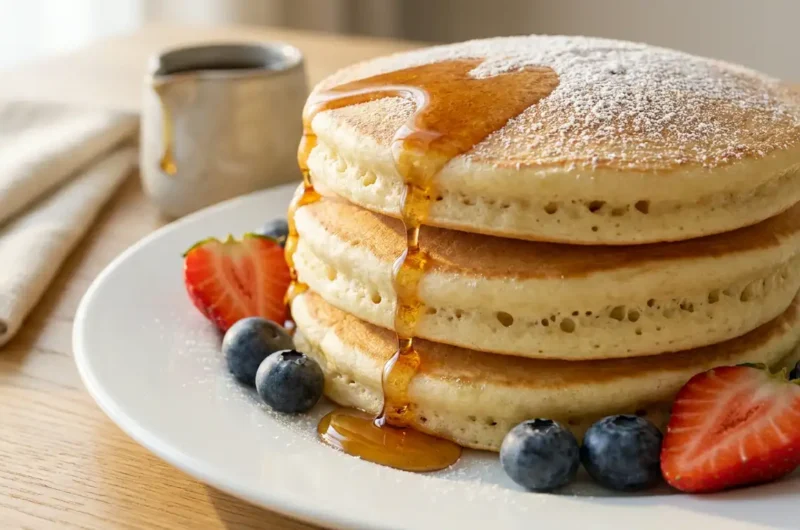
- Stack three pancakes and drizzle with warm maple syrup for a classic presentation.
- Top with a handful of fresh blueberries or sliced strawberries and a spoonful of thick Greek yogurt for a slightly lighter option.
- Serve alongside crispy streaky bacon for a sweet and savoury contrast that balances the tang of the buttermilk.
- Dust lightly with icing sugar and add a small pot of lemon curd on the side for a sharper, citrus-forward finish.
- Pair with a pot of strong Assam tea or freshly brewed filter coffee, both of which stand up well against the richness of the batter.
Storage
Room temperature
Cooked pancakes can be kept in an airtight container at room temperature for up to 1 day.
Refrigerator
Stack the cooled pancakes with a small square of greaseproof paper between each one to prevent them sticking, then place in an airtight container and refrigerate for up to 3 days. Bring them to room temperature for 10 minutes before reheating in a dry pan over a low heat, or warm briefly in the microwave for the best texture.
Freezing
Wrap individual pancakes in cling film and pack them into a freezer bag, where they will keep well for up to 2 months. Defrost overnight in the refrigerator or at room temperature for about 30 minutes, then reheat in a low oven at 150°C (130°C fan) for 5 to 8 minutes until warmed through.
Nutrition
- Calories: 210 kcal
- Carbohydrates: 28g
- Protein: 6g
- Fat: 8g
- Saturated Fat: 4g
- Sodium: 280mg
Nutrition values are estimates based on standard ingredient weights and may vary depending on the specific brands and serving sizes used.
FAQs
Can I use regular milk instead of buttermilk in this recipe?
Yes, though the pancakes will be less tangy and slightly less fluffy. To make a buttermilk substitute, stir 1 tablespoon of lemon juice or white wine vinegar into 250ml of whole milk and leave for 5 minutes until it curdles slightly. This mimics the acidity of buttermilk well enough for a decent result.
Can I make the batter ahead of time the night before?
It is best to mix the batter no more than 30 minutes before cooking. Once the bicarbonate of soda reacts with the buttermilk, the leavening effect begins to diminish, so a batter left overnight will produce noticeably flatter pancakes. Measure and sift the dry ingredients the night before and combine with the wet ingredients in the morning.
Can I add blueberries or chocolate chips directly into the batter?
Yes. Fold up to 100g of fresh or frozen blueberries, or 80g of chocolate chips, gently into the finished batter just before cooking. Drop them in after the rest period so the raising agents are not disturbed by extra stirring.
Can I make these pancakes gluten-free?
A good quality gluten-free plain flour blend will work as a direct substitute in equal quantities. Look for one that contains xanthan gum already, as this helps bind the batter in the absence of gluten and prevents the pancakes from crumbling on the spatula.
Can I double this recipe to feed a larger group?
Yes, simply double all the quantities. The batter behaves exactly the same at larger volumes. Cook in batches and keep the finished pancakes warm in an oven set to 120°C (100°C fan) while working through the full quantity, laying them in a single layer on a baking tray.
Conclusion
This Mary Berry buttermilk pancakes recipe delivers a reliable, fluffy stack every time, with a tender crumb, a golden crust, and that distinctive gentle tang that makes buttermilk baking so satisfying. The method is straightforward, the ingredients are pantry staples, and the whole process from batter to plate takes under 30 minutes. This recipe makes approximately 10 to 12 pancakes, enough for 3 to 4 people.
Whether served as a relaxed weekend breakfast or a quick treat on a weekday morning, these pancakes hold their own without needing anything elaborate alongside them. If this recipe has been useful, please share it with someone who would enjoy it, or leave a comment below to let others know how yours turned out. If you enjoyed this, you might also like the Mary Berry Chocolate and Beetroot Cake Recipe for your next bake.
Mary Berry Buttermilk Pancakes Recipe
Course: BreakfastCuisine: BritishDifficulty: Easy4
servings10
minutes20
minutes210
kcal30
minutesThick, cloud-soft pancakes with a pale golden crust and a gentle tang from buttermilk. This beginner-friendly recipe comes together in under 30 minutes and delivers a consistent, fluffy stack every time.
Ingredients
200g plain flour
1 tsp baking powder
half tsp bicarbonate of soda
1 tbsp caster sugar
quarter tsp fine salt
2 large eggs
250ml buttermilk
2 tbsp whole milk
1 tsp vanilla extract
30g unsalted butter, melted and cooled slightly
a small knob of unsalted butter, for greasing the pan
a little sunflower oil, for greasing the pan
Instructions
- Sift the plain flour, baking powder, bicarbonate of soda, caster sugar, and salt into a large mixing bowl and make a well in the centre.
- In a jug, whisk together the eggs, buttermilk, whole milk, vanilla extract, and melted butter until evenly combined and slightly frothy.
- Pour the wet ingredients into the well of the dry ingredients and stir with a spatula until just combined, leaving a few lumps in the batter.
- Leave the batter to rest for 5 minutes at room temperature to allow the raising agents to activate fully.
- Place a large non-stick frying pan over a medium heat, add a small knob of butter and a drop of sunflower oil, and swirl to coat the base until the butter foams.
- Drop 3 tablespoons of batter per pancake into the pan and cook for 2 to 3 minutes until bubbles break across the surface and the edges look set and matte.
- Flip each pancake with a wide flat spatula and cook for a further 1 to 2 minutes on the second side until golden.
- Transfer cooked pancakes to a plate, cover loosely with foil, re-grease the pan lightly, and continue cooking the remaining batter in batches.
Notes
- Do not over-mix the batter as this develops gluten and produces flat, tough pancakes.
- A lumpy batter is correct and will smooth out during cooking.
- Always rest the batter for 5 minutes before cooking to maximise lift.
- The first pancake is best used as a test to gauge pan temperature and grease level.
- Wait until bubbles break fully across the surface before flipping.
- Keep cooked pancakes warm in an oven at 120 degrees Celsius while cooking in batches.
- Old bicarbonate of soda or baking powder will prevent the pancakes from rising properly, so check dates before use.