Mary Berry Cinnamon Rolls Recipe
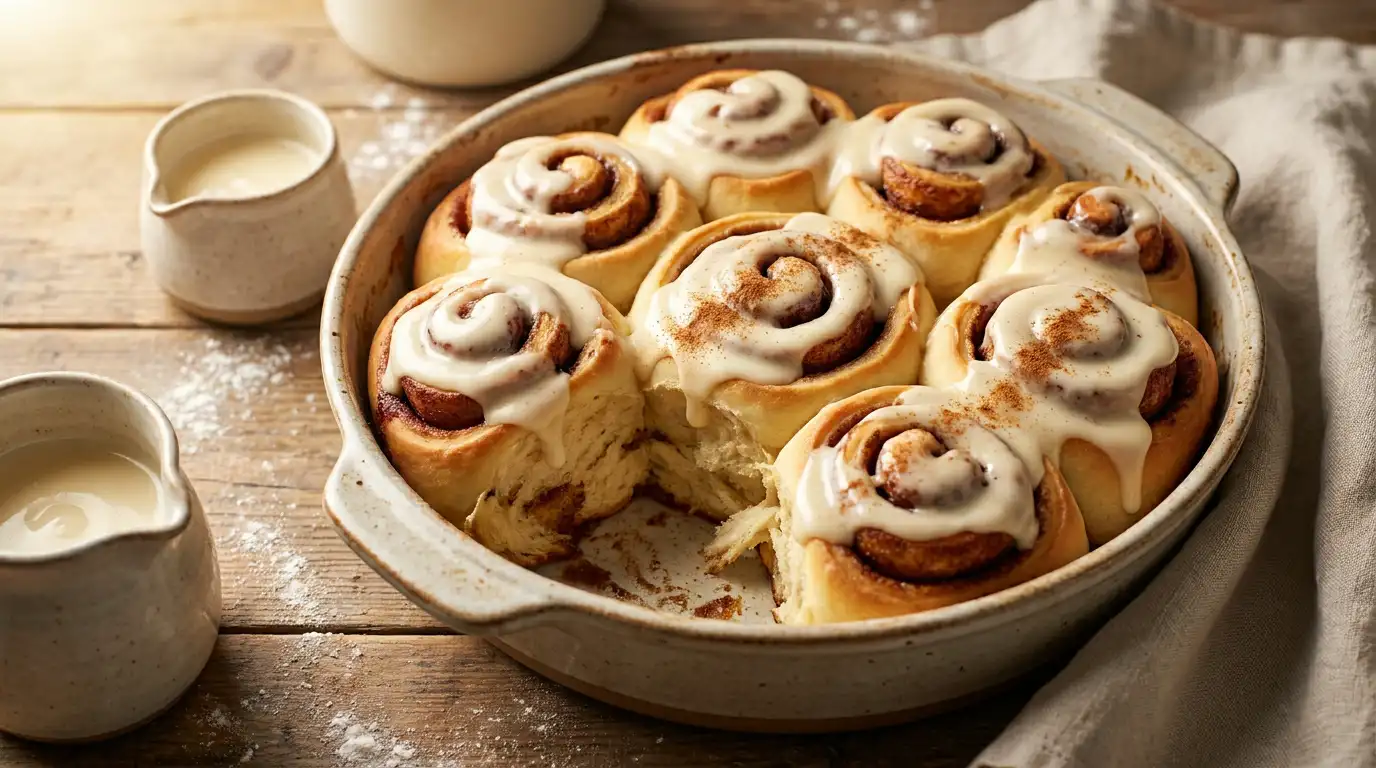
These cinnamon rolls are soft, pillowy spirals with a golden-brown crust, a tender, pull-apart crumb, and a warmly spiced filling of brown sugar and cinnamon that caramelises slightly at the edges as they bake. A cream cheese glaze, thick enough to coat the back of a spoon, soaks gently into the still-warm rolls and sets into a smooth, milky finish.
This Mary Berry cinnamon rolls recipe is built around a forgiving enriched dough that is straightforward to knead by hand, needs no special equipment, and rises reliably every time. The whole recipe, including both rises, is ready in around 3 hours.
Ingredients
For the dough
- 450g strong white bread flour, plus extra for dusting
- 7g fast-action dried yeast (1 sachet)
- 50g caster sugar
- 1 tsp fine sea salt
- 2 large eggs, at room temperature
- 180ml whole milk, warmed to around 38°C
- 75g unsalted butter, softened and cubed
For the filling
- 70g unsalted butter, softened
- 120g light brown soft sugar
- 2 tsp ground cinnamon
- ¼ tsp ground nutmeg
For the glaze
- 150g full-fat cream cheese, at room temperature
- 80g icing sugar, sifted
- 2–3 tbsp whole milk
- ½ tsp vanilla extract
How to Make Mary Berry Cinnamon Rolls Recipe
- Combine the dry ingredients: Add the flour, yeast, caster sugar, and salt into a large mixing bowl and stir briefly to distribute evenly. Keep the yeast and salt on opposite sides of the bowl until mixing begins, as direct contact can slow activation.
- Form the dough: Make a well in the centre and add the eggs and warm milk. Mix with a wooden spoon until a rough, shaggy dough forms, then tip it out onto a lightly floured surface and knead for 5 minutes until the dough starts to smooth out.
- Incorporate the butter: Add the softened butter a few cubes at a time, pressing each addition into the dough and kneading until fully absorbed before adding more. Continue kneading for a further 8 to 10 minutes until the dough is smooth, slightly tacky, and springs back when pressed with a finger.
- First rise: Shape the dough into a ball, place it in a lightly oiled bowl, and cover tightly with cling film. Leave in a warm spot for 1 to 1½ hours until doubled in size.
- Prepare the filling and roll out the dough: Beat the softened butter, brown sugar, cinnamon, and nutmeg together until it forms a thick, spreadable paste. Punch down the risen dough, then roll it out on a floured surface into a rectangle roughly 40cm x 30cm, with the longer edge facing you.
- Fill and slice the rolls: Spread the filling evenly across the dough surface, leaving a 2cm border along the far long edge. Roll the dough tightly towards that clean edge, pressing gently as you go to keep an even log shape. Trim the ends, then cut the log into 9 equal rounds of about 4cm each.
- Second rise and preheat the oven: Arrange the rolls cut-side up in a greased 23cm x 33cm baking tin, leaving a small gap between each one. Cover loosely with cling film and leave to rise for 45 minutes to 1 hour until puffed and touching. Preheat the oven to 180°C (160°C fan) during the last 20 minutes of this rise.
- Bake the rolls: Bake on the middle shelf for 22 to 25 minutes until the tops are a deep golden-brown and the centres feel set rather than soft when pressed lightly. Remove from the oven and leave to cool in the tin for 10 minutes.
- Make and apply the glaze: Beat the cream cheese, icing sugar, vanilla extract, and 2 tablespoons of milk together until smooth and pourable. Add the third tablespoon of milk if needed to loosen the mixture. Pour the glaze over the warm rolls so it melts into the swirls, and serve straight from the tin.
Tips for the Best Cinnamon Rolls
Why are my cinnamon rolls dense and heavy rather than light and fluffy?
The most common cause is under-kneading. The dough needs a full 8 to 10 minutes of kneading after the butter is added to develop enough gluten. The finished dough should be smooth and elastic, not rough or sticky.
Why did the filling leak out from the bottom of the rolls during baking?
This usually happens when the butter in the filling is too warm and melts before the dough sets. Use butter that is softened but still holds its shape, and make sure the rolled dough is tight before slicing.
How do I know when the dough has risen enough during the second prove?
The rolls should look visibly puffed, feel soft and airy when gently pressed, and the gaps between them should have closed. If they feel firm rather than pillowy, they need more time.
Why are the edges of my rolls browning too fast while the centres stay pale?
The oven temperature is likely too high, or the tin is sitting too close to the top element. Move the tin to the middle shelf and check your oven with a thermometer, as many ovens run 10 to 15 degrees hotter than the dial suggests.
Why are my rolls dry after baking?
Over-baking is almost always the reason. Pull the rolls from the oven as soon as the tops are deep golden and the centres feel just set. They continue to firm up as they cool, so a slightly underdone centre in the oven usually produces the right texture at the table.
Serving Suggestions
- Serve warm from the tin within 20 minutes of glazing, when the cream cheese is still soft and the swirls pull apart cleanly.
- Pair with a strong, freshly brewed cup of builder’s tea or filter coffee to balance the sweetness of the glaze.
- Dust lightly with a pinch of extra cinnamon over the glaze just before serving for a deeper spice aroma at the table.
- Offer alongside a small pot of good-quality salted butter for those who prefer less sweetness.
- Present on a wooden board for an informal brunch spread alongside fresh fruit and orange juice.
Storage
Room temperature
Store cooled rolls in an airtight container at room temperature for up to 2 days.
Refrigerator
Place the rolls in an airtight container and refrigerate for up to 4 days. Bring to room temperature or warm briefly in the microwave for 20 to 30 seconds before eating, as the cream cheese glaze firms up when cold.
Freezing
Freeze the baked, unglazed rolls individually wrapped in cling film, then placed in a zip-lock bag, for up to 2 months. Defrost at room temperature for 2 to 3 hours and make the glaze fresh before serving.
Nutrition
- Calories: 390 kcal
- Carbohydrates: 54g
- Protein: 7g
- Fat: 16g
- Saturated Fat: 10g
- Sodium: 220mg
Nutrition values are estimates and may vary depending on the specific ingredients used and portion size.
FAQs
Can I use plain flour instead of strong white bread flour?
Strong bread flour is recommended because its higher protein content develops the gluten structure that gives the rolls their soft, chewy texture. Plain flour will produce rolls that are noticeably more tender and crumbly, which is acceptable but not ideal for this style of enriched dough.
Can I prepare these cinnamon rolls the night before and bake them in the morning?
Yes. After slicing and arranging the rolls in the tin, cover tightly with cling film and refrigerate overnight rather than leaving them to rise at room temperature. The next morning, take them out of the fridge 30 to 40 minutes before baking to take the chill off, then bake as directed.
Can I use instant dried yeast instead of fast-action yeast?
Fast-action and instant yeast are the same product and can be used in exactly the same way. Active dried yeast, which is different, needs to be dissolved in warm liquid first and proofed for around 10 minutes before use.
Can I double this recipe to make a larger batch of cinnamon rolls?
The recipe doubles well. Use two 23cm x 33cm tins and bake both on the same oven shelf if space allows, or rotate them halfway through baking. Rise times remain the same.
What can I use instead of cream cheese for the glaze?
A simple icing made from sifted icing sugar and a few tablespoons of whole milk works well and gives a slightly thinner, glossier finish. Add the milk gradually until the glaze reaches a pourable but not watery consistency.
Conclusion
This Mary Berry cinnamon rolls recipe produces nine generously sized rolls with a tender, pull-apart crumb, a rich brown sugar and cinnamon swirl, and a smooth cream cheese glaze that sets into every spiral. The dough is enriched with butter and eggs for a soft, slightly brioche-like texture that holds well over two days, making it a reliable choice for weekend baking or a relaxed brunch spread.
Whether baked fresh on the day or prepared the evening before, these cinnamon rolls are consistent and satisfying every time. Give them a try, and leave a comment below to share how they turned out. If you found this recipe helpful, feel free to share it with a friend who enjoys home baking. If you enjoyed this, you might also like Mary Berry Black Forest Gateau Recipe.
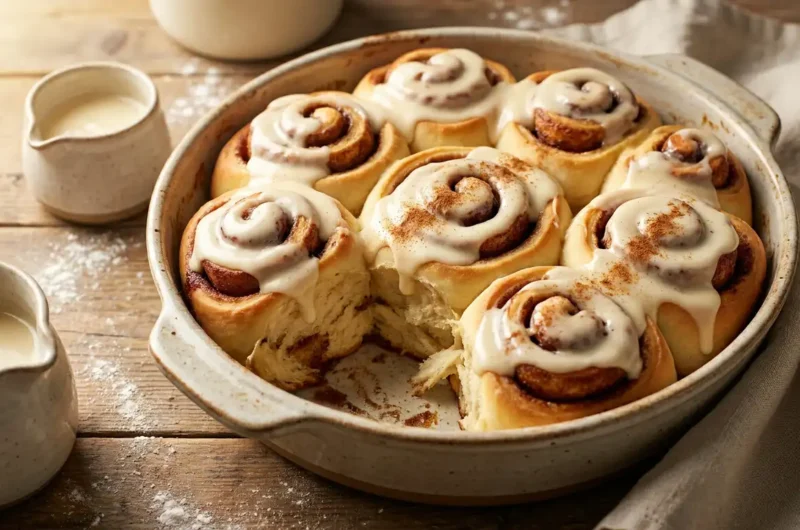
Mary Berry Cinnamon Rolls Recipe
Course: Breakfast, Brunch, DessertCuisine: BritishDifficulty: Easy9
servings30
minutes25
minutes390
kcal3
hoursSoft, pillowy cinnamon rolls with a golden-brown crust, a warmly spiced brown sugar filling, and a smooth cream cheese glaze. Beginner-friendly enriched dough that rises reliably and bakes to a tender, pull-apart finish every time.
Ingredients
450g strong white bread flour, plus extra for dusting
7g fast-action dried yeast (1 sachet)
50g caster sugar
1 tsp fine sea salt
2 large eggs, at room temperature
180ml whole milk, warmed to around 38°C
75g unsalted butter, softened and cubed
70g unsalted butter, softened (for filling)
120g light brown soft sugar
2 tsp ground cinnamon
¼ tsp ground nutmeg
150g full-fat cream cheese, at room temperature
80g icing sugar, sifted
2–3 tbsp whole milk (for glaze)
½ tsp vanilla extract
Instructions
- Add the flour, yeast, caster sugar, and salt into a large mixing bowl and stir briefly to distribute evenly, keeping the yeast and salt on opposite sides until mixing begins.
- Make a well in the centre, add the eggs and warm milk, and mix with a wooden spoon until a rough shaggy dough forms, then knead on a lightly floured surface for 5 minutes.
- Add the softened butter a few cubes at a time, pressing each addition into the dough and kneading until fully absorbed, then continue kneading for 8 to 10 minutes until smooth and elastic.
- Shape the dough into a ball, place in a lightly oiled bowl, cover tightly with cling film, and leave in a warm spot for 1 to 1½ hours until doubled in size.
- Beat the softened butter, brown sugar, cinnamon, and nutmeg together into a thick spreadable paste, then punch down the risen dough and roll out on a floured surface into a rectangle roughly 40cm x 30cm.
- Spread the filling evenly across the dough leaving a 2cm border along the far long edge, then roll tightly towards that clean edge and cut the log into 9 equal rounds of about 4cm each.
- Arrange the rolls cut-side up in a greased 23cm x 33cm baking tin, cover loosely with cling film, and leave to rise for 45 minutes to 1 hour until puffed and touching, preheating the oven to 180°C (160°C fan) during the last 20 minutes.
- Bake on the middle shelf for 22 to 25 minutes until the tops are a deep golden-brown and the centres feel just set, then leave to cool in the tin for 10 minutes.
- Beat the cream cheese, icing sugar, vanilla extract, and milk together until smooth and pourable, then pour over the warm rolls and serve straight from the tin.
Notes
- Keep yeast and salt on opposite sides of the bowl before mixing to avoid slowing activation.
- The dough should feel slightly tacky and spring back when pressed after kneading.
- Use butter that is softened but still holds its shape for the filling to prevent leaking.
- Rolls can be prepared the night before and refrigerated after shaping, then baked the next morning.
- Freeze baked unglazed rolls for up to 2 months and make the glaze fresh before serving.
- Check oven temperature with a thermometer as many ovens run 10 to 15 degrees hotter than the dial.