Mary Berry Pickled Beetroot Recipe
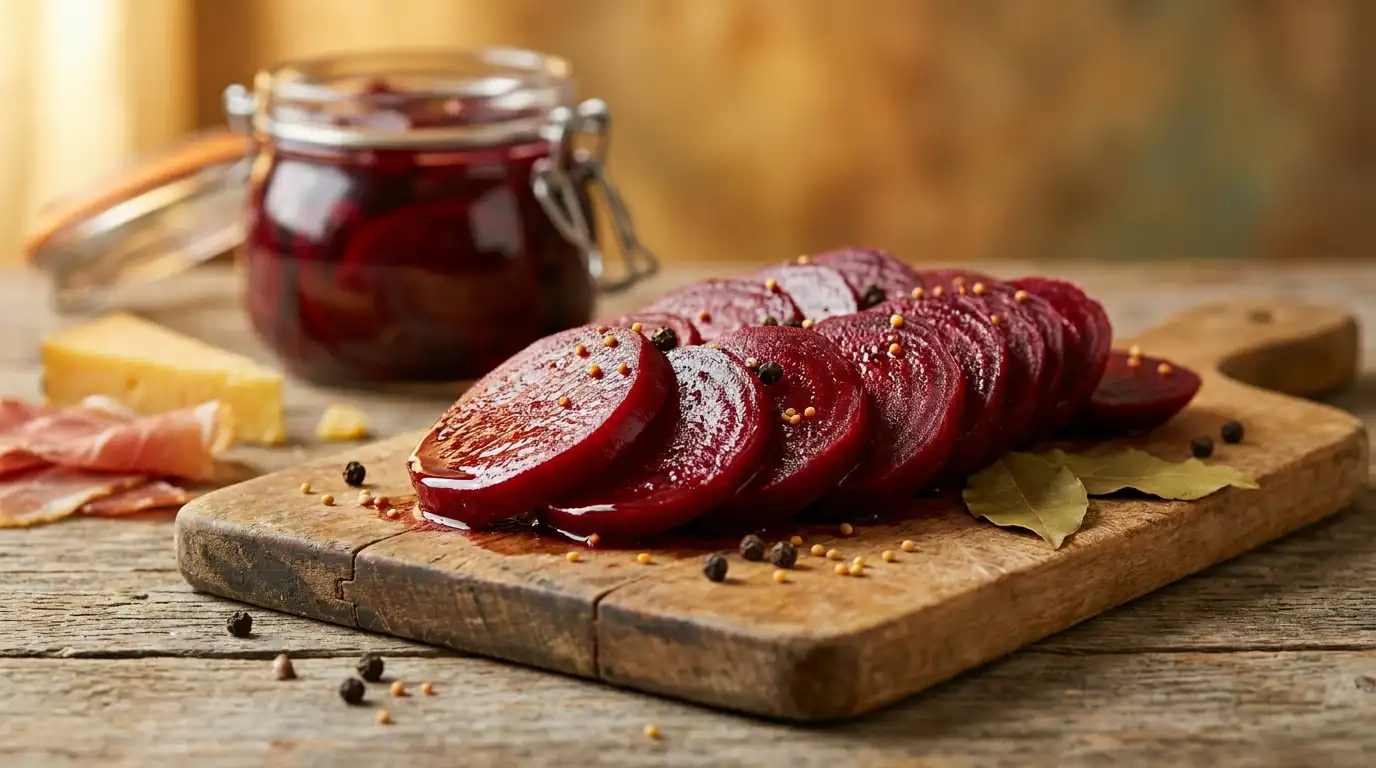
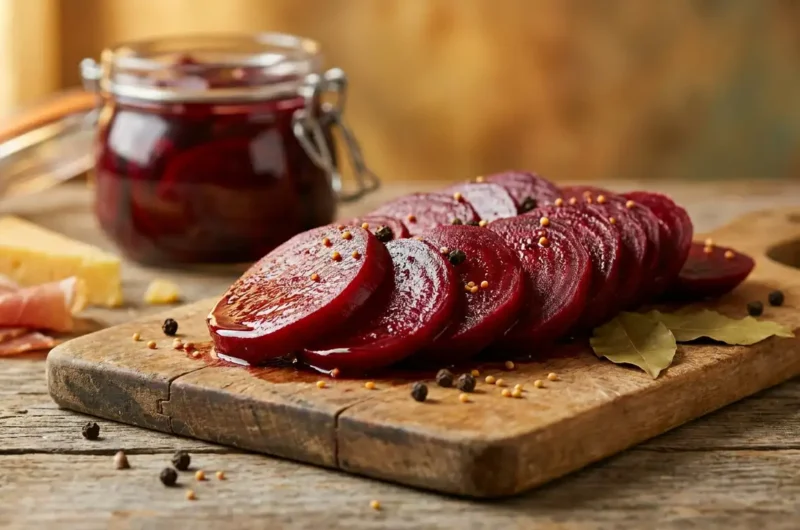
This pickled beetroot is a deep, jewel-red preserve with a sharp vinegar bite balanced by a gentle sweetness and a clean, earthy finish. The slices hold their shape beautifully in the jar, firm enough to slice through a sandwich without falling apart, yet tender all the way through. This version keeps things straightforward, using a classic sweet vinegar brine that works reliably every time, whether you are filling jars for the larder or putting together a platter for guests. From start to finish, it is ready in around 1 hour, plus cooling time before jarring.
Ingredients
For the beetroot
- 700g raw beetroot (around 4 medium beets), scrubbed and trimmed
- 1 tsp fine salt (for cooking water)
For the pickling brine
- 300ml white wine vinegar
- 150ml cold water
- 80g caster sugar
- 1 tsp fine sea salt
- 1 tsp black peppercorns
- 2 bay leaves
- 1 tsp yellow mustard seeds
How to Make Mary Berry Pickled Beetroot Recipe
- Cook the beetroot: Place the whole, unpeeled beetroot in a large saucepan and cover with cold water. Add 1 tsp fine salt, then bring to a rolling boil. Reduce to a steady simmer and cook for 40 to 50 minutes, until a skewer passes through the centre without resistance. The skin will begin to wrinkle slightly when the beets are ready.
- Cool and peel: Drain the cooked beetroot and leave to cool in the colander for 15 minutes, until cool enough to handle. Once cooled, rub the skins away using your hands or a piece of kitchen paper, this comes away easily at this stage without the need for a peeler. Wear rubber gloves if you want to avoid staining your hands.
- Slice the beetroot: Using a sharp knife and a stable chopping board, cut the peeled beetroot into slices roughly 5mm thick. Keep them even so they pickle consistently and stack neatly in the jars. Set aside while you make the brine.
- Make the pickling brine: Combine the white wine vinegar, cold water, caster sugar, sea salt, peppercorns, bay leaves, and mustard seeds in a small saucepan. Place over a medium heat, stirring gently until the sugar has fully dissolved before the liquid reaches a boil. This prevents the sugar from catching on the base of the pan.
- Bring the brine to a boil: Once the sugar has dissolved, raise the heat and bring the brine to a full boil. Allow it to boil for 2 minutes, then remove the pan from the heat immediately. The brine should be fragrant and clear with a pale amber tint.
- Sterilise the jars: Wash two 500ml glass jars with hot, soapy water, rinse thoroughly, and place upright on a baking tray in an oven preheated to 140°C (fan 120°C, Gas Mark 1) for 10 minutes. Remove carefully using oven gloves and allow to cool slightly before filling. Sterilising the jars ensures the beetroot keeps well without spoiling.
- Pack the jars: Layer the sliced beetroot snugly into the warm jars, tucking in the bay leaves from the brine as you go. Leave about 1cm of headspace at the top of each jar to allow for the brine to cover fully.
- Pour the brine: Ladle or carefully pour the hot pickling brine over the beetroot slices, making sure the liquid covers every piece completely. Tap the jars gently on the worktop to release any air bubbles trapped between the slices.
- Seal and cool: Screw the lids on tightly while the jars are still hot. Turn them upside down for 1 minute, then return to upright and leave to cool completely at room temperature. The lids may pop inward as they cool, which indicates a good seal. Label each jar with the date before storing.
Tips for the Best Pickled Beetroot
Why has my pickled beetroot turned soft and mushy?
The most common cause is overcooking the beetroot before pickling. Test the beets from around 40 minutes with a skewer and remove them as soon as the centre is tender. Overcooked beetroot will continue to soften once it sits in the warm brine.
Why is my brine cloudy after a few days in the jar?
Some cloudiness from the natural starch in beetroot is completely normal and does not affect the safety or flavour of the pickle. However, if the brine becomes very cloudy or develops an off smell, discard the jar and start again with freshly sterilised equipment.
Why is my pickled beetroot not sharp enough?
The acidity level depends on the ratio of vinegar to water. If the flavour is too mild after a couple of days, reduce the water to 100ml in the brine on your next batch. Always taste the brine before bottling and adjust the sugar and vinegar to your preference.
Why have my jar lids not sealed properly?
An incomplete seal usually means the lid was not screwed on tight enough while the jar was still hot, or the jar rim had a chip or residue on it. Always check jar rims for cracks before use, and wipe the rim with a clean damp cloth before sealing to ensure a clean surface.
How long should I leave the beetroot before eating it?
Leave the sealed jars undisturbed for at least 48 hours before opening. The flavour develops considerably over the first week, as the brine works through the slices, so patience results in a noticeably more balanced and well-rounded pickle.
Serving Suggestions
- Serve alongside cold sliced beef or ham with wholegrain mustard and crusty bread for a ploughman’s-style spread.
- Layer into a cheese and salad sandwich with mature cheddar and crisp lettuce for a sharp, vibrant contrast.
- Arrange on a charcuterie board with pickled onions, cornichons, and a strong cheddar for a classic British accompaniment.
- Serve chilled as a side dish next to a warm quiche or savoury tart at a summer lunch table.
- Spoon over a simple green salad dressed with olive oil for a vivid, earthy addition that needs no further dressing.
Storage
Room Temperature
Store sealed, unopened jars in a cool, dark cupboard for up to 3 months.
Refrigerator
Once opened, keep the jar in the refrigerator and ensure the beetroot remains submerged under the brine at all times. Use within 4 weeks of opening, and always use a clean spoon to serve to avoid introducing bacteria into the jar.
Freezing
Pickled beetroot is not suitable for freezing, as the vinegar brine and the texture of the cooked beetroot will deteriorate once frozen and thawed. For longer-term storage, prepare fresh batches using sterilised jars and store unopened at room temperature as directed above.
Nutrition
- Calories: 45 kcal
- Carbohydrates: 10g
- Protein: 1g
- Fat: 0.2g
- Saturated Fat: 0g
- Sodium: 210mg
Nutrition values are estimates based on a standard serving of approximately 60g drained beetroot slices, and may vary depending on the specific ingredients and quantities used.
FAQs
Can I use malt vinegar instead of white wine vinegar for pickled beetroot?
Yes, malt vinegar works well and gives a more robust, traditional flavour that many people prefer. It will turn the brine a deeper amber colour, which is perfectly fine. White wine vinegar produces a cleaner, slightly milder brine that lets the beetroot’s natural sweetness come through more clearly.
Can I use ready-cooked vacuum-packed beetroot instead of raw?
You can use pre-cooked beetroot as a shortcut. Skip the boiling stage entirely and slice straight into the jars. Be aware the texture will be softer than beetroot cooked from raw, and the flavour slightly more muted, but the pickle will still be enjoyable and shelf-stable once sealed.
Can I add spices to vary the flavour of this pickled beetroot recipe?
Absolutely. A cinnamon stick, a few cloves, or a star anise added to the brine while it heats will give a warmly spiced result that works particularly well in autumn. Caraway seeds are another option that pairs well with the earthiness of the beetroot without overpowering it.
Can I make a larger batch of this recipe?
The recipe scales up easily. Simply multiply all quantities proportionally and increase the number of sterilised jars accordingly. Make sure each jar is filled individually and sealed while the brine is still hot for the best results.
Is this pickled beetroot recipe suitable for a gluten-free diet?
Yes, this recipe is naturally gluten-free, as none of the ingredients contain wheat, barley, or rye. Always check the labels on your vinegar and mustard seeds if preparing the recipe for someone with coeliac disease, as some products can be processed in facilities that handle gluten-containing grains.
Conclusion
This Mary Berry pickled beetroot recipe is a practical, straightforward preserve that delivers a vibrant, sharp, and subtly sweet result every time. The two-step process of cooking and brining is simple enough for anyone new to preserving, yet the end result is a polished, fridge-worthy pickle that enhances everything from cold meat platters to simple sandwiches. This recipe yields approximately two 500ml jars, giving around 10 to 12 servings in total.
Once you have a couple of jars sitting in the larder, it becomes one of those staples that quietly makes every meal a little more interesting. If this recipe has inspired you to try more preserving or classic British baking, share it with someone who would enjoy it, and leave a comment below with how it turned out. For another reliable classic, you might also enjoy the Mary Berry Melting Moments recipe, a buttery, melt-in-the-mouth biscuit that is just as simple and satisfying to make.
Mary Berry Pickled Beetroot Recipe
Course: CondimentCuisine: BritishDifficulty: Easy10
servings15
minutes50
minutes45
kcal1
hour5
minutesA deep, jewel-red pickled beetroot preserved in a classic sweet white wine vinegar brine with peppercorns, mustard seeds, and bay leaves. Firm, tender slices with a sharp, earthy finish that works beautifully alongside cold meats, cheese boards, and sandwiches.
Ingredients
700g raw beetroot, around 4 medium beets, scrubbed and trimmed
1 tsp fine salt for cooking water
300ml white wine vinegar
150ml cold water
80g caster sugar
1 tsp fine sea salt
1 tsp black peppercorns
2 bay leaves
1 tsp yellow mustard seeds
Instructions
- Place the whole unpeeled beetroot in a large saucepan, cover with cold water, add 1 tsp fine salt, bring to a boil, then reduce to a steady simmer and cook for 40 to 50 minutes until a skewer passes through the centre without resistance.
- Drain the cooked beetroot and leave to cool for 15 minutes, then rub the skins away using your hands or kitchen paper.
- Using a sharp knife, cut the peeled beetroot into slices roughly 5mm thick and set aside.
- Combine the white wine vinegar, cold water, caster sugar, sea salt, peppercorns, bay leaves, and mustard seeds in a small saucepan over medium heat, stirring until the sugar fully dissolves before the liquid reaches a boil.
- Raise the heat and bring the brine to a full boil, allow it to boil for 2 minutes, then remove from the heat.
- Wash two 500ml glass jars with hot soapy water, then place upright on a baking tray in an oven preheated to 140C fan 120C Gas Mark 1 for 10 minutes to sterilise.
- Layer the sliced beetroot snugly into the warm jars, tucking in the bay leaves from the brine as you go, leaving 1cm headspace at the top.
- Ladle the hot pickling brine over the beetroot slices, ensuring all pieces are fully submerged, then tap the jars gently to release any trapped air bubbles.
- Screw the lids on tightly while jars are still hot, turn upside down for 1 minute, return to upright, leave to cool completely, then label each jar with the date.
Notes
- Leave sealed jars undisturbed for at least 48 hours before opening for best flavour.
- Always use rubber gloves when peeling beetroot to avoid staining your hands.
- Check jar rims for chips or cracks before use and wipe clean before sealing.
- The brine may show slight cloudiness from natural starch, which is normal.
- For a spiced variation, add a cinnamon stick or a few cloves to the brine.
- Pickled beetroot is not suitable for freezing.