Mary Berry Devonshire Scones Recipe
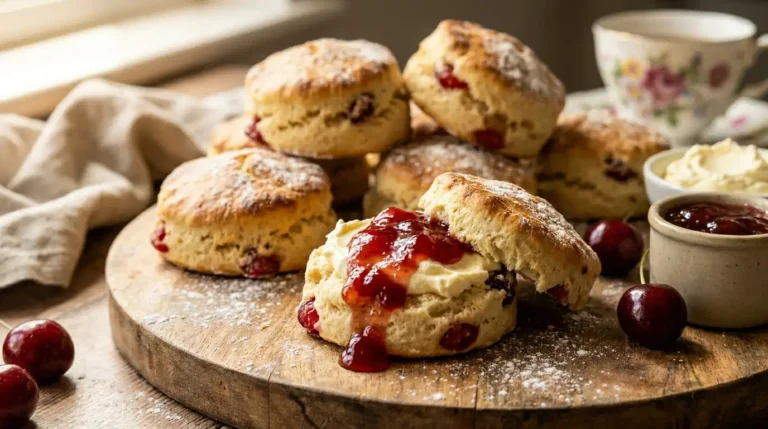
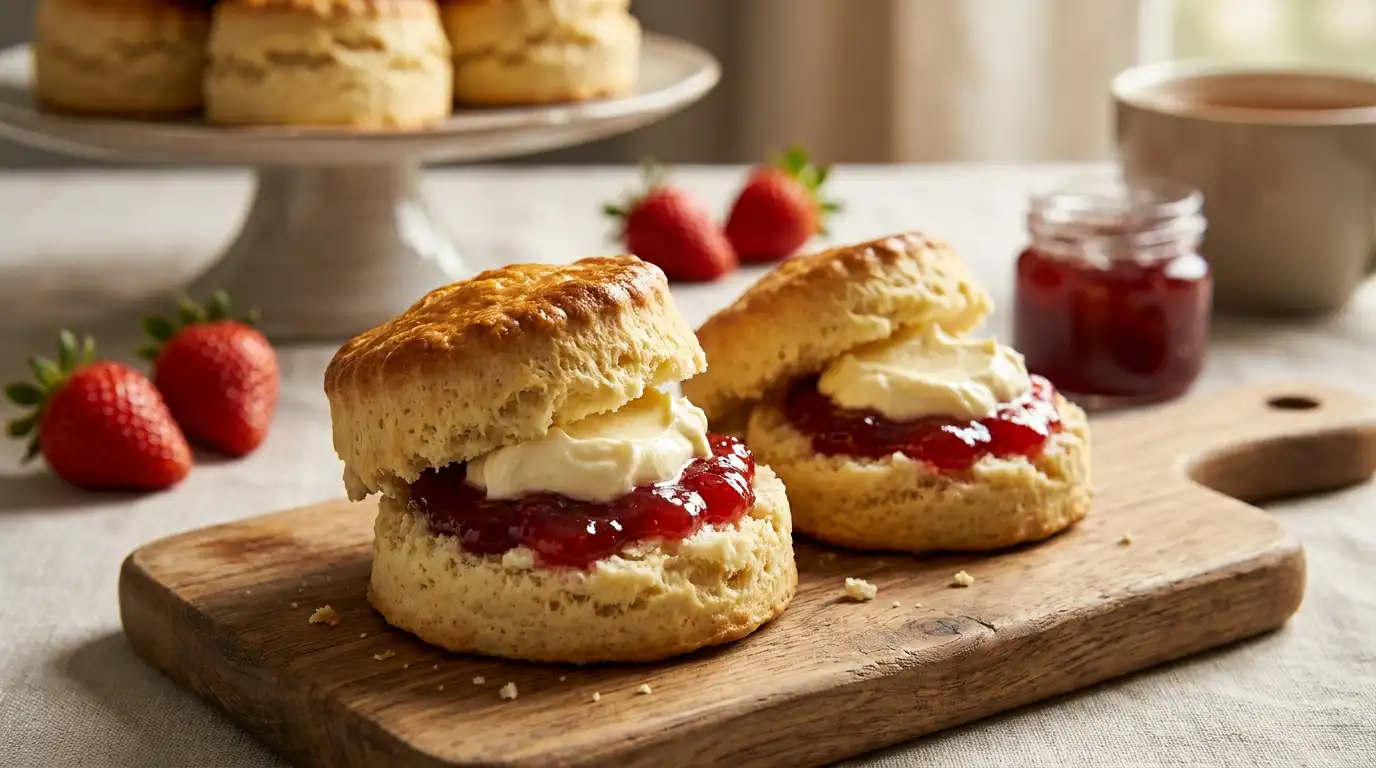
These Devonshire scones are light, tall, and have a crisp pale crust that gives way to a soft, floury crumb inside.
They rise straight and even with barely any effort, making them a reliable choice for afternoon tea or a weekend bake with the family. From start to finish, they are ready in around 25 minutes.
Ingredients
For the scones
- 225g self-raising flour, plus extra for dusting
- 1 tsp baking powder
- 40g unsalted butter, cold and cubed
- 25g caster sugar
- 150ml whole milk
- 1 tsp lemon juice
- 1 egg, beaten, for glazing
To finish
- 4 tbsp strawberry jam
- 100g clotted cream
How to Make Mary Berry Devonshire Scones
- Heat the oven: Set the oven to 220C (200C fan) and line a baking tray with baking paper.
- Combine the dry ingredients: Sieve the flour and baking powder into a large bowl and stir in a pinch of salt.
- Rub in the butter: Rub the cold butter into the flour with your fingertips until the mixture looks like fine breadcrumbs; this keeps the scones light rather than dense.
- Stir in the sugar: Mix the caster sugar through the crumbly mixture so it is evenly spread.
- Add the milk: Stir the lemon juice into the milk, then pour most of it into the bowl, mixing quickly with a knife to form a soft, slightly sticky dough.
- Shape the dough: Turn the dough onto a lightly floured surface and pat gently to about 3cm thick, without overworking it.
- Cut the scones: Use a 5cm round cutter dipped in flour to cut straight down without twisting; this helps the scones rise evenly rather than lean to one side.
- Glaze and bake: Brush the tops with beaten egg, avoiding the sides, then bake for 10 to 12 minutes until golden and well risen.
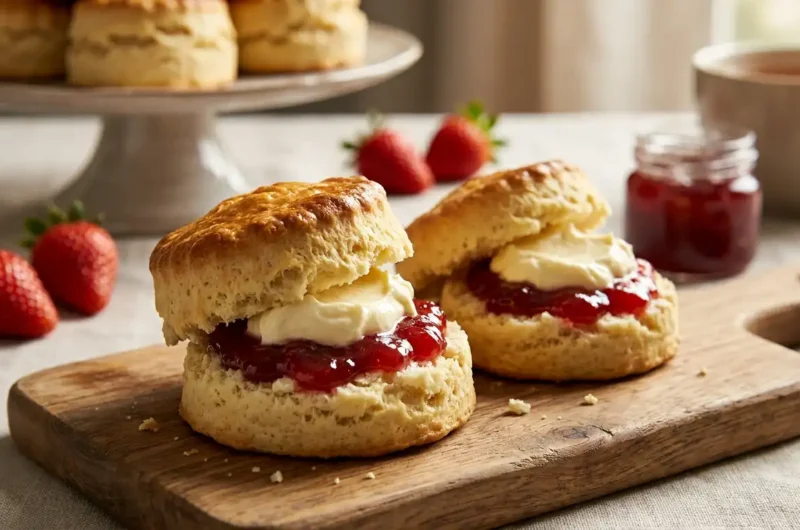
- Cool slightly: Transfer to a wire rack and leave for a few minutes before splitting and serving with jam and clotted cream.
Tips for the Best Mary Berry Devonshire Scones
Why did my scones not rise evenly?
Twisting the cutter as you press down seals the edges and stops the dough rising straight, so always cut in one clean downward motion.
Why are my scones dense instead of light?
Overworking the dough develops too much gluten, so mix and knead only until the dough just comes together.
Why did my scones spread sideways instead of rising up?
The dough may have been too wet or the butter too soft, so keep the butter cold and add the milk gradually until the dough just holds.
How do I get a really good golden top on my scones?
Brush only the tops with beaten egg and keep it off the cut sides, as egg on the edges can stop the scone rising freely.
Why are my scones dry rather than soft in the middle?
This usually means they have been baked a little too long, so check them from the 10 minute mark and remove as soon as they are golden.
Serving Suggestions
- Serve warm with strawberry jam and a thick spoonful of clotted cream
- Pair with a pot of freshly brewed English breakfast tea
- Add a dish of lemon curd for a lighter alternative to jam
- Arrange on a tiered stand for a proper afternoon tea spread
- Split and toast leftovers lightly for breakfast the next day
Storage
Room temperature
Keep in an airtight container for up to 2 days.
Refrigerator
Store in a sealed container in the fridge for up to 4 days, and bring to room temperature before serving for the best texture.
Freezing
Wrap the cooled scones individually and freeze for up to 3 months. Defrost at room temperature, then warm briefly in the oven before serving.
Nutrition
- Calories: 210 kcal
- Carbohydrates: 30g
- Protein: 4g
- Fat: 8g
- Saturated Fat: 5g
- Sodium: 180mg
Nutrition values are estimates and may vary depending on the specific ingredients used and serving size.
FAQs
Can I use buttermilk instead of regular milk?
Yes, buttermilk works well and gives the scones a slightly softer crumb, so simply swap it in for the milk in equal quantity.
Can I make the dough ahead of time?
Yes, the cut scones can be prepared and kept covered in the fridge for a few hours before baking, or baked straight from frozen with a couple of extra minutes.
Can I freeze Devonshire scones?
Yes, they freeze very well either baked and cooled, or unbaked and ready to go straight into the oven.
What size cutter works best for this recipe?
A 5cm round cutter gives a classic afternoon tea size, though a slightly larger cutter can be used for heartier scones.
Can I double this recipe for a larger gathering?
Yes, the recipe doubles easily, though it is best to work the dough in two batches so it stays light and doesn’t overheat from handling.
Conclusion
These Mary Berry Devonshire scones give a tall, golden result with a soft floury centre, and they come together with very little fuss for a proper afternoon tea. This batch makes around 8 scones, ready to be split warm and piled with jam and clotted cream.
Give this recipe a try and share how your batch turned out in the comments below. If you enjoyed this, you might also like mary berry blueberry traybake recipe.
Mary Berry Devonshire Scones Recipe
Course: BakingCuisine: BritishDifficulty: Easy8
servings15
minutes12
minutes210
kcal25
minutesLight, tall scones with a crisp pale crust and a soft, floury crumb inside. This classic British bake rises evenly with barely any effort and suits afternoon tea perfectly.
Ingredients
225g self-raising flour, plus extra for dusting
1 tsp baking powder
40g unsalted butter, cold and cubed
25g caster sugar
150ml whole milk
1 tsp lemon juice
1 egg, beaten, for glazing
4 tbsp strawberry jam
100g clotted cream
Instructions
- Set the oven to 220C (200C fan) and line a baking tray with baking paper.
- Sieve the flour and baking powder into a large bowl and stir in a pinch of salt.
- Rub the cold butter into the flour with your fingertips until the mixture looks like fine breadcrumbs.
- Mix the caster sugar through the crumbly mixture so it is evenly spread.
- Stir the lemon juice into the milk, then pour most of it into the bowl, mixing quickly with a knife to form a soft dough.
- Turn the dough onto a lightly floured surface and pat gently to about 3cm thick, without overworking it.
- Use a 5cm round cutter dipped in flour to cut straight down without twisting.
- Brush the tops with beaten egg, avoiding the sides, then bake for 10 to 12 minutes until golden and well risen.
- Transfer to a wire rack and leave for a few minutes before splitting and serving with jam and clotted cream.
Notes
- Cut straight down with the cutter without twisting to help the scones rise evenly.
- Handle the dough as little as possible to keep the scones light rather than dense.
- Keep the butter cold and add milk gradually so the dough does not become too wet.
- Brush egg glaze only on the tops, not the cut sides, for the best rise.
- Check scones from the 10 minute mark to avoid overbaking and drying them out.
- Serve warm on the day of baking for the best texture.