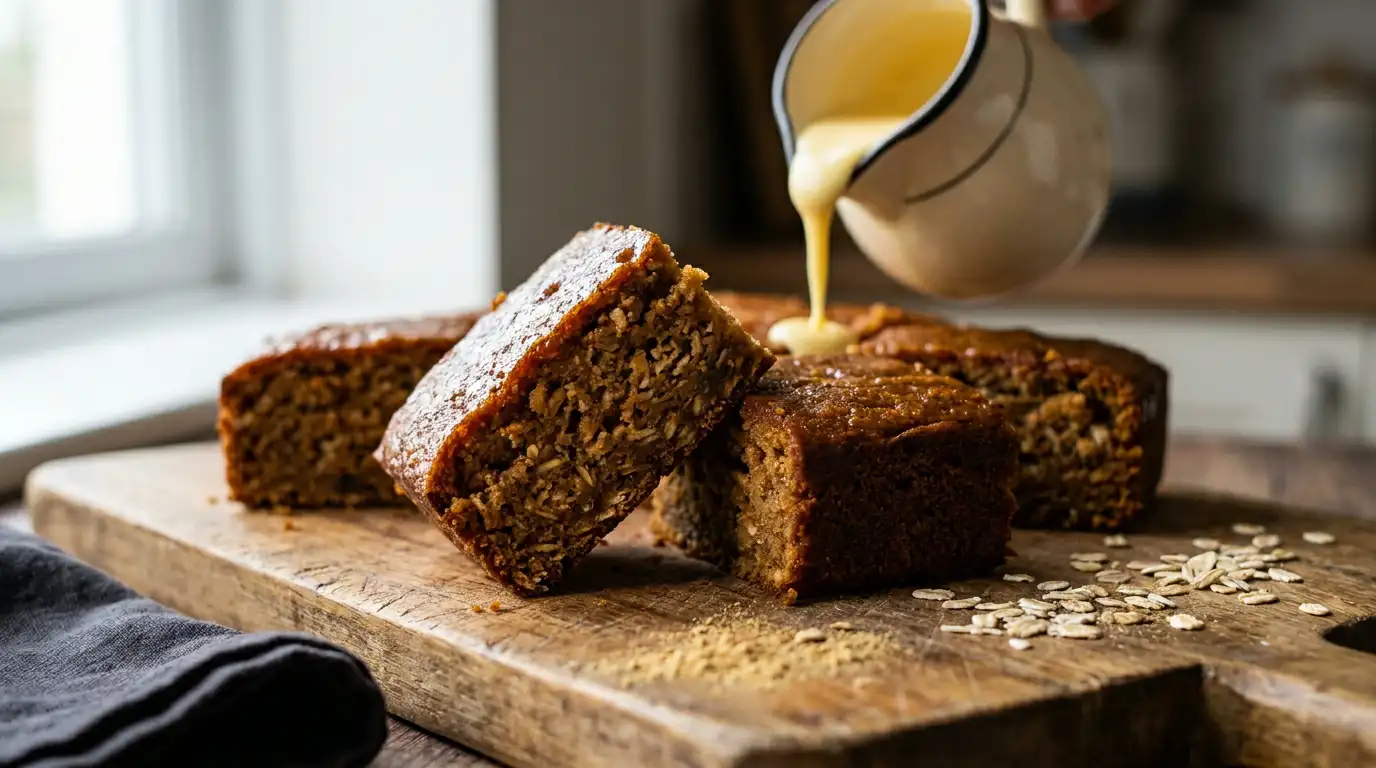
Mary Berry Parkin Recipe
Mary Berry Parkin is a dark, dense ginger cake with a deeply sticky crumb, a warm treacle colour, and a spiced aroma that fills the kitchen as it bakes. The texture starts firm when it comes out of the tin, then softens over the following days into something wonderfully moist and chewy, thanks to the oats and syrup working together beneath the surface. This version keeps the method straightforward, using everyday storecupboard ingredients with no complicated techniques, making it reliable for bakers at any level. It is also an ideal bake-ahead cake, since it genuinely improves with a day or two of resting. From start to finish, it is ready in around 1 hour.
Parkin is a traditional northern British cake, most closely associated with bonfire night and autumn celebrations. Its combination of oatmeal, black treacle, and warming spices gives it a character quite different from a standard ginger cake, with a heavier, more satisfying bite. This recipe produces a tray bake that slices cleanly, travels well, and keeps for several days without drying out.
Ingredients
For the parkin
- 175g medium oatmeal
- 175g self-raising flour
- 1 tsp bicarbonate of soda
- 2 tsp ground ginger
- 1 tsp mixed spice
- 100g unsalted butter, cut into cubes
- 100g golden syrup
- 75g black treacle
- 100g soft dark brown sugar
- 1 large egg, lightly beaten
- 120ml whole milk
How to Make Mary Berry Parkin Recipe
- Preheat and prepare the tin: Heat the oven to 160C fan or 180C conventional. Grease and line a 20cm square baking tin with baking parchment, ensuring the paper comes up the sides. This makes lifting the finished parkin out of the tin much easier once it has cooled.
- Combine the dry ingredients: Measure the oatmeal, self-raising flour, bicarbonate of soda, ground ginger, and mixed spice into a large mixing bowl. Stir briefly to distribute the spices evenly through the dry mix.
- Melt the wet ingredients: Place the butter, golden syrup, black treacle, and soft dark brown sugar into a medium saucepan over a low heat. Stir gently until the butter has melted and everything has combined into a smooth, dark liquid. Do not allow the mixture to boil, as overheating can make the parkin dense rather than tender.
- Bring the batter together: Pour the warm treacle mixture into the dry ingredients and stir until roughly combined. Add the beaten egg and milk, then mix again until a thick, smooth batter forms with no dry patches of flour or oatmeal visible.
- Transfer to the tin: Pour the batter into the prepared tin and spread it level with a spatula. The mixture will be quite runny at this stage, which is expected. It sets and firms up as it bakes.
- Bake the parkin: Place the tin on the middle shelf of the oven and bake for 35 to 40 minutes. The parkin is ready when the top is set and a skewer inserted into the centre comes out clean. The surface may look slightly darker at the edges than in the centre, which is fine.
- Cool and rest: Leave the parkin to cool completely in the tin before cutting. For the best texture, wrap the cooled parkin tightly in baking parchment and store it for at least 24 hours before eating. This resting time allows the oats to soften and the stickiness to develop fully.
Tips for the Best Mary Berry Parkin
Why is my parkin dry and crumbly after baking?
The most common cause is overbaking. Check the parkin a few minutes before the end of the suggested time, as ovens vary. Even a properly baked parkin will feel slightly firm to the touch when it comes out, but it softens considerably once wrapped and rested. If it is still dry after resting, the oven temperature may have been too high.
Why has my parkin not gone sticky after resting?
Stickiness develops through the action of the treacle and syrup being absorbed by the oatmeal over time, but only if the cake is properly wrapped and sealed. If left uncovered or stored in an open container, the moisture simply evaporates. Wrap the whole slab tightly in a double layer of baking parchment and leave it for at least 24 to 48 hours.
Why did my parkin sink in the middle during baking?
Sinking usually means the oven door was opened too early, or the batter was not sufficiently mixed before going in. Wait until the parkin has been in the oven for at least 30 minutes before checking it. Also make sure the bicarbonate of soda is evenly distributed through the dry mix before adding the wet ingredients.
How do I stop the top of my parkin from burning before the centre is cooked?
Parkin is a dark batter, so the surface can look very deep in colour before the inside is fully set. If the top is browning too quickly, lay a loose sheet of foil over the tin from around the 25-minute mark. Do not seal it tightly, just rest it gently on top to deflect the direct heat.
Why does my parkin taste more floury than gingery?
The ginger flavour in parkin is quite subtle when the cake is freshly baked and intensifies as it rests. If it still tastes floury after resting, increase the ground ginger to 2.5 teaspoons in your next batch. Also check that the bicarbonate of soda is within its use-by date, as old raising agents can leave a floury, under-risen result.
Serving Suggestions
- Serve in thick squares with a generous pour of warm custard as a bonfire night pudding.
- Slice thinly and serve alongside a pot of strong builders tea for an afternoon treat.
- Warm individual slices briefly in a low oven and serve with a spoonful of crème fraîche to balance the sweetness.
- Pair with a wedge of mature cheddar for a traditional northern British combination that works surprisingly well.
- Cut into small squares and arrange on a board alongside other bonfire night bakes for a sharing spread.
Storage
Room temperature
Wrap the parkin tightly in baking parchment and store in an airtight tin or container at room temperature for up to five days. It improves noticeably over the first two days.
Refrigerator
Parkin can be refrigerated in an airtight container for up to one week, though the texture firms up considerably when chilled. Bring it back to room temperature for at least 30 minutes before serving to restore its soft, sticky crumb.
Freezing
Cut the parkin into individual portions, wrap each piece in cling film and then place in a zip-lock freezer bag. It keeps well in the freezer for up to three months. Defrost each piece overnight at room temperature and allow a few hours for the stickiness to return before serving.
Nutrition
- Calories: 290 kcal
- Carbohydrates: 44g
- Protein: 4g
- Fat: 11g
- Saturated Fat: 6g
- Sodium: 210mg
Nutrition values are estimates and may vary depending on the specific ingredients used and serving size.
FAQs
Can I use porridge oats instead of medium oatmeal in parkin?
Porridge oats can be used as a substitute, but the texture will be slightly different. Medium oatmeal gives a finer, more even crumb that holds together well, while porridge oats produce a slightly chewier, more textured result. If using porridge oats, a brief blitz in a food processor to break them down a little helps them behave more like oatmeal.
Can I make this parkin recipe ahead of time?
Yes, and it is actually recommended. Parkin tastes noticeably better on the second or third day after baking, once the oats have softened and the treacle flavour has deepened. Bake it one or two days before you need it, wrap it well, and it will be at its best when served.
Can I use golden syrup instead of black treacle in parkin?
Replacing all of the black treacle with golden syrup will give a paler, lighter parkin with less of the distinctive bitter edge that makes parkin taste so different from a standard ginger cake. For an authentic result, use both. If black treacle is not available, a small amount of molasses can be used as a very close substitute.
What size tin should I use for this parkin recipe?
A 20cm square tin gives the ideal depth for this quantity of batter, producing slices with a good thickness. A slightly larger tin, such as 23cm square, will work but the parkin will be thinner and may bake a few minutes faster, so check it earlier. Avoid a tin smaller than 20cm as the batter may overflow during baking.
Is parkin suitable for children?
Yes, parkin is suitable for children, though it has a strong ginger and treacle flavour that some younger children may find quite intense. The recipe contains no nuts or alcohol. Reduce the ground ginger to 1 teaspoon if making it for a younger audience.
Conclusion
This Mary Berry Parkin recipe delivers everything a traditional parkin should be: dark, sticky, warmly spiced, and deeply satisfying to eat. The method is simple and the ingredients are all easy to find, making it a practical bake for any home kitchen. The recipe makes approximately 12 generous squares, which is plenty for a family gathering, a bonfire night spread, or a week of afternoon snacking.
The key thing to remember is patience. Wrapping and resting the parkin overnight transforms it from a firm, newly baked cake into something properly sticky and tender. Once you have tried it, it is the kind of recipe that becomes part of the seasonal baking routine. If you baked this and enjoyed it, share this recipe with someone who would appreciate it, or leave a comment below with how it turned out. If you enjoyed this, you might also like the Mary Berry Dutch Apple Cake Recipe.
Mary Berry Parkin Recipe
Course: CakeCuisine: BritishDifficulty: Easy12
servings15
minutes40
minutes290
kcal55
minutesA dark, dense ginger cake made with oatmeal, black treacle, and golden syrup. This classic northern British bake turns wonderfully sticky and tender after resting, making it ideal for bonfire night and autumn gatherings.
Ingredients
175g medium oatmeal
175g self-raising flour
1 tsp bicarbonate of soda
2 tsp ground ginger
1 tsp mixed spice
100g unsalted butter, cut into cubes
100g golden syrup
75g black treacle
100g soft dark brown sugar
1 large egg, lightly beaten
120ml whole milk
Instructions
- Heat the oven to 160C fan or 180C conventional. Grease and line a 20cm square baking tin with baking parchment, ensuring the paper comes up the sides.
- Measure the oatmeal, self-raising flour, bicarbonate of soda, ground ginger, and mixed spice into a large mixing bowl. Stir briefly to distribute the spices evenly through the dry mix.
- Place the butter, golden syrup, black treacle, and soft dark brown sugar into a medium saucepan over a low heat. Stir gently until the butter has melted and everything has combined into a smooth, dark liquid. Do not allow the mixture to boil.
- Pour the warm treacle mixture into the dry ingredients and stir until roughly combined. Add the beaten egg and milk, then mix again until a thick, smooth batter forms with no dry patches of flour or oatmeal visible.
- Pour the batter into the prepared tin and spread it level with a spatula.
- Place the tin on the middle shelf of the oven and bake for 35 to 40 minutes. The parkin is ready when the top is set and a skewer inserted into the centre comes out clean.
- Leave the parkin to cool completely in the tin before cutting. Wrap the cooled parkin tightly in baking parchment and store for at least 24 hours before eating.
Notes
- Use medium oatmeal rather than porridge oats for the most authentic texture.
- Do not allow the treacle mixture to boil on the hob as it can make the parkin dense.
- The parkin firms up when freshly baked but softens significantly after 24 to 48 hours of resting.
- Always wrap the parkin tightly after cooling to allow the stickiness to develop fully.
- If the top browns too quickly in the oven, lay a loose sheet of foil over the tin from the 25-minute mark.
- Check bicarbonate of soda is within its use-by date for a proper rise.