Mary Berry Earl Grey Tea Loaf Recipe
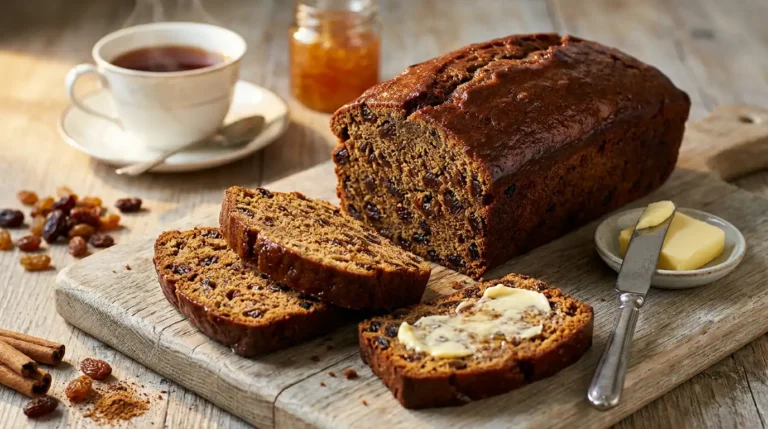
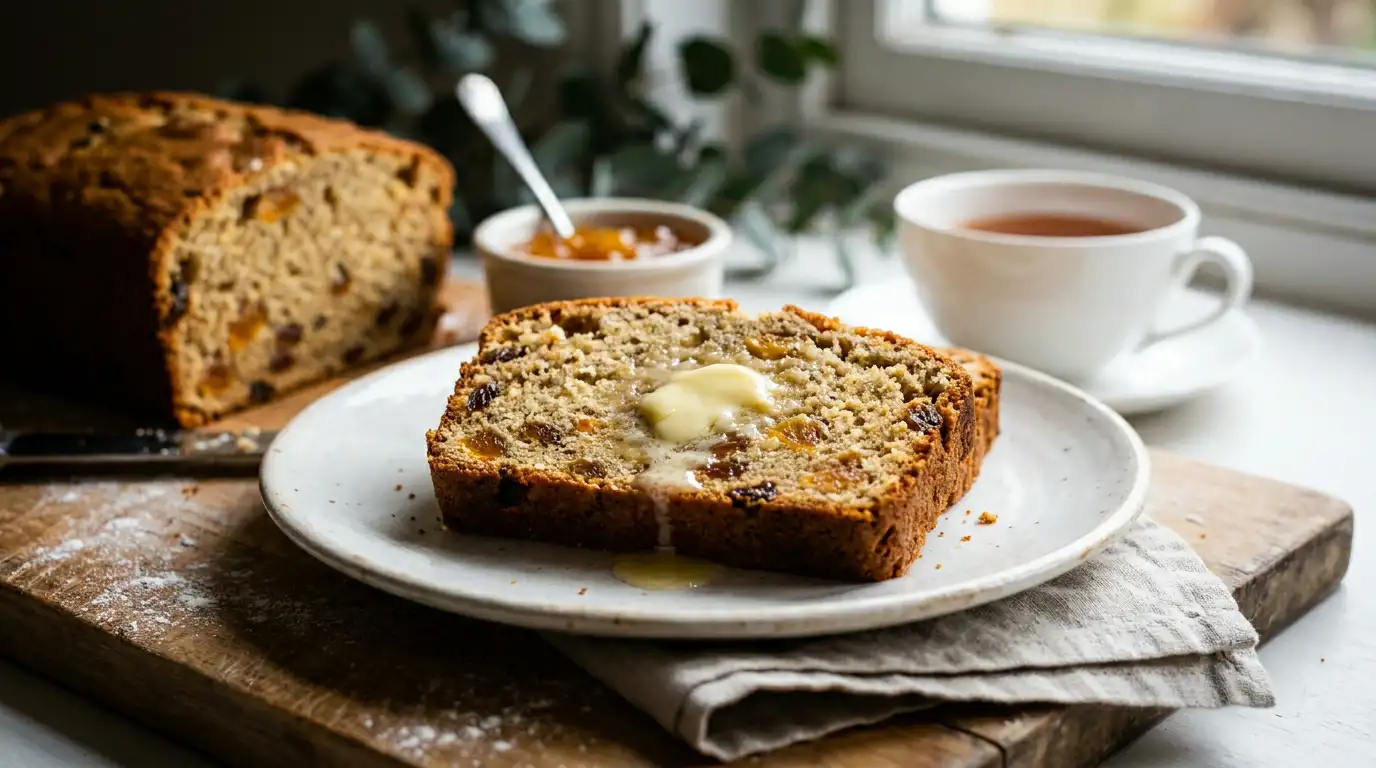
This Earl Grey tea loaf is a dense, moist fruit bread with a lightly floral crumb, golden-brown crust, and a subtle bergamot warmth running through every slice. The dried fruit soaks overnight in freshly brewed Earl Grey, plumping into jammy, tender pockets that give the loaf its characteristic depth without any added fat.
This recipe is particularly reliable for beginner bakers because it requires no butter, no creaming, and no complicated technique. The batter comes together quickly, making it suitable for an easy weekend bake or a simple teatime treat to serve to guests. From start to finish, including the overnight fruit soak, it is ready in around 9 hours, though active baking time is only about 1 hour 10 minutes.
- 300ml strong Earl Grey tea, freshly brewed and cooled
- 175g sultanas
- 100g raisins
- 75g dried apricots, roughly chopped
- 225g self-raising flour
- 125g light muscovado sugar
- 1 tsp mixed spice
- ½ tsp ground cinnamon
- 1 large egg, beaten
- 2 tbsp orange marmalade
- 1 tbsp runny honey or apricot jam, for glazing
- Butter, for greasing the tin
How to Make Mary Berry Earl Grey Tea Loaf
Soak the fruit:
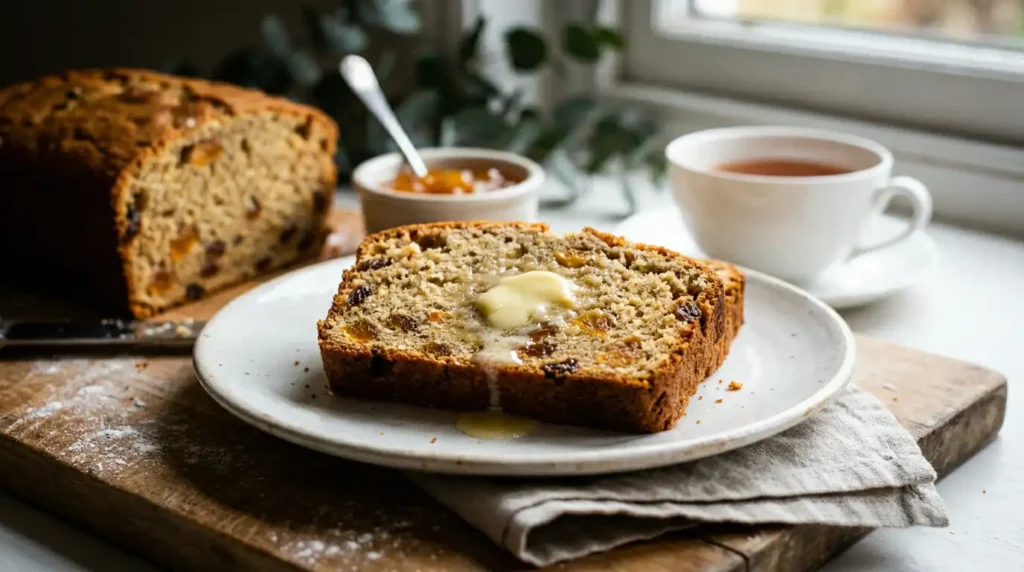
Place the sultanas, raisins, and chopped apricots into a large bowl. Pour the cooled Earl Grey tea over the fruit, stir briefly, then cover the bowl with a clean tea towel and leave to soak for a minimum of 8 hours or overnight. The longer the soak, the more deeply the fruit absorbs the bergamot flavour.
Prepare the tin and oven:
Preheat the oven to 160°C fan (180°C conventional, gas mark 4). Grease a 900g (2lb) loaf tin with butter and line it with a strip of baking parchment, leaving some overhang on the long sides. This makes the loaf much easier to lift out cleanly once baked.
Mix the dry ingredients:
Add the self-raising flour, light muscovado sugar, mixed spice, and cinnamon directly into the bowl with the soaked fruit and any remaining tea liquid. Stir everything together until the dry ingredients are just combined with the fruit.
Add the wet ingredients:
Add the beaten egg and marmalade to the bowl. Stir gently with a wooden spoon until a thick, evenly combined batter forms. Do not overwork the mixture at this stage, as too much stirring can make the crumb dense and heavy.
Fill the tin:
Spoon the batter into the prepared loaf tin and level the top with the back of the spoon. Tap the tin gently on the work surface once or twice to release any large air pockets before placing it in the oven.
Bake the loaf:
Bake on the middle shelf for 55 to 65 minutes, until the loaf is deep golden-brown and a skewer inserted into the centre comes out clean. If the top begins to colour too quickly after 40 minutes, lay a loose sheet of foil over the tin to protect it.
Glaze and cool:
Remove the loaf from the oven and immediately brush the top with a thin layer of runny honey or warmed apricot jam. This gives the crust a soft, lightly glossy finish. Leave the loaf in the tin for 10 minutes before lifting it onto a wire rack to cool completely before slicing.
Tips for the Best Mary Berry Earl Grey Tea Loaf
-
01 Why is my tea loaf dry and crumbly after baking?
The most common cause is not soaking the fruit for long enough. If the fruit has not fully absorbed the tea, it draws moisture out of the batter during baking instead. Always soak for the full overnight period and use all the remaining liquid in the bowl when mixing the batter, even if there seems to be a lot.
-
02 Why has my tea loaf got a dense, gummy centre even though the outside looks done?
This usually points to an oven that runs too hot, which causes the outside to set quickly before the middle has cooked through. Lower the temperature by 10°C and extend the baking time by 8 to 10 minutes. Always test with a skewer in the very centre of the loaf rather than relying on colour alone.
-
03 Why does the top of my tea loaf crack along the centre?
A crack along the top is entirely normal for a loaf cake and is not a sign that anything has gone wrong. It happens as the batter rises and the set crust splits along the natural fault line. It actually gives the loaf a pleasant, rustic appearance once glazed.
-
04 How do I stop the dried fruit from sinking to the bottom of the loaf?
Because the fruit is added directly to the batter rather than folded in separately, sinking is rarely a problem here. However, if your fruit mixture seems particularly wet after soaking, drain off and discard any excess liquid beyond about 2 to 3 tablespoons before mixing. A very wet batter cannot hold fruit in suspension as the loaf rises.
-
05 Why does the loaf feel very sticky when it first comes out of the tin?
This is normal immediately after baking because the sugar and fruit retain heat and moisture. Leave the loaf to cool completely on a wire rack before slicing. Cutting into a warm tea loaf causes the crumb to compress and turn sticky. Once fully cooled, the texture firms up and slices cleanly.
Serving Suggestions
Slice thickly and spread with salted butter for a classic British afternoon tea pairing that lets the bergamot flavour shine.
Toast individual slices lightly under the grill and serve with clotted cream and a spoonful of orange marmalade for a more indulgent teatime plate.
Pair with a pot of freshly brewed Earl Grey to bring out the subtle floral notes in the loaf, or serve alongside a robust Assam if the bergamot flavour feels too delicate.
Serve thin slices alongside a soft goat’s cheese and a few walnut halves as part of a light afternoon spread, where the sweetness of the fruit contrasts well with the sharp dairy.
Cut into neat fingers, wrap individually, and pack into a lunchbox or hamper, as the loaf travels well and holds its texture for several days without drying out.
Storage
Room Temperature
Store the cooled loaf in an airtight tin or container at room temperature for up to 5 days. The texture actually improves after the first day as the crumb settles and the flavour deepens.
Refrigerator
Wrap the loaf tightly in cling film or place it in a lidded container and refrigerate for up to one week. Remove from the fridge at least 30 minutes before serving so the crumb has time to soften and return to its proper texture.
Freezing
Slice the cooled loaf, wrap each slice individually in cling film, and place the wrapped slices into a labelled freezer bag for up to 3 months. Defrost at room temperature for about 1 to 2 hours or overnight in the fridge before eating.
Nutrition
FAQs
-
01 Can I use a different type of tea instead of Earl Grey?
Yes, you can use any strong black tea in place of Earl Grey. Assam and Darjeeling both work well and give a more straightforward, malty flavour without the floral bergamot notes. Avoid herbal or green teas, as they tend to be too light to carry the fruit during the soak and can leave a slightly bitter aftertaste. -
02 Can I make this Mary Berry Earl Grey tea loaf ahead of time?
This loaf is genuinely better made a day in advance. Once cooled and stored in an airtight container, the crumb softens further overnight and the spiced fruit flavour becomes more pronounced. It is an ideal bake to prepare the evening before a gathering or afternoon tea. -
03 Can I use plain flour instead of self-raising flour in this recipe?
Yes. If using plain flour, add 2 level teaspoons of baking powder per 225g of flour and mix it in well before combining with the fruit. This gives a comparable rise without needing to source self-raising flour separately, though make sure the baking powder is fresh for the best result. -
04 What size loaf tin works best for this recipe?
A standard 900g (2lb) loaf tin is the right size for this quantity of batter. Using a smaller tin risks the loaf overflowing before it has set, while a larger tin produces a very shallow loaf with an overdone crust. If you only have a 450g (1lb) tin, halve the recipe and reduce the baking time to around 40 to 45 minutes. -
05 Can I change the dried fruit mixture to suit what I have in the cupboard?
The fruit can be varied quite freely as long as the total weight stays around 350g. Dried cranberries, chopped dates, dried cherries, or currants all soak well and suit the Earl Grey base. Avoid very large pieces of fruit such as whole prunes unless they are finely chopped first, as they can weigh down individual slices.
Conclusion
This Mary Berry Earl Grey tea loaf is one of those reliable bakes that rewards patience more than skill. The overnight fruit soak does the heavy lifting, and the actual baking process is straightforward enough for anyone to follow confidently. The result is a golden, fragrant loaf with a tender, fruit-packed crumb, a subtle floral warmth, and a glossy top that looks far more considered than the effort involved. This recipe makes approximately 10 slices from a single 900g loaf.
Give it a go, and if it becomes a regular in your baking rotation, share it with someone who would appreciate a proper British teatime treat. Leave a comment below with how yours turned out or any fruit variations you tried. If you enjoyed this, you might also like the Mary Berry chocolate chip cookies recipe for another easy, reliable bake that delivers excellent results every time.
Mary Berry Earl Grey Tea Loaf Recipe
Course: BakingCuisine: BritishDifficulty: Easy10
servings15
minutes1
hour5
minutes210
kcal9
hours20
minutesA dense, moist fruit loaf soaked overnight in Earl Grey tea, packed with sultanas, raisins, and dried apricots. This no-butter, one-bowl bake has a golden crust, tender crumb, and a subtle bergamot warmth in every slice.
Ingredients
300ml strong Earl Grey tea, freshly brewed and cooled
175g sultanas
100g raisins
75g dried apricots, roughly chopped
225g self-raising flour
125g light muscovado sugar
1 tsp mixed spice
½ tsp ground cinnamon
1 large egg, beaten
2 tbsp orange marmalade
1 tbsp runny honey or apricot jam, for glazing
butter, for greasing the tin
Instructions
- Place the sultanas, raisins, and chopped apricots into a large bowl. Pour the cooled Earl Grey tea over the fruit, stir briefly, then cover and leave to soak for a minimum of 8 hours or overnight.
- Preheat the oven to 160°C fan (180°C conventional, gas mark 4). Grease a 900g (2lb) loaf tin with butter and line it with a strip of baking parchment, leaving some overhang on the long sides.
- Add the self-raising flour, light muscovado sugar, mixed spice, and cinnamon directly into the bowl with the soaked fruit and any remaining tea liquid. Stir until the dry ingredients are just combined with the fruit.
- Add the beaten egg and marmalade to the bowl. Stir gently with a wooden spoon until a thick, evenly combined batter forms. Do not overwork the mixture.
- Spoon the batter into the prepared loaf tin and level the top with the back of the spoon. Tap the tin gently on the work surface once or twice to release any large air pockets.
- Bake on the middle shelf for 55 to 65 minutes, until the loaf is deep golden-brown and a skewer inserted into the centre comes out clean. If the top colours too quickly after 40 minutes, lay a loose sheet of foil over the tin.
- Remove the loaf from the oven and immediately brush the top with runny honey or warmed apricot jam. Leave in the tin for 10 minutes before lifting onto a wire rack to cool completely before slicing.
Notes
- Soak the fruit overnight for the deepest flavour and most moist crumb.
- Use all the remaining tea liquid in the bowl when mixing the batter.
- Do not overwork the batter once the egg is added to keep the crumb tender.
- Cover loosely with foil after 40 minutes if the top is browning too quickly.
- Always test with a skewer in the very centre of the loaf before removing from the oven.
- The loaf improves in texture and flavour if left in an airtight container for one day before slicing.