Mary Berry Sweet Shortcrust Pastry Recipe
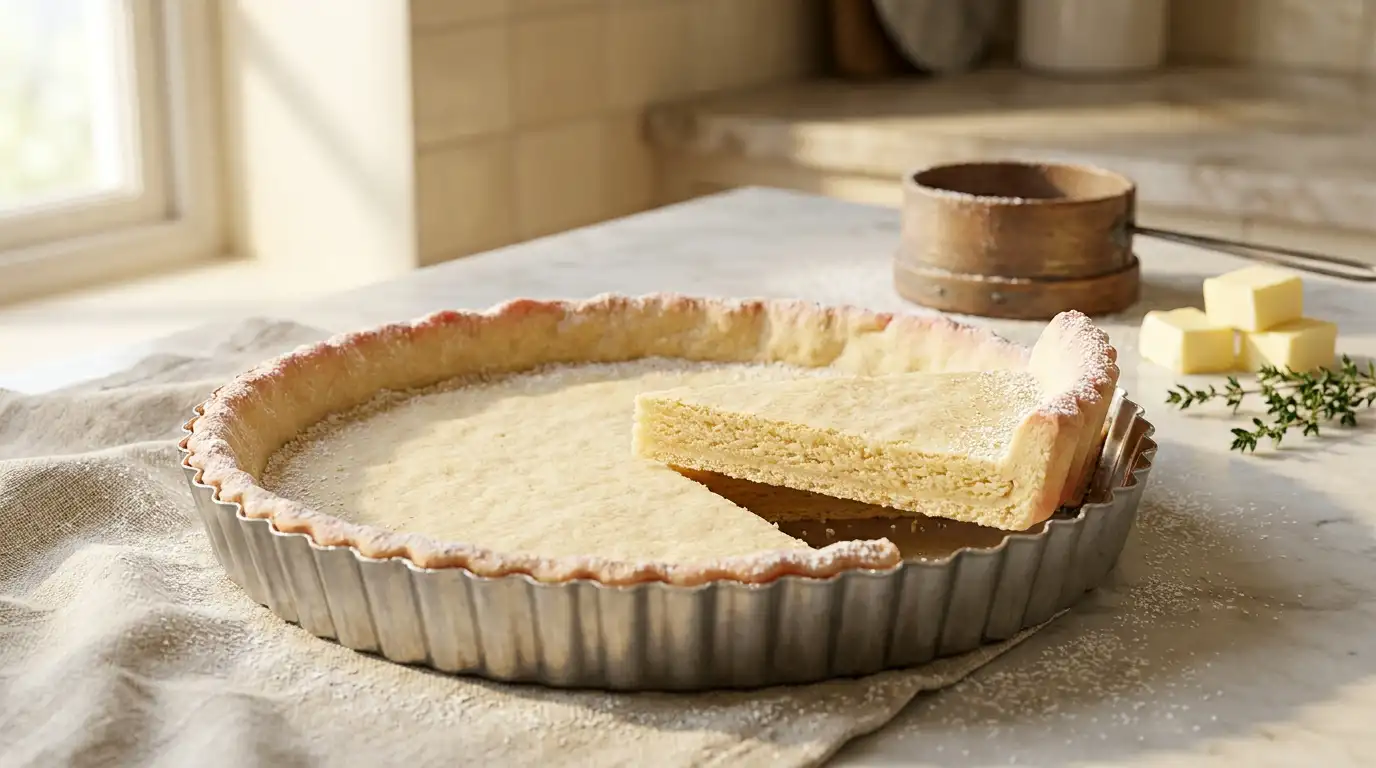
Mary Berry sweet shortcrust pastry is a pale golden, crumbly, and delicately buttery base with a firm snap and a fine, melt-in-the-mouth crumb. It holds its shape well during blind baking, making it ideal for tarts, tartlets, and sweet pies where a clean, neat edge matters. This version uses a straightforward rubbing-in method that produces a consistent, workable dough every time, whether you are a first-time pastry maker or someone returning to the basics.
From mixing to a fully baked pastry case, the process takes around 1 hour, including a 30-minute chill.
Ingredients
For the pastry
- 200g plain flour, plus extra for dusting
- 100g unsalted butter, cold and cut into small cubes
- 30g icing sugar, sifted
- 1 large egg yolk
- 2 to 3 tablespoons cold water
- A pinch of fine salt
How to Make Mary Berry Sweet Shortcrust Pastry
- Combine the dry ingredients: Sift the plain flour, icing sugar, and salt into a large mixing bowl and stir briefly to distribute evenly. Using icing sugar rather than caster sugar gives the finished pastry a finer, more tender texture.
- Rub in the butter: Add the cold butter cubes to the flour mixture and rub between your fingertips, lifting the mixture as you work, until it resembles fine, dry breadcrumbs with no visible lumps of butter remaining. Work quickly so the butter stays cold throughout.
- Add the egg yolk: Make a well in the centre of the flour and butter mixture, then drop in the egg yolk. Stir with a palette knife or round-bladed knife until the yolk is roughly incorporated into the crumbs.
- Bring the dough together: Add the cold water one tablespoon at a time, mixing between each addition, until the dough just comes together into a smooth, firm ball. Stop adding water as soon as it no longer looks dry and crumbly, as excess liquid leads to a tough, shrunken crust.
- Chill the dough: Flatten the ball into a disc, wrap it tightly in cling film, and refrigerate for at least 30 minutes. Chilling allows the gluten to relax, which reduces shrinkage during baking and makes the dough easier to roll.
- Roll out the pastry: Lightly flour a cool work surface and roll the chilled dough to a thickness of around 3mm, working from the centre outwards and turning the pastry a quarter turn after each roll. Transfer it to a 20cm loose-bottomed fluted tart tin by rolling it loosely around the rolling pin and unrolling it over the tin.
- Line the tin: Press the pastry gently into the base and sides of the tin without stretching it, then trim the excess by rolling the rolling pin firmly across the top of the tin. Prick the base all over with a fork to prevent the pastry from puffing up during blind baking.
- Blind bake the case: Preheat the oven to 190C (170C fan, Gas Mark 5). Line the pastry case with a sheet of baking paper and fill with baking beans or uncooked rice. Bake for 15 minutes, then remove the paper and beans and return to the oven for a further 5 to 8 minutes until the base looks dry and just beginning to colour. The pastry is now ready to fill and finish bake according to your chosen recipe.
Tips for the Best Mary Berry Sweet Shortcrust Pastry
Why does my sweet shortcrust pastry shrink down the sides of the tin during baking?
Shrinkage almost always happens when the pastry has not been chilled long enough after lining the tin. After pressing the dough into the tin, refrigerate the lined tin for at least 15 minutes before blind baking. This re-firms the butter and relaxes any tension in the dough that would otherwise cause it to pull back.
Why does my pastry go soggy on the bottom even after blind baking?
A soggy bottom typically means the base was not dried out sufficiently during the final stage of blind baking. Once the baking beans are removed, leave the case in the oven until the base has a dry, matte surface with the faintest hint of colour. If the filling is particularly wet, brushing the inside of the warm case with a thin layer of beaten egg white and returning it to the oven for 2 minutes creates an effective moisture barrier.
Why is my sweet shortcrust pastry hard and tough instead of crumbly?
Over-working the dough after adding the water is the most common cause. Once the liquid goes in, handle the dough as little as possible, just enough to bring it together. Excessive kneading develops the gluten in the flour, producing a pastry that is chewy and dense rather than short and crumbly.
Why did my pastry crack when I tried to roll it out?
Cracking usually means the dough is too cold and rigid straight from the fridge. Leave the disc at room temperature for 5 minutes before rolling, and if a crack appears, press it back together with your fingertip and continue. Cracks in the chilled dough do not indicate a problem with the recipe; the pastry simply needs a short rest before it becomes pliable.
How do I stop the edges of the pastry case from burning before the filling is set?
If the fluted edges are browning faster than the filling is cooking, cut a strip of foil and fold it loosely around the rim of the tin to shield the edge. This works particularly well for filled tarts that need 25 to 35 minutes in the oven.
Serving Suggestions
- Fill the baked case with a classic lemon curd and top with a soft meringue for a lemon meringue tart.
- Spoon in a chilled vanilla pastry cream and arrange fresh summer berries on top for a colourful fruit tart.
- Pour in a chocolate ganache and leave to set at room temperature for a glossy, dense chocolate tart that slices cleanly.
- Fill with a frangipane and top with halved plums or pears before the final bake for a rustic autumnal tart.
- Use smaller tartlet tins to make individual cases filled with lemon curd or jam, which are well-suited for afternoon tea.
Storage
Room temperature
An unfilled, fully baked pastry case can be kept in an airtight tin at room temperature for up to 2 days.
Refrigerator
Wrap the unbaked pastry disc tightly in cling film and refrigerate for up to 3 days before rolling and baking. A filled, baked tart should be covered and refrigerated for up to 2 days; bring it to room temperature for 20 minutes before serving for the best texture and flavour.
Freezing
The uncooked pastry disc can be wrapped in cling film and then a layer of foil and frozen for up to 2 months. Defrost overnight in the refrigerator before rolling, or freeze the pastry already pressed into the tin, then blind bake directly from frozen, adding an extra 5 minutes to the initial baking time.
Nutrition
- Calories: 210 kcal
- Carbohydrates: 22g
- Protein: 3g
- Fat: 12g
- Saturated Fat: 7g
- Sodium: 45mg
Nutrition values are estimates based on a single serving of the unfilled pastry case (recipe makes approximately 8 portions) and may vary depending on the specific ingredients used and serving size.
FAQs
Can I use salted butter instead of unsalted butter in sweet shortcrust pastry?
Salted butter can be used in place of unsalted, but omit the pinch of salt in the recipe to avoid an overly salty pastry. The flavour difference is subtle in a sweet case, but unsalted butter gives more control over the overall seasoning.
Can I make this sweet shortcrust pastry dough ahead of time?
The dough can be made up to 3 days ahead and kept wrapped in the refrigerator, or frozen for up to 2 months. This makes it a practical choice when preparing for a dinner party or baking event, as the pastry work can be done well in advance.
Can I use this sweet shortcrust pastry recipe for individual tartlet cases?
This quantity of dough is well-suited to lining eight individual 10cm tartlet tins, which are a popular choice for afternoon tea or buffet-style desserts. Reduce the blind baking time to around 10 minutes with the beans in, then 4 to 5 minutes without, as smaller cases cook more quickly than a single large tart tin.
Can I replace plain flour with a gluten-free flour blend in this recipe?
A gluten-free plain flour blend can be substituted in an equal weight for the plain flour. The dough may be a little more fragile and crumbly when rolling, so it helps to roll it between two sheets of baking paper rather than directly on the work surface, and to patch any cracks in the tin rather than re-rolling.
What size tin does this sweet shortcrust pastry recipe fit?
The quantities given are designed for a 20cm round, loose-bottomed fluted tart tin approximately 3cm deep. For a 23cm tin, increase the butter and flour by around 25g each and add an extra egg yolk, keeping the water quantity the same to start.
Conclusion
Mary Berry sweet shortcrust pastry is a reliable, versatile base that produces a pale, crumbly case with a short, buttery crumb and a firm enough structure to hold a wide range of fillings. Using cold butter, icing sugar for tenderness, and a proper chill in the fridge are the three elements that make the difference between a pastry that holds its shape and one that slumps or cracks. This recipe makes enough dough to line one 20cm tart tin or approximately eight individual tartlet cases.
Whether filled with fruit, cream, curd, or frangipane, a well-made pastry case is a foundation skill that opens up a wide range of baking possibilities. If this recipe has been useful, leave a comment below with what you chose to fill your case with, and share it with anyone learning to bake from scratch. If you enjoyed this, you might also like the Mary Berry Coq au Vin recipe for a classic, satisfying main course to follow.
Mary Berry Sweet Shortcrust Pastry Recipe
Course: DessertCuisine: BritishDifficulty: Easy8
servings15
minutes23
minutes210
kcal1
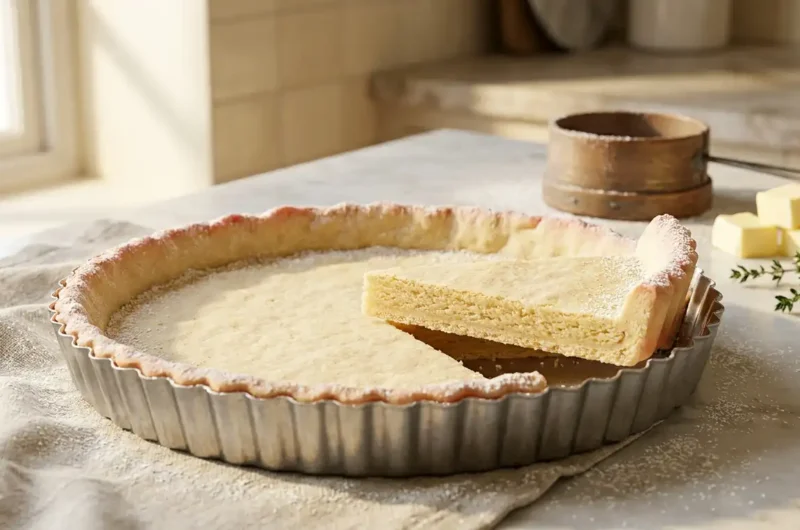
hourA pale golden, crumbly, and delicately buttery pastry case with a firm snap and fine melt-in-the-mouth crumb. Made using a simple rubbing-in method, this reliable sweet shortcrust pastry holds its shape during blind baking and works beautifully as a base for tarts, tartlets, and sweet pies.
Ingredients
200g plain flour, plus extra for dusting
100g unsalted butter, cold and cut into small cubes
30g icing sugar, sifted
1 large egg yolk
2 to 3 tablespoons cold water
a pinch of fine salt
Instructions
- Sift the plain flour, icing sugar, and salt into a large mixing bowl and stir briefly to distribute evenly.
- Add the cold butter cubes and rub between your fingertips, lifting the mixture as you work, until it resembles fine dry breadcrumbs with no visible lumps of butter remaining.
- Make a well in the centre of the mixture and drop in the egg yolk, then stir with a palette knife until roughly incorporated into the crumbs.
- Add the cold water one tablespoon at a time, mixing between each addition, until the dough just comes together into a smooth firm ball.
- Flatten the dough into a disc, wrap tightly in cling film, and refrigerate for at least 30 minutes.
- Lightly flour a cool work surface and roll the chilled dough to around 3mm thickness, then transfer to a 20cm loose-bottomed fluted tart tin.
- Press the pastry gently into the base and sides of the tin, trim the excess by rolling the rolling pin across the top, then prick the base all over with a fork.
- Preheat the oven to 190C (170C fan, Gas Mark 5), line the pastry case with baking paper and fill with baking beans, then bake for 15 minutes. Remove the paper and beans and return to the oven for a further 5 to 8 minutes until the base is dry and just beginning to colour.
Notes
- Use cold butter straight from the fridge and work quickly to keep it from warming during rubbing in.
- Icing sugar gives a finer, more tender crumb than caster sugar in this pastry.
- Stop adding water as soon as the dough comes together to avoid a tough, shrunken crust.
- Chill the pastry-lined tin for 15 minutes before blind baking to reduce shrinkage down the sides.
- Once baking beans are removed, ensure the base looks dry and matte before removing from the oven.
- Brush the warm case with a thin layer of beaten egg white and return to the oven for 2 minutes to create a moisture barrier for wet fillings.
- Roll the dough between two sheets of baking paper if it is fragile or cracking during rolling.
- Leave the chilled dough at room temperature for 5 minutes before rolling if it feels too firm.