Mary Berry Lemon Shortbread Recipe
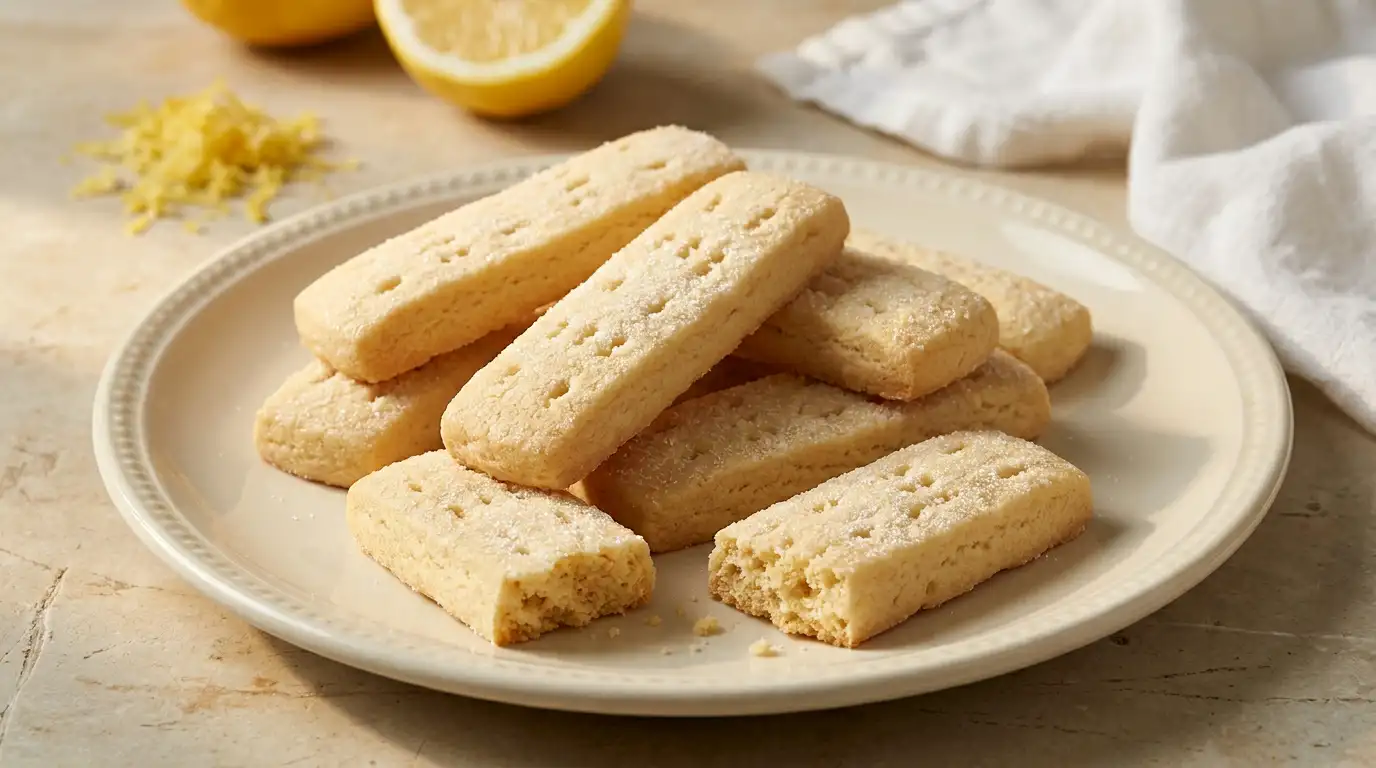
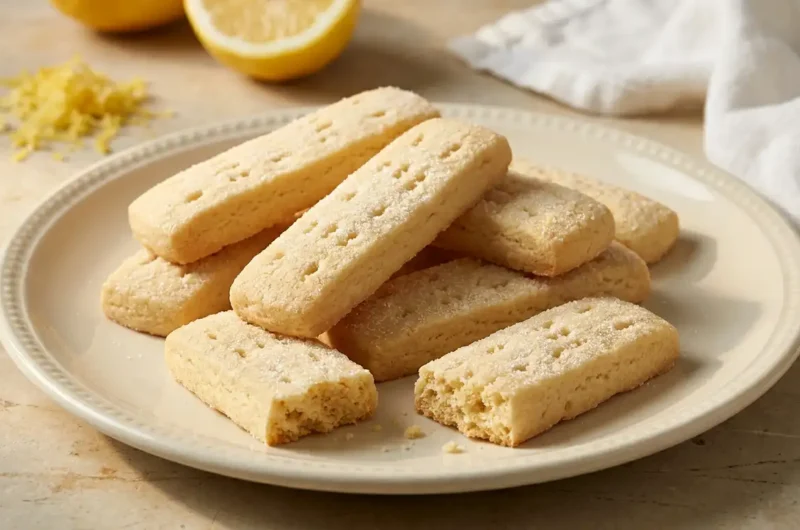
This lemon shortbread has a pale golden, melt-in-the-mouth crumb with a clean citrus sharpness that cuts through the buttery richness. The texture is firm enough to snap cleanly, yet so tender that it crumbles softly on the tongue, with a fine, sandy finish that proper shortbread is known for. The lemon zest and a touch of juice bring a natural brightness rather than an artificial tang, making each piece feel light despite the high butter content.
This version keeps the method straightforward, relying on cold butter worked quickly into the flour to keep the dough short and fragile. It bakes evenly in a standard tin, holds its shape well during cutting, and works just as nicely on a tea tray as it does wrapped up as a gift. From mixing bowl to cooling rack, this Mary Berry lemon shortbread recipe is ready in around 45 minutes.
Ingredients
For the shortbread
- 175g plain flour
- 55g caster sugar, plus extra for dusting
- 115g unsalted butter, cold and cut into small cubes
- Finely grated zest of 1 large unwaxed lemon
- 1 teaspoon lemon juice
- A small pinch of fine salt
How to Make Mary Berry Lemon Shortbread Recipe
- Prepare the oven and tin: Heat the oven to 160C (fan 140C, Gas Mark 3) and line a 18cm square baking tin with baking parchment, leaving an overhang on two sides for easy lifting. Cold butter needs a lower oven temperature so the shortbread sets slowly and stays pale rather than browning too fast.
- Combine the dry ingredients: Place the plain flour, caster sugar, lemon zest, and salt into a large mixing bowl. Stir briefly with a fork to distribute the zest evenly through the flour, which helps the lemon flavour carry throughout the finished biscuit.
- Rub in the butter: Add the cold butter cubes to the bowl. Using your fingertips, rub the butter into the flour mixture using quick, light movements, lifting and aerating as you go. Continue until the mixture resembles fine breadcrumbs with no large lumps of butter remaining.
- Bring the dough together: Add the lemon juice and press the mixture firmly together with your hands, squeezing it into a smooth, cohesive dough. Do not knead or overwork it, as this develops gluten and toughens the texture. The dough should come together cleanly without cracking.
- Press into the tin: Transfer the dough into the prepared tin and press it out evenly using the back of a spoon or the flat base of a glass. Aim for an even thickness of around 1cm across the whole tin so all pieces bake at the same rate.
- Score and chill: Using a sharp knife, score the surface into fingers or squares, pressing down just enough to mark but not cut all the way through. Prick each piece two or three times with a fork, then place the tin in the refrigerator for 15 minutes. Chilling firms the butter again and helps the shortbread hold its shape in the oven.
- Bake until set: Bake on the middle shelf for 25 to 30 minutes, until the shortbread is a very pale, biscuit-cream colour with slightly golden edges. It should feel firm and dry to the touch when pressed lightly in the centre.
- Cut and cool: Remove from the oven and, while still warm, cut along the scored lines using a sharp knife. Dust lightly with caster sugar, then leave in the tin for 10 minutes before lifting onto a wire rack to cool completely. Cutting while warm prevents the shortbread from cracking and crumbling along uneven lines.
Tips for the Best Lemon Shortbread
Why is my shortbread spreading flat and losing its shape in the oven?
The butter was likely too warm before baking. Shortbread relies on cold fat to hold structure. Always chill the pressed dough for at least 15 minutes before it goes into the oven, and make sure the oven is fully preheated so the outside sets quickly.
Why does my shortbread turn brown on the bottom before the top is cooked?
The tin is sitting too close to the heat source, or the oven runs hotter than the dial suggests. Use the middle shelf rather than a lower one, and place the tin on a second baking sheet to add a layer of insulation underneath.
Why is the lemon flavour very faint in the finished biscuit?
The zest may have been from a waxed lemon, which releases far less essential oil, or the zest was not fine enough. Use an unwaxed lemon and grate on the finest side of the grater, pressing firmly to extract the fragrant oils from the skin without reaching the bitter white pith.
Why did my shortbread crumble into pieces when I tried to cut it?
It was cut once fully cold, when the butter has reset and the structure is at its most fragile. Always score and then fully cut the shortbread while it is still warm from the oven, within a few minutes of removing it from the tin.
Why is my shortbread tough and a little chewy rather than tender and short?
The dough was overworked. Once the butter is rubbed in, the mixture needs only enough handling to press it together into a dough. Any additional kneading or rolling develops gluten in the flour, which produces a firmer, more biscuit-like chew rather than the classic melt-in-the-mouth crumb.
Serving Suggestions
- Serve alongside a pot of Earl Grey or a pale Darjeeling, where the bergamot or floral notes echo the citrus in the shortbread.
- Arrange on a cake stand with a small bowl of lemon curd for dipping, which deepens the citrus flavour further.
- Dust with a little icing sugar mixed with a pinch of dried lemon zest just before serving for a smarter, more finished look.
- Pair with a scoop of vanilla or clotted cream ice cream for a simple dessert plate at the end of a summer lunch.
- Pack into a cellophane bag tied with ribbon for a homemade gift, as the shortbread keeps its texture and fragrance well for several days after baking.
Storage
Room Temperature
Store in an airtight tin or container at room temperature for up to 5 days. Keep away from anything strongly scented, as shortbread absorbs surrounding aromas quickly.
Refrigerator
Shortbread can be stored in the refrigerator in a sealed container for up to 10 days, though this is generally unnecessary. Bring back to room temperature for at least 20 minutes before serving, as cold shortbread feels denser and the butter flavour is less pronounced straight from the fridge.
Freezing
Wrap the fully cooled shortbread pieces in a double layer of clingfilm, then place in a freezer bag or rigid container, and freeze for up to 3 months. Defrost at room temperature for about an hour, unwrapped, so condensation does not settle on the surface and soften the texture.
Nutrition
- Calories: 148 kcal
- Carbohydrates: 16g
- Protein: 1.5g
- Fat: 9g
- Saturated Fat: 5.5g
- Sodium: 20mg
Nutrition values are estimates based on standard ingredients and may vary depending on the specific brands used and the exact serving size.
FAQs
Can I use salted butter instead of unsalted butter in this shortbread?
Yes, salted butter works, but the result will have a noticeably saltier finish. If using salted butter, leave out the pinch of salt in the recipe and taste the raw dough before pressing it into the tin to check the balance.
Can I make this lemon shortbread dough ahead of time?
The dough can be made up to 24 hours ahead, wrapped tightly in clingfilm, and kept in the refrigerator. Press it into the tin straight from the fridge, score it, and bake as directed. There is no need to bring it to room temperature first.
Can I use lime or orange zest instead of lemon in this shortbread?
Both work well as direct swaps. Orange zest gives a warmer, rounder citrus note and pairs particularly well with a little dark chocolate drizzled on top once the shortbread has cooled. Lime zest produces a sharper, more aromatic flavour closer to the lemon version.
What size tin works best for this recipe?
An 18cm square tin gives a good thickness of around 1cm, which allows the shortbread to bake through without drying out. A 20cm tin can also be used, but the shortbread will be thinner and will need checking around the 20-minute mark to avoid over-baking.
Can I add other flavourings alongside the lemon zest?
A teaspoon of finely chopped fresh thyme or rosemary added with the zest gives a subtle herbal note that works surprisingly well with lemon in a savoury-leaning shortbread. For a sweeter variation, half a teaspoon of vanilla extract added with the lemon juice also works well without overpowering the citrus.
Conclusion
This Mary Berry lemon shortbread recipe is a reliable, unfussy bake that delivers a crisp, buttery biscuit with a clean lemon lift every time. The method is straightforward enough for a first-time baker, yet the result is polished and genuinely pleasing. This recipe makes approximately 12 to 14 fingers or squares, depending on how the tin is scored, which is a practical amount for a household tin or a small gathering.
Once you have made this shortbread once, the process becomes second nature, and the dough is easy to adapt with different citrus or herb combinations. If you give this a go, leave a comment below to share how it turned out, and feel free to pass the recipe on to anyone who enjoys a classic British biscuit. If you enjoyed this, you might also like Mary Berry apple muffins recipe for another simple, reliable bake worth adding to your collection.
Mary Berry Lemon Shortbread Recipe
Course: DessertCuisine: BritishDifficulty: Easy12
servings15
minutes30
minutes148
kcal45
minutesA pale golden, melt-in-the-mouth shortbread with a clean citrus sharpness from fresh lemon zest. Made with just 6 ingredients, this classic buttery biscuit is crisp, tender, and simple enough for beginner bakers.
Ingredients
175g plain flour
55g caster sugar, plus extra for dusting
115g unsalted butter, cold and cut into small cubes
finely grated zest of 1 large unwaxed lemon
1 teaspoon lemon juice
a small pinch of fine salt
Instructions
- Heat the oven to 160C (fan 140C, Gas Mark 3) and line an 18cm square baking tin with baking parchment, leaving an overhang on two sides for easy lifting.
- Place the plain flour, caster sugar, lemon zest, and salt into a large mixing bowl and stir briefly with a fork to distribute the zest evenly through the flour.
- Add the cold butter cubes and rub into the flour mixture using quick, light fingertip movements until the mixture resembles fine breadcrumbs with no large lumps remaining.
- Add the lemon juice and press the mixture firmly together with your hands into a smooth, cohesive dough without kneading or overworking it.
- Transfer the dough into the prepared tin and press out evenly to around 1cm thickness using the back of a spoon or the flat base of a glass.
- Score the surface into fingers or squares with a sharp knife, prick each piece two or three times with a fork, then chill in the refrigerator for 15 minutes.
- Bake on the middle shelf for 25 to 30 minutes until a very pale biscuit-cream colour with slightly golden edges, and firm and dry to the touch in the centre.
- Remove from the oven, cut along the scored lines while still warm, dust lightly with caster sugar, leave in the tin for 10 minutes, then transfer to a wire rack to cool completely.
Notes
- Always use cold butter straight from the fridge for the best short, crumbly texture.
- Use an unwaxed lemon and grate on the finest side of the grater for the most flavour.
- Do not overwork the dough once the butter is rubbed in or the shortbread will turn tough.
- Chilling the pressed dough for 15 minutes before baking helps it hold its shape in the oven.
- Always cut the shortbread while still warm to prevent cracking and crumbling.
- Place the tin on a second baking sheet if the base tends to brown too quickly in your oven.