Mary Berry French Apple Tart Recipe
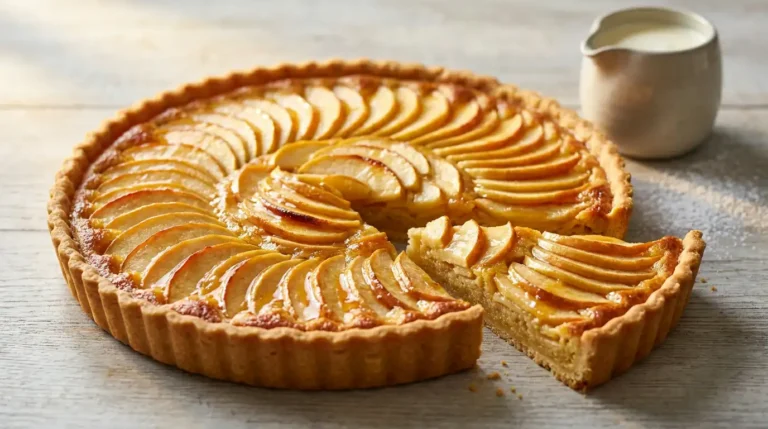
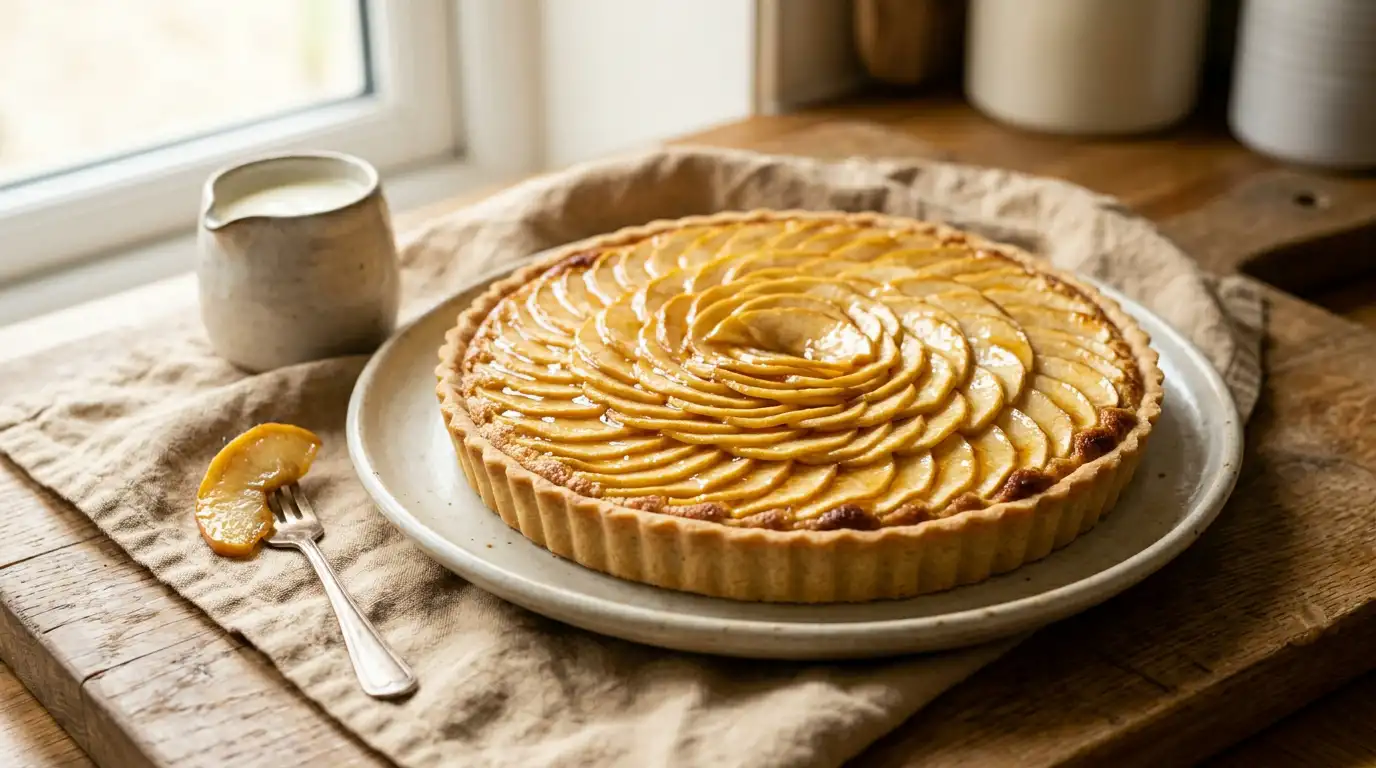
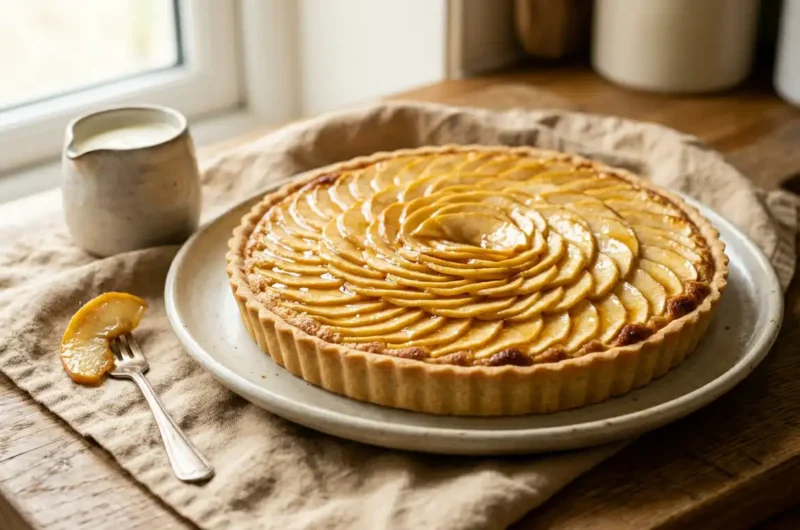
This Mary Berry French apple tart has a crisp, buttery shortcrust base layered with a smooth almond cream filling and topped with thinly sliced dessert apples that fan out into neat, overlapping rings. The apples turn a pale gold in the oven, their edges just catching colour, while the frangipane beneath sets to a soft, tender crumb with a faintly nutty aroma. It is a tart that looks as though it came from a patisserie window, yet the method is well within reach of any careful home baker. From start to finish, it is ready in around 1 hour 30 minutes.
What makes this version particularly reliable is the approach to the pastry case: baking it blind before adding the filling removes any risk of a soggy base, so the finished tart holds its shape cleanly when sliced. It works equally well for a Sunday lunch dessert, a dinner party centrepiece, or an afternoon tea spread where something elegant is needed without hours of effort.
Ingredients
- 175g plain flour, plus extra for dusting
- 85g cold unsalted butter, cubed
- 1 tbsp caster sugar
- 1 egg yolk
- 2 tbsp cold water
- Pinch of fine salt
- 75g unsalted butter, softened
- 75g caster sugar
- 75g ground almonds
- 1 large egg, beaten
- 1 tbsp plain flour
- ½ tsp vanilla extract
- 3 medium dessert apples, such as Braeburn or Cox
- Juice of ½ lemon
- 1 tbsp caster sugar
- 15g unsalted butter, melted
- 3 tbsp apricot jam
- 1 tbsp water
How to Make Mary Berry French Apple Tart
Place the flour, salt, and cold cubed butter in a large bowl. Rub the butter into the flour using your fingertips until the mixture resembles coarse breadcrumbs with no large lumps remaining. Stir in the caster sugar, then add the egg yolk and cold water. Bring the dough together with your hands, working quickly so the butter stays cool, then shape it into a flat disc, wrap it in cling film, and refrigerate for at least 30 minutes.
Preheat the oven to 190°C (170°C fan, Gas Mark 5). On a lightly floured surface, roll the chilled pastry out to approximately 3mm thick and use it to line a 23cm loose-bottomed fluted tart tin. Press it gently into the edges, then trim any overhang with a sharp knife. Prick the base all over with a fork, line with baking parchment, fill with baking beans, and bake for 15 minutes. Remove the beans and parchment and bake for a further 5 minutes until the base is dry and very lightly coloured, this prevents any moisture from the filling making the pastry soft.
Beat the softened butter and caster sugar together in a bowl until the mixture is pale and fluffy, about 2 minutes by hand. Add the beaten egg a little at a time, mixing well between each addition. Fold in the ground almonds, plain flour, and vanilla extract until a smooth, even mixture forms. Set aside at room temperature while you prepare the apples.
Peel, core, and halve the apples. Place each half cut-side down on a board and slice them very thinly, around 2mm, using a sharp knife or mandoline. Squeeze the lemon juice over the slices immediately and toss gently to coat, which stops them browning before they reach the oven.
Spread the frangipane evenly over the blind-baked pastry case in a smooth, level layer using the back of a spoon or a palette knife. Starting from the outside edge of the tart and working inward, arrange the apple slices in overlapping concentric rings, fanning each slice slightly. Brush the apple slices with the melted butter and scatter the caster sugar over the top.
Place the tart on a baking tray and bake at 190°C (170°C fan, Gas Mark 5) for 30 to 35 minutes, until the frangipane is set and golden at the edges and the apple slices are tender with lightly coloured tips. A skewer inserted into the centre should come out without any wet mixture clinging to it. Remove from the oven and leave to cool in the tin for 10 minutes before unmoulding.
Warm the apricot jam and water together in a small saucepan over a low heat, stirring until the jam melts and the mixture becomes fluid, then push it through a sieve to remove any chunks. While the tart is still warm, brush the glaze generously over the apple surface in a thin, even coat. The glaze sets to a clear, glossy finish as the tart cools, giving the apples a professional sheen.
Tips for the Best French Apple Tart
01 Why is my pastry shrinking down the sides during blind baking?
02 Why is the frangipane still liquid in the centre after the stated baking time?
03 Why are the edges of my apple slices burning before the filling is cooked through?
04 Why does the glaze look cloudy rather than clear and glossy?
05 Why is the base of my tart soggy even after blind baking?
Serving Suggestions
Serve at room temperature with a generous pour of cold double cream, which contrasts well with the warm nuttiness of the frangipane.
Pair with a scoop of good vanilla ice cream for a dinner party dessert, allowing it to melt slightly into the warm pastry base.
Dust lightly with icing sugar just before bringing to the table for a clean, patisserie-style presentation that needs no further garnish.
Offer alongside crème fraîche at afternoon tea, where its slight tartness balances the sweetness of the almond filling.
Slice and serve with a pot of good Earl Grey or a strong Assam tea when presenting as part of a traditional British afternoon spread.
Storage
Room Temperature
Store the cooled tart loosely covered with foil or in an airtight container at room temperature for up to 2 days.
Refrigerator
Place the tart in an airtight container and refrigerate for up to 4 days. Remove it from the fridge at least 30 minutes before serving to allow the pastry to return to its crisp, short texture rather than turning hard and cold.
Freezing
Wrap individual slices or the whole tart tightly in a double layer of cling film followed by foil, then freeze for up to 2 months. Defrost overnight in the refrigerator and allow to come to room temperature before serving; the glaze may lose some of its sheen but the flavour remains well preserved.
Nutrition
FAQs
01 Can I use shortcrust pastry from a shop instead of making it from scratch?
02 Can I make the Mary Berry French apple tart the day before serving?
03 Can I use cooking apples instead of dessert apples in this recipe?
04 What size tart tin works best for this French apple tart recipe?
05 Can I replace the apricot glaze with something else?
Conclusion
This Mary Berry French apple tart brings together a crisp shortcrust base, a soft almond frangipane, and neatly fanned apple slices under a glossy apricot glaze, producing a tart that looks elegant but follows a straightforward, dependable method. It yields 8 slices from a 23cm tin, making it a well-proportioned bake for a family lunch or a relaxed dinner party. The blind-baked base, the room-temperature frangipane, and the lemon-coated apple slices each play a clear role in the finished result, and following the steps in order gives a consistent outcome every time.
Whether served with cream, ice cream, or simply on its own, this tart holds its shape and flavour well from the day it is made through to the following afternoon. If you give it a go, leave a comment below to share how it turned out or pass the recipe on to a friend who enjoys weekend baking. If you enjoyed this, you might also like the Mary Berry Chocolate Chip Cake Recipe for another classic bake worth adding to your repertoire.
Mary Berry French Apple Tart Recipe
Course: DessertCuisine: FrenchDifficulty: Easy8
servings30
minutes55
minutes390
kcal1
hour25
minutesA crisp buttery shortcrust pastry case filled with soft almond frangipane and topped with thinly fanned dessert apple slices, finished with a clear apricot glaze. This classic French-style tart is reliable, beginner-friendly, and elegant enough for a dinner party or afternoon tea.
Ingredients
175g plain flour, plus extra for dusting
85g cold unsalted butter, cubed
1 tbsp caster sugar
1 egg yolk
2 tbsp cold water
pinch of fine salt
75g unsalted butter, softened
75g caster sugar
75g ground almonds
1 large egg, beaten
1 tbsp plain flour
half tsp vanilla extract
3 medium dessert apples such as Braeburn or Cox
juice of half a lemon
1 tbsp caster sugar
15g unsalted butter, melted
3 tbsp apricot jam
1 tbsp water
Instructions
- Place the flour, salt, and cold cubed butter in a large bowl. Rub the butter into the flour using your fingertips until the mixture resembles coarse breadcrumbs. Stir in the caster sugar, then add the egg yolk and cold water. Bring the dough together quickly, shape into a flat disc, wrap in cling film, and refrigerate for at least 30 minutes.
- Preheat the oven to 190C (170C fan, Gas Mark 5). Roll the chilled pastry out to approximately 3mm thick and line a 23cm loose-bottomed fluted tart tin. Prick the base with a fork, line with baking parchment, fill with baking beans, and bake for 15 minutes. Remove the beans and parchment and bake for a further 5 minutes until the base is dry and lightly coloured.
- Beat the softened butter and caster sugar together until pale and fluffy. Add the beaten egg a little at a time, mixing well between each addition. Fold in the ground almonds, plain flour, and vanilla extract until a smooth mixture forms. Set aside at room temperature.
- Peel, core, and halve the apples. Place each half cut-side down and slice very thinly at around 2mm. Squeeze lemon juice over the slices immediately and toss gently to coat.
- Spread the frangipane evenly over the blind-baked pastry case. Starting from the outside edge, arrange the apple slices in overlapping concentric rings, fanning each slice slightly. Brush with melted butter and scatter caster sugar over the top.
- Place the tart on a baking tray and bake at 190C (170C fan, Gas Mark 5) for 30 to 35 minutes until the frangipane is set and golden at the edges and the apple slices are tender. Remove from the oven and leave to cool in the tin for 10 minutes before unmoulding.
- Warm the apricot jam and water in a small saucepan over a low heat, stirring until fluid, then push through a sieve. While the tart is still warm, brush the glaze generously over the apple surface in a thin, even coat.
Notes
- Rest the pastry in the fridge for at least 30 minutes before rolling to prevent shrinkage during baking.
- Always blind bake the pastry case fully before adding the frangipane to avoid a soggy base.
- Use firm dessert apples such as Braeburn or Cox as they hold their shape during baking.
- Apply lemon juice to the apple slices immediately after cutting to prevent browning.
- Brush the apricot glaze while the tart is still warm so it flows thinly and sets to a clear finish.
- Cover the outer apple edges loosely with foil from the halfway point if they are browning too fast.