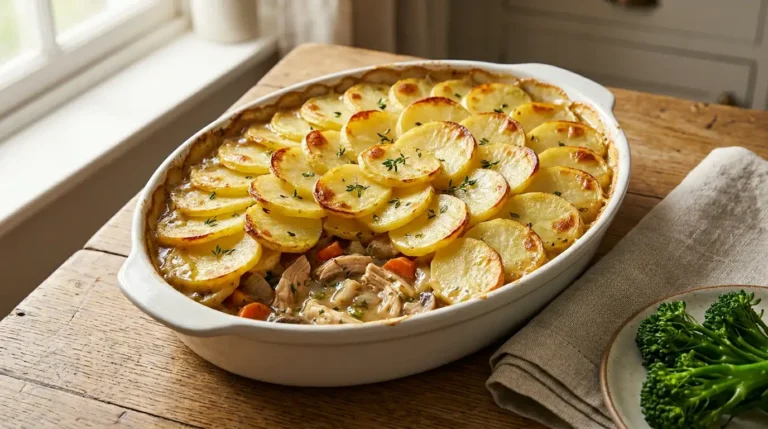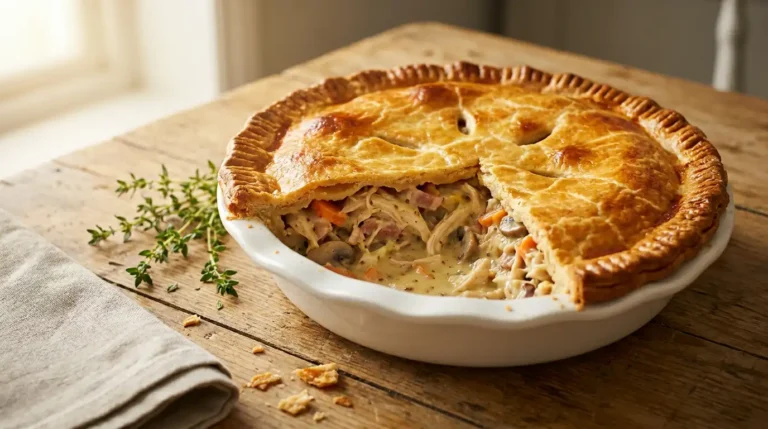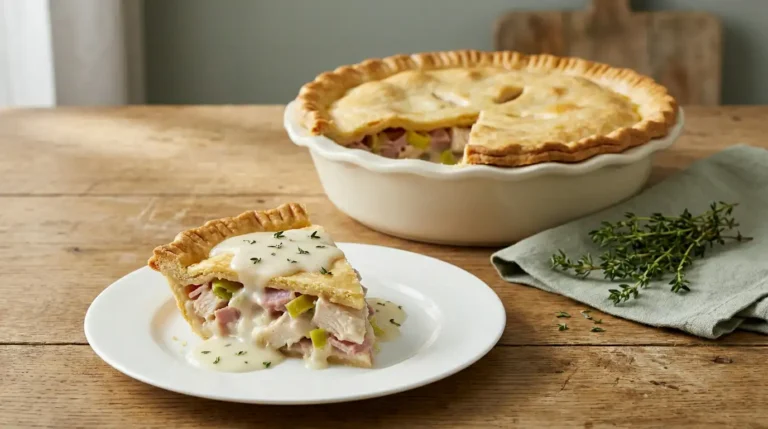
Mary Berry Dijon Chicken Recipe
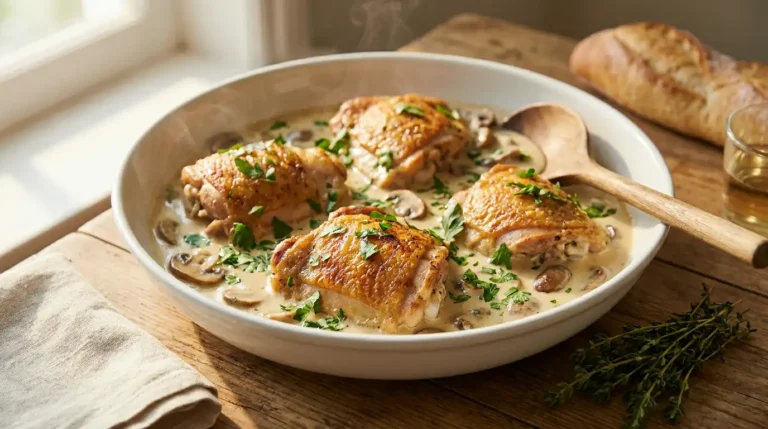
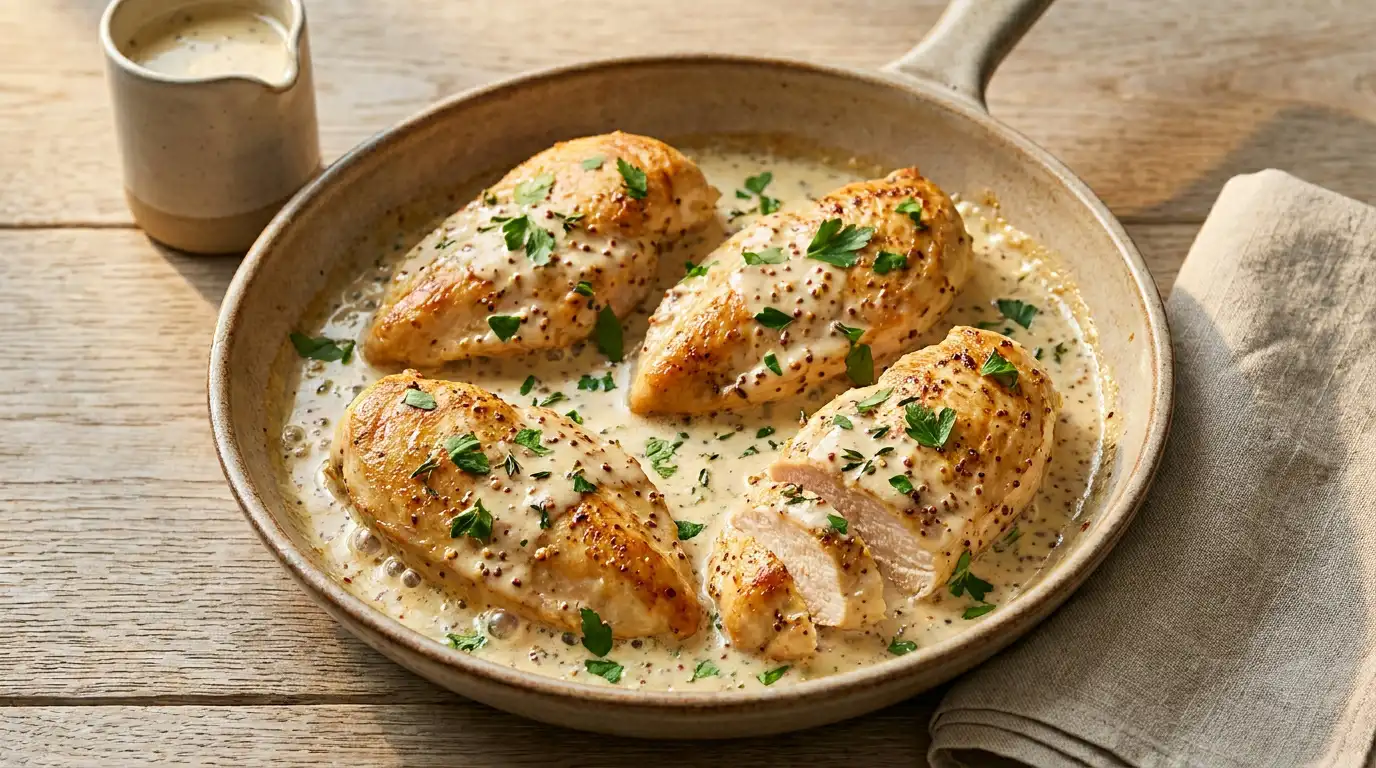
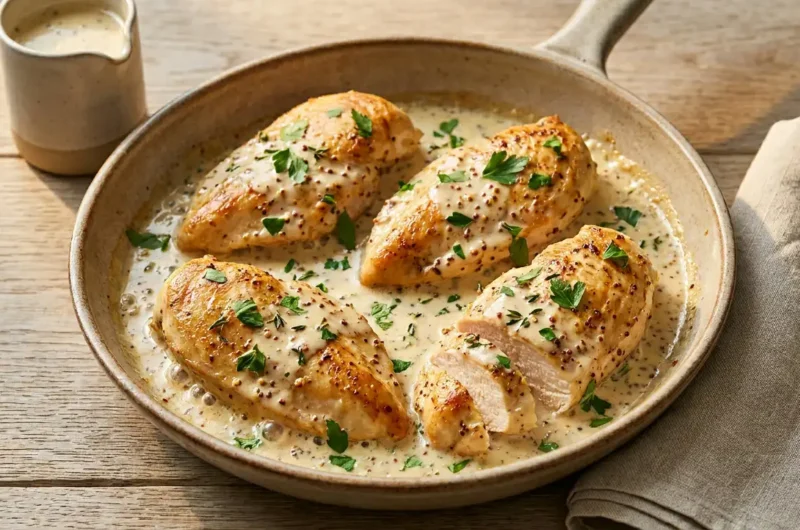
This Dijon chicken is a golden, pan-seared dish finished in a silky, pale mustard sauce with a gentle heat that coats each piece without overpowering it. The sauce reduces to a smooth, cream-enriched consistency that clings to the chicken and leaves a warm, tangy finish on the palate. It works equally well for a quiet midweek dinner or a relaxed weekend meal for guests. From start to finish, it is ready in around 45 minutes.
What sets this version apart is its reliability. The sauce comes together in the same pan used to sear the chicken, which means every caramelised bit left behind adds depth to the finished dish. No specialist equipment is needed, and the timing is forgiving enough for a home cook working without a second pair of hands.
Ingredients
For the chicken
- 4 boneless, skinless chicken breasts (approximately 150g each)
- 1 tablespoon olive oil
- 15g unsalted butter
- ½ teaspoon fine sea salt
- ¼ teaspoon freshly ground black pepper
For the Dijon sauce
- 1 medium shallot, finely diced
- 2 garlic cloves, finely minced
- 150ml dry white wine
- 200ml chicken stock, low sodium
- 150ml double cream
- 2 tablespoons Dijon mustard
- 1 teaspoon wholegrain mustard
- 1 teaspoon fresh thyme leaves, or ½ teaspoon dried thyme
- Salt and black pepper to taste
To finish
- Small handful of fresh flat-leaf parsley, roughly chopped
How to Make Mary Berry Dijon Chicken Recipe
- Prepare the chicken: Pat the chicken breasts dry with kitchen paper and season both sides with the salt and black pepper. Drying the surface helps the chicken colour properly rather than steam in the pan.
- Sear the chicken: Heat the olive oil and butter in a wide, heavy-based frying pan over a medium-high heat. Once the butter has melted and the foam begins to subside, lay the chicken breasts in the pan. Cook for 4 to 5 minutes on each side until deep golden and just cooked through. Transfer to a warm plate and cover loosely with foil.
- Soften the shallot and garlic: Reduce the heat to medium and add the diced shallot to the pan. Cook for 2 to 3 minutes, stirring occasionally, until softened and translucent. Add the garlic and cook for a further 30 seconds, keeping it moving so it does not catch on the base of the pan.
- Deglaze with white wine: Pour in the white wine and let it bubble steadily for 2 minutes, scraping up any golden bits from the base of the pan with a wooden spoon. This step draws all the caramelised flavour into the sauce.
- Build the sauce: Add the chicken stock and thyme. Increase the heat slightly and let the liquid reduce by roughly a third, which will take around 3 to 4 minutes. The sauce should look more concentrated and slightly syrupy at the edges.
- Stir in the cream and mustards: Lower the heat to a gentle simmer and pour in the double cream. Stir in both the Dijon mustard and the wholegrain mustard. Let the sauce cook for 2 to 3 minutes, stirring, until it thickens enough to coat the back of a spoon lightly.
- Return the chicken to the pan: Nestle the seared chicken breasts back into the sauce. Spoon the sauce over each piece and leave to warm through for 3 to 4 minutes over a low heat. Check the internal temperature reaches 74°C if using a thermometer.
- Finish and serve: Scatter the chopped parsley over the top just before bringing the pan to the table. Serve immediately while the sauce is still loose and glossy.
Tips for the Best Mary Berry Dijon Chicken Recipe
Why is my Dijon sauce splitting and looking greasy?
This happens when the cream is added to a pan that is too hot. Always reduce the heat to a gentle simmer before adding double cream, and stir steadily as you pour it in. If the sauce does start to split, remove the pan from the heat immediately and stir in a splash of cold chicken stock to bring it back together.
Why does my chicken turn out dry even though I followed the timings?
Chicken breast thickness varies considerably, and a thicker piece may need an extra minute or two per side. Rather than relying solely on time, press the centre of the breast gently. It should feel firm but with a slight give. Returning it to the sauce to warm through also helps keep the meat moist rather than finishing it alone in the pan.
Why is my sauce too thin and not coating the chicken properly?
The liquid needs enough time to reduce before the cream goes in. If the stock did not reduce by at least a third in step five, the base will be too loose to thicken properly once the cream is added. Continue simmering, uncovered, until the sauce holds a light coating on a spoon before you proceed.
Why does my sauce taste sharp or overly mustardy?
Dijon mustard intensifies when it simmers for too long at high heat. Once both mustards are added, keep the pan on a gentle simmer only. The cream and stock balance the sharpness as the sauce reduces, so patience at a low temperature gives a rounded, mellow result rather than a harsh one.
Why is there no colour on my chicken even after five minutes in the pan?
The pan likely was not hot enough before the chicken went in, or the chicken was not dried properly beforehand. Surface moisture creates steam and prevents browning. Make sure the butter foam has settled before adding the chicken, and resist the urge to move the pieces around. Leave them undisturbed for the full four to five minutes so the Maillard reaction can develop properly.
Serving Suggestions
- Spoon over buttered tagliatelle or wide pappardelle to catch the mustard sauce in the folds of the pasta.
- Serve alongside steamed new potatoes with a knob of butter and a few snipped chives.
- Place on a bed of wilted spinach for a lighter plate that still soaks up the sauce well.
- Pair with tenderstem broccoli roasted in the oven with a little olive oil for a contrasting slightly charred note.
- Offer a small jug of extra sauce at the table for anyone who wants to add more to their plate.
Storage
Room temperature
Store any leftovers in an airtight container at room temperature for no longer than 2 hours after cooking.
Refrigerator
Transfer cooled leftovers to an airtight container and refrigerate for up to 3 days. When reheating, warm gently in a saucepan over a low heat with a splash of chicken stock stirred through to loosen the sauce back to its original consistency.
Freezing
Cream-based sauces can sometimes separate on freezing, but if needed, place the cooled chicken and sauce in a freezer-safe container and freeze for up to 1 month. Defrost overnight in the refrigerator and reheat gently on the hob, stirring frequently and adding a little stock if the sauce looks grainy.
Nutrition
- Calories: 390 kcal
- Carbohydrates: 5g
- Protein: 38g
- Fat: 22g
- Saturated Fat: 11g
- Sodium: 480mg
Nutrition values are estimates based on average ingredient weights and may vary depending on the specific products used and the final serving size.
FAQs
Can I use chicken thighs instead of chicken breasts in this recipe?
Boneless, skinless chicken thighs work very well here and actually stay a little more moist during cooking. Increase the initial searing time by a couple of minutes per side and allow an extra 5 minutes in the sauce to ensure they are cooked through.
Can I make this Dijon chicken recipe ahead of time?
The dish can be made up to a day in advance and stored in the refrigerator. Reheat gently in a covered pan over a low heat, adding a small amount of chicken stock to help the sauce return to a smooth consistency. Avoid boiling it or the cream may separate.
Can I swap the white wine for something non-alcoholic?
Replace the white wine with an equal quantity of additional chicken stock and add a teaspoon of white wine vinegar or a small squeeze of lemon juice. This gives the sauce the acidity it needs to balance the cream and mustard without using alcohol.
What type of Dijon mustard gives the best result in this recipe?
A smooth, French-style Dijon with a clean, sharp flavour works best for the base of the sauce. Avoid honey-flavoured or mild varieties as they will make the sauce taste sweet rather than savoury. The wholegrain mustard added alongside it provides texture and a slightly milder note.
Can I double this recipe to serve more people?
The recipe scales up easily to serve eight. Sear the chicken in two batches to avoid overcrowding the pan, which would prevent proper browning. Once all the chicken is seared, make the sauce in the same pan as described, using double the quantities throughout.
Conclusion
The Mary Berry Dijon chicken recipe delivers a satisfying result with relatively little effort, which makes it a practical choice for both everyday cooking and more relaxed entertaining. The mustard sauce is smooth, cream-enriched, and balanced, with the wholegrain element adding a pleasing texture alongside the sharper Dijon base. This recipe serves 4 people and takes around 45 minutes from start to finish.
Give it a try and leave a comment below to share how it turned out. If the sauce technique is new to you, take note of the tips on heat control as they make a real difference to the finished result. Share this recipe with anyone who enjoys a simple, flavour-forward chicken dish that works any night of the week. If you enjoyed this, you might also like the Mary Berry ginger flapjacks recipe for a classic bake to round off a meal.
Mary Berry Dijon Chicken Recipe
Course: Main CourseCuisine: FrenchDifficulty: Easy4
servings10
minutes35
minutes390
kcal45
minutesA golden pan-seared chicken dish finished in a silky, cream-enriched Dijon mustard sauce. Quick, reliable, and ready in 45 minutes, this recipe works equally well for a midweek dinner or relaxed weekend entertaining.
Ingredients
4 boneless skinless chicken breasts approximately 150g each
1 tablespoon olive oil
15g unsalted butter
half teaspoon fine sea salt
quarter teaspoon freshly ground black pepper
1 medium shallot finely diced
2 garlic cloves finely minced
150ml dry white wine
200ml chicken stock low sodium
150ml double cream
2 tablespoons Dijon mustard
1 teaspoon wholegrain mustard
1 teaspoon fresh thyme leaves or half teaspoon dried thyme
salt and black pepper to taste
small handful of fresh flat-leaf parsley roughly chopped
Instructions
- Pat the chicken breasts dry with kitchen paper and season both sides with the salt and black pepper.
- Heat the olive oil and butter in a wide heavy-based frying pan over a medium-high heat. Once the butter has melted and the foam begins to subside lay the chicken breasts in the pan. Cook for 4 to 5 minutes on each side until deep golden and just cooked through. Transfer to a warm plate and cover loosely with foil.
- Reduce the heat to medium and add the diced shallot to the pan. Cook for 2 to 3 minutes stirring occasionally until softened and translucent. Add the garlic and cook for a further 30 seconds keeping it moving so it does not catch on the base of the pan.
- Pour in the white wine and let it bubble steadily for 2 minutes scraping up any golden bits from the base of the pan with a wooden spoon.
- Add the chicken stock and thyme. Increase the heat slightly and let the liquid reduce by roughly a third which will take around 3 to 4 minutes.
- Lower the heat to a gentle simmer and pour in the double cream. Stir in both the Dijon mustard and the wholegrain mustard. Let the sauce cook for 2 to 3 minutes stirring until it thickens enough to coat the back of a spoon lightly.
- Nestle the seared chicken breasts back into the sauce. Spoon the sauce over each piece and leave to warm through for 3 to 4 minutes over a low heat.
- Scatter the chopped parsley over the top just before serving and serve immediately while the sauce is still loose and glossy.
Notes
- Dry the chicken breasts well with kitchen paper before seasoning to ensure proper browning in the pan.
- Do not add the cream over high heat as it can cause the sauce to split.
- If the sauce splits stir in a splash of cold chicken stock off the heat to bring it back together.
- Let the stock reduce by at least a third before adding cream so the sauce thickens properly.
- Chicken thighs can be used instead and will stay slightly more moist during cooking.
- Replace white wine with extra chicken stock plus a teaspoon of white wine vinegar for a non-alcoholic version.