Mary Berry Chicken Ham And Leek Pie Recipe
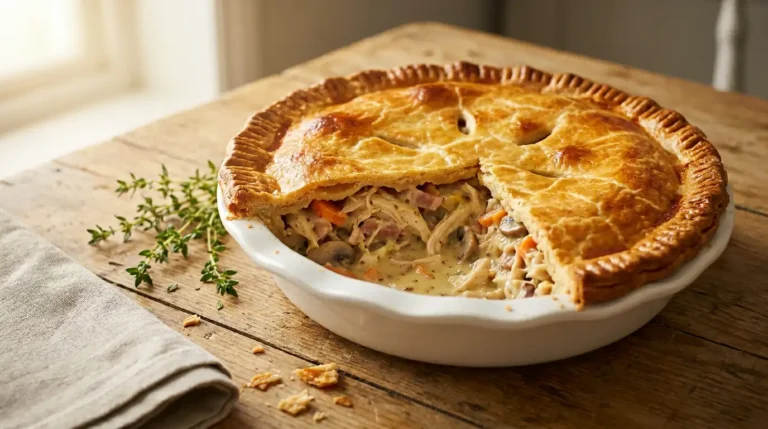
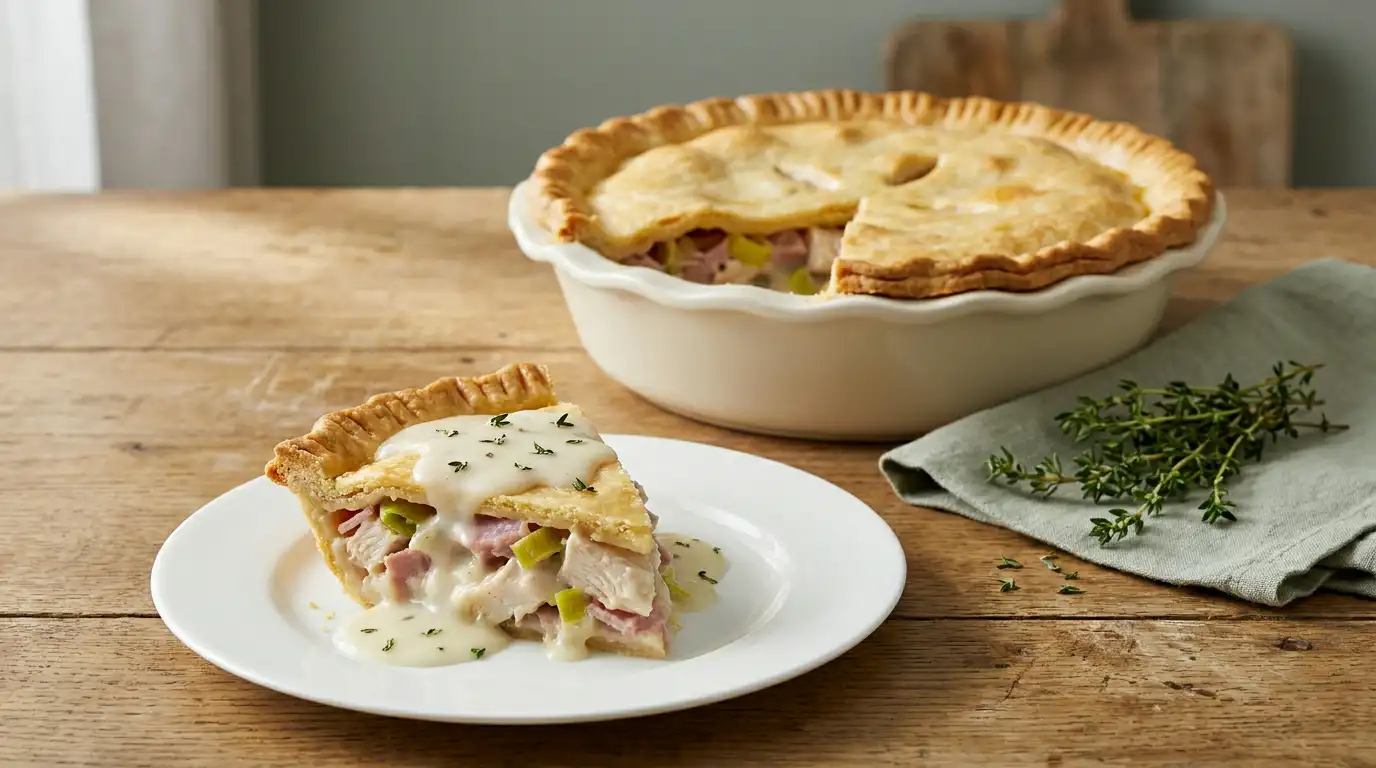
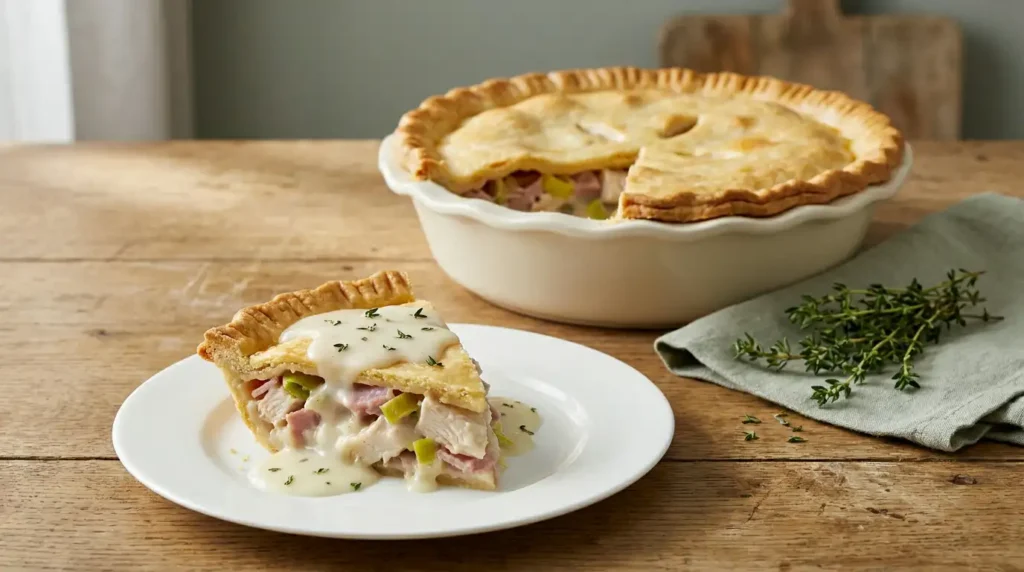
This chicken ham and leek pie is a deeply comforting dish with a golden, buttery shortcrust pastry that shatters at the fork to reveal a creamy, herb-flecked filling of tender chicken, salty ham, and soft leeks bound in a silky white sauce. The contrast between the crisp pastry lid and the yielding, flavoursome filling makes every portion satisfying in a way that feels both homely and considered. It is the sort of pie that suits a Sunday lunch table as easily as a midweek family dinner, and it reheats well without losing its texture. From start to finish, it is ready in around 1 hour 30 minutes.
What makes this version reliable for home cooks is the straightforward approach: a simple roux-based sauce, accessible ingredients, and a single-dish method that keeps washing up to a minimum. The pastry is easy to handle and forgiving to roll, making it a practical recipe even for those who rarely attempt homemade pie.
Ingredients
- 280g plain flour, plus extra for dusting
- 140g cold unsalted butter, cut into small cubes
- 1 medium egg yolk
- 3–4 tablespoons cold water
- 1 pinch of salt
- 500g cooked chicken breast, torn into chunks
- 180g cooked ham, roughly chopped
- 2 medium leeks, trimmed, halved and sliced into half-moons
- 1 medium onion, finely chopped
- 2 garlic cloves, finely chopped
- 50g unsalted butter
- 50g plain flour
- 400ml whole milk, warm
- 150ml chicken stock
- 2 tablespoons crème fraîche
- 1 teaspoon Dijon mustard
- 1 tablespoon fresh thyme leaves
- Salt and freshly ground black pepper
- 1 medium egg, beaten, for egg wash
- A little olive oil or butter for frying
How to Make Mary Berry Chicken Ham And Leek Pie
Make the pastry
Tip the flour and salt into a large bowl, then add the cold butter cubes. Rub the butter into the flour using your fingertips until the mixture resembles coarse breadcrumbs with a few pea-sized lumps remaining. Add the egg yolk and cold water, one tablespoon at a time, mixing with a knife until the dough just comes together. Working the dough as little as possible keeps the pastry tender and short rather than tough. Flatten into a disc, wrap in cling film, and chill in the refrigerator for at least 30 minutes.
Soften the vegetables
Heat a little olive oil or butter in a wide frying pan over a medium heat. Add the chopped onion and cook for 5 minutes until softened and translucent. Add the garlic and sliced leeks, then continue cooking for a further 4–5 minutes until the leeks are tender and bright. Transfer to a large mixing bowl and set aside to cool slightly.
Make the white sauce
Melt the butter in a medium saucepan over a moderate heat. Add the flour and stir constantly for 1–2 minutes to cook out the raw flour taste. Remove from the heat briefly, then gradually add the warm milk a little at a time, whisking thoroughly between each addition to prevent lumps. Return to a gentle heat, pour in the chicken stock, and stir continuously until the sauce is thick enough to coat the back of a spoon. This stage typically takes around 6–8 minutes. Stir in the crème fraîche, Dijon mustard, and thyme leaves, then season generously with salt and black pepper.
Combine the filling
Add the cooked chicken chunks and roughly chopped ham to the bowl with the leeks and onion. Pour the white sauce over the top and stir gently to combine everything evenly without breaking up the chicken too much. Taste and adjust the seasoning, then tip the filling into a deep 22–24cm round pie dish. Allow the filling to cool to room temperature before adding the pastry lid, as a hot filling can cause the pastry to go soggy before it has a chance to bake.
Preheat the oven
Heat the oven to 200°C (180°C fan, Gas Mark 6). Place a flat baking sheet on the middle shelf while the oven heats up. Baking the pie on a preheated surface helps the base of the dish stay at a high temperature throughout cooking, which encourages the filling to bubble properly and helps the pastry base to crisp if using a metal dish.
Top the pie with pastry
Lightly flour a clean surface and roll the chilled pastry out to a rough circle about 3–4mm thick, slightly larger than the top of your pie dish. Brush the rim of the dish with a little beaten egg. Carefully lay the pastry over the filling, pressing it gently onto the rim to seal. Trim away any overhang with a sharp knife, then crimp the edges using your thumb and forefinger or the back of a fork to create a firm seal. Cut two small slits in the centre of the lid to allow steam to escape during baking.
Egg wash and bake
Brush the entire surface of the pastry lid with the beaten egg, taking care to coat it evenly for a uniform golden finish. Place the pie dish on the preheated baking sheet and bake in the centre of the oven for 35–40 minutes, until the pastry is deep golden and the filling can be heard gently bubbling through the steam slits. If the pastry is browning too quickly after 25 minutes, lay a loose piece of foil over the top for the remainder of the bake time.
Rest before serving
Remove the pie from the oven and leave it to rest for 8–10 minutes before cutting. Resting allows the sauce inside to thicken slightly as it cools, so the filling holds its shape when portioned rather than running across the plate. Serve directly from the dish in generous wedges.
Tips for the Best Chicken Ham and Leek Pie
01 Why is my pastry lid shrinking and pulling away from the edge of the dish during baking?
02 Why is my white sauce lumpy instead of smooth?
03 Why is the pastry base of my pie soggy?
04 My pastry lid is pale and not golden even after the full baking time. What went wrong?
05 Why does my filling spill out during baking even though I cut steam vents?
Serving Suggestions
Serve with buttered mashed potato on the side to catch any extra sauce that pools beneath the pie crust when portioned.
Accompany with steamed tenderstem broccoli or Savoy cabbage for a balanced, seasonal plate that adds a slight bitterness to offset the creamy filling.
Pair with a simple green salad dressed in a sharp Dijon vinaigrette when serving the pie at room temperature for a lighter lunch option.
Spoon over a little extra chicken gravy at the table for anyone who prefers a more generously sauced serving.
Present at the table whole in the dish with a large spoon before cutting, which keeps the pastry intact longer and makes for a more impressive informal centrepiece at a Sunday lunch.
Storage
Room Temperature
Cover the pie dish tightly with cling film or foil and keep it in a cool room for up to 1 day, away from direct sunlight or heat sources.
Refrigerator
Once cooled, wrap the pie dish in cling film and refrigerate for up to 3 days. Bring the pie out of the fridge 15 minutes before reheating in a 180°C oven for 20–25 minutes, until the filling is piping hot throughout and the pastry has crisped back up.
Freezing
Cool the pie completely, then wrap the entire dish tightly in two layers of cling film followed by a layer of foil, and freeze for up to 3 months. Defrost fully in the refrigerator overnight, then reheat in a 180°C oven, covered loosely with foil for the first 15 minutes and uncovered for a further 15–20 minutes to restore the golden pastry top.
Nutrition
FAQs
01 Can I use shop-bought shortcrust pastry instead of making my own?
02 Can I make the filling for this pie ahead of time?
03 Can I use leftover roast chicken instead of cooked chicken breast?
04 What size pie dish works best for this recipe?
05 Can I add other vegetables to the filling?
Conclusion
This Mary Berry chicken ham and leek pie recipe is the kind of dish that earns a regular place in any home cook’s rotation. The golden shortcrust pastry, creamy thyme-scented sauce, and generous chunks of chicken and ham combine into something that is both visually appealing and deeply filling. This recipe serves 4–6 people generously, making it a practical choice for a family dinner or a relaxed gathering where comfort food is called for. The method is methodical and clear, making it manageable even for cooks who do not bake pastry often.
If you have enjoyed working through this recipe, why not share it with someone who would appreciate a reliable, proper British pie? Leave a comment below to let us know how yours turned out, or if you made any additions to the filling. For something a little lighter to follow or to bake alongside, you might also enjoy the Mary Berry apple and almond cake recipe, which makes a quietly elegant finish to a meal like this one.
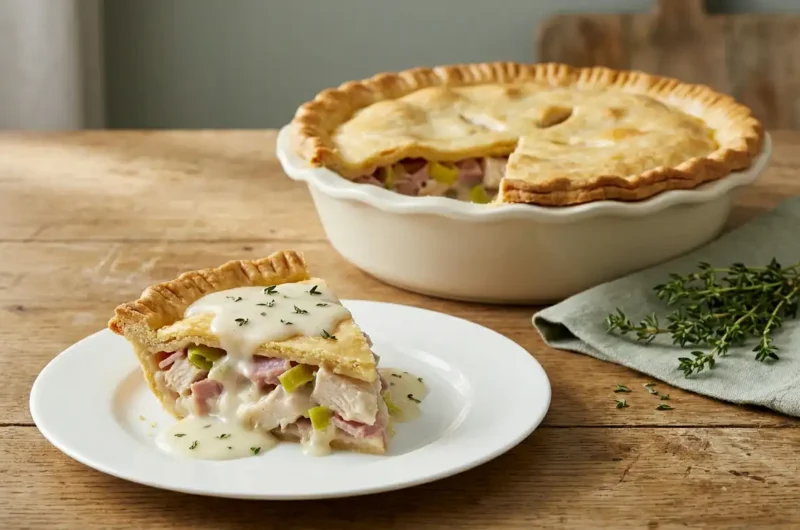
Mary Berry Chicken Ham and Leek Pie Recipe
Course: Main CourseCuisine: BritishDifficulty: Easy6
servings40
minutes50
minutes520
kcal1
hour30
minutesA deeply comforting British pie with tender chicken, salty ham, and soft leeks bound in a silky white sauce, all encased in a golden, buttery shortcrust pastry. Reliable, beginner-friendly, and perfect for a family Sunday lunch or midweek dinner.
Ingredients
280g plain flour, plus extra for dusting
140g cold unsalted butter, cut into small cubes
1 medium egg yolk
3–4 tablespoons cold water
1 pinch of salt
500g cooked chicken breast, torn into chunks
180g cooked ham, roughly chopped
2 medium leeks, trimmed, halved and sliced into half-moons
1 medium onion, finely chopped
2 garlic cloves, finely chopped
50g unsalted butter
50g plain flour
400ml whole milk, warm
150ml chicken stock
2 tablespoons crème fraîche
1 teaspoon Dijon mustard
1 tablespoon fresh thyme leaves
salt and freshly ground black pepper
1 medium egg, beaten, for egg wash
a little olive oil or butter for frying
Instructions
- Tip the flour and salt into a large bowl, add the cold butter cubes, and rub together until the mixture resembles coarse breadcrumbs. Add the egg yolk and cold water one tablespoon at a time until the dough just comes together. Flatten into a disc, wrap in cling film, and chill for at least 30 minutes.
- Heat a little olive oil or butter in a wide frying pan over medium heat. Cook the chopped onion for 5 minutes until softened, then add the garlic and leeks and cook for a further 4–5 minutes until tender. Transfer to a large bowl and leave to cool slightly.
- Melt the butter in a saucepan over moderate heat, add the flour and stir for 1–2 minutes. Remove from heat and gradually whisk in the warm milk a little at a time. Return to a gentle heat, add the chicken stock, and stir until the sauce is thick enough to coat the back of a spoon, around 6–8 minutes. Stir in the crème fraîche, Dijon mustard, and thyme leaves, then season with salt and black pepper.
- Add the cooked chicken chunks and chopped ham to the bowl with the leeks and onion. Pour over the white sauce and stir gently to combine. Taste and adjust seasoning, then tip the filling into a deep 22–24cm round pie dish. Allow the filling to cool to room temperature before topping.
- Heat the oven to 200°C (180°C fan, Gas Mark 6) and place a flat baking sheet on the middle shelf while it heats up.
- Roll the chilled pastry on a lightly floured surface to a circle about 3–4mm thick, slightly larger than the top of the pie dish. Brush the rim of the dish with beaten egg, lay the pastry over the filling, press onto the rim to seal, trim any overhang, and crimp the edges. Cut two small slits in the centre of the lid to allow steam to escape.
- Brush the pastry surface evenly with beaten egg. Place the pie on the preheated baking sheet and bake for 35–40 minutes until the pastry is deep golden and the filling is bubbling. Cover loosely with foil if the pastry browns too quickly.
- Remove the pie from the oven and leave to rest for 8–10 minutes before cutting and serving in generous wedges.
Notes
- Rest the pastry in the fridge for at least 30 minutes to prevent shrinkage during baking.
- Always cool the filling to room temperature before adding the pastry lid to avoid a soggy base.
- Add the milk to the roux gradually and whisk continuously to keep the sauce smooth and lump-free.
- Place the pie on a preheated baking sheet to help the base crisp up and the filling bubble evenly.
- If the pastry lid is browning too quickly, lay a loose sheet of foil over the top for the remainder of the bake.
- Leftover roast chicken works very well in place of plain cooked chicken breast and adds extra flavour.