Mary Berry Chicken Tagine Recipe
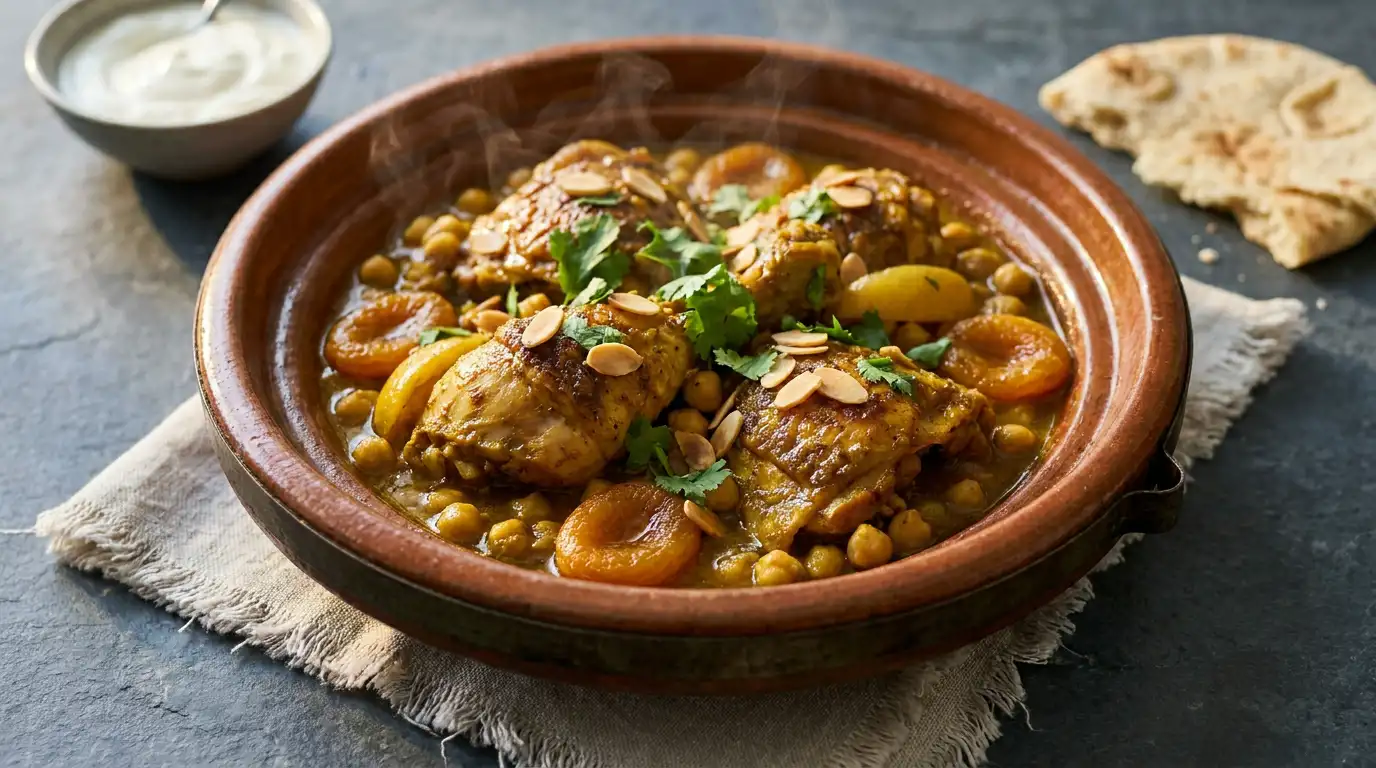
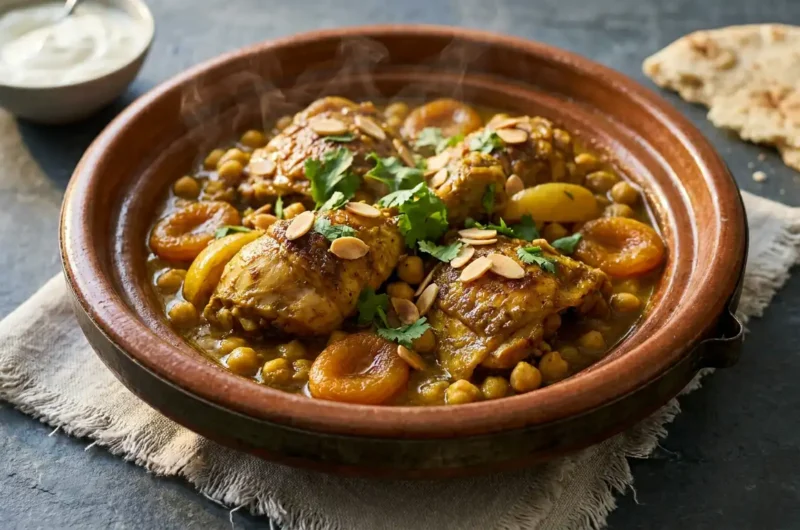
This Mary Berry chicken tagine is a warmly spiced, slow-cooked dish where tender chicken pieces absorb a rich, golden broth layered with cumin, cinnamon, and preserved lemon. The sauce thickens gradually in the pot, turning from a loose liquid into a glossy, deeply fragrant coating that clings to each piece of chicken. Soft chickpeas and sweet dried apricots add body and a gentle sweetness that balances the earthy spice.
What makes this version particularly reliable is that it uses one pot from start to finish, with no complex techniques required. The spice blend comes together quickly from pantry staples, and the long, gentle simmer does most of the work. It suits a relaxed midweek dinner as easily as it does a weekend table with guests. From start to finish, it is ready in around 1 hour 30 minutes.
Ingredients
For the chicken
- 900g bone-in chicken thighs, skin removed
- 2 tablespoons olive oil
- 1 teaspoon fine sea salt
- ½ teaspoon ground black pepper
For the spice paste
- 1 teaspoon ground cumin
- 1 teaspoon ground coriander
- 1 teaspoon ground turmeric
- 1 teaspoon smoked paprika
- ½ teaspoon ground cinnamon
- ¼ teaspoon ground ginger
- ¼ teaspoon cayenne pepper
For the tagine base
- 1 large onion, halved and thinly sliced
- 3 garlic cloves, finely chopped
- 400g tin of chopped tomatoes
- 400ml chicken stock
- 400g tin of chickpeas, drained and rinsed
- 100g dried apricots, halved
- 1 preserved lemon, skin only, finely chopped
- 1 tablespoon clear honey
To finish
- Small bunch of fresh coriander, roughly torn
- 30g flaked almonds, lightly toasted
How to Make Mary Berry Chicken Tagine
- Mix the spice paste: Combine all the spices in a small bowl with half a teaspoon of salt and a tablespoon of olive oil to form a rough paste. Rub this all over the chicken thighs and set aside for at least 15 minutes. This brief resting time allows the spices to begin penetrating the surface of the meat before cooking starts.
- Brown the chicken: Heat the remaining oil in a wide, heavy-based casserole over a medium-high heat. Add the chicken thighs and cook for 3 to 4 minutes on each side until the surface is deep golden and the spices smell fragrant. Remove the chicken to a plate.
- Soften the onion: Reduce the heat to medium and add the sliced onion to the same pan. Cook for 6 to 8 minutes, stirring occasionally, until the onion is soft, translucent, and beginning to turn golden at the edges.
- Add the garlic: Stir in the chopped garlic and cook for 1 minute until the raw smell fades. Do not allow the garlic to brown at this stage, as it will turn bitter in the finished sauce.
- Build the sauce: Pour in the tinned tomatoes and chicken stock, then stir in the chickpeas, dried apricots, preserved lemon skin, and honey. Scrape up any spiced bits stuck to the base of the pan, as these carry a lot of flavour into the broth.
- Return the chicken: Nestle the browned chicken thighs back into the sauce, ensuring they sit submerged at least halfway. Bring the liquid to a gentle simmer.
- Simmer low and slow: Cover the casserole with a tight-fitting lid, reduce the heat to low, and cook for 45 to 50 minutes until the chicken is completely tender and the sauce has reduced to a thick, glossy consistency. Check and stir halfway through.
- Finish and serve: Taste the sauce and adjust seasoning if needed. Scatter the torn coriander and toasted flaked almonds over the top just before bringing the pot to the table.
Tips for the Best Mary Berry Chicken Tagine
Why does my tagine sauce taste thin and watery?
The lid may have allowed too much steam to escape, or the heat was too high. Remove the lid for the final 10 to 15 minutes of cooking and allow the sauce to reduce uncovered. It will thicken noticeably as the liquid evaporates.
Why is my chicken dry even after the full cooking time?
Bone-in thighs are far more forgiving than breast meat in slow-cooked dishes, but if the heat is too high they can tighten up and lose moisture. Keep the simmer very gentle, with just a few bubbles breaking the surface, rather than a rolling boil.
Why does the spice flavour seem flat or dull in the finished dish?
Dried spices lose their potency over time. If the spices in your cupboard are older than six months, use slightly more than the recipe states, and make sure they are toasted briefly in the oil before the other ingredients are added.
Why does the preserved lemon taste overpowering?
Only the skin of a preserved lemon is used, not the pulp, which holds most of the intense salt. Rinse the skin under cold water before chopping it, and this will mellow the flavour considerably without losing the aromatic quality.
Why is my chicken sticking to the pan during the browning stage?
The pan needs to be properly hot before the chicken goes in. If the chicken sticks when nudged, leave it for another 30 seconds. Chicken releases naturally from a hot pan once a proper sear has formed on the surface.
Serving Suggestions
- Spoon over a bed of fluffy couscous that has been soaked in hot chicken stock for extra depth.
- Serve alongside warm flatbreads for scooping up the thick sauce from the bowl.
- Add a spoonful of natural yogurt on the side to cool the warmth of the spices at the table.
- Pair with a simple cucumber and mint salad dressed in lemon juice to cut through the richness of the broth.
- Serve in wide, shallow bowls so the golden sauce pools around the base and stays visible and inviting.
Storage
Room temperature
Leave the tagine to cool completely before storing, then transfer to an airtight container and keep at room temperature for no longer than 2 hours after cooking.
Refrigerator
Store in a lidded airtight container in the fridge for up to 3 days. Reheat gently in a saucepan over a low heat, adding a splash of water or stock to loosen the sauce, and bring to room temperature for 20 minutes before reheating for the best result.
Freezing
Allow to cool fully, then portion into freezer-safe containers or zip-lock bags, removing as much air as possible, and freeze for up to 3 months. Defrost overnight in the fridge and reheat thoroughly until piping hot all the way through before serving.
Nutrition
- Calories: 420 kcal
- Carbohydrates: 28g
- Protein: 38g
- Fat: 16g
- Saturated Fat: 3g
- Sodium: 680mg
Nutrition values are estimates and may vary depending on the specific ingredients and portion sizes used.
FAQs
Can I use chicken breast instead of chicken thighs in this tagine?
Chicken breast can be used, but it is more prone to drying out over long cooking times. If using breast, reduce the simmering time to around 25 to 30 minutes and check for doneness early, as the texture will change quickly once cooked through.
Can I make this chicken tagine the day before serving?
This dish actually improves overnight as the spices continue to develop in the sauce. Cook it fully, cool completely, refrigerate, and reheat gently the next day. The flavour will be noticeably deeper and more rounded.
Can I use dried lemon instead of preserved lemon in this recipe?
Dried lemon is not a direct substitute, as preserved lemon brings a fermented, floral quality that dried lemon cannot replicate. A good alternative is a teaspoon of lemon zest combined with half a teaspoon of extra salt, which gives a brighter citrus note rather than the mellow depth of preserved lemon.
Can I cook this chicken tagine in a slow cooker?
Yes. Brown the chicken and soften the onion in a frying pan first, then transfer everything to the slow cooker. Cook on low for 6 to 7 hours or on high for 3 to 4 hours. Remove the lid for the final 30 minutes on high if the sauce needs thickening.
Can I add vegetables to this chicken tagine recipe?
Root vegetables such as butternut squash, carrots, or parsnips work very well. Cut them into chunky pieces and add them to the pot at the same time as the chickpeas, so they cook through during the simmering stage without becoming too soft.
Conclusion
This Mary Berry chicken tagine brings together bold North African spices, tender bone-in chicken, plump chickpeas, and sweet apricots in a single pot that does nearly all the work for you. The result is a glossy, warmly spiced broth with layers of cumin, cinnamon, and preserved lemon that deepen over the cooking time. This recipe yields 4 generous servings, making it ideal for a family dinner or a small gathering.
Whether prepared on a weeknight or cooked ahead for a relaxed weekend meal, the tagine holds well and improves with time. The steps are straightforward, the spice blend is built from everyday cupboard ingredients, and the one-pot method keeps washing up to a minimum. If you try this recipe, leave a comment below with how it went, or share it with someone who would enjoy a flavourful midweek dinner. If you enjoyed this, you might also like the Mary Berry Baileys Cheesecake Recipe for a rich and indulgent dessert to follow.
Mary Berry Chicken Tagine Recipe
Course: Main CourseCuisine: North AfricanDifficulty: Easy4
servings20
minutes1
hour10
minutes420
kcal1
hour30
minutesA warmly spiced, slow-cooked chicken tagine with tender bone-in thighs, chickpeas, dried apricots, and preserved lemon in a rich, glossy broth. Made in one pot with everyday spices, it is beginner-friendly and ideal for midweek dinners or relaxed weekend meals.
Ingredients
900g bone-in chicken thighs, skin removed
2 tablespoons olive oil
1 teaspoon fine sea salt
half teaspoon ground black pepper
1 teaspoon ground cumin
1 teaspoon ground coriander
1 teaspoon ground turmeric
1 teaspoon smoked paprika
half teaspoon ground cinnamon
quarter teaspoon ground ginger
quarter teaspoon cayenne pepper
1 large onion, halved and thinly sliced
3 garlic cloves, finely chopped
400g tin of chopped tomatoes
400ml chicken stock
400g tin of chickpeas, drained and rinsed
100g dried apricots, halved
1 preserved lemon, skin only, finely chopped
1 tablespoon clear honey
small bunch of fresh coriander, roughly torn
30g flaked almonds, lightly toasted
Instructions
- Combine all the spices in a small bowl with half a teaspoon of salt and a tablespoon of olive oil to form a rough paste. Rub this all over the chicken thighs and set aside for at least 15 minutes.
- Heat the remaining oil in a wide, heavy-based casserole over a medium-high heat. Add the chicken thighs and cook for 3 to 4 minutes on each side until deep golden. Remove the chicken to a plate.
- Reduce the heat to medium and add the sliced onion to the same pan. Cook for 6 to 8 minutes, stirring occasionally, until soft, translucent, and beginning to turn golden at the edges.
- Stir in the chopped garlic and cook for 1 minute until the raw smell fades.
- Pour in the tinned tomatoes and chicken stock, then stir in the chickpeas, dried apricots, preserved lemon skin, and honey. Scrape up any spiced bits from the base of the pan.
- Nestle the browned chicken thighs back into the sauce, ensuring they sit submerged at least halfway. Bring the liquid to a gentle simmer.
- Cover the casserole with a tight-fitting lid, reduce the heat to low, and cook for 45 to 50 minutes until the chicken is completely tender and the sauce has reduced to a thick, glossy consistency. Stir halfway through.
- Taste the sauce and adjust seasoning if needed. Scatter torn coriander and toasted flaked almonds over the top just before serving.
Notes
- Rest the spice-rubbed chicken for at least 15 minutes before browning for deeper flavour penetration.
- Keep the simmer very gentle throughout to prevent the chicken from drying out.
- Remove the lid for the final 10 to 15 minutes if the sauce needs further thickening.
- Use only the skin of the preserved lemon, not the pulp, and rinse it before chopping to reduce saltiness.
- Spices older than six months should be increased slightly as they lose potency over time.
- This dish improves overnight as the spices continue to develop in the sauce.