Mary Berry Vegetable Curry Recipe
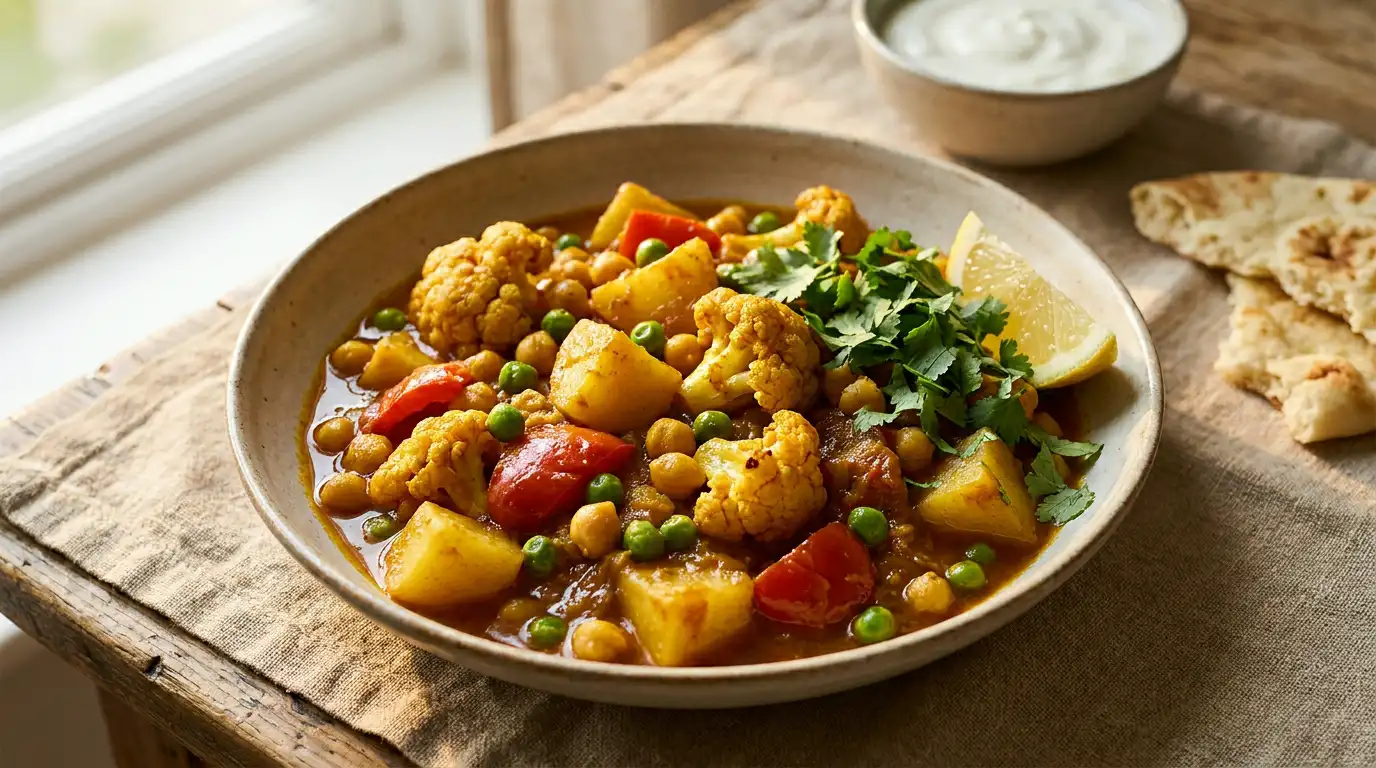
This vegetable curry is a warmly spiced, golden-sauced dish with tender chunks of potato, soft chickpeas, and sweet red pepper sitting in a thick, fragrant tomato base. The spices bloom into a deep, earthy aroma, and the sauce clings to each vegetable rather than sitting watery at the bottom of the pan. This Mary Berry vegetable curry recipe keeps everything straightforward, using a short list of everyday spices rather than a lengthy blend, making it approachable for weeknight cooking. It works equally well as a meat-free main for the family or as a side alongside grilled chicken. From start to finish, it is ready in around 45 minutes.
What sets this version apart is its balance. The heat is gentle enough for the whole table, but the depth of flavour from toasted cumin and coriander means nothing tastes flat or thin. It is the kind of curry that tastes as though it has been simmering for far longer than it actually has.
Ingredients
For the curry base
- 2 tbsp sunflower oil
- 1 large onion, finely chopped
- 3 garlic cloves, crushed
- 1 thumb-sized piece of fresh ginger, peeled and grated
- 1 tsp ground cumin
- 1 tsp ground coriander
- 1 tsp turmeric
- 1 tsp garam masala
- half tsp mild chilli powder
- 400g tin chopped tomatoes
- 200ml vegetable stock
- 1 tsp caster sugar
- salt and black pepper, to season
For the vegetables
- 2 medium potatoes (approximately 350g), peeled and cut into 2cm cubes
- 1 large red pepper, deseeded and cut into chunks
- 200g cauliflower, broken into small florets
- 400g tin chickpeas, drained and rinsed
- 100g frozen peas
To finish
- small handful of fresh coriander, roughly chopped
- juice of half a lemon
How to Make Mary Berry Vegetable Curry
- Soften the onion: Heat the sunflower oil in a large, deep frying pan or wide saucepan over a medium heat. Add the chopped onion and cook for 8 to 10 minutes, stirring occasionally, until it turns soft and pale golden. Taking the time to properly soften the onion builds a sweet, gentle foundation for the sauce.
- Add the garlic and ginger: Stir in the crushed garlic and grated ginger and cook for 1 minute, keeping the heat at medium so neither catches and turns bitter.
- Toast the spices: Add the ground cumin, ground coriander, turmeric, garam masala, and chilli powder directly to the pan. Stir continuously for about 60 seconds until the spices are fragrant and coat the onion mixture evenly. This brief toasting step deepens the flavour considerably compared to adding spices straight into liquid.
- Build the sauce: Pour in the chopped tomatoes and vegetable stock, then stir in the caster sugar and a generous pinch of salt. Bring the mixture to a gentle simmer and stir well to combine everything evenly.
- Cook the potatoes and cauliflower: Add the cubed potato and cauliflower florets to the sauce. Stir to coat, then cover the pan with a lid and simmer over a low to medium heat for 15 minutes, stirring occasionally, until the potato is just starting to become tender when tested with a knife.
- Add the remaining vegetables: Remove the lid and add the red pepper chunks and the drained chickpeas. Stir gently, then continue to cook uncovered for a further 8 to 10 minutes until the pepper has softened and the sauce has thickened slightly around the vegetables.
- Stir in the peas: Add the frozen peas and cook for 2 to 3 minutes until they are heated through and bright green. There is no need to defrost them first; they will cool the sauce very briefly, so keep the heat on until everything is piping hot.
- Finish and season: Squeeze over the lemon juice and scatter the fresh coriander across the top. Taste and adjust the seasoning with salt and pepper before serving.
Tips for the Best Vegetable Curry
Why does my curry sauce taste thin and watery?
This usually happens when the lid is left on throughout cooking. Remove the lid for the final 8 to 10 minutes so excess moisture can evaporate and the sauce reduces to a thicker, clingier consistency.
Why do my potatoes stay hard even after the cooking time?
The potato cubes are likely too large. Cut them no bigger than 2cm so they cook through in the time given. If they are still firm when you add the red pepper, replace the lid and give them an extra 5 minutes before continuing.
Why does my curry taste flat even though I followed the quantities?
The spices may not have been toasted long enough in step three. If the raw spice smell is still present when you add the tomatoes, the flavour will be muted. The spices need a full 60 seconds in a dry-ish pan to bloom properly.
How do I stop the garlic from burning when I add it to the pan?
Keep the heat at medium, not high, when adding the garlic and ginger. They only need one minute, and a high heat will turn them acrid very quickly. If the pan feels too hot, take it off the heat briefly before adding them.
Why does my curry look very orange rather than the deep golden colour I expect?
This is often because the onion was not cooked for long enough before the spices were added. A properly softened, lightly golden onion gives the sauce its richer, amber tone. Rushing this stage keeps the base pale and the sauce too sharp-tasting.
Serving Suggestions
- Spoon over basmati rice that has been cooked with a cardamom pod and a pinch of salt for a subtly fragrant base.
- Serve alongside warm naan bread or chapattis to scoop up the thick sauce from the sides of the bowl.
- Add a spoonful of natural yogurt on top of each portion to cool the spice and add a creamy contrast to the tomato-based sauce.
- Pile into a bowl with a wedge of lemon on the side for squeezing at the table, brightening the overall flavour of each serving.
- Offer mango chutney as a condiment alongside for a sweet, sticky counterpoint to the earthy spices in the curry.
Storage
Room temperature
Leave the curry to cool completely, then store in an airtight container at room temperature for no longer than 2 hours before refrigerating or freezing.
Refrigerator
Transfer to an airtight container and refrigerate for up to 3 days. Reheat thoroughly in a saucepan over a medium heat, adding a small splash of water or stock if the sauce has thickened too much overnight, and bring to a full simmer before serving.
Freezing
Portion the cooled curry into freezer-safe containers or zip-lock bags, removing as much air as possible, and freeze for up to 3 months. Defrost overnight in the fridge and reheat gently on the hob until piping hot throughout, stirring well to bring the sauce back together.
Nutrition
- Calories: 285 kcal
- Carbohydrates: 38g
- Protein: 11g
- Fat: 9g
- Saturated Fat: 1g
- Sodium: 420mg
Nutrition values are estimates and may vary depending on the specific ingredients and brands used, as well as the serving size.
FAQs
Can I use sweet potato instead of regular potato in this vegetable curry?
Yes, sweet potato works well here and will give the sauce a slightly sweeter, richer flavour. Cut it into the same 2cm cubes and add it at the same stage, but check for tenderness a few minutes earlier as sweet potato tends to soften a little faster than regular potato.
Can I make this vegetable curry ahead of time?
This curry actually improves overnight as the spices continue to develop. Make it up to a day ahead, cool it completely, refrigerate it in a covered container, and reheat gently on the hob before serving. Add a small splash of stock when reheating if the sauce has thickened too much.
Can I add spinach to this Mary Berry vegetable curry?
Yes, a large handful of fresh spinach can be stirred through at the very end of cooking, just before the lemon juice. It wilts in about 60 seconds over the residual heat and adds colour and a mild, earthy note to the finished dish.
Is this vegetable curry suitable for a vegan diet?
As written, the recipe contains no dairy, eggs, or meat, so it is suitable for vegans. Just check the label on your vegetable stock, as some brands include small amounts of dairy or other non-vegan ingredients.
Can I use curry paste instead of individual spices in this recipe?
A mild or medium curry paste can be used as a substitute. Replace the individual ground spices with 2 tablespoons of your chosen paste and stir it into the softened onion in place of step three. The flavour profile will differ slightly depending on the paste used, but the method remains the same.
Conclusion
This Mary Berry vegetable curry recipe delivers a deeply flavoured, satisfying meal using straightforward techniques and a manageable ingredient list. The combination of toasted spices, tender potato and cauliflower, and protein-rich chickpeas in a thick tomato sauce makes for a well-rounded dish that holds its own as a complete meal. This recipe yields 4 generous servings, making it ideal for a family dinner or for batch cooking across the week.
Whether cooking for a meat-free Monday or simply looking for a reliable, crowd-friendly curry, this recipe covers it. If you give it a try, leave a comment below with how it turned out or any vegetables you swapped in. Sharing the recipe with friends or saving it for later is always appreciated. If you enjoyed this, you might also like the Mary Berry Dijon Chicken Recipe for another reliable, flavour-forward main course with a classic British touch.
Mary Berry Vegetable Curry Recipe
Course: Main CourseCuisine: BritishDifficulty: Easy4
servings15
minutes30
minutes285
kcal45
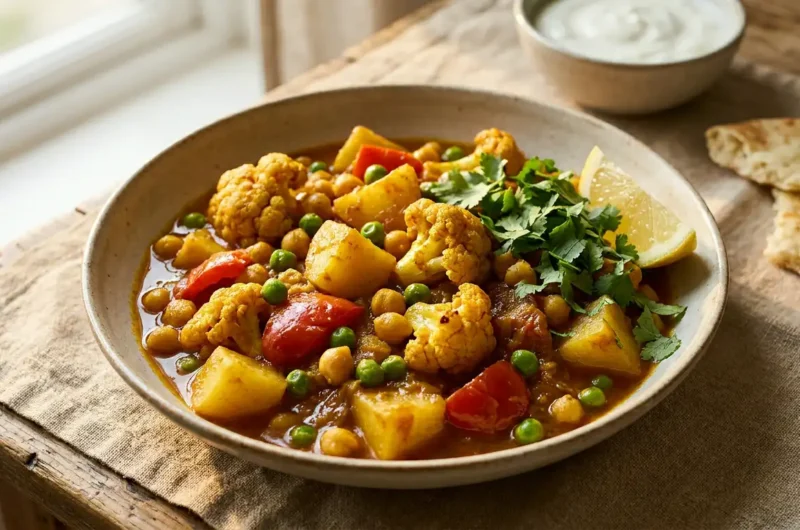
minutesA warmly spiced vegetable curry with tender potatoes, cauliflower, chickpeas and red pepper in a thick, fragrant tomato sauce. Beginner-friendly, meat-free and ready in 45 minutes.
Ingredients
2 tbsp sunflower oil
1 large onion, finely chopped
3 garlic cloves, crushed
1 thumb-sized piece of fresh ginger, peeled and grated
1 tsp ground cumin
1 tsp ground coriander
1 tsp turmeric
1 tsp garam masala
half tsp mild chilli powder
400g tin chopped tomatoes
200ml vegetable stock
1 tsp caster sugar
salt and black pepper, to season
2 medium potatoes (approximately 350g), peeled and cut into 2cm cubes
1 large red pepper, deseeded and cut into chunks
200g cauliflower, broken into small florets
400g tin chickpeas, drained and rinsed
100g frozen peas
small handful of fresh coriander, roughly chopped
juice of half a lemon
Instructions
- Heat the sunflower oil in a large, deep frying pan or wide saucepan over a medium heat. Add the chopped onion and cook for 8 to 10 minutes, stirring occasionally, until soft and pale golden.
- Stir in the crushed garlic and grated ginger and cook for 1 minute over a medium heat.
- Add the ground cumin, ground coriander, turmeric, garam masala, and chilli powder to the pan. Stir continuously for about 60 seconds until the spices are fragrant and coat the onion mixture evenly.
- Pour in the chopped tomatoes and vegetable stock, then stir in the caster sugar and a generous pinch of salt. Bring to a gentle simmer and stir well to combine.
- Add the cubed potato and cauliflower florets to the sauce. Stir to coat, cover with a lid and simmer over a low to medium heat for 15 minutes, stirring occasionally, until the potato is just starting to become tender.
- Remove the lid and add the red pepper chunks and drained chickpeas. Cook uncovered for a further 8 to 10 minutes until the pepper has softened and the sauce has thickened slightly.
- Add the frozen peas and cook for 2 to 3 minutes until heated through and bright green.
- Squeeze over the lemon juice and scatter the fresh coriander across the top. Taste and adjust the seasoning with salt and pepper before serving.
Notes
- Cook the onion fully before adding spices to build a sweeter, deeper sauce base.
- Toast the spices for a full 60 seconds so the raw spice smell disappears before adding liquid.
- Remove the lid for the final 8 to 10 minutes to allow the sauce to thicken properly.
- Cut potatoes no larger than 2cm cubes so they cook through in the given time.
- A squeeze of lemon juice added at the end brightens the overall flavour of the finished curry.
- Stir in a large handful of fresh spinach at the very end for added colour and nutrition.