Mary Berry Panang Chicken Recipe
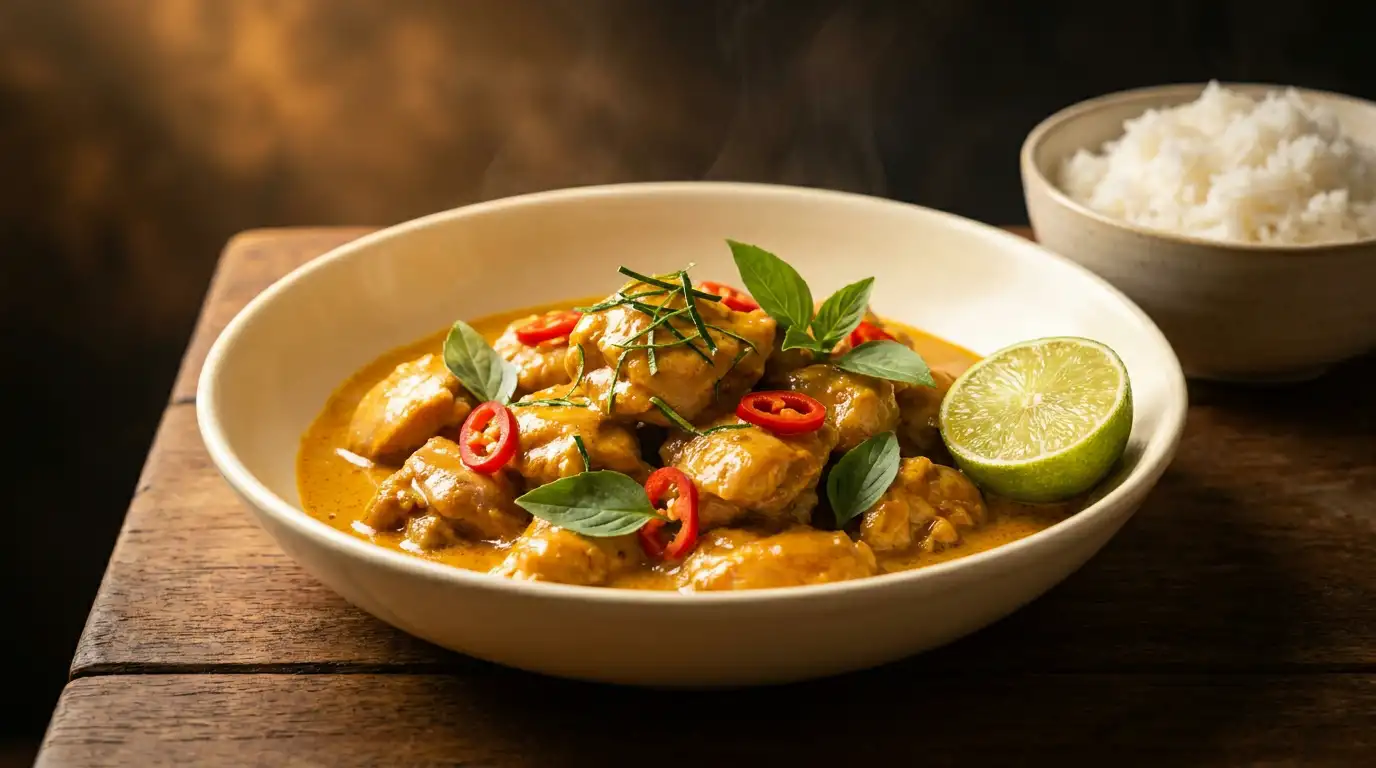
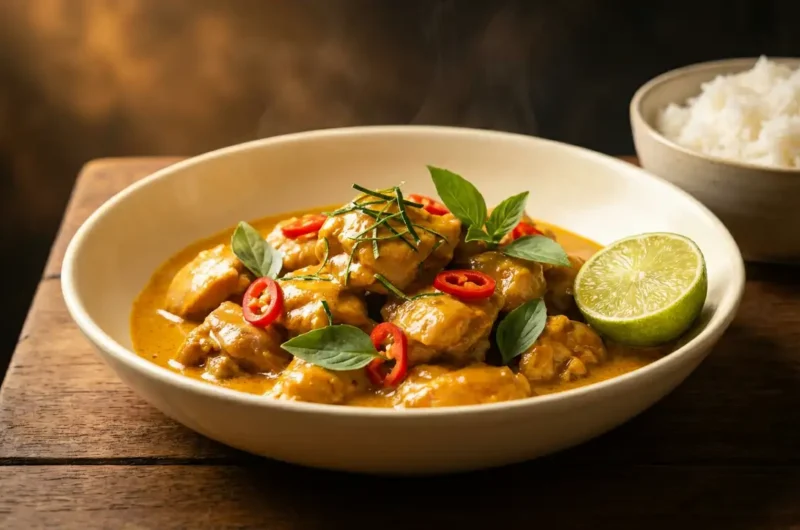
Mary Berry Panang Chicken is a thick, deeply aromatic curry with a velvety coconut base, warming spice, and tender pieces of chicken that hold their shape through cooking. The sauce clings to each piece, rich with the nutty depth of peanut and the faint sweetness of palm sugar, finishing with a gentle heat that builds slowly rather than hitting all at once.
What makes this version reliable is the straightforward method, which skips complicated pastes made from scratch and instead uses a good-quality shop-bought Panang paste as the base. The result is a fragrant, restaurant-style curry that works equally well on a busy weeknight or as part of a relaxed dinner with friends. From start to finish, it is ready in around 45 minutes.
Ingredients
For the chicken
- 600g boneless, skinless chicken thighs, cut into 4cm pieces
- 1 tablespoon vegetable oil
- 2 tablespoons Panang curry paste
- 400ml full-fat coconut milk
- 100ml chicken stock
- 2 tablespoons fish sauce
- 1 tablespoon palm sugar or soft light brown sugar
- 2 tablespoons smooth peanut butter
- 4 fresh kaffir lime leaves, central rib removed, thinly sliced
- 1 red chilli, thinly sliced (optional, for serving)
For the aromatics
- 3 garlic cloves, finely grated
- 1 thumb-sized piece of fresh ginger, peeled and finely grated
- 1 lemongrass stalk, outer layers removed, finely chopped
To serve
- 400g jasmine rice, cooked to packet instructions
- Small handful of fresh Thai basil or coriander leaves
- Lime wedges
How to Make Mary Berry Panang Chicken Recipe
- Prepare the aromatics: Grate the garlic and ginger directly into a small bowl, then add the finely chopped lemongrass and set aside. Having these ready before the pan goes on prevents the paste from over-cooking while you scramble to prepare.
- Heat the oil: Pour the vegetable oil into a wide, heavy-based pan or wok and set over a medium-high heat. Wait until the oil shimmers before adding anything, which takes about one minute.
- Fry the curry paste: Add the Panang paste and the prepared aromatics to the hot oil. Stir constantly for 1 to 2 minutes until the mixture is fragrant and the paste has darkened slightly in colour. This step blooms the spices and releases their essential oils into the fat, which is what gives the finished sauce its depth.
- Add the coconut milk and stock: Pour in the coconut milk and chicken stock, stirring to combine everything into a smooth, golden-orange sauce. Bring to a gentle simmer over a medium heat.
- Stir in the peanut butter and seasoning: Add the peanut butter, fish sauce, and palm sugar. Stir well until the peanut butter has fully dissolved into the sauce. Taste at this point and adjust the fish sauce or sugar to balance the saltiness and sweetness.
- Cook the chicken: Add the chicken thigh pieces in a single layer and turn them to coat in the sauce. Simmer uncovered for 18 to 20 minutes, turning the pieces once halfway through, until the chicken is cooked through and the sauce has reduced to a thick, glossy consistency.
- Add the kaffir lime leaves: Scatter the sliced kaffir lime leaves into the pan for the final 3 minutes of cooking. They soften slightly and release a clean, citrus-floral fragrance that lifts the richness of the coconut base.
- Rest and serve: Remove the pan from the heat and leave to stand for 2 minutes before serving. Spoon over jasmine rice and top with fresh Thai basil or coriander, sliced red chilli, and a wedge of lime on the side.
Tips for the Best Mary Berry Panang Chicken Recipe
Why does my Panang curry sauce look greasy and split?
This usually happens when the heat is too high during the initial coconut milk stage. Keep the heat at a steady medium and avoid boiling the sauce aggressively. If it does split, remove from the heat, stir in a splash of cold coconut milk, and continue on a lower setting.
Why is my sauce too thin after cooking?
The sauce needs to be simmered uncovered so that steam can escape and the liquid reduces properly. If it still looks thin after 20 minutes, increase the heat slightly and simmer for a further 5 minutes, stirring regularly to prevent the bottom from catching.
Why does my chicken turn out dry even after following the timings?
Chicken breast is the likely cause. Breast meat loses moisture quickly in a simmering sauce, whereas thigh remains tender and moist. Stick to boneless thighs and cut them no smaller than 4cm to prevent them from overcooking.
Why is my curry too sweet or too salty?
The balance of fish sauce, palm sugar, and peanut butter varies between brands of Panang paste, so always taste before serving. Add fish sauce in small increments for more salt, or a small pinch of extra sugar to round off sharpness, not to make it taste sweet.
Why does my finished curry lack fragrance?
The kaffir lime leaves must be very finely shredded after the central rib is removed. If the rib is left in or the leaves are added whole, they release very little aroma into the sauce. Adding them in the final few minutes, not at the start, also preserves their freshness.
Serving Suggestions
- Spoon over steamed jasmine rice, which absorbs the thick coconut sauce without becoming soggy.
- Serve alongside a simple cucumber salad dressed with rice vinegar and sesame oil to cut through the richness.
- Pair with roti or flatbread for a more informal table setting where guests can tear and scoop.
- Offer small bowls of sliced fresh chilli, lime wedges, and extra Thai basil so each person can adjust heat and freshness at the table.
- Serve as part of a spread with a light Thai-style broth or spring rolls for a more generous dinner party main course.
Storage
Room Temperature
Store any leftover curry in an airtight container at room temperature for no longer than 2 hours before refrigerating.
Refrigerator
Transfer to an airtight container and refrigerate for up to 3 days. Reheat gently in a saucepan over a low-medium heat, stirring occasionally and adding a small splash of coconut milk or water if the sauce has thickened too much on standing. Bring to room temperature for 15 minutes before reheating for the most even result.
Freezing
Allow the curry to cool completely, then transfer to a freezer-safe container or zip-lock bag, pressing out as much air as possible, and freeze for up to 2 months. Defrost overnight in the refrigerator and reheat thoroughly in a saucepan until steaming hot throughout before serving.
Nutrition
- Calories: 420 kcal
- Carbohydrates: 12g
- Protein: 34g
- Fat: 27g
- Saturated Fat: 16g
- Sodium: 820mg
Nutrition values are estimates and may vary depending on the specific ingredients and brands used, as well as the portion size served.
FAQs
Can I use chicken breast instead of chicken thighs in this recipe?
Chicken breast can be used but it needs careful handling. Cut it into slightly larger chunks and reduce the simmering time to around 12 to 14 minutes to avoid the meat becoming dry and stringy. Thighs are the more forgiving choice for a curry sauce.
Can I make Panang curry paste from scratch instead of using shop-bought?
A homemade paste made from dried Kashmiri chillies, galangal, lemongrass, coriander root, cumin, and shrimp paste will give a more complex, layered flavour. However, a good-quality shop-bought paste, such as Mae Ploy or Maesri, produces a very reliable and deeply flavoured result with far less preparation time.
Can I make this Panang chicken curry ahead of time?
The curry actually improves overnight as the spices continue to develop. Make the full recipe up to a day in advance, cool and refrigerate it, then reheat gently before serving. Add the fresh Thai basil and lime only just before bringing it to the table.
Can I make this recipe suitable for a dairy-free diet?
This recipe contains no dairy ingredients as written. Full-fat coconut milk is the only creamy element, so no substitutions are needed. Always check the label on your curry paste, as some brands include shrimp paste, which is not suitable for vegans or those with shellfish allergies.
Can I use light coconut milk to reduce the fat content?
Light coconut milk can be used, but the sauce will be noticeably thinner and less rich in flavour. To compensate, simmer the sauce for a few extra minutes uncovered to help it reduce and concentrate. The texture will not be as velvety as the full-fat version.
Conclusion
This Mary Berry Panang Chicken Recipe brings together a thick, aromatic coconut sauce, well-seasoned chicken thighs, and the clean brightness of kaffir lime in a dish that is straightforward enough for a midweek meal but impressive enough for guests. The balance of heat, sweetness, and savoury depth is what makes Panang curry so satisfying, and this method gives you full control over each of those elements. The recipe yields 4 servings when paired with jasmine rice.
Give this recipe a try and leave a comment below to share how it turned out. If you adjusted the heat level or found a clever twist, others would love to hear about it. Share this recipe with anyone who enjoys bold, comforting flavours at home. If you enjoyed this, you might also like the Mary Berry Raspberry and White Chocolate Cake Recipe for a beautifully indulgent bake to follow a savoury meal.
Mary Berry Panang Chicken Recipe
Course: Main CourseCuisine: ThaiDifficulty: Easy4
servings15
minutes30
minutes420
kcal45
minutesA thick, aromatic coconut curry with tender chicken thighs, peanut butter, and kaffir lime. Rich, gently spiced, and ready in 45 minutes for a weeknight or dinner party.
Ingredients
600g boneless skinless chicken thighs cut into 4cm pieces
1 tablespoon vegetable oil
2 tablespoons Panang curry paste
400ml full-fat coconut milk
100ml chicken stock
2 tablespoons fish sauce
1 tablespoon palm sugar or soft light brown sugar
2 tablespoons smooth peanut butter
4 fresh kaffir lime leaves central rib removed thinly sliced
1 red chilli thinly sliced optional for serving
3 garlic cloves finely grated
1 thumb-sized piece of fresh ginger peeled and finely grated
1 lemongrass stalk outer layers removed finely chopped
400g jasmine rice cooked to packet instructions
small handful of fresh Thai basil or coriander leaves
lime wedges
Instructions
- Grate the garlic and ginger into a small bowl, add the finely chopped lemongrass, and set aside.
- Pour the vegetable oil into a wide heavy-based pan or wok and set over a medium-high heat until the oil shimmers.
- Add the Panang paste and prepared aromatics to the hot oil and stir constantly for 1 to 2 minutes until fragrant and the paste has darkened slightly in colour.
- Pour in the coconut milk and chicken stock, stirring to combine into a smooth sauce, then bring to a gentle simmer over a medium heat.
- Add the peanut butter, fish sauce, and palm sugar, stirring until the peanut butter has fully dissolved, then taste and adjust seasoning.
- Add the chicken thigh pieces in a single layer, turn to coat in the sauce, and simmer uncovered for 18 to 20 minutes turning once halfway until cooked through and the sauce is thick and glossy.
- Scatter the sliced kaffir lime leaves into the pan for the final 3 minutes of cooking.
- Remove from the heat, leave to stand for 2 minutes, then spoon over jasmine rice and top with Thai basil or coriander, sliced red chilli, and lime wedges.
Notes
- Use chicken thighs rather than breast for a tender, moist result in the sauce.
- Always fry the curry paste in oil before adding liquid to bloom the spices properly.
- Taste the sauce after adding fish sauce and sugar and adjust the balance before adding the chicken.
- Remove the central rib from kaffir lime leaves and slice them very finely for maximum fragrance.
- Simmer the sauce uncovered so it reduces to a thick, glossy consistency.
- Mae Ploy or Maesri are reliable shop-bought Panang paste brands for this recipe.