Mary Berry Thai Chicken Curry Recipe
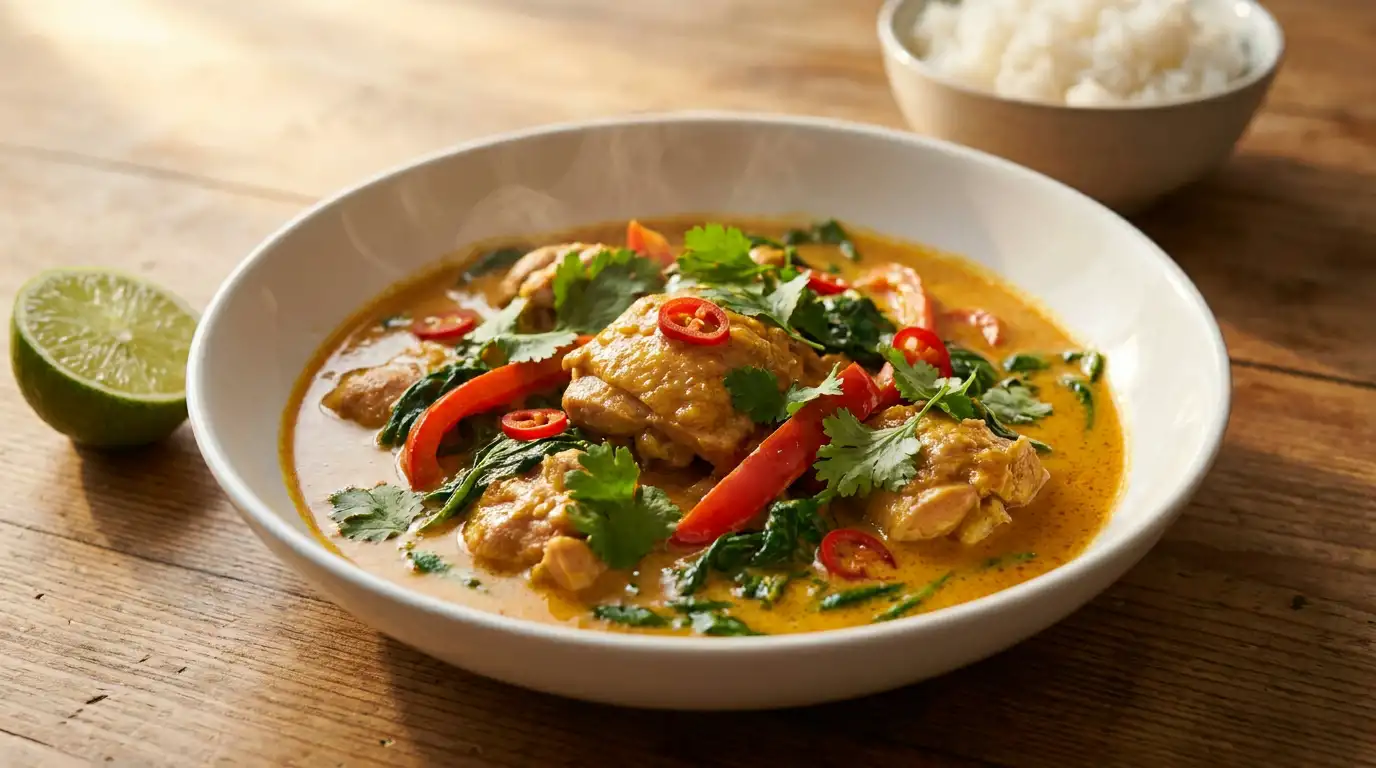
This Thai chicken curry is a fragrant, golden-sauced dish with tender pieces of chicken simmered in a smooth coconut milk base, laced with lemongrass, ginger, and a gentle heat from red curry paste. The sauce has a silky, slightly thick consistency that clings to each piece of chicken, carrying layers of citrus, warmth, and a subtle sweetness from the coconut.
What sets this version apart is its straightforward method. There is no complicated technique involved, and the ingredients are easy to source from any large supermarket. It works equally well for a midweek family dinner or a casual gathering, scaling up without any fuss. From start to finish, it is ready in around 50 minutes.
Ingredients
For the curry
- 600g boneless, skinless chicken thighs, cut into 3cm pieces
- 2 tbsp vegetable oil
- 1 medium onion, finely sliced
- 3 garlic cloves, finely grated
- 1 tbsp fresh ginger, finely grated
- 2 tbsp Thai red curry paste
- 1 stalk lemongrass, bruised and halved
- 400ml full-fat coconut milk
- 150ml chicken stock
- 1 tbsp fish sauce
- 1 tsp soft light brown sugar
- 4 kaffir lime leaves, torn (fresh or dried)
- 1 red pepper, deseeded and thinly sliced
- 100g baby spinach
To finish
- Juice of half a lime
- Small handful of fresh coriander, roughly chopped
- 1 red chilli, thinly sliced (optional)
To serve
- 350g jasmine rice, cooked according to packet instructions
How to Make Mary Berry Thai Chicken Curry Recipe
- Prepare the chicken: Pat the chicken thigh pieces dry with kitchen paper and season lightly with salt. Drying the surface helps the chicken colour rather than steam when it hits the hot pan.
- Soften the aromatics: Heat the vegetable oil in a wide, heavy-based pan over a medium heat. Add the sliced onion and cook for 6 to 8 minutes, stirring occasionally, until softened and just beginning to turn golden at the edges.
- Build the base: Add the grated garlic, ginger, and Thai red curry paste to the pan. Stir everything together and cook for 2 minutes. The paste will darken slightly and the kitchen will fill with a rich, spiced aroma as the raw garlic and ginger cook through.
- Brown the chicken: Increase the heat to medium-high and add the chicken pieces. Stir to coat them in the paste mixture and cook for 3 to 4 minutes, turning occasionally, until the chicken is sealed and lightly coloured on the outside.
- Add the liquids: Pour in the coconut milk and chicken stock, then add the lemongrass, kaffir lime leaves, fish sauce, and brown sugar. Stir well and bring the mixture to a gentle simmer.
- Simmer the curry: Reduce the heat to low, cover loosely, and cook for 18 to 20 minutes, stirring occasionally, until the chicken is cooked through and the sauce has reduced to a coating consistency. A loose cover allows some steam to escape, which concentrates the flavour without drying the sauce out.
- Add the vegetables: Stir in the sliced red pepper and cook for a further 4 minutes. Add the baby spinach and stir gently until just wilted, about 1 minute.
- Finish and taste: Remove the lemongrass stalk. Squeeze in the lime juice, scatter over the fresh coriander, and taste for seasoning. Add a little more fish sauce if it needs salt, or a small squeeze of extra lime if it needs brightness.
Tips for the Best Mary Berry Thai Chicken Curry
Why does my curry sauce taste thin and watery?
This usually happens when the lid is kept on too tightly throughout cooking. Keep the pan only loosely covered so some liquid can evaporate and the sauce can reduce. If the sauce still looks too loose at the end of cooking, simply remove the lid entirely and simmer for a further 5 minutes on a low heat.
Why is my curry paste catching and burning on the bottom of the pan?
Curry paste burns quickly if the heat is too high or the pan is too dry. Keep the heat at medium when frying the paste and stir continuously for those first 2 minutes. If you notice it sticking, add a small splash of water or coconut milk before adding the chicken.
Why does my curry taste too salty?
Fish sauce is already quite salty, and some curry pastes contain salt too. Add the fish sauce gradually, starting with half the quantity, and taste before adding more. The brown sugar and lime juice at the end also help balance any excess saltiness.
Why is my chicken tough after cooking?
Chicken breast cooked at too high a temperature or for too long tends to become dry and tight. Using chicken thighs, as this recipe specifies, gives much more forgiving results. Thighs remain tender even if slightly overcooked, and they absorb the sauce far more effectively than breast meat.
Why does the coconut milk split and look grainy in the pan?
Coconut milk can separate if it is boiled hard rather than simmered gently. Once the liquid is in the pan, reduce the heat so the surface is barely bubbling. Full-fat coconut milk is also considerably more stable than reduced-fat versions, which tend to split more easily under heat.
Serving Suggestions
- Serve over freshly cooked jasmine rice, which absorbs the coconut sauce cleanly and complements the citrus notes in the curry.
- Offer warm flatbreads or naan alongside for scooping, which makes this a relaxed, informal meal for four.
- Spoon into deep bowls and top with extra fresh coriander, a wedge of lime, and thin slices of red chilli for a vibrant finish.
- Pair with a light cucumber and rice vinegar salad on the side to cut through the richness of the coconut milk base.
- Serve with a cold glass of lager or a sparkling water with fresh mint, both of which sit well against the gentle heat of the curry paste.
Storage
Room temperature
Leave the curry to cool fully, then transfer to an airtight container and store at room temperature for no more than 2 hours before refrigerating.
Refrigerator
Store the cooled curry in a sealed airtight container in the fridge for up to 3 days. Reheat gently in a saucepan over a low heat, stirring occasionally, and bring to room temperature for about 15 minutes before reheating to help it warm through evenly without the edges overcooking.
Freezing
Transfer completely cooled portions into freezer-safe containers or zip-lock bags, removing as much air as possible, and freeze for up to 2 months. Defrost overnight in the fridge and reheat gently in a pan with a small splash of water or coconut milk to loosen the sauce back to its original consistency.
Nutrition
- Calories: 420 kcal
- Carbohydrates: 14g
- Protein: 36g
- Fat: 25g
- Saturated Fat: 16g
- Sodium: 620mg
Nutrition values are estimates and may vary depending on the exact ingredients and brands used, as well as the serving size.
FAQs
Can I use chicken breast instead of chicken thighs?
Yes, chicken breast can be used, but reduce the simmering time to around 12 to 14 minutes to avoid it becoming dry and stringy. Cut the breast into slightly larger pieces than you would thighs, as they cook faster and smaller pieces toughen quickly in a hot sauce.
Can I use green curry paste instead of red?
Green curry paste works well here and gives a fresher, more herbal flavour with a sharper heat compared to the deeper, slightly smoky notes of red paste. Use the same quantity, but taste as you go as green pastes can vary considerably in heat level between brands.
Can I make this Thai chicken curry ahead of time?
This curry actually improves overnight as the spices continue to develop in the sauce. Make it a day ahead, cool it quickly, and refrigerate. Add the fresh coriander and lime juice just before serving rather than during initial cooking, so both stay bright and vibrant.
Can I make this recipe suitable for a gluten-free diet?
Most Thai red curry pastes and fish sauces are naturally gluten-free, but always check the label as some brands add wheat-based thickeners or soy sauce. Use a certified gluten-free stock to be sure, and serve with rice rather than any bread-based accompaniment.
Can I add other vegetables to this curry?
Courgette, green beans, baby corn, and sugar snap peas all work well. Add firmer vegetables, such as courgette or green beans, at the same point as the red pepper. Tender greens like sugar snap peas can go in during the final 2 minutes alongside the spinach.
Conclusion
This Mary Berry Thai chicken curry delivers a rich, fragrant sauce with tender chicken and a good balance of heat, creaminess, and citrus. The method is straightforward, the ingredients are easy to find, and the result is a curry that tastes far more involved than the effort required to make it. This recipe serves 4 people generously, making it a practical choice for a family dinner or a casual meal with friends.
Whether it is a busy weeknight or a relaxed weekend cook, this dish holds up well and reheats beautifully the next day. Give it a try and leave a comment below to share how it turned out, or pass the recipe along to someone who enjoys a good homemade curry. If you enjoyed this, you might also like the Mary Berry Chicken Supreme Recipe for another reliable, flavour-packed chicken dish worth adding to the weekly rotation.
Mary Berry Thai Chicken Curry Recipe
Course: Main CourseCuisine: ThaiDifficulty: Easy4
servings15
minutes35
minutes420
kcal50
minutesA fragrant, golden-sauced Thai chicken curry with tender chicken thighs simmered in a smooth coconut milk base with lemongrass, ginger, and red curry paste. Simple enough for a midweek dinner and impressive enough for guests.
Ingredients
600g boneless skinless chicken thighs cut into 3cm pieces
2 tbsp vegetable oil
1 medium onion finely sliced
3 garlic cloves finely grated
1 tbsp fresh ginger finely grated
2 tbsp Thai red curry paste
1 stalk lemongrass bruised and halved
400ml full-fat coconut milk
150ml chicken stock
1 tbsp fish sauce
1 tsp soft light brown sugar
4 kaffir lime leaves torn
1 red pepper deseeded and thinly sliced
100g baby spinach
juice of half a lime
small handful of fresh coriander roughly chopped
1 red chilli thinly sliced optional
350g jasmine rice cooked to serve
Instructions
- Pat the chicken thigh pieces dry with kitchen paper and season lightly with salt.
- Heat the vegetable oil in a wide heavy-based pan over a medium heat, add the sliced onion and cook for 6 to 8 minutes until softened and just beginning to turn golden at the edges.
- Add the grated garlic, ginger, and Thai red curry paste to the pan, stir together and cook for 2 minutes until the paste darkens slightly and smells fragrant.
- Increase the heat to medium-high, add the chicken pieces and cook for 3 to 4 minutes, turning occasionally, until sealed and lightly coloured on the outside.
- Pour in the coconut milk and chicken stock, then add the lemongrass, kaffir lime leaves, fish sauce, and brown sugar, stir well and bring to a gentle simmer.
- Reduce the heat to low, cover loosely, and cook for 18 to 20 minutes, stirring occasionally, until the chicken is cooked through and the sauce has reduced to a coating consistency.
- Stir in the sliced red pepper and cook for a further 4 minutes, then add the baby spinach and stir gently until just wilted, about 1 minute.
- Remove the lemongrass stalk, squeeze in the lime juice, scatter over the fresh coriander, and taste for seasoning before serving over jasmine rice.
Notes
- Use full-fat coconut milk for a stable, creamy sauce that does not split during cooking.
- Keep the lid only loosely on during simmering so the sauce can reduce properly.
- Add fish sauce gradually and taste as you go as salt levels vary between brands.
- Chicken thighs are strongly recommended over breast for a tender, forgiving result.
- Add the lime juice and coriander at the very end to keep them bright and fresh.
- The curry tastes even better the next day once the spices have had time to develop.