Mary Berry Pheasant Casserole Recipe
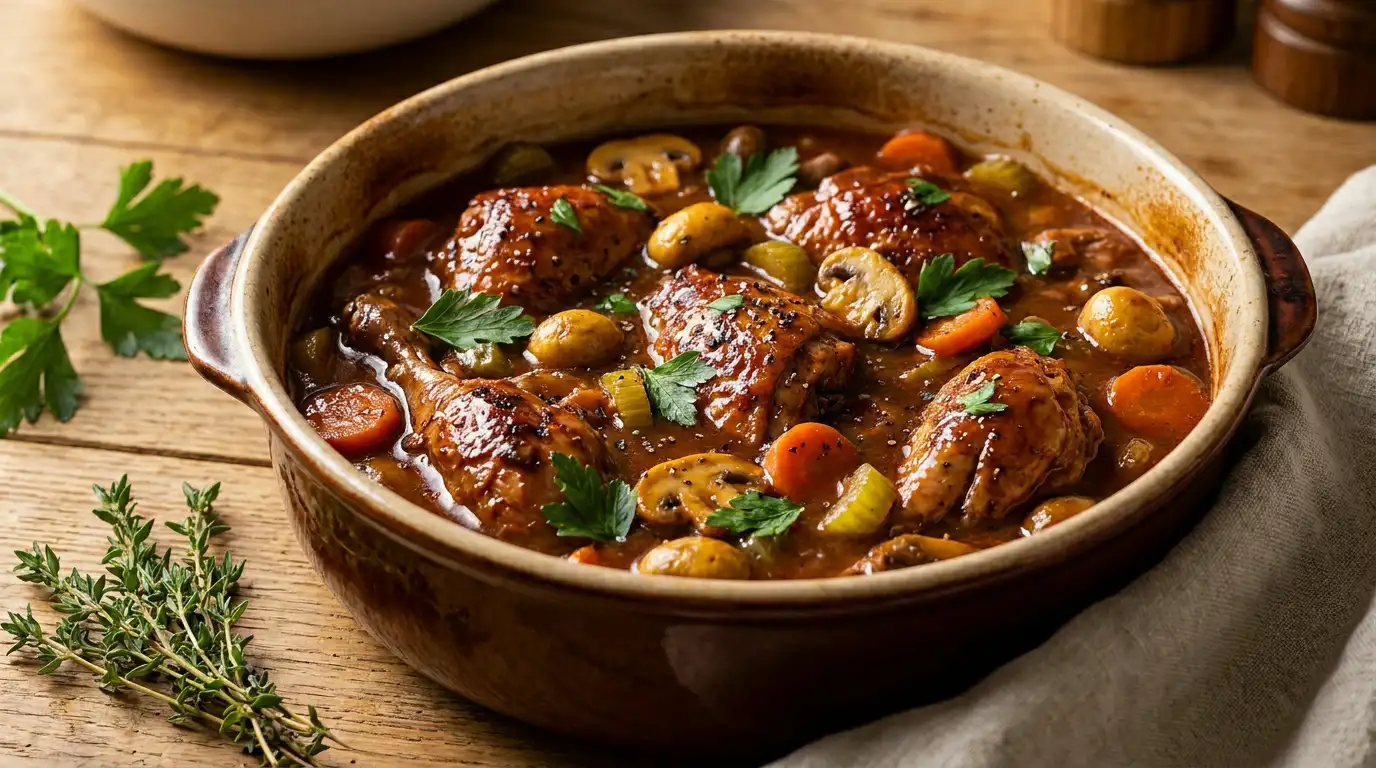
This Mary Berry pheasant casserole is a deep, mahogany-coloured dish with tender, slow-braised meat that falls easily from the bone, surrounded by a glossy, herb-scented sauce with earthy undertones of thyme and bay. It is the kind of casserole that fills the kitchen with a warm, savoury aroma as it cooks low and slow in the oven. The method is straightforward, the ingredients are widely available, and the result is a robust centrepiece that suits a relaxed Sunday lunch just as well as a quiet midweek dinner. From start to finish, it is ready in around 2 hours 15 minutes.
Pheasant can seem like an unfamiliar bird to cook, but it responds beautifully to gentle braising in stock and wine, which keeps the meat moist and draws out a rich, slightly gamey depth of flavour that chicken simply cannot match. This casserole is approachable for any home cook who has made a basic stew before.
Ingredients
For the casserole
- 1 whole pheasant (approximately 900g–1kg), jointed into 4 pieces, or use pre-jointed pieces
- 2 tablespoons plain flour, seasoned with salt and black pepper
- 2 tablespoons sunflower oil
- 25g unsalted butter
- 1 large onion, peeled and finely sliced
- 2 medium carrots, peeled and cut into 1cm rounds
- 2 celery sticks, trimmed and sliced
- 2 garlic cloves, peeled and finely chopped
- 150ml dry red wine
- 400ml good-quality chicken stock
- 1 tablespoon tomato purée
- 3 sprigs fresh thyme
- 2 bay leaves
- Salt and freshly ground black pepper, to taste
For the mushrooms
- 200g chestnut mushrooms, wiped and halved
- 1 tablespoon unsalted butter
To finish
- 2 tablespoons fresh flat-leaf parsley, roughly chopped
How to Make Mary Berry Pheasant Casserole Recipe
- Preheat the oven: Set the oven to 160°C (140°C fan, Gas Mark 3). A lower temperature allows the pheasant to braise gently, keeping the meat tender rather than dry and stringy.
- Coat the pheasant: Tip the seasoned flour onto a large plate and turn each piece of pheasant in it until evenly coated on all sides. Shake off any excess flour before frying.
- Brown the pheasant pieces: Heat the sunflower oil and 25g of butter in a large, ovenproof casserole dish over a medium-high heat. Add the pheasant pieces skin-side down and cook for 3 to 4 minutes until the skin is golden brown and lightly crisped, then turn and brown the other side for 2 minutes. Remove from the dish and set aside on a plate. Browning the pieces first builds the caramelised base that gives the sauce its depth of colour and flavour.
- Soften the vegetables: Reduce the heat to medium. Add the sliced onion, carrots, and celery to the same dish and cook gently for 6 to 8 minutes, stirring occasionally, until softened and beginning to colour at the edges. Stir in the chopped garlic and cook for 1 further minute.
- Add the liquid: Pour in the red wine and let it bubble for 2 minutes, scraping any caramelised bits from the base of the dish. Stir in the tomato purée, then pour in the chicken stock. The sauce should come roughly halfway up the pheasant pieces once they are returned to the dish.
- Return the pheasant and add the herbs: Nestle the browned pheasant pieces back into the dish, tucking the thyme sprigs and bay leaves around them. Season with salt and freshly ground black pepper. Bring the liquid to a gentle simmer on the hob.
- Braise in the oven: Cover the casserole with a tight-fitting lid and transfer to the preheated oven. Cook for 1 hour 20 minutes to 1 hour 30 minutes, until the meat is very tender and coming away from the bone.
- Fry the mushrooms: About 10 minutes before the casserole is ready, melt 1 tablespoon of butter in a frying pan over a high heat. Add the mushrooms and cook for 4 to 5 minutes, stirring once or twice, until golden and slightly caramelised rather than watery and pale.
- Finish and rest: Remove the casserole from the oven. Discard the bay leaves and thyme sprigs. Stir in the fried mushrooms and scatter over the chopped parsley. Leave to rest with the lid on for 5 minutes before serving, which allows the sauce to settle and the flavours to come together.
Tips for the Best Mary Berry Pheasant Casserole
Why does pheasant turn dry and tough in a casserole?
Pheasant is a lean bird with very little fat, so it dries out quickly if the oven temperature is too high or the cooking time is too short for braising. Keep the oven at 160°C or below and ensure the lid fits snugly throughout cooking to trap the steam.
How do I stop the sauce from becoming too thin and watery?
The flour coating on the pheasant pieces thickens the sauce naturally as it braises. If the sauce still looks thin after removing the lid at the end, place the casserole on the hob over a medium heat and simmer uncovered for 5 to 8 minutes until it reduces to a glossy, coating consistency.
Why does my casserole smell overly gamey after cooking?
A strong gamey aroma usually comes from pheasant that has been hung for too long, or from meat that was not fresh at purchase. Buy pheasant from a reliable butcher or farm shop and use it within two days of purchase. The red wine and thyme in this recipe balance the natural gamey notes of the bird.
How do I get the mushrooms to colour properly instead of releasing water?
The key is a very hot pan and cooking in a single layer without stirring too frequently. Crowding the pan causes the mushrooms to steam rather than fry, producing a pale, wet result. Fry them separately in batches if necessary and add them to the casserole only at the very end.
Why is the sauce bitter after adding the wine?
This happens when the wine has not been cooked off sufficiently before adding the stock. Always allow the wine to bubble and reduce for a full 2 minutes before introducing the stock, which cooks away the harsh raw alcohol and leaves only the mellow, fruity depth of flavour.
Serving Suggestions
- Spoon over a generous mound of creamy mashed potato, made with plenty of butter and warm milk, which soaks up the glossy braising sauce.
- Serve alongside buttered wide egg noodles or pappardelle for a slightly more European approach to the dish.
- Pair with steamed Savoy cabbage or buttered kale, whose slight bitterness cuts through the richness of the sauce.
- Place a slice of toasted crusty bread in the base of each bowl before ladling over the casserole, allowing the bread to absorb the sauce.
- Finish each plate with a light dusting of extra chopped parsley and a crack of black pepper for colour and freshness at the table.
Storage
Room temperature
Leave the casserole to cool completely, then store in an airtight container at room temperature for no longer than 2 hours before refrigerating.
Refrigerator
Transfer to a sealed airtight container and refrigerate for up to 3 days. Reheat thoroughly in a saucepan over a medium-low heat or in the oven at 160°C, covered, for 20 to 25 minutes until piping hot throughout. Bring the casserole to room temperature for 15 minutes before reheating for a more even result.
Freezing
Portion the cooled casserole into freezer-safe containers, pressing clingfilm directly onto the surface of the sauce before sealing the lid, and freeze for up to 3 months. Defrost overnight in the refrigerator and reheat gently on the hob, adding a splash of stock if the sauce has thickened during freezing.
Nutrition
- Calories: 320–370 kcal
- Carbohydrates: 12g
- Protein: 38g
- Fat: 14g
- Saturated Fat: 5g
- Sodium: 420mg
Nutrition values are estimates and will vary depending on the exact ingredients and brands used, as well as the size of the portions served.
FAQs
Can I use chicken instead of pheasant in this casserole?
Yes, bone-in chicken thighs work well as a substitute and are more widely available. Use the same weight and follow the same method, but reduce the oven braising time to around 50 to 60 minutes, as chicken thighs cook more quickly than pheasant. The flavour will be milder but the dish will still be rich and satisfying.
Can I make this pheasant casserole the day before serving?
This casserole actually improves overnight as the flavours deepen and the sauce thickens slightly. Cool completely, refrigerate in the casserole dish or a sealed container, and reheat covered in the oven at 160°C for 25 to 30 minutes before serving.
Can I use white wine instead of red wine in this recipe?
A dry white wine such as a Sauvignon Blanc or unoaked Chardonnay can be used in place of red. The sauce will be lighter in colour and slightly less robust in flavour, but it works particularly well if serving the casserole alongside a cream-enriched mash or with buttered noodles.
Is it possible to make this casserole in a slow cooker?
Yes. Brown the pheasant and soften the vegetables on the hob as directed, then transfer everything to the slow cooker. Cook on low for 5 to 6 hours or on high for 3 to 3.5 hours. Stir in the separately fried mushrooms and parsley just before serving.
Can I double this recipe for a larger group?
This recipe doubles well. Use two pheasants and a large lidded casserole dish or roasting tin covered tightly with foil. The oven temperature and braising time remain the same, though check the meat at 1 hour 30 minutes and add up to 15 minutes more if the pieces are not yet fully tender.
Conclusion
This Mary Berry pheasant casserole is a deeply satisfying braised dish that makes the most of a lean, flavourful game bird. The slow oven cooking draws out a rich, savoury sauce with warm notes of thyme, wine, and caramelised vegetables, while the pheasant itself becomes beautifully tender and easy to eat. This recipe serves 4 people and is ready in approximately 2 hours 15 minutes, making it ideal for a relaxed Sunday lunch or an easy autumn dinner that requires minimal attention once it goes into the oven.
Whether this is the first time cooking pheasant or a familiar regular on the autumn menu, this casserole is a reliable and rewarding recipe to return to. If you give it a try, leave a comment below to share how it turned out, or share the recipe with someone who enjoys seasonal home cooking. If you enjoyed this, you might also like the Mary Berry Thai Chicken Curry Recipe for another warming, deeply flavoured main course that is just as straightforward to put together.
Mary Berry Pheasant Casserole Recipe
Course: Main CourseCuisine: BritishDifficulty: Easy4
servings15
minutes2
hours345
kcal2
hours15
minutesA rich, mahogany-coloured braised pheasant casserole with a glossy herb-scented sauce, tender fall-off-the-bone meat, and golden chestnut mushrooms. Slow-cooked in red wine and chicken stock for deep, warming flavour.
Ingredients
1 whole pheasant approximately 900g to 1kg jointed into 4 pieces or use pre-jointed pieces
2 tablespoons plain flour seasoned with salt and black pepper
2 tablespoons sunflower oil
25g unsalted butter
1 large onion peeled and finely sliced
2 medium carrots peeled and cut into 1cm rounds
2 celery sticks trimmed and sliced
2 garlic cloves peeled and finely chopped
150ml dry red wine
400ml good-quality chicken stock
1 tablespoon tomato puree
3 sprigs fresh thyme
2 bay leaves
salt and freshly ground black pepper to taste
200g chestnut mushrooms wiped and halved
1 tablespoon unsalted butter for mushrooms
2 tablespoons fresh flat-leaf parsley roughly chopped
Instructions
- Set the oven to 160C (140C fan, Gas Mark 3).
- Tip the seasoned flour onto a large plate and turn each piece of pheasant in it until evenly coated on all sides. Shake off any excess flour before frying.
- Heat the sunflower oil and 25g of butter in a large ovenproof casserole dish over a medium-high heat. Add the pheasant pieces skin-side down and cook for 3 to 4 minutes until golden brown, then turn and brown the other side for 2 minutes. Remove from the dish and set aside on a plate.
- Reduce the heat to medium. Add the sliced onion, carrots, and celery to the same dish and cook gently for 6 to 8 minutes until softened. Stir in the chopped garlic and cook for 1 further minute.
- Pour in the red wine and let it bubble for 2 minutes, scraping any caramelised bits from the base of the dish. Stir in the tomato puree, then pour in the chicken stock.
- Nestle the browned pheasant pieces back into the dish, tucking the thyme sprigs and bay leaves around them. Season with salt and freshly ground black pepper. Bring the liquid to a gentle simmer on the hob.
- Cover the casserole with a tight-fitting lid and transfer to the preheated oven. Cook for 1 hour 20 minutes to 1 hour 30 minutes, until the meat is very tender and coming away from the bone.
- About 10 minutes before the casserole is ready, melt 1 tablespoon of butter in a frying pan over a high heat. Add the mushrooms and cook for 4 to 5 minutes until golden and slightly caramelised.
- Remove the casserole from the oven. Discard the bay leaves and thyme sprigs. Stir in the fried mushrooms and scatter over the chopped parsley. Leave to rest with the lid on for 5 minutes before serving.
Notes
- Keep the oven at 160C or below to prevent the lean pheasant meat from drying out.
- If the sauce looks thin after cooking, simmer uncovered on the hob for 5 to 8 minutes until glossy.
- Buy pheasant from a reliable butcher and use within two days of purchase for best flavour.
- Fry mushrooms in a single layer over high heat to achieve colour rather than steaming them.
- Always allow the red wine to bubble and reduce for a full 2 minutes before adding stock.
- This casserole improves overnight as the flavours deepen in the refrigerator.