Mary Berry Macaroni Cheese Recipe
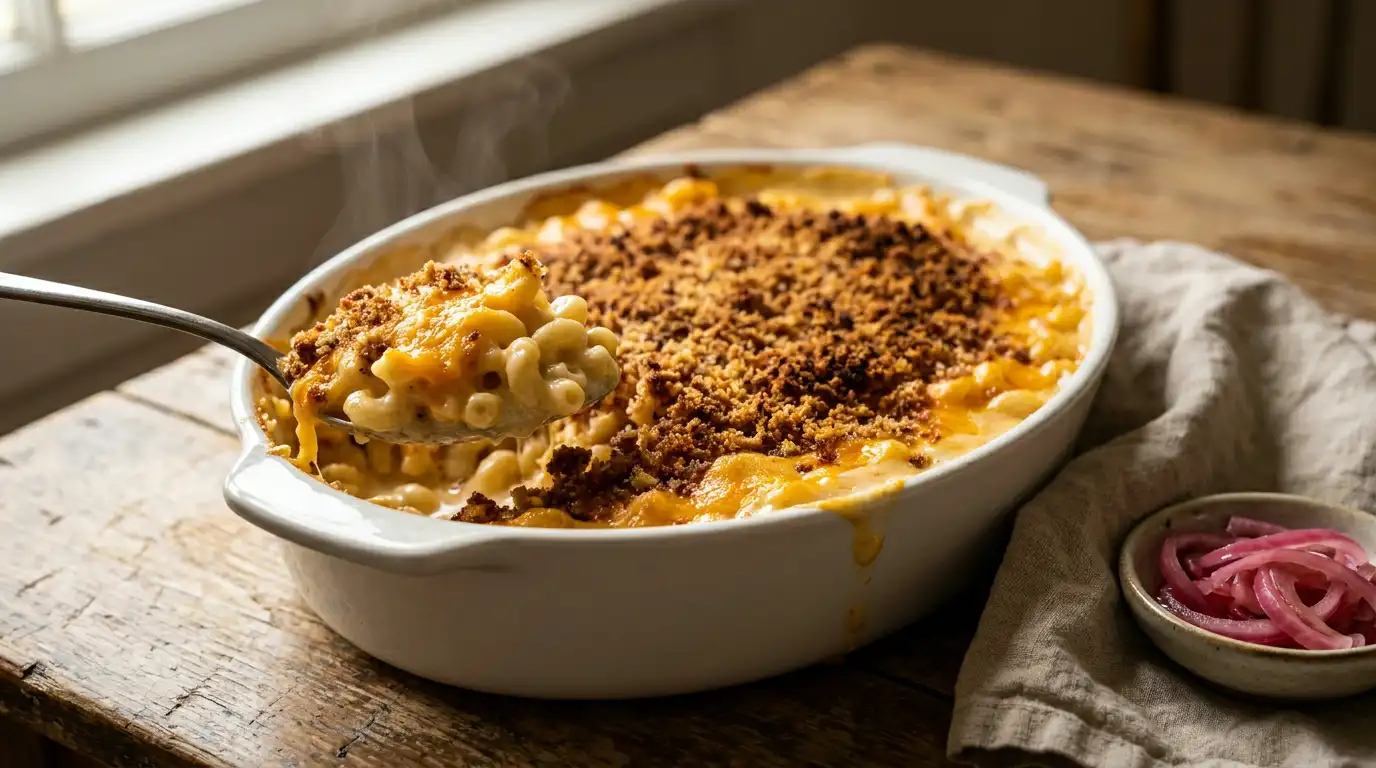
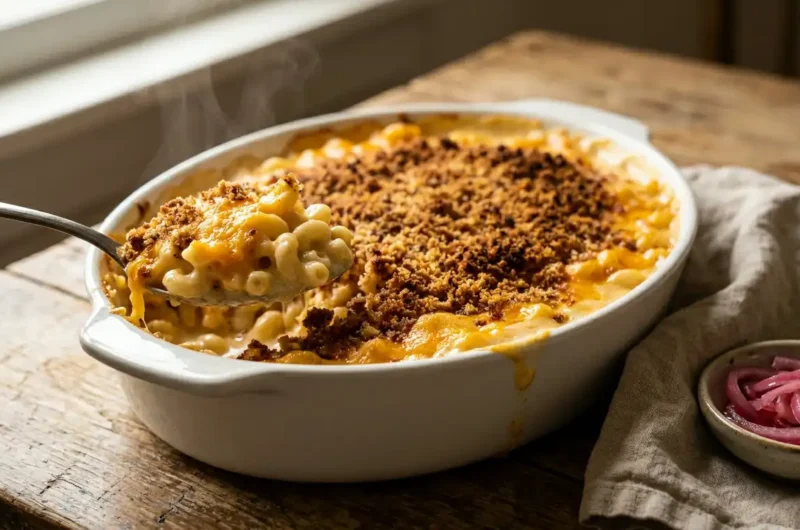
Mary Berry macaroni cheese is a golden-topped, bubbling bake with a thick, silky béchamel sauce clinging to every tube of pasta, finished with a deep amber crust of melted cheddar that crackles when a spoon breaks through. This version keeps things straightforward, using a proper roux-based sauce that holds its consistency without splitting or turning grainy. It suits a midweek supper just as well as a casual weekend gathering when something warm and filling is needed. From start to finish, it is ready in around 45 minutes.
Ingredients
For the pasta
- 250g dried macaroni
- 1 tsp fine salt (for the pasta water)
For the cheese sauce
- 50g unsalted butter
- 50g plain flour
- 600ml whole milk, warmed
- 1 tsp English mustard
- 1/4 tsp freshly grated nutmeg
- 1/2 tsp fine salt
- 1/4 tsp freshly ground black pepper
- 150g mature cheddar, grated
- 50g Gruyère, grated
For the topping
- 75g mature cheddar, grated
- 30g fresh white breadcrumbs
- 1 tsp olive oil
How to Make Mary Berry Macaroni Cheese Recipe
- Heat the oven and prepare the dish: Set the oven to 200°C (180°C fan, Gas Mark 6). Lightly butter a deep ovenproof dish measuring roughly 28 x 20cm and set aside.
- Cook the pasta: Bring a large pan of well-salted water to a rolling boil and cook the macaroni for two minutes less than the packet instructs, then drain and set aside. Undercooking slightly at this stage prevents the pasta from turning mushy once it bakes in the sauce.
- Make the roux: Melt the butter in a heavy-based saucepan over a medium heat. Add the flour all at once and stir constantly with a wooden spoon for 1 to 2 minutes until the mixture turns a pale biscuit colour and pulls away from the sides of the pan.
- Build the sauce: Pour the warm milk in slowly, adding roughly 100ml at a time and whisking thoroughly between each addition to keep the sauce lump-free. Continue over a medium-low heat, stirring, until the sauce thickens enough to coat the back of a spoon, which takes around 6 to 8 minutes.
- Season and add the cheese: Remove the pan from the heat. Stir in the mustard, nutmeg, salt, and pepper, then add the 150g cheddar and the Gruyère. Stir until both cheeses have melted completely into the sauce, giving it a smooth, glossy finish.
- Combine pasta and sauce: Tip the drained macaroni into the cheese sauce and stir gently until every piece is well coated. Pour the mixture into the prepared ovenproof dish and spread it level with the back of a spoon.
- Prepare the topping: Mix the remaining 75g cheddar with the breadcrumbs and olive oil in a small bowl until the crumbs are lightly coated. Scatter the mixture evenly over the top of the pasta.
- Bake until golden: Place the dish on the middle shelf of the oven and bake for 20 to 25 minutes until the topping is deep golden and the sauce is visibly bubbling at the edges. Leave to rest for 5 minutes before serving so the sauce firms up slightly and holds its shape when spooned.
Tips for the Best Mary Berry Macaroni Cheese
Why is my cheese sauce lumpy even after whisking?
Lumps usually form when cold milk hits the hot roux too quickly. Warm the milk in a separate saucepan or in the microwave before adding it, and pour it in gradually, no more than 100ml at a time, whisking fully after each addition before the next goes in.
Why does my macaroni cheese turn dry after baking?
A dry result almost always means the pasta was fully cooked before it went into the oven, or the béchamel was too thick to begin with. Pull the pasta out when it still has a firm bite, and make sure the sauce is loose enough to pour easily before it goes into the dish.
Why is the topping pale and soft instead of golden and crisp?
This happens when the dish is placed too low in the oven or the breadcrumbs are packed down too thickly. Keep the crumb layer no more than 5mm deep and bake on the middle to upper-middle shelf. If the top still looks pale after 25 minutes, switch on the grill for the final 3 to 4 minutes and watch it closely.
Why does the sauce split and look greasy in the oven?
A splitting sauce usually means the heat inside the oven is too high, or the dish has been left in too long after the sauce is already set. Stick to 200°C and check the dish at the 20-minute mark. Resting the bake for 5 minutes off the heat also helps the sauce re-emulsify slightly as it cools.
How do I stop the pasta from clumping together while I make the sauce?
Toss the drained macaroni with a small drizzle of oil immediately after draining to keep the pieces separate. Do not leave it sitting in the colander for more than a few minutes before combining it with the sauce.
Serving Suggestions
- Serve straight from the oven dish with a crisp green salad dressed in a sharp mustard vinaigrette to cut through the richness.
- Pair with grilled smoked bacon rashers laid across the top for a hearty supper version.
- Offer a dish of lightly pickled red onion alongside, which brings a sharp contrast to the creamy sauce.
- Spoon alongside roasted cherry tomatoes, as the slight acidity balances the deep flavour of the cheese.
- Present at a casual gathering with crusty white bread rolls and a large pot of English mustard on the table.
Storage
Room Temperature
Cover the dish tightly and keep at room temperature for no more than 2 hours after baking.
Refrigerator
Transfer any leftovers to an airtight container and refrigerate for up to 3 days. To reheat, add a small splash of milk, cover with foil, and warm in the oven at 180°C for 15 to 20 minutes until piping hot throughout. Bring to room temperature for 20 minutes before reheating for the most even result.
Freezing
Spoon cooled portions into freezer-safe containers, press a sheet of cling film directly onto the surface to prevent ice crystals forming, and freeze for up to 2 months. Defrost overnight in the refrigerator and reheat as above, adding a little extra milk to loosen the sauce before it goes back into the oven.
Nutrition
- Calories: 520 kcal
- Carbohydrates: 52g
- Protein: 22g
- Fat: 24g
- Saturated Fat: 14g
- Sodium: 620mg
Nutrition values are estimates based on the ingredients listed and may vary depending on the specific brands used and individual serving size.
FAQs
Can I use a different type of pasta instead of macaroni?
Yes, short pasta shapes work well as alternatives. Rigatoni, penne, or conchiglie all hold a thick béchamel nicely due to their ridged surfaces or hollow centres. Avoid long pasta like spaghetti, as it does not distribute the sauce evenly when baked.
Can I make this macaroni cheese ahead of time?
The dish can be assembled up to the end of the topping stage, then covered and refrigerated for up to 24 hours before baking. Add an extra 5 minutes to the baking time if it goes into the oven straight from the fridge to ensure it heats all the way through.
Can I use a single type of cheese instead of a mixture?
A good quality mature cheddar used on its own will still give a flavourful result. The Gruyère adds a slightly nutty depth and helps the sauce melt more smoothly, but it is not essential. Avoid mild or medium cheddar as the flavour becomes too subtle once it is mixed into the sauce and baked.
Can I make this recipe gluten-free?
Yes, swap the plain flour for a gluten-free plain flour blend to make the roux, and use a gluten-free dried pasta. The sauce behaves in very much the same way, though gluten-free pasta can soften faster, so reduce the pre-cooking time by 3 minutes rather than 2.
What size ovenproof dish works best for this recipe?
A deep rectangular dish around 28 x 20cm gives the best result, allowing for a generous layer of sauce under the topping without the pasta drying out during baking. Avoid a very wide, shallow dish as the sauce evaporates too quickly and the pasta at the edges can become tough.
Conclusion
This Mary Berry macaroni cheese recipe delivers everything a proper baked pasta dish should offer: a sauce that stays creamy and cohesive, a topping that crisps to a deep golden finish, and pasta that holds its texture rather than turning limp. The recipe yields 4 generous main-course portions, making it a reliable choice for a family supper or a small gathering where a satisfying, unfussy dish is called for.
Once the technique for a smooth béchamel is clear, the rest of the recipe comes together quickly and confidently. If this has been useful, feel free to share it with someone who loves a good cheesy bake, or leave a comment below with any questions. For another comforting recipe worth adding to the weekly rotation, take a look at the Mary Berry sticky honey chicken recipe, which is just as straightforward and equally crowd-pleasing.
Mary Berry Macaroni Cheese Recipe
Course: Main CourseCuisine: BritishDifficulty: Easy4
servings15
minutes30
minutes520
kcal45
minutesA golden-topped, bubbling baked macaroni with a thick, silky cheddar and Gruyère béchamel sauce, finished with a crispy breadcrumb crust. Reliable, straightforward, and ready in around 45 minutes.
Ingredients
250g dried macaroni
1 tsp fine salt for the pasta water
50g unsalted butter
50g plain flour
600ml whole milk warmed
1 tsp English mustard
1/4 tsp freshly grated nutmeg
1/2 tsp fine salt
1/4 tsp freshly ground black pepper
150g mature cheddar grated
50g Gruyère grated
75g mature cheddar grated for topping
30g fresh white breadcrumbs
1 tsp olive oil
Instructions
- Set the oven to 200°C (180°C fan, Gas Mark 6) and lightly butter a deep ovenproof dish measuring roughly 28 x 20cm.
- Bring a large pan of well-salted water to a rolling boil and cook the macaroni for two minutes less than the packet instructs, then drain and set aside.
- Melt the butter in a heavy-based saucepan over a medium heat, add the flour all at once and stir constantly for 1 to 2 minutes until the mixture turns a pale biscuit colour.
- Pour the warm milk in slowly, adding roughly 100ml at a time and whisking thoroughly between each addition, then continue stirring over a medium-low heat for 6 to 8 minutes until the sauce thickens enough to coat the back of a spoon.
- Remove the pan from the heat and stir in the mustard, nutmeg, salt, and pepper, then add the 150g cheddar and Gruyère and stir until both cheeses have melted into a smooth, glossy sauce.
- Tip the drained macaroni into the cheese sauce, stir gently until every piece is well coated, then pour into the prepared dish and spread level.
- Mix the remaining 75g cheddar with the breadcrumbs and olive oil in a small bowl, then scatter evenly over the top of the pasta.
- Bake on the middle shelf for 20 to 25 minutes until the topping is deep golden and the sauce is bubbling at the edges, then leave to rest for 5 minutes before serving.
Notes
- Warm the milk before adding to the roux to prevent lumps forming in the sauce.
- Undercook the pasta by 2 minutes before baking to avoid a mushy final texture.
- Keep the breadcrumb layer no deeper than 5mm for an even, crispy topping.
- Switch on the grill for the final 3 to 4 minutes if the topping needs more colour.
- Toss drained pasta in a small drizzle of oil to stop the pieces clumping together.
- The dish can be assembled up to 24 hours ahead and refrigerated before baking.