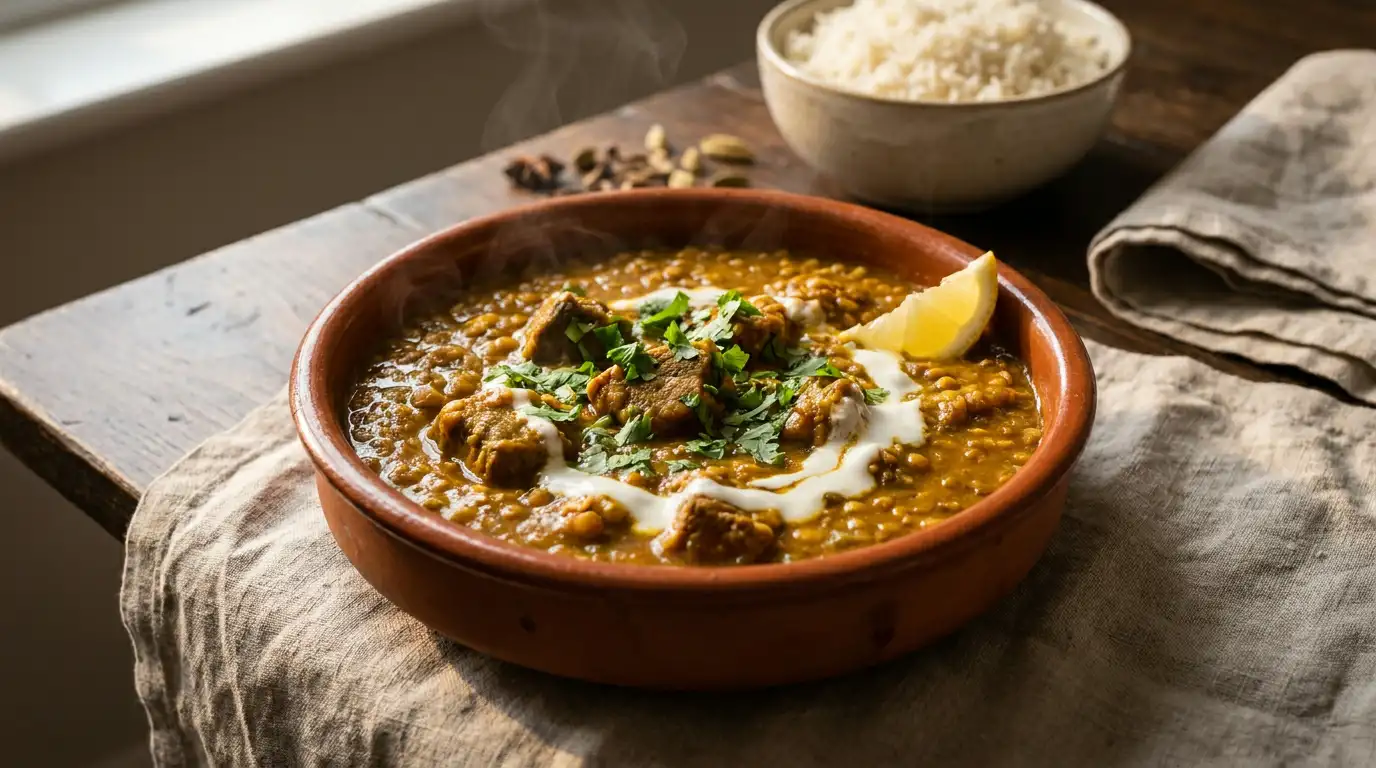
Mary Berry Lamb Dhansak Recipe
Mary Berry Lamb Dhansak is a warmly spiced, golden-hued curry where tender chunks of lamb sit in a thick, lentil-rich sauce with a gently sweet and sour finish. The lentils break down during cooking to give the gravy a velvety, almost silky body that clings to the meat without feeling heavy. This version keeps the method straightforward and the spicing balanced, so the result is deeply flavoured without being fierce.
It suits a weekend cook-ahead meal perfectly, as the flavours develop and deepen overnight in the fridge. The recipe feeds four comfortably and works well whether served at a relaxed family dinner or as a centrepiece for a casual gathering. From start to finish, it is ready in around 2 hours.
Ingredients
For the lamb
- 700g boneless lamb shoulder, cut into 4cm chunks
- 2 tbsp vegetable oil
- 1 tsp fine sea salt
- ½ tsp ground black pepper
For the lentil base
- 150g red split lentils, rinsed
- 80g yellow split lentils (chana dal), rinsed
- 700ml water
- ½ tsp ground turmeric
For the sauce
- 2 tbsp vegetable oil
- 2 medium onions, finely chopped
- 4 garlic cloves, finely grated
- 20g fresh root ginger, finely grated
- 1 tsp cumin seeds
- 1 tsp ground coriander
- 1 tsp ground cumin
- 1 tsp garam masala
- ½ tsp ground cinnamon
- ½ tsp chilli powder
- 1 tbsp tomato purée
- 2 medium tomatoes, roughly chopped
- 1 tbsp soft dark brown sugar
- 2 tbsp tamarind paste
- 400ml lamb or chicken stock
- Salt, to taste
To finish
- Small handful of fresh coriander, roughly chopped
- 1 tsp dried fenugreek leaves (methi)
How to Make Mary Berry Lamb Dhansak Recipe
- Cook the lentils: Place the red and yellow lentils in a medium saucepan with the water and turmeric. Bring to the boil over a medium-high heat, then reduce to a steady simmer and cook for 25 minutes, stirring occasionally, until both types of lentil are completely soft and beginning to collapse. Set aside without draining, as the cooking liquid forms part of the sauce.
- Brown the lamb: Heat 2 tablespoons of oil in a large, heavy-based casserole or deep frying pan over a high heat. Season the lamb pieces with salt and pepper, then add them in a single layer, working in two batches if needed. Cook without moving for 3 minutes, then turn and cook for a further 2 minutes until deep golden on all sides. This browning builds a savoury depth that carries through the finished dish. Transfer to a plate and set aside.
- Soften the onions: Reduce the heat to medium and add the remaining oil to the same pan. Add the chopped onions and cook, stirring regularly, for 12 to 15 minutes until soft, golden, and beginning to catch slightly at the edges. Take the time here rather than rushing, as properly cooked onions give the sauce its body and a gentle sweetness.
- Add the aromatics: Stir in the garlic, ginger, and cumin seeds, and cook for 1 minute. Add the ground coriander, ground cumin, garam masala, cinnamon, and chilli powder. Stir continuously for 30 seconds until the spices smell toasted and fragrant, then add the tomato purée and chopped tomatoes. Cook for 3 minutes, pressing the tomatoes down with the back of a spoon until they soften into the paste.
- Combine and simmer: Return the browned lamb to the pan. Pour in the stock, then spoon in the cooked lentils along with all their liquid. Add the tamarind paste and brown sugar, and stir everything together until well combined. Bring to a gentle boil, then reduce the heat to low, cover with a lid, and cook for 50 minutes to 1 hour, stirring every 15 minutes, until the lamb is completely tender and the sauce has thickened to a rich, spoonable consistency.
- Adjust the seasoning: Remove the lid and stir in the dried fenugreek leaves. Taste the sauce and adjust the salt, sugar, or tamarind to balance the sweet-sour note to your preference. If the sauce looks thicker than you would like, stir in a splash of hot water and simmer for 2 more minutes.
- Finish and serve: Scatter over the fresh coriander and serve straight from the pan. The sauce should be thick enough to coat a spoon, with the lentils fully dissolved into the gravy and the lamb falling apart when pressed.
Tips for the Best Mary Berry Lamb Dhansak Recipe
Why is my lamb still tough after the cooking time?
Lamb shoulder can vary in thickness and fat content between cuts. If the meat is still firm after an hour, simply cover the pan and continue cooking for a further 20 to 30 minutes on a very low heat. It will soften as the connective tissue continues to break down.
Why does my dhansak sauce taste flat rather than balanced?
The sweet-sour balance is the defining characteristic of this dish, and it is easy for one element to dominate. If the sauce tastes sharp, add a pinch more sugar. If it tastes too sweet, stir in a small amount of extra tamarind paste, half a teaspoon at a time, until the flavour lifts.
Why are there visible lentil pieces instead of a smooth gravy?
The yellow split lentils take longer to break down than red lentils. If the gravy looks grainy after combining, use the back of a wooden spoon or a potato masher to press the lentils against the side of the pan during the final simmer. This thickens the sauce and creates a more uniform texture.
Why does the spice smell raw or bitter even after following the steps?
Ground spices need direct contact with hot oil to bloom properly. If they are added to a wet, steaming pan, they steam rather than toast. Make sure the pan is hot and the onions are well-reduced before adding the ground spices, and keep them moving constantly for the full 30 seconds.
Why is there an oily film on top of my finished curry?
This is a natural result of the fat from the lamb shoulder rendering out during cooking. Skim the surface with a ladle before serving, or leave the cooked curry to cool for 15 minutes, after which the fat rises and can be lifted off cleanly with a spoon.
Serving Suggestions
- Serve with long-grain basmati rice, cooked so each grain is separate and fluffy, to absorb the thick sauce.
- Offer warm naan bread or chapattis alongside for scooping directly from the pan at the table.
- Spoon a small amount of plain yoghurt on the side to temper the heat and provide a cool, creamy contrast.
- Add a simple cucumber and red onion salad dressed with lemon juice and a pinch of cumin for a fresh, crunchy counterpoint.
- Finish with a wedge of lemon on each plate so guests can add a sharp lift to their own portion.
Storage
Room temperature
Leave the curry to cool completely, then store in an airtight container at room temperature for no longer than 2 hours before refrigerating.
Refrigerator
Transfer to a sealed container and refrigerate for up to 3 days. The lentil sauce thickens considerably when cold, so stir in 2 to 3 tablespoons of water when reheating in a saucepan over a low heat, and bring to a full simmer before serving.
Freezing
Portion the cooled curry into freezer-safe containers or zip-lock bags and freeze for up to 3 months. Defrost overnight in the refrigerator, then reheat gently in a saucepan with a splash of water to loosen the sauce back to its original consistency.
Nutrition
- Calories: 490 kcal
- Carbohydrates: 34g
- Protein: 38g
- Fat: 22g
- Saturated Fat: 7g
- Sodium: 480mg
Nutrition values are estimates based on standard ingredient weights and may vary depending on the specific products used and the exact serving size.
FAQs
Can I use lamb leg instead of lamb shoulder in this recipe?
Lamb leg is leaner and has less connective tissue, so it can turn dry if cooked for as long as shoulder. It will work in this recipe, but reduce the simmering time to around 40 minutes and check for tenderness earlier. Shoulder is still the preferred cut for this dish because the fat keeps the meat moist throughout the long cook.
Can I make the Mary Berry Lamb Dhansak recipe ahead of time?
Yes, and it is actually better made a day ahead. The flavours deepen and mellow as the curry rests overnight, and the sweet-sour balance becomes more rounded. Store covered in the refrigerator and reheat gently on the hob the following day, adding a little water if needed.
Can I make this recipe with chicken instead of lamb?
Chicken thighs, bone-in and skin removed, work well as a substitute. Reduce the simmering time to 30 to 35 minutes, as chicken thighs cook much faster than lamb shoulder. The finished sauce will be slightly lighter in flavour but the spice and lentil combination holds up well.
Can I use tinned lentils instead of dried lentils?
Dried lentils are strongly recommended here because they dissolve into the sauce as they cook, creating the characteristic thick gravy. Tinned lentils are already soft and will not break down in the same way, resulting in a thinner, less unified sauce. If dried lentils are unavailable, reduce the simmer time for the lentils and mash them more aggressively before combining.
Is this recipe suitable for a gluten-free diet?
All the main ingredients in this dhansak are naturally gluten-free, but check the stock and tamarind paste packaging, as some brands add thickeners or flavourings that contain gluten. Use a certified gluten-free stock and a pure tamarind paste to keep the dish safe for those with a gluten intolerance.
Conclusion
This Mary Berry Lamb Dhansak recipe delivers everything the dish is known for: a slow-cooked, fall-apart lamb in a thick lentil sauce with a gently balanced sweet and sour flavour running through every bite. The steps are unhurried and approachable, making it a reliable choice for anyone cooking a proper curry at home for the first time or the fiftieth. This recipe yields 4 generous portions, making it well suited to a family dinner or a meal that stretches comfortably into the next day.
The effort put into browning the meat properly and softening the onions slowly makes a real difference to the finished dish, so it is worth giving those stages their full time. Share this recipe with someone who enjoys a good homemade curry, or leave a comment below with how yours turned out. If you enjoyed this, you might also like the Mary Berry Lemon Drizzle Muffins Recipe for a completely different but equally satisfying bake to try next.
Mary Berry Lamb Dhansak Recipe
Course: Main CourseCuisine: IndianDifficulty: Medium4
servings20
minutes1
hour40
minutes490
kcal2
hoursA warmly spiced, golden-hued curry where tender chunks of lamb shoulder sit in a thick, lentil-rich sauce with a gently sweet and sour finish. The lentils break down during cooking to give the gravy a velvety body that clings to the meat without feeling heavy.
Ingredients
700g boneless lamb shoulder, cut into 4cm chunks
2 tbsp vegetable oil
1 tsp fine sea salt
½ tsp ground black pepper
150g red split lentils, rinsed
80g yellow split lentils (chana dal), rinsed
700ml water
½ tsp ground turmeric
2 tbsp vegetable oil
2 medium onions, finely chopped
4 garlic cloves, finely grated
20g fresh root ginger, finely grated
1 tsp cumin seeds
1 tsp ground coriander
1 tsp ground cumin
1 tsp garam masala
½ tsp ground cinnamon
½ tsp chilli powder
1 tbsp tomato purée
2 medium tomatoes, roughly chopped
1 tbsp soft dark brown sugar
2 tbsp tamarind paste
400ml lamb or chicken stock
salt to taste
small handful of fresh coriander, roughly chopped
1 tsp dried fenugreek leaves (methi)
Instructions
- Place the red and yellow lentils in a medium saucepan with the water and turmeric. Bring to the boil over a medium-high heat, then reduce to a steady simmer and cook for 25 minutes, stirring occasionally, until both types of lentil are completely soft and beginning to collapse. Set aside without draining.
- Heat 2 tablespoons of oil in a large, heavy-based casserole or deep frying pan over a high heat. Season the lamb pieces with salt and pepper, then add them in a single layer, working in two batches if needed. Cook without moving for 3 minutes, then turn and cook for a further 2 minutes until deep golden on all sides. Transfer to a plate and set aside.
- Reduce the heat to medium and add the remaining oil to the same pan. Add the chopped onions and cook, stirring regularly, for 12 to 15 minutes until soft, golden, and beginning to catch slightly at the edges.
- Stir in the garlic, ginger, and cumin seeds, and cook for 1 minute. Add the ground coriander, ground cumin, garam masala, cinnamon, and chilli powder. Stir continuously for 30 seconds until the spices smell toasted and fragrant, then add the tomato purée and chopped tomatoes. Cook for 3 minutes, pressing the tomatoes down with the back of a spoon until they soften into the paste.
- Return the browned lamb to the pan. Pour in the stock, then spoon in the cooked lentils along with all their liquid. Add the tamarind paste and brown sugar, and stir everything together until well combined. Bring to a gentle boil, then reduce the heat to low, cover with a lid, and cook for 50 minutes to 1 hour, stirring every 15 minutes, until the lamb is completely tender and the sauce has thickened to a rich, spoonable consistency.
- Remove the lid and stir in the dried fenugreek leaves. Taste the sauce and adjust the salt, sugar, or tamarind to balance the sweet-sour note to your preference. If the sauce looks thicker than you would like, stir in a splash of hot water and simmer for 2 more minutes.
- Scatter over the fresh coriander and serve straight from the pan. The sauce should be thick enough to coat a spoon, with the lentils fully dissolved into the gravy and the lamb falling apart when pressed.
Notes
- Lamb shoulder is the best cut for this dish as the fat keeps the meat moist throughout the long cook.
- Take the full 12 to 15 minutes to soften the onions properly as they give the sauce its body and gentle sweetness.
- Keep the ground spices moving constantly for the full 30 seconds to avoid a raw or bitter taste.
- The sweet-sour balance is key. Add more sugar if too sharp or more tamarind paste if too sweet.
- Skim any oily film from the surface with a ladle before serving or cool for 15 minutes and lift off the fat cleanly.
- This curry tastes even better made a day ahead as the flavours deepen and mellow overnight in the fridge.