Mary Berry Slow Roast Lamb Recipe
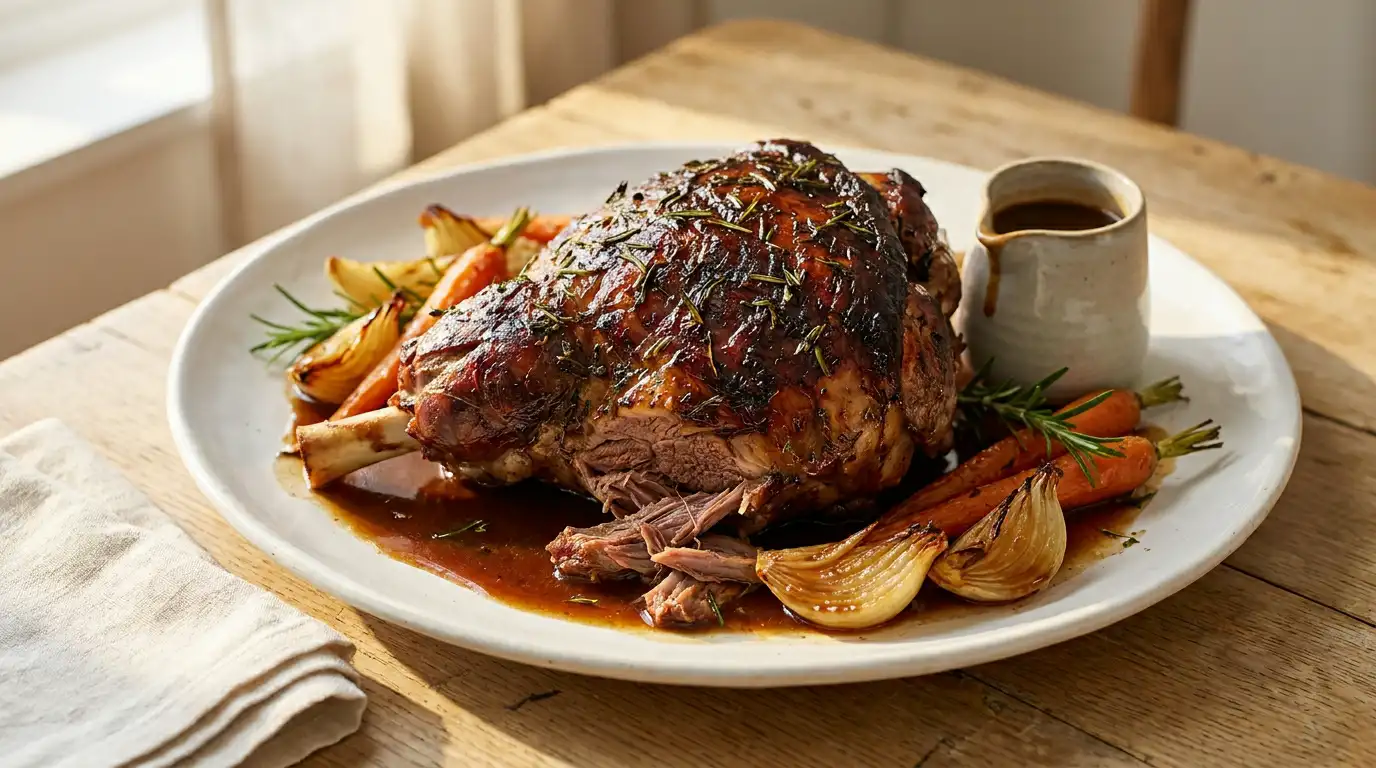
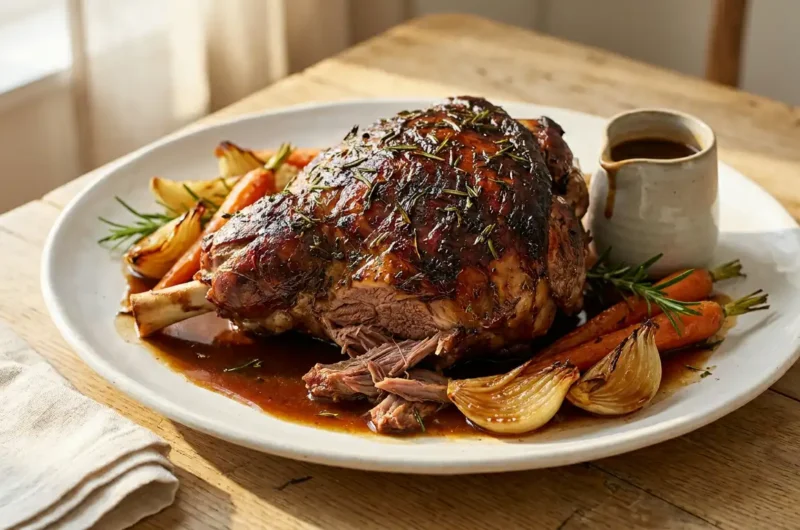
This Mary Berry slow roast lamb recipe produces a joint that falls apart at the touch of a fork, with deeply savoury, herb-scented meat that has turned a rich mahogany brown on the outside and stays meltingly tender within. The fat renders down slowly, basting the meat from the inside, while the pan juices reduce into a concentrated, glossy base for the gravy.
What sets this version apart is its straightforward approach: no complicated marinades, no unusual equipment, just careful timing and a low oven that does the hard work for you. It suits a relaxed Sunday lunch as easily as a celebratory Easter table, and the hands-on time is surprisingly short. From start to finish, including resting time, allow around 5 hours.
Ingredients
For the lamb
- 1.8kg bone-in leg of lamb
- 4 garlic cloves, cut into thin slivers
- 6 fresh rosemary sprigs, needles stripped and roughly chopped
- 1 tbsp fresh thyme leaves
- 2 tbsp olive oil
- 1 tsp fine sea salt
- 1 tsp freshly ground black pepper
- Zest of 1 lemon
For the roasting tray
- 2 medium onions, thickly sliced
- 3 medium carrots, cut into large chunks
- 4 celery sticks, roughly chopped
- 250ml dry white wine
- 250ml lamb or chicken stock
For the gravy
- 1 tbsp plain flour
- 300ml lamb or chicken stock, warm
- Salt and black pepper to season
How to Make Mary Berry Slow Roast Lamb Recipe
- Preheat the oven: Set the oven to 160C fan or 180C conventional and allow it to reach temperature fully before the lamb goes in, as an evenly heated oven ensures the meat cooks consistently from the first moment.
- Prepare the lamb: Pat the leg of lamb dry with kitchen paper. Using a small sharp knife, make around 20 deep incisions all over the surface of the joint, spacing them evenly across the top and sides.
- Insert the garlic and herbs: Push a sliver of garlic and a pinch of chopped rosemary deep into each incision, pressing them in firmly so the flavours infuse throughout the meat as it cooks rather than just sitting on the surface.
- Season and oil the joint: Mix the remaining rosemary, thyme, lemon zest, salt, pepper, and olive oil together in a small bowl to form a rough paste. Rub this all over the outside of the lamb, covering it evenly.
- Prepare the roasting tray: Scatter the onions, carrots, and celery across the base of a large roasting tin. Pour over the white wine and stock. These vegetables act as a trivet, lifting the lamb slightly and giving the gravy its depth and body.
- Place the lamb and cover: Sit the prepared lamb joint on top of the vegetables. Cover the tin tightly with a double layer of foil, pressing the edges down firmly to trap the steam inside.
- Slow roast the lamb: Transfer to the preheated oven and cook for 3 hours 30 minutes. The long, slow cooking at a moderate temperature breaks down the connective tissue, giving the meat its characteristic tenderness.
- Remove the foil and finish: Take off the foil and return the lamb to the oven for a further 30 to 45 minutes, until the outside turns a deep golden brown and the meat is starting to pull away from the bone.
- Rest the joint: Lift the lamb onto a warm plate or board, cover loosely with foil, and leave to rest for at least 20 minutes. Resting allows the juices to redistribute through the meat so they do not run out when the joint is carved or pulled apart.
- Make the gravy: Strain the vegetables and juices from the roasting tin into a jug, skimming off the fat from the surface. Pour the strained juices back into the tin and set over a medium heat on the hob. Whisk in the flour, then gradually add the warm stock, stirring constantly until the gravy thickens and turns glossy. Season to taste, then strain into a warm jug for serving.
Tips for the Best Mary Berry Slow Roast Lamb Recipe
Why is my slow roast lamb still tough after the cooking time?
The foil may not have been sealed tightly enough, allowing steam to escape. Without that trapped moisture, the meat braises less effectively. Re-cover firmly and return the joint to the oven for a further 30 to 45 minutes, checking again after that point.
How do I get a good golden colour on the outside of the lamb without drying it out?
Make sure the foil is removed completely for the final browning stage and that the oven temperature is correct. If the surface is not colouring after 30 minutes with the foil off, increase the temperature to 200C conventional for the last 10 minutes only.
Why does my gravy taste thin even after adding flour?
The juices from the roasting tin need to be adequately reduced before the flour is added. If there is a large volume of liquid in the tin, boil it on the hob for 3 to 4 minutes first to concentrate the flavour before whisking in the flour.
How do I know when the lamb is properly done without a thermometer?
Insert a skewer into the thickest part of the meat, close to but not touching the bone, and hold it there for five seconds. When withdrawn, it should meet no resistance and the juices running from the puncture should be clear with no trace of pink.
My lamb is releasing a lot of liquid in the tray, making the vegetables waterlogged. What should I do?
Some joints release more moisture than others depending on the breed and how the meat was stored. If the liquid level rises very high during cooking, carefully remove some with a ladle through the foil to prevent the vegetables from becoming overly soft and the base flavour from becoming diluted.
Serving Suggestions
- Serve pulled directly from the bone alongside creamy mashed potato and tender-stem broccoli for a classic Sunday roast
- Spoon the glossy gravy generously over the meat at the table, letting it pool around the accompaniments
- Pair with a dish of roasted root vegetables, such as parsnips and beetroot, that can go into the oven alongside the lamb for the final 45 minutes
- Accompany with a mint sauce made from finely chopped fresh mint, white wine vinegar, and a pinch of caster sugar for a sharp contrast to the rich meat
- Serve any leftover shredded lamb the following day in warm flatbreads with sliced cucumber, natural yogurt, and a squeeze of lemon
Storage
Room temperature
The cooked lamb should not be left at room temperature for more than 2 hours before being refrigerated or consumed.
Refrigerator
Allow the lamb to cool completely, then transfer to an airtight container and refrigerate for up to 3 days. To serve again, cover the meat with a little of the reserved gravy and warm through in a low oven at 160C conventional for 20 to 25 minutes, which keeps the meat moist rather than drying it out as reheating on the hob can do.
Freezing
Pull the cooled lamb into shreds or portions and pack tightly into freezer bags or airtight containers, removing as much air as possible, then freeze for up to 2 months. Defrost overnight in the refrigerator and reheat gently with a splash of stock to restore moisture before serving.
Nutrition
- Calories: 420 kcal
- Carbohydrates: 6g
- Protein: 48g
- Fat: 22g
- Saturated Fat: 9g
- Sodium: 480mg
Nutrition values are estimates and may vary depending on the specific ingredients used, the size of the joint, and individual serving portions.
FAQs
Can I use a boneless leg of lamb instead of bone-in for this recipe?
Yes, a boneless rolled leg of lamb works well here. Reduce the covered cooking time by around 30 minutes, as the absence of bone means heat penetrates the meat more quickly. Check for tenderness at the 3-hour mark before removing the foil.
Can I prepare the lamb the night before and roast it the next day?
The garlic and herb rub can be applied up to 24 hours in advance. Cover the seasoned joint loosely and refrigerate it overnight. Take it out of the fridge 45 minutes before cooking so it returns to room temperature, which helps the meat cook more evenly from the start.
Can I make the gravy ahead of time for this slow roast lamb?
The gravy relies on the roasting juices from the tin, so it is best made fresh once the lamb comes out of the oven. However, the finished gravy can be cooled and refrigerated for up to 2 days, then reheated gently on the hob with a splash of additional stock to loosen it back to the right consistency.
Can I add other vegetables to the roasting tin with the lamb?
Potatoes, fennel, and leeks all work well in the base of the tin. Cut them into large pieces so they hold their shape over the long cooking time, and ensure they are fully submerged in the liquid so they braise rather than dry out.
Is this recipe suitable for cooking in a slow cooker instead of the oven?
Yes, the lamb transfers very well to a slow cooker. Place the seasoned joint and vegetables in the slow cooker bowl, add the wine and stock, and cook on low for 7 to 8 hours. Finish the meat under a hot grill for 10 minutes to develop colour on the surface, as the slow cooker will not brown the outside on its own.
Conclusion
This Mary Berry slow roast lamb recipe is a reliable centrepiece that rewards patience. The combination of low heat, a sealed foil cover, and a fragrant garlic and rosemary rub produces meat that is fall-apart tender, deeply flavoured, and requires very little active effort from the cook. The pan juices transform into a rich, concentrated gravy that brings the whole dish together. This recipe serves 4 to 6 people generously, depending on the size of the joint and your accompaniments.
Give this a go for your next Sunday lunch or family gathering and let us know how it turns out in the comments below. If you found this recipe helpful, share it with someone who loves a proper roast. For another comforting, crowd-pleasing dish from the same classic tradition, you might also enjoy this Mary Berry macaroni cheese recipe, which is just as straightforward and equally satisfying.
Mary Berry Slow Roast Lamb Recipe
Course: Main CourseCuisine: BritishDifficulty: Easy5
servings20
minutes4
hours15
minutes420
kcal5
hoursA classic slow roast lamb with garlic, rosemary, and thyme, cooked low and slow until fall-apart tender with a rich, glossy gravy made from the roasting pan juices.
Ingredients
1.8kg bone-in leg of lamb
4 garlic cloves, cut into thin slivers
6 fresh rosemary sprigs, needles stripped and roughly chopped
1 tbsp fresh thyme leaves
2 tbsp olive oil
1 tsp fine sea salt
1 tsp freshly ground black pepper
zest of 1 lemon
2 medium onions, thickly sliced
3 medium carrots, cut into large chunks
4 celery sticks, roughly chopped
250ml dry white wine
250ml lamb or chicken stock
1 tbsp plain flour
300ml lamb or chicken stock, warm
salt and black pepper to season
Instructions
- Preheat the oven to 160C fan or 180C conventional and allow it to reach full temperature before the lamb goes in.
- Pat the leg of lamb dry with kitchen paper and make around 20 deep incisions all over the surface using a small sharp knife.
- Push a sliver of garlic and a pinch of chopped rosemary into each incision, pressing them in firmly.
- Mix the remaining rosemary, thyme, lemon zest, salt, pepper, and olive oil into a rough paste and rub it all over the outside of the lamb.
- Scatter the onions, carrots, and celery across the base of a large roasting tin and pour over the white wine and stock.
- Sit the lamb on top of the vegetables and cover the tin tightly with a double layer of foil, pressing the edges down firmly.
- Transfer to the oven and cook for 3 hours 30 minutes.
- Remove the foil and return the lamb to the oven for a further 30 to 45 minutes until deep golden brown.
- Lift the lamb onto a warm plate, cover loosely with foil, and leave to rest for at least 20 minutes.
- Strain the roasting juices into a jug, skim the fat, return to the tin on the hob, whisk in the flour, add the warm stock gradually, stir until thickened and glossy, season, then strain into a warm jug for serving.
Notes
- Seal the foil tightly around the tin to trap steam and keep the meat moist throughout cooking.
- Bring the lamb out of the fridge 45 minutes before roasting for even cooking.
- If the surface is not browning after 30 minutes with the foil off, increase to 200C for the final 10 minutes.
- Rest the joint for at least 20 minutes before carving to keep the juices in the meat.
- Reduce roasting tin juices on the hob before adding flour if the gravy tastes thin.
- Leftover shredded lamb keeps well in the fridge for up to 3 days and freezes for up to 2 months.