Mary Berry Cheese Scones Recipe
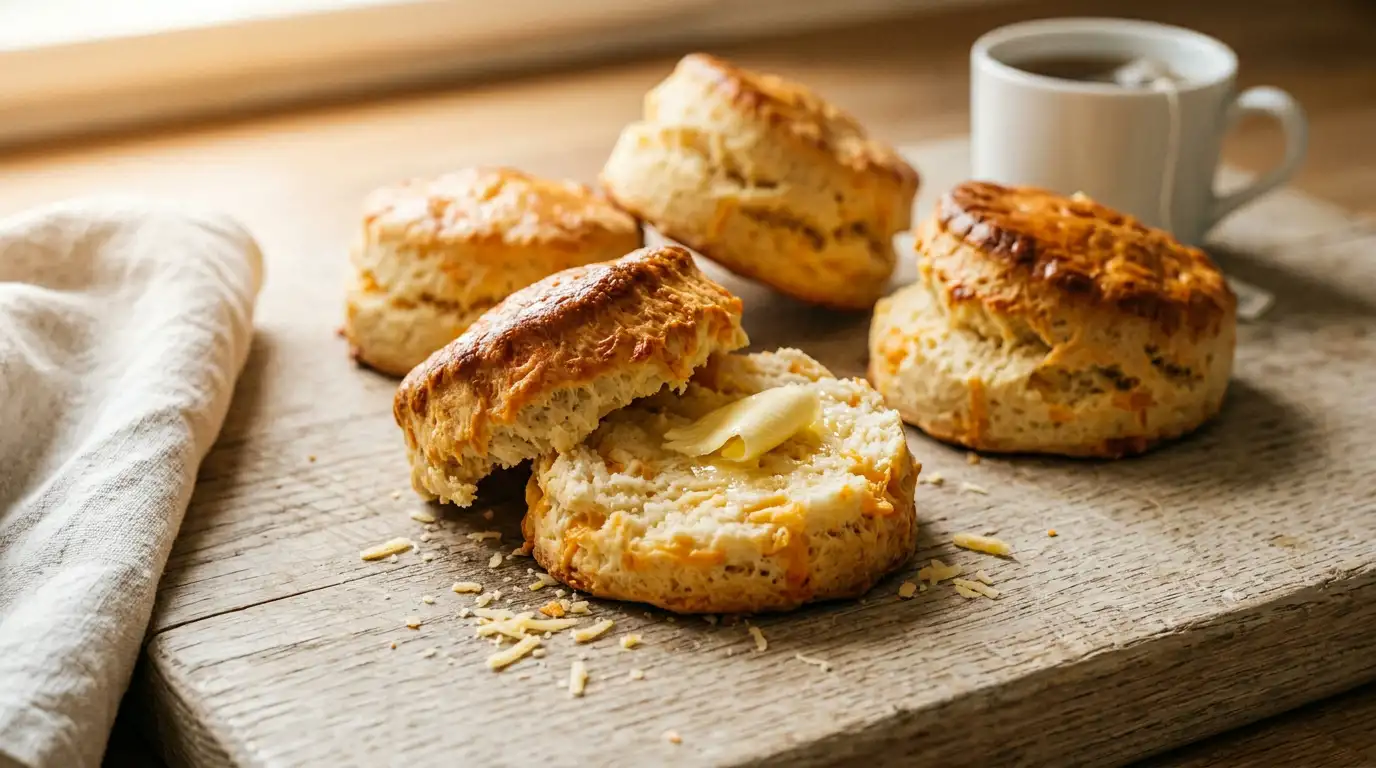
These cheese scones have a golden, lightly crusted top that gives way to a soft, airy crumb inside, with a warm, savoury depth from the mature cheddar running through every layer. The dough comes together in minutes, requires no special equipment, and bakes up consistently whether you are making them for a weekend lunch or a last-minute gathering. From start to finish, they are ready in around 35 minutes.
What sets this version of the mary berry cheese scones recipe apart is the balance between lightness and flavour. Using a higher ratio of cheese and a touch of mustard powder gives each scone a rounded, tangy finish without overpowering the buttery base. They rise well, hold their shape, and taste just as good warm from the oven as they do cooled and split with butter.
Ingredients
- For the scones
- 225g self-raising flour, plus extra for dusting
- 1 tsp baking powder
- ½ tsp mustard powder
- ¼ tsp fine sea salt
- pinch of cayenne pepper
- 50g unsalted butter, cold and cubed
- 100g mature cheddar, finely grated
- 1 large egg
- 75ml whole milk, plus a little extra to brush
- To finish
- 25g mature cheddar, finely grated, for topping
How to Make Mary Berry Cheese Scones
- Preheat the oven: Set the oven to 220°C (200°C fan, gas mark 7) and lightly flour a large baking tray. A well-preheated oven is what drives the initial rise, so do not rush this step.
- Combine the dry ingredients: Sift the flour and baking powder into a large mixing bowl. Add the mustard powder, salt, and cayenne pepper, then stir briefly to distribute everything evenly.
- Rub in the butter: Add the cold cubed butter to the flour mixture and rub it in with your fingertips until the mixture resembles coarse, slightly uneven breadcrumbs. Work quickly so the butter stays cold, as this is what creates a light, layered texture in the finished scone.
- Add the cheese: Stir in the 100g of grated cheddar, tossing it through the crumb mixture until the shreds are well coated and no large clumps remain.
- Mix the wet ingredients: Beat the egg lightly with the 75ml of milk in a small jug. Pour almost all of it into the flour mixture and stir with a round-bladed knife until the dough just comes together. Add the remaining liquid if the dough looks too dry, but stop mixing as soon as it forms a shaggy, cohesive mass.
- Shape the dough: Turn the dough out onto a lightly floured surface and pat it gently to a thickness of about 2.5cm. Use a 5cm round cutter, pressing straight down without twisting, to cut out the scones. Re-pat the trimmings once to get additional scones. Twisting the cutter seals the edges and prevents a good rise.
- Top and bake: Place the scones onto the prepared tray, brush the tops with a little milk, and scatter the reserved 25g of grated cheddar over each one. Bake in the centre of the oven for 12 to 14 minutes, until the tops are deep golden and the cheese has melted into a lightly caramelised crust.
- Cool slightly: Transfer the baked scones to a wire rack. Leave them for at least 5 minutes before serving, which allows the crumb to set and makes them easier to split cleanly.
Tips for the Best Cheese Scones
Why are my cheese scones not rising properly?
The most common cause is overworked dough. Once the liquid goes in, mix only until the dough comes together. Kneading develops gluten, which tightens the structure and prevents the scones from lifting. A slightly rough, uneven dough rises far better than a smooth one.
Why do my scones come out dense and heavy instead of light?
This usually points to warm butter. Cold butter creates small pockets of steam during baking, which is what gives the crumb its open, airy structure. If the butter softens during rubbing in, chill the bowl and mixture for 10 minutes before continuing.
How do I get a really even golden top on my cheese scones?
Make sure the milk wash covers the entire surface right to the edges, and that the oven is fully up to temperature before the scones go in. Patchy browning is almost always caused by an oven that has not had enough time to heat through.
Why did my scones spread sideways instead of rising upwards?
The dough was likely too wet or patted too thin. Aim for a consistent 2.5cm thickness before cutting, and if the dough feels sticky, add a small amount of flour to your surface rather than to the dough itself.
How do I stop the cheese topping from burning before the scones are cooked through?
Position the tray on the middle shelf, not too high in the oven. If the tops are colouring too fast, lay a loose sheet of foil over them for the final few minutes of baking without pressing it down onto the cheese.
Serving Suggestions
- Serve warm, split open and spread with cold salted butter for a simple but satisfying result.
- Pair with a bowl of tomato soup for a filling, comforting lunch on a cooler day.
- Arrange on a board with sliced mature cheddar and a few pickled onions for an easy afternoon spread.
- Serve alongside a soft-boiled egg and some watercress for a light weekend brunch plate.
- Offer warm at a picnic alongside chutney and cold cuts; they travel well wrapped in a clean tea towel.
Storage
Room Temperature
Store cooled scones in an airtight container at room temperature for up to 2 days.
Refrigerator
Place in an airtight container and refrigerate for up to 4 days. Bring to room temperature or warm briefly in the oven at 180°C for 5 minutes before serving, as cold scones can feel dense and lose their soft crumb texture.
Freezing
Wrap each scone individually in cling film, then place them in a labelled freezer bag and freeze for up to 3 months. To defrost, leave them at room temperature for about an hour or warm from frozen in a 180°C oven for 8 to 10 minutes.
Nutrition
- Calories: 210 kcal
- Carbohydrates: 22g
- Protein: 8g
- Fat: 10g
- Saturated Fat: 6g
- Sodium: 310mg
Nutrition values are estimates only and may vary depending on the specific ingredients and quantities used.
FAQs
Can I use a different type of cheese in this recipe?
Yes. Gruyère works well for a nuttier flavour, and a sharp Red Leicester gives a good colour and mild tang. Avoid soft cheeses like brie or cream cheese as they add too much moisture and affect the dough structure.
Can I make the dough ahead of time?
The dough is best baked straight away, but you can cut the scones, place them on a lined tray, and refrigerate them uncovered for up to an hour before baking. Bake directly from the fridge, adding a minute or two to the baking time.
Can I use plain flour instead of self-raising flour for cheese scones?
Yes. Replace the self-raising flour with 225g of plain flour and increase the baking powder to 3 teaspoons. Sift both together thoroughly before rubbing in the butter to make sure the raising agent is well distributed.
Can I double this cheese scone recipe for a larger batch?
The recipe doubles well. Use two baking trays and rotate them halfway through baking if your oven has uneven heat. Do not crowd the scones on a single tray, as they need space to rise without touching.
Are these cheese scones suitable for vegetarians?
Yes, provided the cheddar used is made with vegetarian rennet. Most supermarket own-brand mature cheddars will state this on the packaging. The rest of the ingredients contain no meat products.
Conclusion
This mary berry cheese scones recipe is a reliable, straightforward bake that delivers a golden, savoury scone with a soft, open crumb and a well-seasoned, cheesy flavour in just over half an hour. The recipe makes approximately 8 scones using a 5cm cutter, which is a practical yield for most households. Whether served warm for lunch, packed into a picnic basket, or offered at a casual gathering, they hold up well and suit a wide range of occasions.
The key to getting them right every time is cold butter, a light hand with the mixing, and a hot oven. Follow those three principles and the results are consistent. If this recipe has been useful, leave a comment below with how yours turned out, or share it with someone who would enjoy a reliable cheese scone. For another classic biscuit bake to add to your repertoire, you might also like this mary berry lemon biscuits recipe.
Mary Berry Cheese Scones Recipe
Course: Side DishCuisine: BritishDifficulty: Easy8
servings20
minutes14
minutes210
kcal35
minutesGolden, savoury cheese scones with a soft, airy crumb and a deep cheddar flavour. Made with cold butter, mustard powder, and a cayenne kick, these bake up in under 35 minutes and suit everything from a quick lunch to an afternoon spread.
Ingredients
225g self-raising flour, plus extra for dusting
1 tsp baking powder
½ tsp mustard powder
¼ tsp fine sea salt
pinch of cayenne pepper
50g unsalted butter, cold and cubed
100g mature cheddar, finely grated
1 large egg
75ml whole milk, plus a little extra to brush
25g mature cheddar, finely grated, for topping
Instructions
- Set the oven to 220°C (200°C fan, gas mark 7) and lightly flour a large baking tray.
- Sift the flour and baking powder into a large mixing bowl, then add the mustard powder, salt, and cayenne pepper and stir to distribute evenly.
- Add the cold cubed butter and rub it in with your fingertips until the mixture resembles coarse, slightly uneven breadcrumbs.
- Stir in the 100g of grated cheddar, tossing it through the crumb mixture until well coated and no large clumps remain.
- Beat the egg lightly with the 75ml of milk in a small jug, pour almost all of it into the flour mixture, and stir with a round-bladed knife until the dough just comes together.
- Turn the dough out onto a lightly floured surface, pat to a thickness of about 2.5cm, and cut out scones using a 5cm round cutter pressed straight down without twisting.
- Place the scones on the prepared tray, brush the tops with a little milk, scatter the reserved 25g of grated cheddar over each one, and bake for 12 to 14 minutes until deep golden.
- Transfer to a wire rack and leave for at least 5 minutes before serving.
Notes
- Use cold butter straight from the fridge and work quickly to keep it from warming in your hands.
- Do not twist the cutter when stamping out scones as this seals the edges and limits the rise.
- Mix the dough only until it just comes together as overworking develops gluten and produces a dense result.
- Pat the dough to an even 2.5cm thickness for a consistent rise across all scones.
- A fully preheated oven is essential as the initial blast of heat drives the lift in the first few minutes of baking.
- Finely grated cheddar melts more evenly into the dough and topping than coarsely grated cheese.