Mary Berry Pecan Pie Recipe
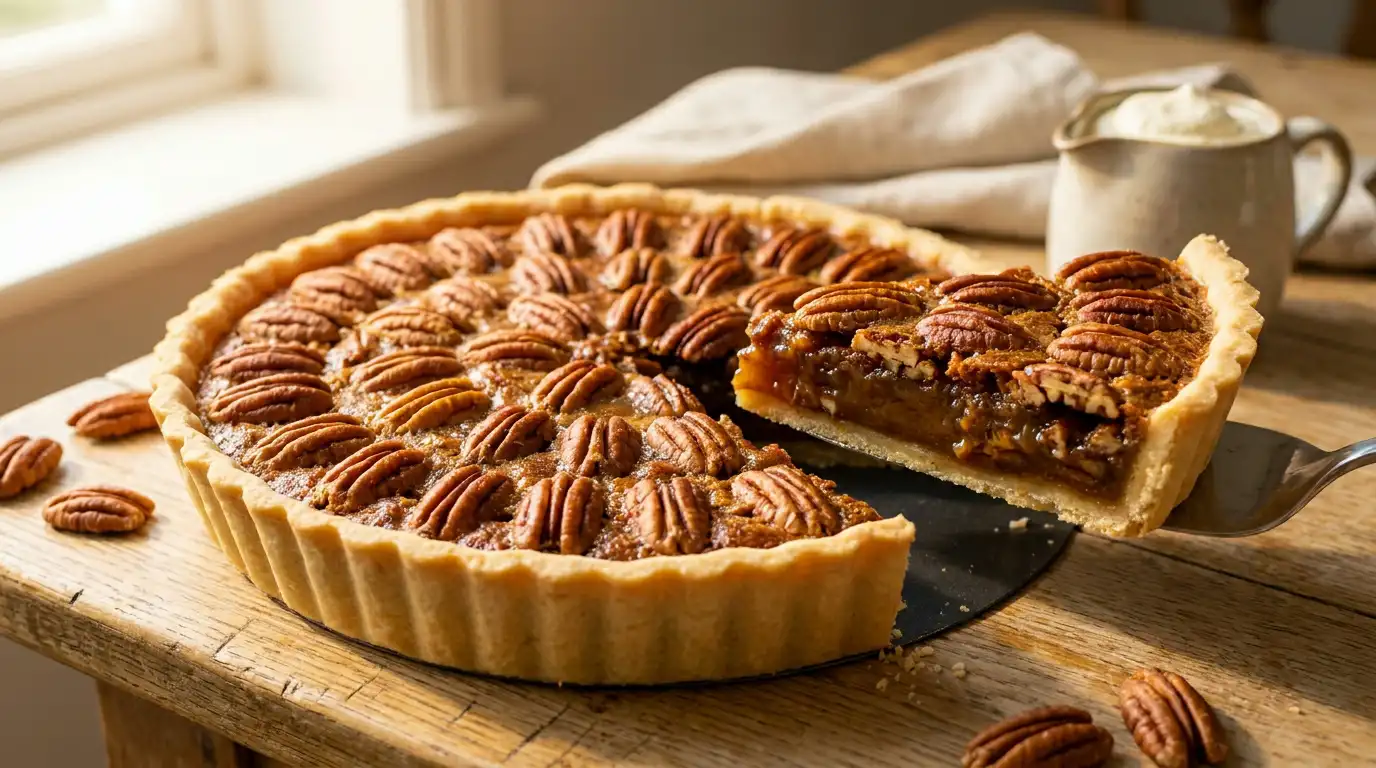
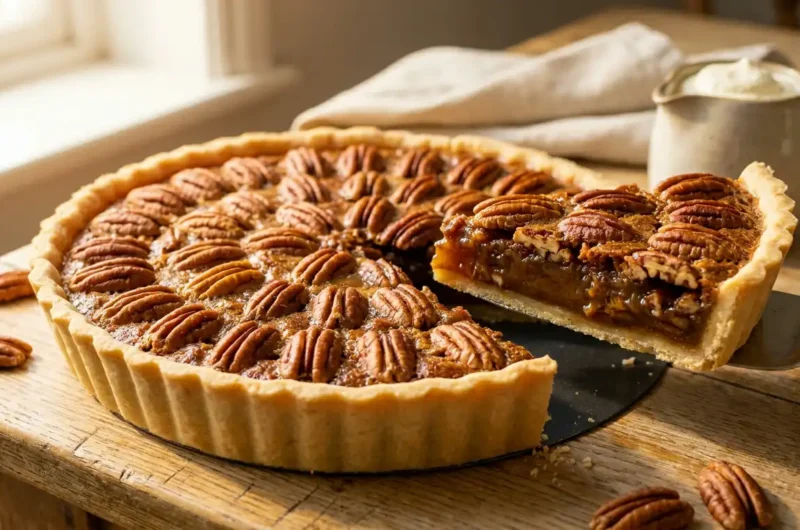
This pecan pie has a buttery, short pastry shell filled with a dark, caramel-like custard that sets firm at the edges and stays gently yielding in the centre. The toasted pecans on top give a rich, nutty bite that contrasts with the deep sweetness of the filling. It is the sort of dessert that holds its shape cleanly when sliced, making it suited to celebrations, Sunday lunches, and everything in between. From start to finish, including chilling time, it is ready in around 2 hours.
This version keeps the method straightforward, with a simple blind-baked pastry case and a filling that comes together in one bowl. There is no need for a stand mixer or specialist equipment, just a rolling pin, a loose-bottomed tin, and a little patience while it bakes.
Ingredients
For the pastry
- 175g plain flour, plus extra for dusting
- 85g unsalted butter, cold and cubed
- 1 tablespoon caster sugar
- 1 medium egg yolk
- 2 to 3 tablespoons cold water
For the filling
- 150g light brown soft sugar
- 150g golden syrup
- 60g unsalted butter, melted and slightly cooled
- 3 medium eggs, lightly beaten
- 1 teaspoon vanilla extract
- 1 tablespoon plain flour
- a pinch of fine sea salt
- 200g pecan halves
How to Make Mary Berry Pecan Pie Recipe
- Make the pastry: Place the flour and cold butter into a large bowl and rub together with your fingertips until the mixture resembles fine breadcrumbs. Stir in the caster sugar, then add the egg yolk and cold water one tablespoon at a time, mixing with a palette knife until the dough just comes together. The dough should hold when pressed but not feel sticky.
- Chill the dough: Shape the pastry into a flat disc, wrap it in cling film, and refrigerate for at least 30 minutes. Resting the dough relaxes the gluten, which reduces shrinkage during baking.
- Line the tin: Preheat the oven to 190C (170C fan, Gas Mark 5). On a lightly floured surface, roll the pastry out to around 3mm thick and use it to line a 23cm loose-bottomed fluted tart tin. Press the pastry gently into the sides and trim the excess, leaving a small overhang. Prick the base several times with a fork.
- Blind bake the case: Line the pastry with a sheet of baking paper and fill with baking beans or uncooked rice. Bake for 15 minutes, then remove the paper and beans and return the case to the oven for a further 5 minutes until the base looks dry and pale golden. Trim any overhanging pastry neatly with a sharp knife while still warm.
- Prepare the filling: Reduce the oven temperature to 170C (150C fan, Gas Mark 3). In a large bowl, whisk together the light brown sugar, golden syrup, and melted butter until smooth. Add the beaten eggs, vanilla extract, plain flour, and salt, and whisk again until everything is evenly combined.
- Add the pecans: Scatter roughly two-thirds of the pecan halves over the base of the blind-baked pastry case. Pour the filling mixture over the top, then arrange the remaining pecans across the surface in an even layer. The pecans on top will rise slightly as the filling bakes and set in place.
- Bake the pie: Place the tin on a baking sheet and bake in the centre of the oven for 35 to 40 minutes. The filling should be set at the edges with a very slight wobble remaining at the centre when gently shaken. It firms up further as it cools, so do not overbake.
- Cool before slicing: Leave the pie to cool completely in the tin on a wire rack before removing and slicing. This takes at least 1 hour. Cutting into a warm pecan pie will cause the filling to run, as it needs time to set fully.
Tips for the Best Mary Berry Pecan Pie Recipe
Why is my pecan pie filling still liquid after the full baking time?
The most common cause is an oven running cooler than the dial suggests. Use an oven thermometer to check accuracy, and if needed, add 5 to 10 minutes of additional baking time. The outer 4cm of the filling should be completely firm before the pie comes out.
Why did my pastry case shrink down the sides during blind baking?
Pastry shrinks when it has not been rested long enough or when it is stretched rather than eased into the tin. Always chill the lined tin for 15 minutes before blind baking, and press the pastry into the flutes gently rather than pulling it taut.
Why do the pecans on top burn before the filling is set?
This happens when the oven temperature is too high or the pie is placed on a shelf that is too close to the top element. Lay a loose sheet of foil over the top of the pie for the final 10 minutes of baking to protect the nuts while the centre finishes cooking.
Why is my pastry soggy at the bottom?
A soggy base usually means the blind baking stage was cut short. The pastry base must look completely dry, with no shiny or damp patches, before the filling goes in. Returning the case to the oven for an extra 3 to 4 minutes after removing the beans makes a real difference.
Why is there a crack running across the surface of the filling?
Cracks form when the pie is baked at too high a temperature or left in the oven beyond the point of set. The filling expands quickly in intense heat and then contracts as it cools, splitting the surface. Sticking to the lower temperature and removing the pie with a slight wobble in the centre prevents this.
Serving Suggestions
- Serve at room temperature with a jug of lightly whipped double cream poured at the table.
- Pair with a scoop of good-quality vanilla ice cream for a warm dessert contrast at a dinner party.
- Offer thin wedges alongside a pot of strong Assam tea as part of an afternoon spread.
- Dust lightly with icing sugar just before serving for a clean, finished look.
- Serve with a small dish of crème fraîche alongside, which cuts through the sweetness of the filling.
Storage
Room temperature
Once completely cooled, the pie can be kept in an airtight container at room temperature for up to 2 days.
Refrigerator
Store the pie loosely covered with foil or in a large airtight container in the fridge for up to 4 days. Bring it back to room temperature for at least 30 minutes before serving, as the pastry firms considerably when chilled and the flavour of the filling is more pronounced when not cold.
Freezing
Wrap the fully cooled pie tightly in two layers of cling film, then a layer of foil, and freeze for up to 2 months. Defrost overnight in the refrigerator and allow to come to room temperature fully before slicing.
Nutrition
- Calories: 490 kcal
- Carbohydrates: 54g
- Protein: 6g
- Fat: 28g
- Saturated Fat: 10g
- Sodium: 95mg
Nutrition values are estimates based on standard ingredients and may vary depending on the specific products used and the size of each serving.
FAQs
Can I use maple syrup instead of golden syrup in a pecan pie?
Yes, maple syrup works well as a direct swap for golden syrup in the same quantity. It gives the filling a slightly thinner consistency and a more distinctly woody, earthy sweetness compared to the deeper caramel note of golden syrup, but the pie will set correctly and taste excellent.
Can I make the pastry case ahead of time?
The blind-baked pastry case can be made up to 2 days in advance and stored, uncovered, at room temperature. Avoid wrapping it airtight as trapped moisture can soften the base. Add the filling and bake on the day of serving for the best texture.
Can I use a ready-made shortcrust pastry sheet instead of making my own?
A shop-bought all-butter shortcrust pastry sheet is a reliable substitute and handles well in a fluted tin. Roll it to fit the 23cm tin and blind bake as described. The flavour will be slightly less rich than homemade, but the result is still good.
Can I double this recipe to make two pies?
The filling scales up easily, but it is better to make two separate pastry batches rather than doubling the dough, as a larger quantity is harder to handle without overworking. Bake both pies on separate trays on the same shelf or on two shelves with a 10-minute swap halfway through.
What size tin does a pecan pie need?
A 23cm loose-bottomed fluted tart tin, around 3cm deep, is ideal for this recipe. A tin that is too shallow will cause the filling to overflow, and one that is too deep will leave the centre undercooked before the edges set. A ceramic flan dish can also be used, though slicing and serving directly from it is easier than removing slices cleanly.
Conclusion
This Mary Berry pecan pie recipe gives a properly set filling with a rich, caramel depth and a short, golden pastry case that holds its shape cleanly on the plate. The method is calm and straightforward, building each element in stages so nothing feels rushed. Made in a 23cm tin, it yields 8 generous slices, which makes it well suited to a family gathering or a relaxed dinner party dessert.
The combination of a careful blind bake, a well-balanced filling, and time to cool properly produces a pie that slices neatly and tastes as good at room temperature as it does slightly warm. If you try this recipe, leave a comment below to share how it turned out, and feel free to share it with anyone looking for a reliable baked dessert. If you enjoyed this, you might also like the Mary Berry salmon mousse recipe, another straightforward classic worth adding to your collection.
Mary Berry Pecan Pie Recipe
Course: DessertCuisine: AmericanDifficulty: Easy8
servings40
minutes55
minutes490
kcal2
hoursA classic pecan pie with a buttery blind-baked shortcrust pastry case and a rich, caramel-like custard filling topped with toasted pecan halves. Beginner-friendly, one-bowl filling method with reliable results every time.
Ingredients
175g plain flour, plus extra for dusting
85g unsalted butter, cold and cubed
1 tablespoon caster sugar
1 medium egg yolk
2 to 3 tablespoons cold water
150g light brown soft sugar
150g golden syrup
60g unsalted butter, melted and slightly cooled
3 medium eggs, lightly beaten
1 teaspoon vanilla extract
1 tablespoon plain flour
a pinch of fine sea salt
200g pecan halves
Instructions
- Place the flour and cold butter into a large bowl and rub together with your fingertips until the mixture resembles fine breadcrumbs. Stir in the caster sugar, then add the egg yolk and cold water one tablespoon at a time, mixing with a palette knife until the dough just comes together.
- Shape the pastry into a flat disc, wrap it in cling film, and refrigerate for at least 30 minutes.
- Preheat the oven to 190C (170C fan, Gas Mark 5). Roll the pastry out to around 3mm thick and use it to line a 23cm loose-bottomed fluted tart tin. Press into the sides, trim the excess leaving a small overhang, and prick the base several times with a fork.
- Line the pastry with baking paper and fill with baking beans or uncooked rice. Bake for 15 minutes, then remove the paper and beans and return to the oven for a further 5 minutes until the base looks dry and pale golden. Trim any overhanging pastry with a sharp knife while still warm.
- Reduce the oven temperature to 170C (150C fan, Gas Mark 3). In a large bowl, whisk together the light brown sugar, golden syrup, and melted butter until smooth. Add the beaten eggs, vanilla extract, plain flour, and salt, and whisk until evenly combined.
- Scatter roughly two-thirds of the pecan halves over the base of the blind-baked pastry case. Pour the filling mixture over the top, then arrange the remaining pecans across the surface in an even layer.
- Place the tin on a baking sheet and bake in the centre of the oven for 35 to 40 minutes, until the filling is set at the edges with a very slight wobble remaining at the centre.
- Leave the pie to cool completely in the tin on a wire rack for at least 1 hour before removing and slicing.
Notes
- Rest the pastry in the fridge for at least 30 minutes to prevent shrinkage during blind baking.
- The pastry base must look completely dry before the filling goes in to avoid a soggy bottom.
- Remove the pie from the oven while the centre still has a slight wobble as it firms up fully on cooling.
- If the pecan topping begins to darken too quickly, lay a loose sheet of foil over the pie for the final 10 minutes.
- Allow the pie to cool for a full hour before slicing as the filling needs time to set completely.
- Maple syrup can be used in place of golden syrup for a more earthy, woody sweetness.