Mary Berry Pear Pudding Recipe
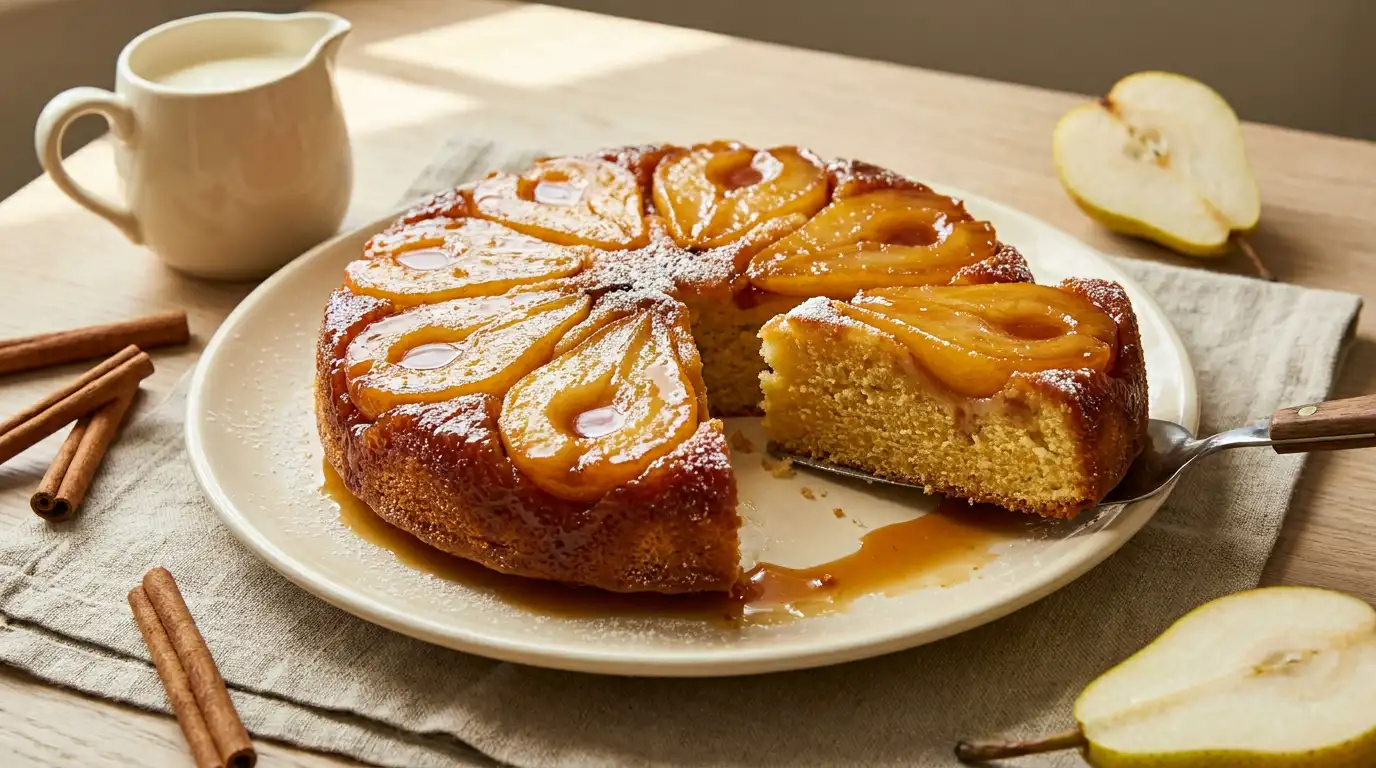
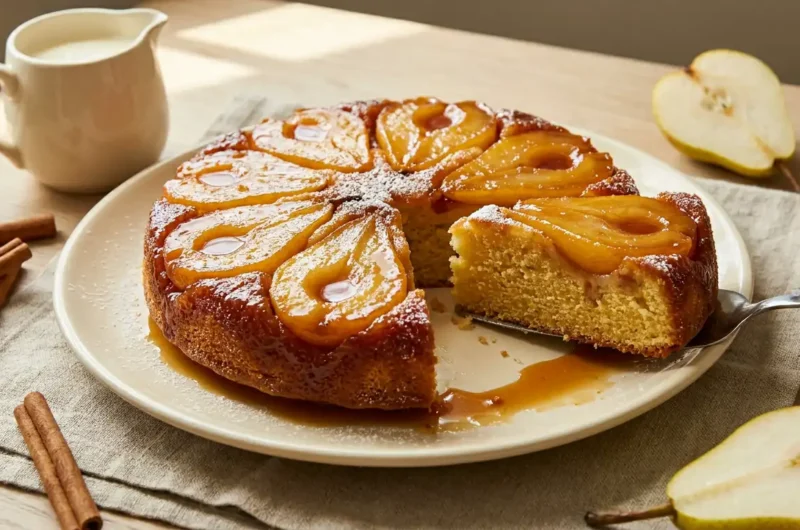
This pear pudding is a tender, golden sponge with a soft, yielding crumb, sitting atop caramelised pear halves that release their juices into the batter as it bakes. The result is a moist, lightly spiced pudding with a glossy, amber base and a gentle floral sweetness from the fruit. It works beautifully as a midweek family dessert or as the finishing course at a relaxed dinner. The recipe uses straightforward techniques and everyday ingredients, making it reliable even for less experienced bakers. From start to finish, it is ready in around 55 minutes.
Ingredients
For the pear base
- 3 ripe but firm pears, peeled, halved, and cored
- 30g unsalted butter
- 30g light brown sugar
- 1 tsp vanilla extract
For the sponge
- 125g unsalted butter, softened
- 125g caster sugar
- 2 large eggs, at room temperature
- 125g self-raising flour, sifted
- 1 tsp baking powder
- 1 tsp ground ginger
- Half tsp ground cinnamon
- 2 tbsp whole milk
- 1 tsp vanilla extract
To finish
- 1 tbsp icing sugar, for dusting
How to Make Mary Berry Pear Pudding Recipe
- Preheat the oven: Set the oven to 180C (160C fan, gas mark 4) and grease a 20cm round ovenproof dish or cake tin well with butter.
- Caramelise the pears: Melt the 30g butter and light brown sugar together in a small frying pan over a medium heat, stirring gently until the sugar dissolves and the mixture turns a light caramel colour. Add the vanilla extract, then lay the pear halves cut side down in the pan and cook for 2 minutes, this softens the fruit slightly and draws out its natural sweetness before baking.
- Arrange the pears: Transfer the caramelised pears to the prepared dish, placing them cut side down in a single layer. Pour any remaining caramel from the pan over the fruit.
- Make the sponge batter: In a large mixing bowl, beat the softened butter and caster sugar together with an electric hand whisk for 3 to 4 minutes until the mixture is pale, noticeably lighter in colour, and fluffy in texture.
- Add the eggs: Beat in the eggs one at a time, adding a tablespoon of the sifted flour with the second egg to prevent the batter from curdling.
- Fold in the dry ingredients: Gently fold in the remaining flour, baking powder, ground ginger, and cinnamon using a large metal spoon, cutting through the batter in sweeping motions rather than stirring, which keeps air in the mixture.
- Loosen the batter: Stir in the milk and vanilla extract until the batter drops easily from the spoon, it should have a soft, dropping consistency rather than being stiff.
- Spoon over the pears: Dollop the sponge batter over the arranged pears and spread it gently to cover them evenly, taking care not to disturb the fruit underneath.
- Bake the pudding: Place on the middle shelf of the oven and bake for 30 to 35 minutes, until the sponge is well risen, golden brown on top, and a skewer inserted into the centre comes out clean.
- Turn out and serve: Leave the pudding to rest in the dish for 5 minutes, then run a palette knife around the edge and invert it onto a warm serving plate so the caramelised pears face upwards. Dust lightly with icing sugar before serving.
Tips for the Best Mary Berry Pear Pudding Recipe
Why is my sponge sitting on top of the pears instead of merging with them?
This is usually because the pears were too wet when the batter was added. After caramelising, give the pear halves a brief moment in the pan and tip away any excess liquid before transferring to the dish. A small amount of caramel pooling in the base is fine and desirable, but large puddles of juice will prevent the sponge from setting underneath.
Why did my pudding come out pale rather than golden on top?
A pale top usually points to the oven temperature being too low, or the pudding sitting on a shelf that is too high in the oven. Always place it on the middle shelf and check that your oven is properly preheated before the dish goes in. If the top is still under-coloured at 30 minutes but the skewer comes out clean, switch to the grill for 2 minutes to finish the colour.
Why did my sponge come out dense and heavy rather than light?
Over-mixing after adding the flour is the most common cause. Once the flour goes in, fold rather than beat, and stop as soon as the batter looks smooth. Overmixing develops gluten in the flour, which tightens the crumb and stops the sponge rising properly.
Why did the caramel stick to the tin when I tried to turn the pudding out?
The dish was not greased thoroughly enough, or the pudding was turned out while still too hot. Grease the dish right up to the rim with a generous layer of softened butter, and always rest the pudding for at least 5 minutes before inverting it.
How do I know when the pudding is fully cooked through?
Insert a thin metal skewer into the thickest part of the sponge and remove it cleanly. If it comes out with wet batter clinging to it, give the pudding another 5 minutes and test again. The top should also spring back when pressed lightly in the centre.
Serving Suggestions
- Serve warm with a generous pour of double cream for a classic, comforting finish.
- Spoon over warm vanilla custard for a more traditional British pudding presentation.
- Add a scoop of vanilla ice cream alongside the warm pudding for a contrast of temperatures at a dinner party.
- Pair with a pot of strong Assam tea for an afternoon serving when the pudding is at room temperature.
- Scatter a small handful of toasted flaked almonds over the caramelised pears just before serving for added texture and colour.
Storage
Room temperature
Store the cooled pudding in an airtight container at room temperature for up to 2 days.
Refrigerator
Cover the pudding well with cling film or transfer slices to an airtight container and refrigerate for up to 4 days. Bring to room temperature for 30 minutes before serving, or warm individual portions in a microwave for 40 to 60 seconds to restore the soft, moist texture.
Freezing
Wrap the fully cooled pudding tightly in a double layer of cling film, then in foil, and freeze for up to 2 months. Defrost overnight in the refrigerator and warm through in a low oven at 160C (140C fan) for 15 minutes before serving.
Nutrition
- Calories: 320 kcal
- Carbohydrates: 38g
- Protein: 4g
- Fat: 17g
- Saturated Fat: 10g
- Sodium: 160mg
Nutrition values are estimates based on average ingredient weights and may vary depending on the specific brands and serving size used.
FAQs
Can I use tinned pears instead of fresh pears in this recipe?
Yes, tinned pears work in this recipe, but drain them very thoroughly and pat them dry with kitchen paper before use. Tinned pears hold more moisture than fresh, so any excess liquid left on the fruit will make the base of the pudding soggy rather than caramelised.
Can I make this pear pudding ahead of time?
The pudding can be baked up to a day in advance, cooled completely, and stored covered in the refrigerator. Warm it through in a 160C oven for 15 minutes before serving, or reheat individual slices in a microwave. It is at its very best served fresh from the oven.
Can I swap the self-raising flour for plain flour?
Yes. Use 125g plain flour and increase the baking powder to 2 teaspoons. Sift both together before adding them to the batter to ensure even distribution and a consistent rise.
What size dish works best for this pear pudding?
A 20cm round ovenproof dish gives the best depth and ensures the sponge cooks through evenly without drying out around the edges. A 23cm dish can also be used, but the sponge will be slightly shallower and may need 5 minutes less in the oven.
Can I leave out the ginger and cinnamon if I prefer a plain sponge?
The spices can be left out entirely for a plainer sponge, or replaced with the finely grated zest of one lemon for a brighter, more citrus-forward flavour that pairs well with the sweetness of the pears.
Conclusion
This Mary Berry pear pudding recipe delivers a beautifully balanced bake, with a tender spiced sponge and sweet caramelised pears that complement each other at every level. The steps are straightforward and the timing is reliable, making it a dependable choice whether baking for the family on a weeknight or rounding off a Sunday lunch. The recipe yields 6 generous portions from a 20cm dish.
If this pudding has gone down well, share it with someone who would enjoy it, or leave a comment below with how it turned out. For another satisfying bake with that same reliable, home-cooked quality, you might also enjoy the Mary Berry ham and leek pie recipe, a comforting savoury dish that is equally straightforward to put together.
Mary Berry Pear Pudding Recipe
Course: DessertCuisine: BritishDifficulty: Easy6
servings20
minutes35
minutes320
kcal55
minutesA tender, golden sponge baked over caramelised pears with warm ginger and cinnamon. This beginner-friendly British pudding is moist, lightly spiced, and ready in under an hour.
Ingredients
3 ripe but firm pears, peeled, halved, and cored
30g unsalted butter
30g light brown sugar
1 tsp vanilla extract
125g unsalted butter, softened
125g caster sugar
2 large eggs, at room temperature
125g self-raising flour, sifted
1 tsp baking powder
1 tsp ground ginger
half tsp ground cinnamon
2 tbsp whole milk
1 tsp vanilla extract
1 tbsp icing sugar, for dusting
Instructions
- Set the oven to 180C (160C fan, gas mark 4) and grease a 20cm round ovenproof dish or cake tin well with butter.
- Melt the 30g butter and light brown sugar together in a small frying pan over a medium heat, stirring gently until the sugar dissolves and the mixture turns a light caramel colour. Add the vanilla extract, then lay the pear halves cut side down in the pan and cook for 2 minutes.
- Transfer the caramelised pears to the prepared dish, placing them cut side down in a single layer. Pour any remaining caramel from the pan over the fruit.
- In a large mixing bowl, beat the softened butter and caster sugar together with an electric hand whisk for 3 to 4 minutes until the mixture is pale, lighter in colour, and fluffy in texture.
- Beat in the eggs one at a time, adding a tablespoon of the sifted flour with the second egg to prevent the batter from curdling.
- Gently fold in the remaining flour, baking powder, ground ginger, and cinnamon using a large metal spoon, cutting through the batter in sweeping motions.
- Stir in the milk and vanilla extract until the batter drops easily from the spoon and has a soft, dropping consistency.
- Dollop the sponge batter over the arranged pears and spread it gently to cover them evenly, taking care not to disturb the fruit underneath.
- Place on the middle shelf of the oven and bake for 30 to 35 minutes, until the sponge is well risen, golden brown on top, and a skewer inserted into the centre comes out clean.
- Leave the pudding to rest in the dish for 5 minutes, then run a palette knife around the edge and invert it onto a warm serving plate so the caramelised pears face upwards. Dust lightly with icing sugar before serving.
Notes
- Use ripe but firm pears so they hold their shape during caramelisation and baking.
- Drain tinned pears thoroughly and pat dry if using instead of fresh.
- Stop folding as soon as the batter looks smooth to avoid a dense crumb.
- Grease the dish generously right up to the rim to prevent the caramel from sticking.
- Rest the pudding for at least 5 minutes before turning out for a clean release.
- Replace the spices with the zest of one lemon for a lighter, citrus-forward flavour.