Mary Berry Crème Caramel Recipe
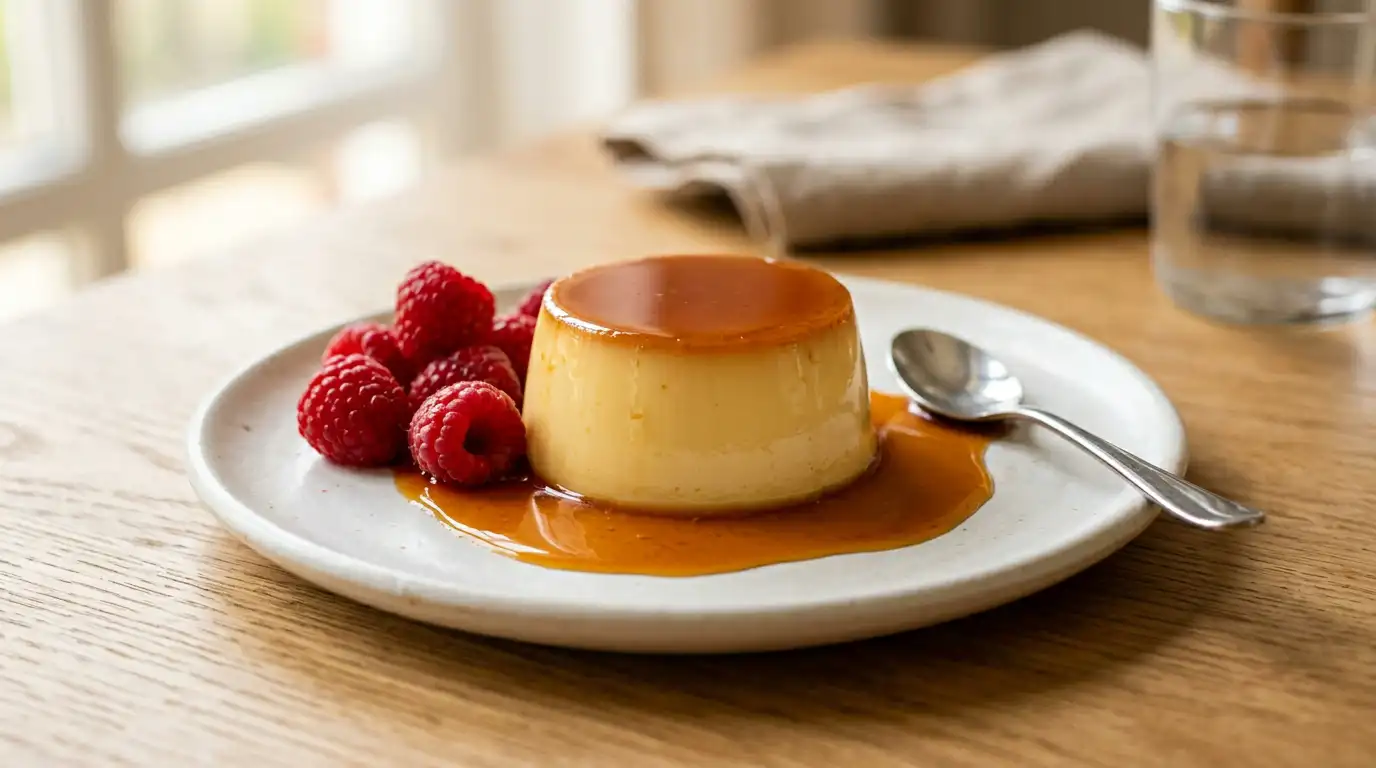
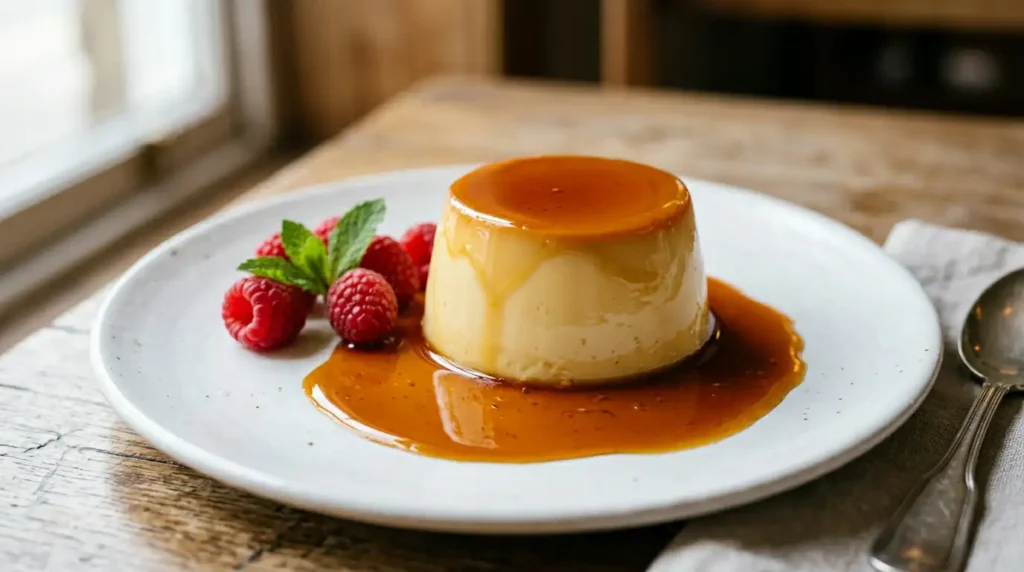
Mary Berry crème caramel is a silky, amber-glazed custard with a deep, bittersweet caramel that pools across the plate the moment it is unmoulded. The custard itself is set just firm enough to hold its shape, with a smooth, trembling texture that yields cleanly under a spoon.
This version is reliable from the very first attempt. The quantities are scaled for six individual ramekins, making it ideal for a dinner party dessert or a relaxed weekend treat. The caramel and custard come together with straightforward technique and no specialist equipment. From start to finish, including chilling time, allow around 4 hours.
Ingredients
- 150g caster sugar
- 4 tablespoons cold water
- 500ml whole milk
- 3 large eggs, at room temperature
- 2 large egg yolks, at room temperature
- 75g caster sugar
- 1 teaspoon vanilla extract
- Fresh raspberries or redcurrants, for garnish
- Whipped double cream, optional
How to Make Mary Berry Crème Caramel
- 01
Prepare the Ramekins
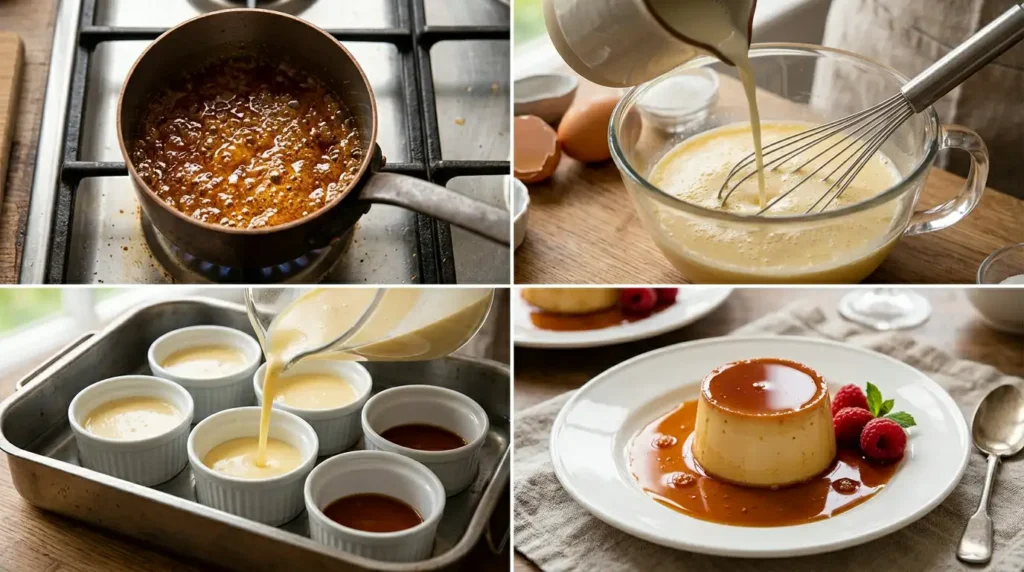
Lightly grease six 150ml ramekins with a little sunflower oil and place them inside a deep roasting tin. Set the tin aside for now. Preheat the oven to 150°C (fan 130°C, gas mark 2).
- 02
Make the Caramel
Place the 150g caster sugar and 4 tablespoons of cold water into a small, heavy-based saucepan. Set over a medium-low heat and stir gently until the sugar dissolves completely, then stop stirring and allow the syrup to bubble undisturbed. Watch carefully as the liquid turns a deep amber colour, similar to dark honey. This takes around 8 to 10 minutes and can burn quickly at the final stage, so remove the pan from the heat the moment it reaches that deep amber shade.
- 03
Pour the Caramel
Working quickly, divide the caramel evenly between the six prepared ramekins, tilting each one slightly so the caramel coats the base in a thin, even layer. The caramel will set firm within a minute or two, which is expected. Set the ramekins aside in the roasting tin.
- 04
Warm the Milk
Pour the 500ml whole milk into a medium saucepan and heat gently over a low flame until steaming but not boiling. There should be small bubbles forming around the edges, but the milk must not simmer. Scalding the milk shortens the baking time and helps produce a smoother, less grainy custard.
- 05
Mix the Custard
In a large jug, whisk together the 3 whole eggs, 2 egg yolks, 75g caster sugar, and 1 teaspoon vanilla extract until the sugar has fully dissolved. Pour the hot milk in slowly while whisking constantly, adding it in a thin, steady stream rather than all at once, to prevent the eggs from scrambling.
- 06
Strain and Fill
Pour the custard mixture through a fine-mesh sieve into a clean jug to remove any threads of cooked egg. Carefully pour the strained custard over the set caramel in each ramekin, filling them to just below the rim. Straining removes air bubbles and ensures a perfectly smooth surface once unmoulded.
- 07
Bake in a Water Bath
Pour enough just-boiled water into the roasting tin to reach halfway up the sides of the ramekins. Cover the entire tin loosely with a sheet of foil, then transfer carefully to the preheated oven. Bake for 35 to 40 minutes, until the custards are just set with a very slight wobble in the very centre. The water bath (bain-marie) prevents the edges from overcooking before the centre sets.
- 08
Cool and Chill
Remove the ramekins from the water bath and leave to cool at room temperature for 30 minutes. Once cool, cover each ramekin with cling film and refrigerate for a minimum of 3 hours, or overnight for the best results. Chilling overnight allows the caramel at the base to liquefy fully, giving a generous pool of sauce when the pudding is turned out.
- 09
Unmould and Serve
To serve, run a small palette knife or thin knife carefully around the edge of each ramekin. Place a flat serving plate on top, then invert quickly and firmly. Hold for a moment before lifting the ramekin away. The caramel will flow around the custard. Serve immediately with fresh berries or a small spoonful of whipped cream alongside.
Tips for the Best Mary Berry Crème Caramel
01 Why did my crème caramel come out with a bubbly, pitted surface rather than smooth?
02 Why is the centre of my crème caramel still liquid after the correct baking time?
03 Why did my caramel go grainy and crystallise instead of becoming smooth and amber?
04 Why does the caramel not flow freely when the crème caramel is turned out?
05 How do I stop the custard from cracking when I run the knife around the edge?
Serving Suggestions
Serve immediately after unmoulding, while the caramel is fluid and pooling freely around the base of the custard.
Scatter a small handful of fresh raspberries or a few redcurrant sprigs beside each serving for a sharp, fruity contrast to the sweet caramel.
Pair with a crisp, lightly sweet dessert wine such as a Muscat or a Sauternes for a more formal dinner party setting.
Add a small quenelle of softly whipped double cream alongside for those who prefer a slightly richer, less sharp finish.
Dust the top of each custard very lightly with a pinch of flaky sea salt just before serving, which deepens the caramel flavour noticeably.
Storage
Room Temperature
Crème caramel should not be kept at room temperature for more than 1 hour before serving, as the custard is egg-based and perishable outside of refrigeration.
Refrigerator
Cover each ramekin with cling film and refrigerate for up to 3 days. Keep the custards in their ramekins and unmould only when ready to serve, as the caramel continues to soften and improve with each day in the fridge.
Freezing
Cover the ramekins tightly with two layers of cling film and freeze for up to 1 month. Defrost overnight in the refrigerator and allow to come to room temperature for 20 minutes before unmoulding, as the caramel needs time to loosen from the base.
Nutrition
FAQs
01 Can I make Mary Berry crème caramel the day before serving?
02 Can I use semi-skimmed milk instead of whole milk for this recipe?
03 Can I make one large crème caramel instead of individual ramekins?
04 Can I use a vanilla pod instead of vanilla extract in this crème caramel?
05 Is this crème caramel recipe suitable for a gluten-free diet?
Conclusion
This Mary Berry crème caramel recipe delivers six individual puddings with a clean, trembling custard and a bittersweet caramel that runs freely across the plate. The technique is straightforward when followed in the right order: a deep amber caramel, a strained and gently baked custard in a water bath, and enough chilling time for everything to settle into the classic, silky result. The total yield is 6 servings, making it a practical choice for both a weekend family dessert and a more formal dinner party finish.
If this recipe has made its way into your regular repertoire, share it with someone who would appreciate a reliable, elegant dessert, and leave a comment below with how yours turned out. Every kitchen is different, and your experience might help another reader get the perfect wobble. If you enjoyed this, you might also like the Mary Berry coffee and walnut cupcakes recipe for another classic that rewards careful technique.
Mary Berry Crème Caramel Recipe
Course: DessertCuisine: FrenchDifficulty: Easy6
servings20
minutes40
minutes215
kcal4
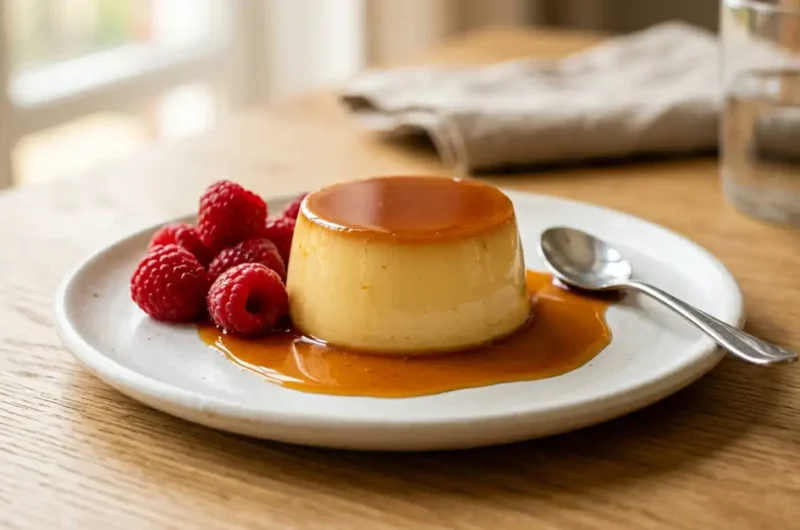
hoursA silky, amber-glazed baked custard with a bittersweet caramel that pools freely across the plate. This classic French-style dessert is made with whole milk, eggs, and vanilla, set gently in a water bath for a smooth, trembling finish.
Ingredients
150g caster sugar
4 tablespoons cold water
500ml whole milk
3 large eggs at room temperature
2 large egg yolks at room temperature
75g caster sugar
1 teaspoon vanilla extract
fresh raspberries or redcurrants for garnish
whipped double cream optional
Instructions
- Lightly grease six 150ml ramekins with sunflower oil, place in a deep roasting tin, and preheat the oven to 150C fan 130C gas mark 2.
- Place 150g caster sugar and 4 tablespoons cold water in a heavy-based saucepan over medium-low heat, stir until dissolved, then boil undisturbed for 8 to 10 minutes until deep amber in colour.
- Divide the caramel quickly between the six ramekins, tilting to coat the base evenly, and leave to set firm in the roasting tin.
- Heat 500ml whole milk in a saucepan over low heat until steaming with small bubbles around the edges but not boiling.
- Whisk 3 whole eggs, 2 egg yolks, 75g caster sugar, and 1 teaspoon vanilla extract in a large jug, then pour in the hot milk in a slow, steady stream while whisking constantly.
- Strain the custard through a fine-mesh sieve into a clean jug, then pour evenly over the set caramel in each ramekin.
- Pour just-boiled water into the roasting tin to reach halfway up the ramekins, cover loosely with foil, and bake for 35 to 40 minutes until just set with a slight wobble at the centre.
- Remove the ramekins from the water bath, cool at room temperature for 30 minutes, then cover with cling film and refrigerate for a minimum of 3 hours or overnight.
- Run a thin knife around the edge of each ramekin, place a flat plate on top, and invert quickly to unmould. Serve immediately with fresh berries or whipped cream.
Notes
- Deep amber caramel gives the best bittersweet flavour. Remove from heat the moment it reaches that colour.
- Always strain the custard through a fine sieve to remove air bubbles and cooked egg threads.
- The water bath prevents the edges from overcooking before the centre sets.
- Chilling overnight produces a more fluid, generous caramel sauce when unmoulded.
- A vanilla pod split and steeped in the warm milk can be used in place of vanilla extract for a deeper flavour.
- Run the knife in one smooth continuous circle against the ramekin wall to avoid tearing the custard edge.