Mary Berry Apple Strudel Recipe
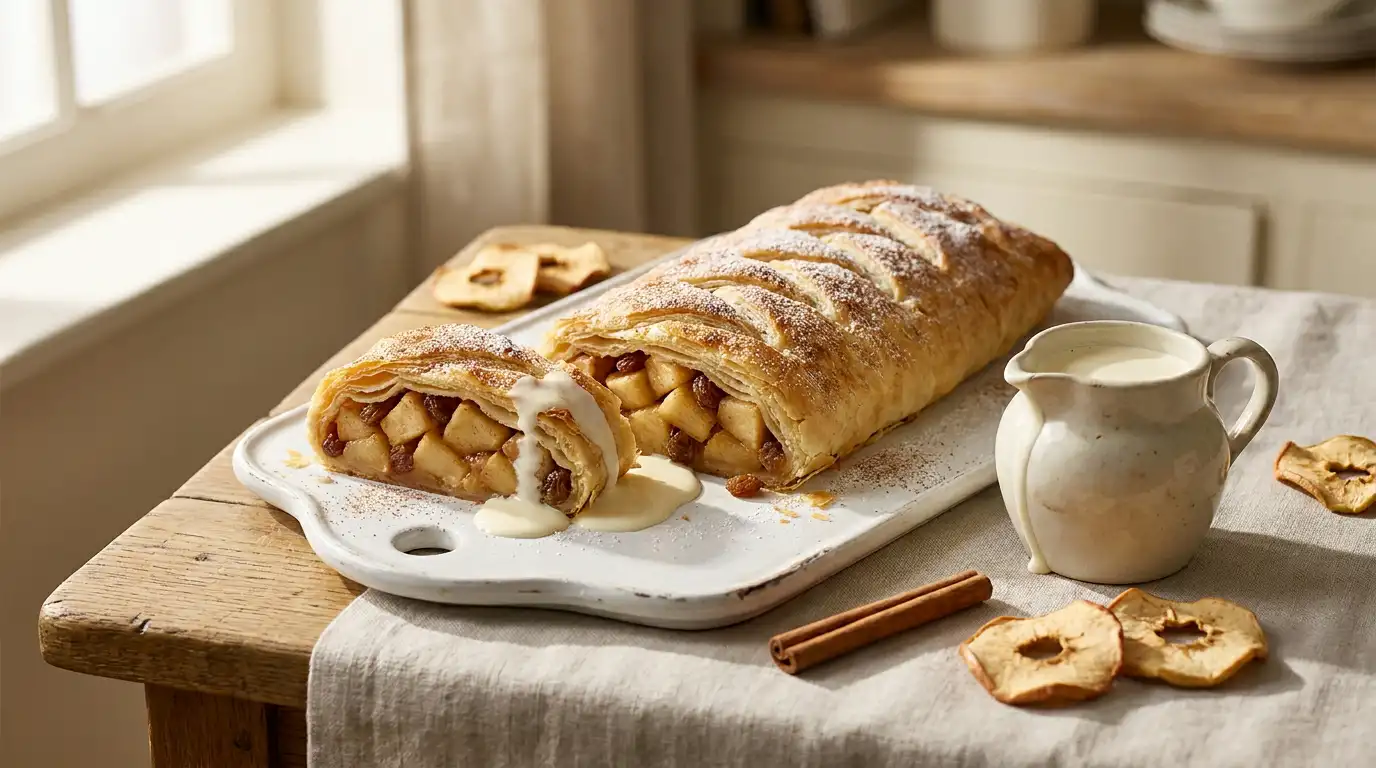
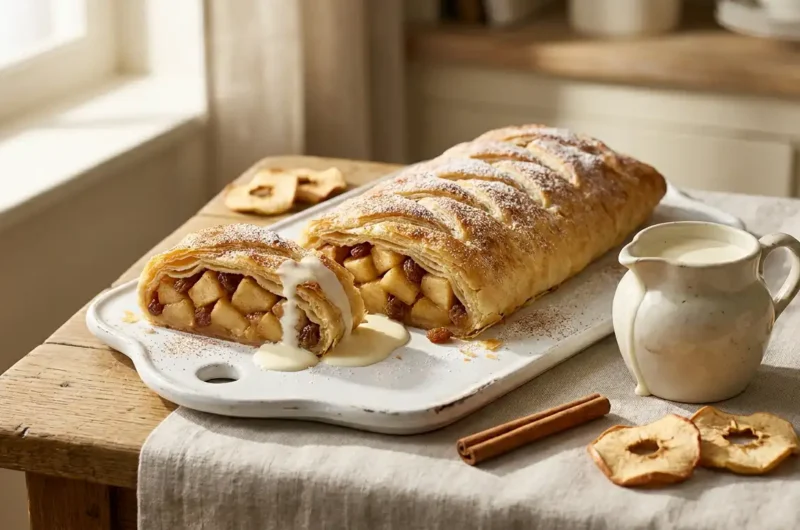
Mary Berry apple strudel is a crisp, golden pastry shell wrapped around a warmly spiced apple filling that releases a gentle cloud of cinnamon and brown sugar as it bakes. The layers of filo are paper-thin, shattering at the fork to reveal tender chunks of apple beneath, with just enough sweetness to balance the fruit’s natural sharpness.
This version keeps the method practical and unfussy, using ready-made filo sheets so there is no intimidating pastry work. It bakes evenly in a standard oven and is just as fitting for a Sunday lunch dessert as it is for an afternoon tea centrepiece. From start to finish, it is ready in around 55 minutes.
Ingredients
For the filling
- 3 medium Bramley apples (roughly 550g), peeled, cored, and cut into 1cm chunks
- 60g caster sugar
- 1 tsp ground cinnamon
- ¼ tsp ground nutmeg
- 50g raisins or sultanas
- 30g fresh white breadcrumbs
- Finely grated zest of 1 small lemon
- 1 tbsp lemon juice
For the pastry
- 6 sheets of filo pastry (roughly 30cm x 40cm each)
- 70g unsalted butter, melted
To finish
- 1 tbsp icing sugar, sifted, for dusting
How to Make Mary Berry Apple Strudel Recipe
- Preheat and prepare the tray: Heat the oven to 190°C (170°C fan, Gas 5). Line a large baking tray with non-stick baking paper and set it aside while the oven reaches temperature.
- Prepare the apple filling: Place the apple chunks in a bowl with the caster sugar, cinnamon, nutmeg, raisins, breadcrumbs, lemon zest, and lemon juice. Stir well until every piece of apple is evenly coated. The breadcrumbs will absorb excess liquid during baking, keeping the pastry base crisp rather than soggy.
- Lay out the filo sheets: Place a clean, slightly damp tea towel on a flat surface. Lay one sheet of filo on the towel and brush it lightly with melted butter from edge to edge. Lay a second sheet directly on top and brush again. Continue until all six sheets are stacked and every layer is buttered. Keep the remaining filo covered with another damp cloth between uses so it does not dry out and crack.
- Add the filling: Spoon the apple mixture along one of the longer edges of the layered filo, leaving a 3cm border at each short end and a 5cm border along the long edge nearest to you. Spread the filling into a neat, compact log shape rather than pressing it flat across the sheet.
- Roll and seal the strudel: Fold the short ends of the pastry inward over the filling, then roll the strudel away from you along the length of the sheets, using the tea towel to guide a tight, even roll. Finish with the seam facing downward. Transferring with the seam underneath prevents the roll from opening in the oven.
- Brush and score: Carefully lift the strudel onto the prepared baking tray. Brush the outside generously with the remaining melted butter, making sure to coat the sides. Use a sharp knife to score three shallow diagonal lines across the top, which allows steam to escape and prevents the pastry splitting unevenly.
- Bake until golden: Place the tray on the middle shelf and bake for 30 to 35 minutes, until the pastry is deep golden and the surface feels firm and crisp when lightly tapped. If the top is browning too quickly after 20 minutes, lay a loose sheet of foil over it without pressing down.
- Rest and dust: Leave the strudel on the tray for 5 minutes before dusting lightly with icing sugar through a small sieve. Slice with a serrated knife to keep the layers intact.
Tips for the Best Mary Berry Apple Strudel
Why is my filo pastry tearing when I try to roll the strudel?
Filo dries out within minutes of being unwrapped. Keep any sheets you are not actively working with covered with a slightly damp tea towel at all times. If a sheet tears, simply patch it with a small piece from a spare sheet and brush over with butter to seal it in place.
Why is the base of my strudel soggy after baking?
The breadcrumbs in the filling play a key role here. They soak up the juice that Bramley apples release as they cook. If you skip them or reduce the quantity, the moisture will soak through the pastry layers before they have a chance to crisp up. Stick to the amount given.
My strudel split open along the side during baking. What went wrong?
This usually happens when the roll is too loose or the short ends are not tucked in firmly enough before rolling. Make sure to fold the short sides over the filling first, then roll tightly using the tea towel as support. Placing it seam-side down on the tray also helps hold the shape through baking.
The apples are still slightly firm in the centre. How do I avoid this?
Cut the apple pieces no larger than 1cm. Bramley apples soften faster than eating apples, but larger chunks will not cook through in the time it takes the pastry to turn golden. If you prefer a softer texture, toss the apple mixture in a bowl and leave it to macerate for 10 minutes before filling; the sugar draws out moisture and begins to soften the fruit before it even reaches the oven.
How do I get an even golden colour across the whole strudel?
Brush the butter generously and make sure the sides and ends are coated, not just the top surface. Rotate the baking tray by 180 degrees halfway through the bake if your oven has a hot spot at the back, which is common in fan ovens.
Serving Suggestions
- Serve warm, sliced thickly, with a generous pour of cold double cream pooling alongside each portion.
- Pair with a scoop of good quality vanilla custard for a comforting pudding finish at a Sunday lunch.
- Dust with an extra pinch of ground cinnamon alongside the icing sugar for a more pronounced spiced aroma on the plate.
- Serve at room temperature alongside a pot of strong Assam tea for an afternoon treat.
- Add a spoonful of crème fraîche for a slightly tangy contrast that cuts through the sweetness of the filling.
Storage
Room Temperature
Once cooled, keep the strudel in an airtight container at room temperature for up to 1 day.
Refrigerator
Store any remaining strudel in the fridge, loosely wrapped in foil or in a sealed container, for up to 3 days. Bring to room temperature for around 20 minutes before serving, or warm individual slices in a low oven at 160°C for 8 to 10 minutes to restore crispness to the pastry.
Freezing
The baked strudel can be frozen once it has cooled completely. Wrap it tightly in a double layer of cling film and then a layer of foil, and freeze for up to 2 months. Defrost overnight in the fridge and reheat in the oven at 170°C for 15 minutes until the pastry crisps up again.
Nutrition
- Calories: 290 kcal
- Carbohydrates: 42g
- Protein: 3g
- Fat: 12g
- Saturated Fat: 7g
- Sodium: 120mg
Nutrition values are estimates and will vary depending on the specific brands and ingredients used, as well as the size of each serving.
FAQs
Can I use eating apples instead of Bramley apples in this recipe?
Yes. Eating apples such as Granny Smith or Cox work well if Bramleys are not available. They hold their shape slightly better during baking and produce a firmer, chunkier filling with a milder tartness. Reduce the caster sugar by around 10g to account for the natural sweetness of eating apples.
Can I make the apple strudel the day before serving?
The strudel is best eaten on the day it is baked while the pastry is at its crispest. However, it can be assembled fully, wrapped in cling film without the icing sugar dusting, and refrigerated unbaked for up to 12 hours. Brush with a little extra butter before baking straight from the fridge, adding 5 minutes to the bake time.
Can I add other fruit to the apple filling?
Pears work very well alongside apple, using a ratio of roughly two apples to one firm pear. Avoid soft berries as they release too much liquid during baking and can make the pastry base wet. Dried cranberries can replace the raisins for a slightly sharper finish.
What can I use instead of filo pastry if I cannot find it?
Filo is the traditional choice and gives the distinctive layered, shattering texture. Ready-rolled puff pastry can be used as a substitute for a thicker, more bread-like result, though the finished dish will be closer to an apple turnover than a strudel. Bake time remains roughly the same.
Can I double this recipe for a larger group?
Yes. Use two separate baking trays and make two individual strudels rather than one very large roll, as a single oversized roll can be difficult to seal and roll evenly. Both trays can go into the oven at the same time on different shelves; swap their positions halfway through baking for an even colour.
Conclusion
This apple strudel brings together crisp, butter-layered filo and a warmly spiced apple filling in a recipe that is manageable for a beginner yet impressive enough for guests. The method is straightforward once the filo is handled carefully, and the result is a sliceable, golden parcel with a satisfying contrast between the brittle pastry and the soft, fragrant filling. This recipe makes 6 generous slices, which is enough to serve comfortably as a dessert for a family meal or a casual dinner party.
If this recipe has worked well, share it with someone who would enjoy it, or leave a note in the comments about what filling variations worked best. For another classic pastry-based bake with a similarly reliable method, you might also enjoy the Mary Berry pecan pie recipe, which uses a short crust base and a rich, nutty filling that is just as straightforward to put together.
Mary Berry Apple Strudel Recipe
Course: DessertCuisine: EuropeanDifficulty: Easy6
servings20
minutes35
minutes290
kcal55
minutesA crisp, golden filo pastry wrapped around a warmly spiced apple filling with cinnamon, sultanas, and lemon zest. Beginner-friendly and ready in 55 minutes.
Ingredients
3 medium Bramley apples (roughly 550g), peeled, cored, and cut into 1cm chunks
60g caster sugar
1 tsp ground cinnamon
1/4 tsp ground nutmeg
50g raisins or sultanas
30g fresh white breadcrumbs
finely grated zest of 1 small lemon
1 tbsp lemon juice
6 sheets of filo pastry (roughly 30cm x 40cm each)
70g unsalted butter, melted
1 tbsp icing sugar, sifted, for dusting
Instructions
- Heat the oven to 190C (170C fan, Gas 5) and line a large baking tray with non-stick baking paper.
- Place the apple chunks in a bowl with the caster sugar, cinnamon, nutmeg, raisins, breadcrumbs, lemon zest, and lemon juice. Stir well until every piece of apple is evenly coated.
- Lay one sheet of filo on a clean damp tea towel and brush lightly with melted butter. Layer all six sheets on top of each other, brushing every layer with butter. Keep unused sheets covered with a damp cloth.
- Spoon the apple mixture along one longer edge of the layered filo, leaving a 3cm border at each short end and a 5cm border along the nearest long edge. Shape into a compact log.
- Fold the short ends inward over the filling, then roll the strudel away from you along the length of the sheets using the tea towel to guide a tight, even roll. Place seam-side down on the prepared tray.
- Brush the outside generously with remaining melted butter and score three shallow diagonal lines across the top with a sharp knife.
- Bake on the middle shelf for 30 to 35 minutes until the pastry is deep golden and feels firm and crisp. If browning too quickly, lay a loose sheet of foil over the top after 20 minutes.
- Leave to rest on the tray for 5 minutes, then dust with sifted icing sugar and slice with a serrated knife.
Notes
- Keep unused filo covered with a damp tea towel at all times to prevent it drying out and cracking.
- Breadcrumbs in the filling absorb excess apple juice and keep the pastry base crisp.
- Cut apple pieces no larger than 1cm so they cook through within the bake time.
- Place the strudel seam-side down on the tray to prevent it opening during baking.
- Rotate the tray halfway through baking if your oven has a hot spot for an even golden colour.
- Slice with a serrated knife to keep the filo layers intact.